

According to QQ , the film "Letter to Grandma" is still dominating Chinese theaters, with daily box office revenue increasing by nearly 100 million RMB. Released on April 30th, the film's first-day box office revenue was only 3.7 million RMB.
With its growing popularity, the film has now grossed 721 million RMB, with a projected final total revenue of 1.6 billion RMB, while its production budget was only 14 million RMB. Its rating on Douban has also increased from 9 to 9.1/10.
The girl who caused a sensation in the entertainment industry.
The film's lead actress, Li Si Tong, also decided to enter the entertainment industry after the film's resounding success. Li Si Tong is the clearest example of the saying "becoming a star overnight." Prior to that, she was a second-year student majoring in Financial Engineering at Guangdong University of Finance and Economics .
Li Si Tong had a hobby of making short videos , which led to her discovery by director Lam Hong Chun. Director Lam wanted to make " A Love Letter to Grandma" as the conclusion to his trilogy about the people of Chaoshan, " Chaoshan Trilogy ." When Lam Hong Chun called Li Si Tong's parents to invite her to audition, the actress thought it was a scam.
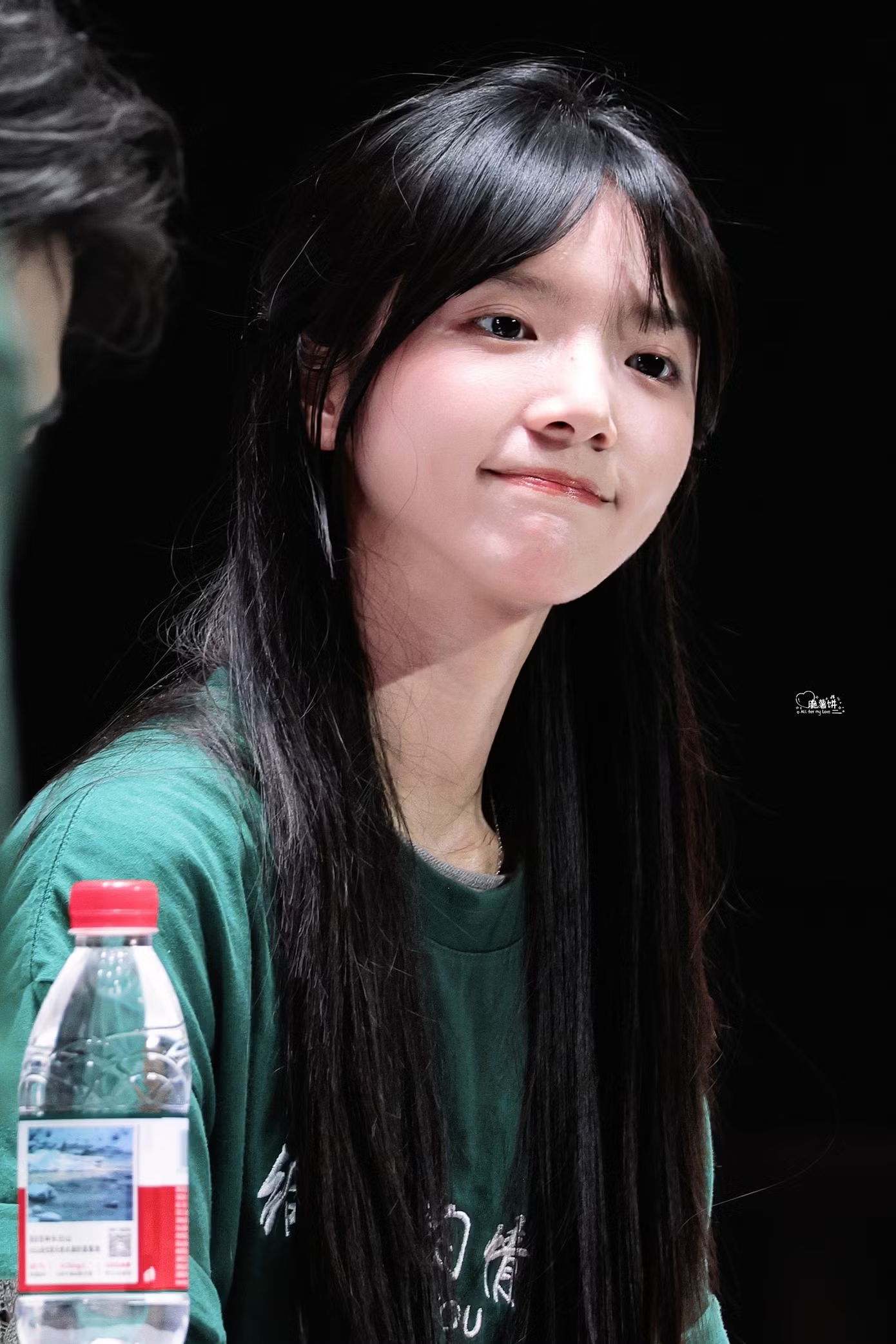



During the audition, Li Si Tong read the entire script of the character Xie Nan Zhi, from her youth to her old age. She was moved to tears, and it was at this moment that director Lam confirmed that Li Si Tong was the leading actress he had been looking for.
On Douban , viewers commented: "Choosing Li Si Tong to play Xie Nan Zhi was a genius move by the director. There are some roles destined for 'non-actors' like her. She's like moonlight cleansed by the sea, cool yet full of vitality."
The best Chinese work of 2026
"A Love Letter to Grandma" is a film with a strong regional flavor, with 90% of the dialogue in the Teochew dialect. Initially, it was only released in Guangdong province, but after gaining popularity, the film was screened throughout China.
The film begins decades ago, when Zheng Mu Sheng, due to circumstances, left home to make a living, sending letters and money back to his wife and children every month. Unexpectedly, Mu Sheng died in an accident in a foreign land, leaving his wife, Ye Shu Ru, to raise their three children alone.
Ye Shunu was completely unaware of this heartbreaking truth, because Xie Nanzhi, a girl indebted to Mu Sheng, had silently assumed the role of a deceased person to send letters and transfer money to Ye Shunu for 18 years. Shunu, however, mistakenly believed Mu Sheng had married Nanzhi. It wasn't until much later, when her grandson Xiaowei, burdened by debt, set out to find his grandfather to ask for money, that the truth was revealed. And when Shunu finally found Nanzhi to thank her, Nanzhi had already fallen ill with dementia and forgotten everything.
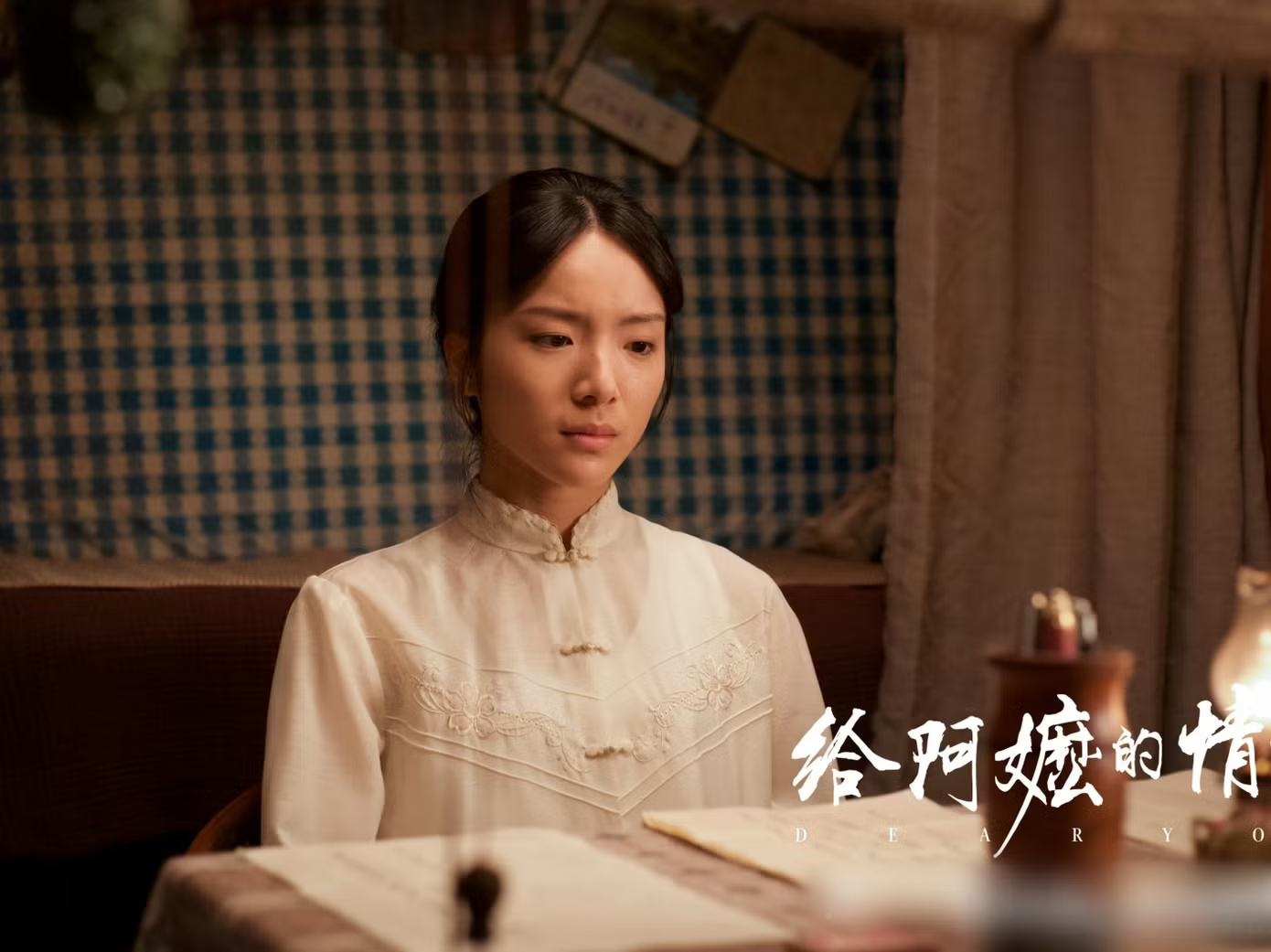
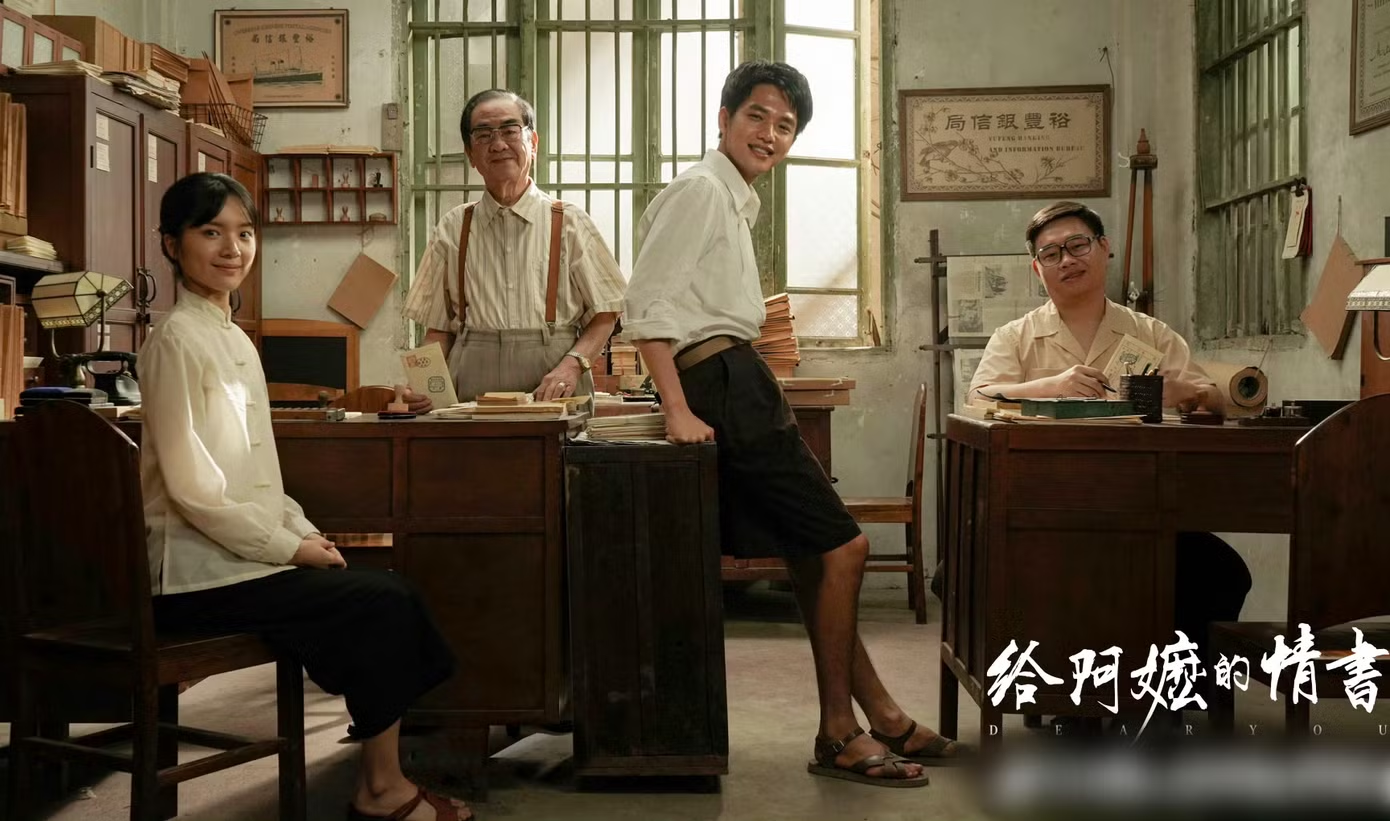
The film revolves around "Kieu Phe" letters – a special form of sending letters accompanied by money or goods by overseas Chinese (Hoa Kieu) to their relatives back home, mainly prevalent from the mid-19th to the mid-20th century. The work leads the audience on a journey to rediscover their roots, with stories of warm human relationships and kindness that have been hidden for many years. The image of the Teochew grandmother cherishing stacks of old letters, spending her life waiting for her loved one in distant Southeast Asia, evokes a sense of poignant sadness in the viewers.
The film was also praised for successfully portraying the close bond and mutual support between two strangers who had never met, a "classic example of the spirit of women helping women" (Girls help girls). When Mrs. Diep Nhu learned about Nam Chi's years of help, her initial reaction was one of sympathy for Nam Chi, thinking, "How difficult it must have been to raise so many children for so many years."
"A Love Letter to Grandma" also deciphers the core spirit of "priceless affection" of the Teochew people, and is an excellent work that uses a small story to express a great spirit.
The film lacks dramatic and intense plot twists, but it captivates viewers with the profound sense of "love" embedded in every action. It perfectly portrays the perseverance of two women, the homesickness of a stranger, and the kindness and integrity of strangers. The content is simple yet profound, touching the hearts of all viewers.
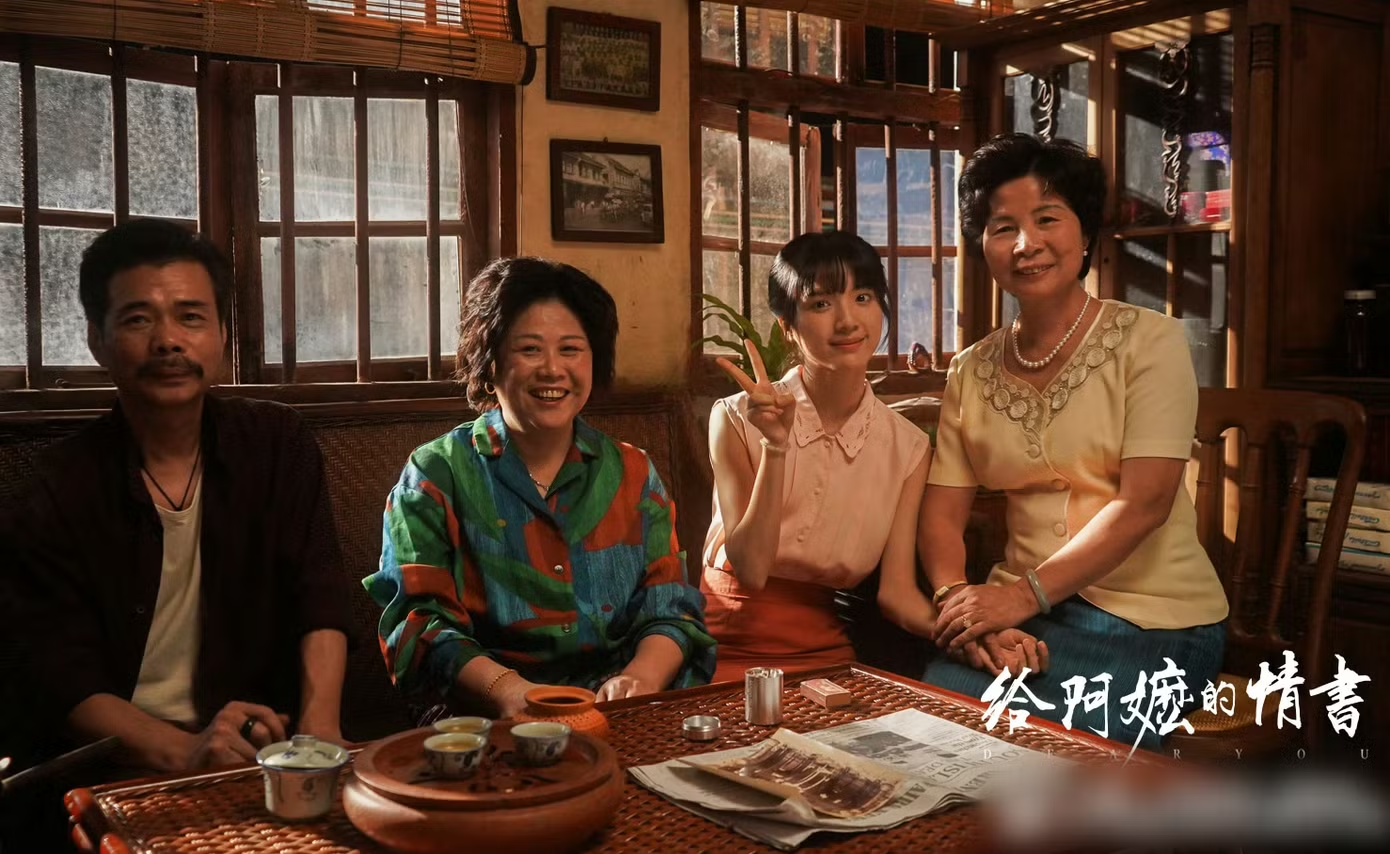
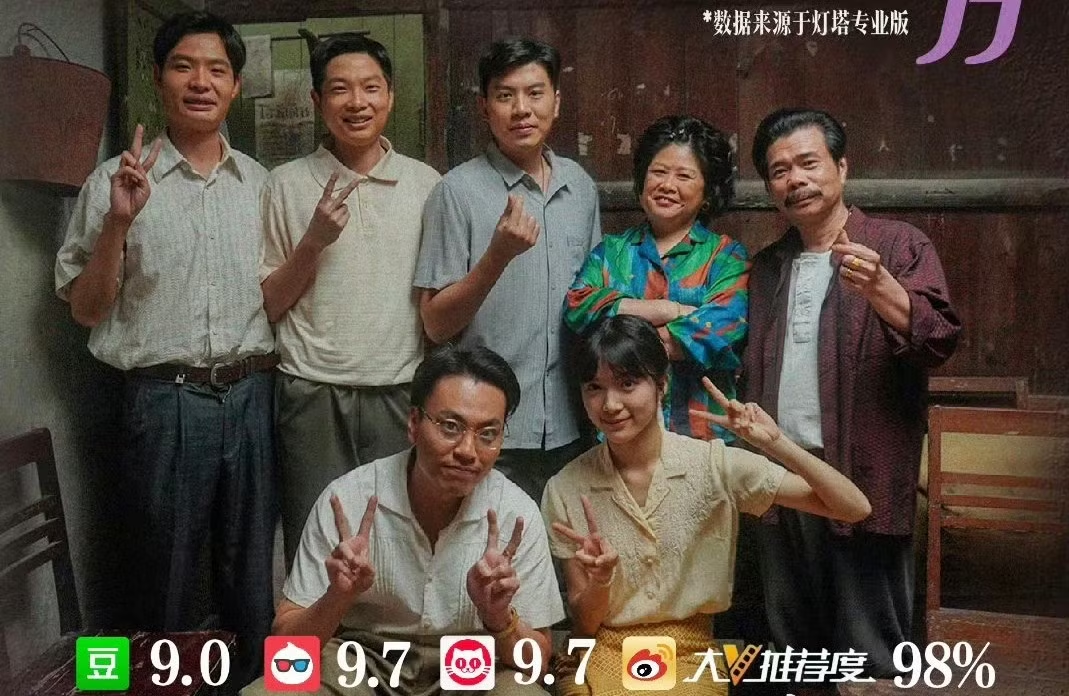
Currently, on Douban, over 530,000 people have left positive reviews and shared their feelings about the film. Among them, some shared that they cried a lot while watching the work. The language of the letters is also subtle and profound, clearly showcasing the beauty of the Chinese language.
"It turns out that the so-called love letters weren't just about romantic love, but also about love for one's homeland, friendship – the bond between people, family affection, and patriotism. All kinds of emotions in the film deeply resonate with the viewers and are incredibly moving," "This is the best film of the year," "Not a single penny spent on the ticket was wasted," "The most complete human relationship doesn't necessarily have to end with an embrace. In that chaotic era, being able to live as normal people and help each other was the highest form of fulfillment of the soul."
Source: https://tienphong.vn/co-gai-vo-danh-noi-tieng-after-one-night-post1845038.tpo

![[Image] Hanoi's urban life under the challenge of a "scorching hot" environment](https://vphoto.vietnam.vn/thumb/1200x675/vietnam/resource/IMAGE/2026/05/25/1779706979265_nang-nong-t5-2026-minh-duy-7-4636-jpg.webp)


![[Image] Close-up view of the interchange connecting the two expressways and Long Thanh Airport.](https://vphoto.vietnam.vn/thumb/1200x675/vietnam/resource/IMAGE/2026/05/25/1779703378210_ndo_br_z7863716673926-224453a31600126cce10622af6290afd-4549-jpg.webp)





































































Comment (0)