

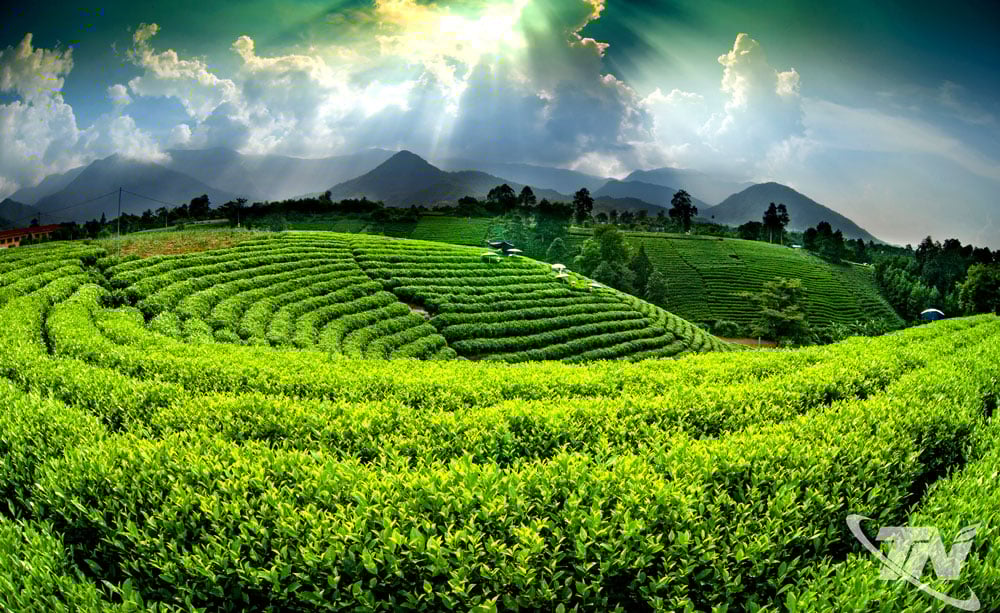
 |
| The La Bang tea region boasts endless stretches of lush green tea hills. (Photo: Provided) |
The challenges facing the tea industry.
Aiming to develop tea into a "billion-dollar" crop, Thai Nguyen has reaped the rewards as the value derived from tea cultivation continues to increase. While the province's tea product value reached 13.4 trillion VND in 2024, it has already exceeded 14.5 trillion VND in the first six months of 2025.
However, in the current context, the tea industry still faces many obstacles. Expanding the cultivated area is difficult due to the shrinking land available for tea cultivation. Many localities have not yet reviewed and assessed the efficiency of land use to convert inefficient rice fields, forest land, and land for annual crops to perennial crops, in order to create land for tea development.
Mr. Nguyen Ta, Head of the Provincial Department of Crop Production and Plant Protection, stated: Currently, many concentrated tea production areas have been established in the province, but they are mainly small-scale household production; the scale of cooperatives remains limited. Although the number of newly established tea cooperatives is increasing annually, they have not yet attracted many households to participate. Notably, many cooperatives still face difficulties in organizing production, especially in the preliminary processing and manufacturing stages. This makes it difficult for products to achieve uniformity in quality and appearance, leading to difficulties in meeting large orders and the requirements of demanding export markets.
 |
| For many years, the expansion of tea cultivation areas in Thai Nguyen has been limited due to the increasingly scarce land resources. |
Ms. Le Thi Quynh Huong, Head of the Provincial Department of Agricultural, Forestry and Fisheries Product Quality Management, stated: After many efforts, businesses, cooperatives, and tea processing and trading establishments in the province have expanded their product distribution channels, including modern channels such as supermarkets and e-commerce platforms (C-ThaiNguyen, Voso.vn, PostMart...). Tea products basically meet the requirements for quality, food safety, and traceability. However, the province has yet to build a distribution system linked to the quality management of Thai Nguyen tea in other localities nationwide, especially in the Southern market.
Furthermore, Thai Nguyen tea products have not yet fully exploited export markets. Some businesses and cooperatives have only accessed international markets through gifts, presents, or informal exports to demanding markets; the number of businesses exporting through official channels remains very limited. Meanwhile, the province has not yet attracted many businesses with the potential to invest in the production, processing, and consumption of tea products along the value chain.
We hope the policy will be implemented soon.
Over the past 10 years, Thai Nguyen province has paid special attention to developing the tea industry through many key projects, such as: restructuring the agricultural sector, developing key crops... Recently, on February 3, 2025, the Provincial Party Committee issued Resolution No. 11-NQ/TU on the development of the Thai Nguyen tea industry for the period 2025-2030. The resolution sets out many important goals: by 2030, the entire province aims to achieve 24,500 hectares of tea, with a fresh tea leaf production of 300,000 tons; 70% of the area will be produced according to VietGAP or organic standards; 70% of the area will be granted planting area codes; and 100% of tea and tea product production, processing, and trading establishments will comply with food safety regulations...
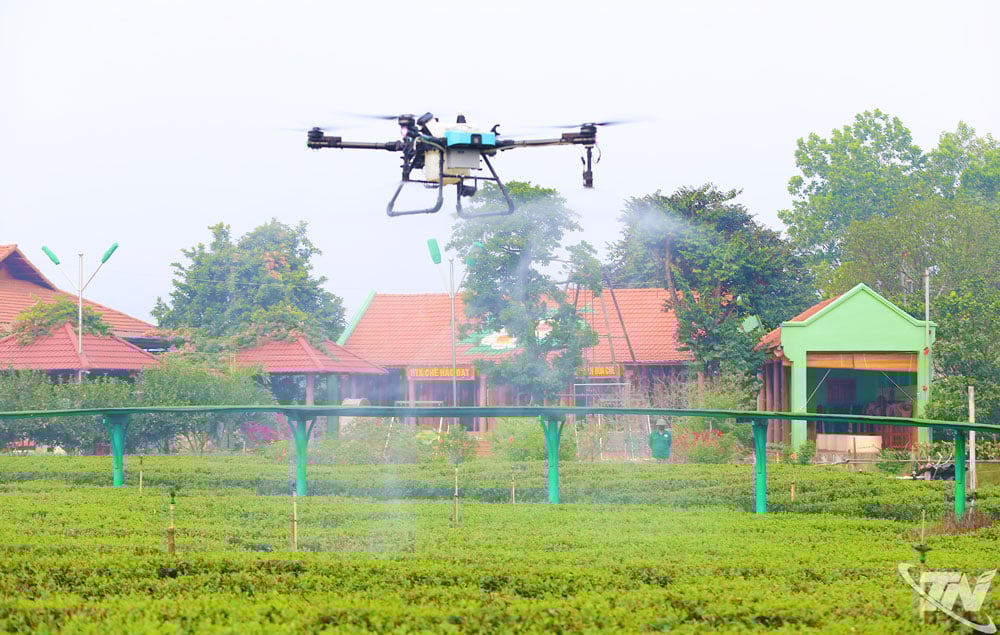 |
| Using drones to care for tea plants at Hao Dat Tea Cooperative. (Photo: Provided) |
To concretize the targets and plans set forth, the Thai Nguyen Provincial People's Council has drafted a Resolution promulgating regulations on policies to support the development of the tea industry in Thai Nguyen province, seeking opinions from relevant departments and agencies, and is expected to be approved at the mid-year regular session of the Provincial People's Council in 2025.
Accordingly, the draft regulations on policies to support the development of the tea industry in the province include 11 support measures, which are highly anticipated by many people and cooperatives. The support measures in the aforementioned draft regulations have been developed based on closely following the production practices and needs of tea growers.
Notably, the province provides 100% financial support for purchasing tea seedlings for new planting and replacement. It also offers a one-time subsidy of 70% of the cost of organic and microbial organic fertilizers for new tea planting in the first year. Furthermore, the province supports certification of VietGAP and other GAP standards, with 100% of the cost for initial GAP certification (up to 6 million VND/ha) and 100% of the cost for re-certification (up to 4 million VND/ha) for organizations and individuals meeting the requirements for tea production scale (minimum 5 hectares)...
 |
Ms. Nguyen Thi Hien, Chairwoman of the Board of Directors of Ha Thai Tea Joint Stock Company: “Through many years of involvement in the tea production sector, I have noticed that the investment resources for developing tea production in Thai Nguyen are still limited and do not meet production needs, especially investment in supporting production materials of organic and biological origin; mechanization in production and processing; and expanding the area of tea production certified with organic standards”...
The province also pays special attention to supporting the issuance of tea growing area codes. Accordingly, establishments involved in tea production, processing, and consumption; growing areas with a minimum area of 5 hectares; and establishments that commit to maintaining the growing area code in accordance with regulations for at least 5 years will receive 100% financial support for the initial registration of the growing area code for export, up to a maximum of 25 million VND per growing area. The State will ensure annual funding for the inspection and monitoring of growing areas that have been assigned codes.
Thai Nguyen province has also issued a support mechanism for applying smart, water-saving irrigation systems in tea production according to VietGAP and organic standards, with a minimum scale of 2 hectares. The support is provided once, equivalent to 70% of the investment cost, with a maximum of 60 million VND/hectare and not exceeding 300 million VND/establishment. In addition, people are also supported in purchasing machinery and equipment for tea production and processing; registering intellectual property protection; developing tea and tea-related products that meet OCOP standards; and receiving support in promoting, building brands, and facilitating trade for their products.
 |
Ms. Tong Thi Xuyen, Director of Hoan Xuyen Safe Tea Cooperative, Vo Tranh commune: "The province's support policies are of practical significance to businesses, cooperatives, and households involved in tea production. When implemented effectively, these policies will become a 'lever' to help us expand tea production areas according to VietGAP and organic standards, enhancing the value and competitiveness of Thai Nguyen tea products."
In particular, in this draft Resolution, Thai Nguyen province has focused on supporting the development of community-based tourism and ecotourism associated with tea production areas. Accordingly, the conditions for receiving support policies are that community-based and ecotourism destinations must be recognized by competent authorities; the tea-growing area must be included in the local tourism development plan or have clear tourism potential.
People, businesses, and cooperatives involved in tea production, processing, and trading in the province are eagerly awaiting the resolution's early approval and swift implementation.
Support for producing tea that meets organic standards (minimum production scale of 5ha): 100% of the cost of initial organic certification is supported, up to a maximum of VND 60 million/ha; 100% of the cost of re-certification is supported, up to a maximum of VND 40 million/ha. 70% of the cost of purchasing organic fertilizers, microbial organic fertilizers, biological pesticides, and biological products is supported during the transition to organic tea production for a maximum of 3 years, and not exceeding VND 50 million/ha/year... (Excerpt from the draft regulations on policies to support the development of the tea industry in Thai Nguyen province) |
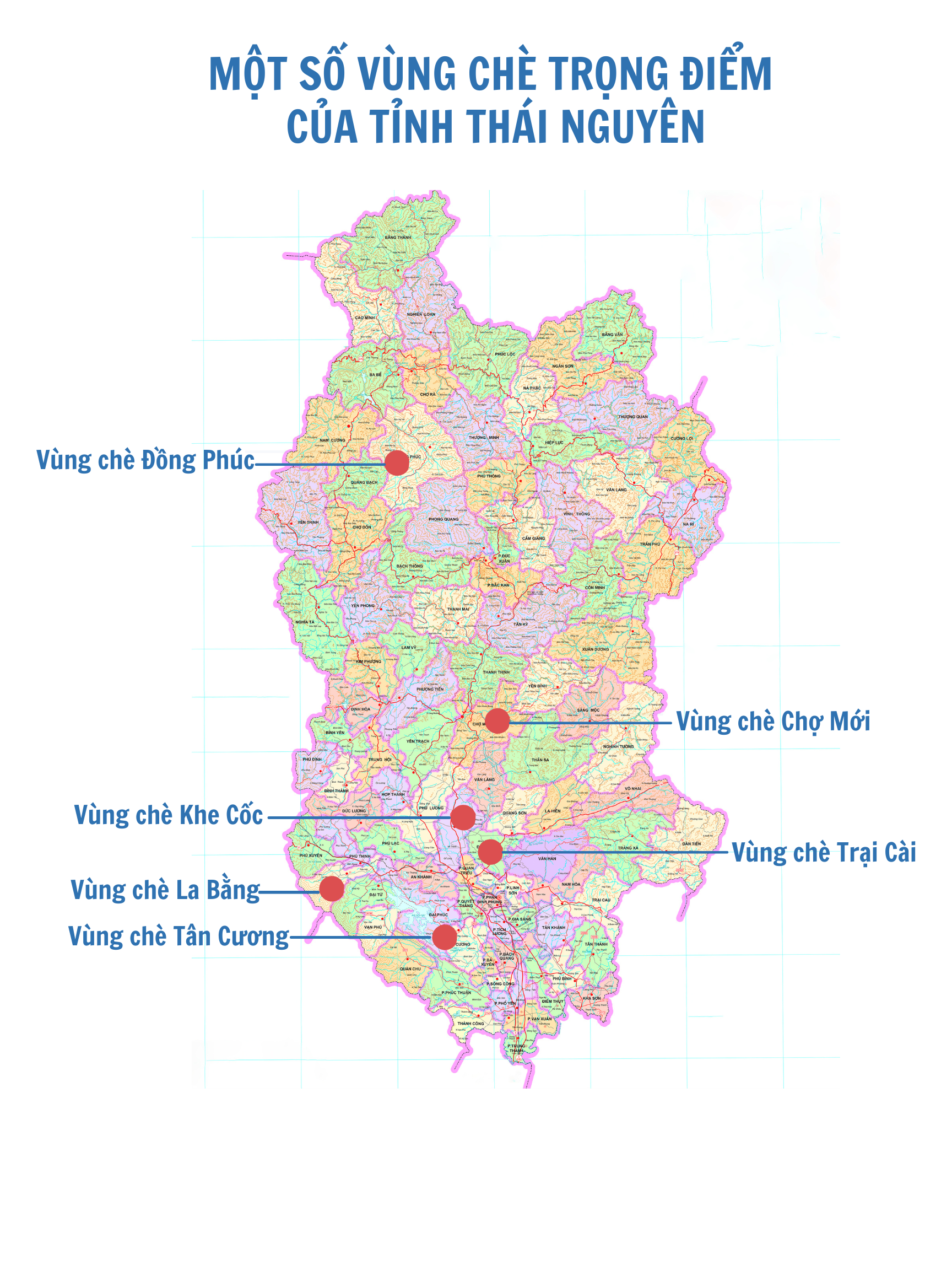 |
Source: https://baothainguyen.vn/kinh-te/202507/co-hoi-nao-cho-cay-ty-do-9d63a7d/
![[Photo] General Secretary and President To Lam presides over a working session with the Central Policy and Strategy Committee on the development of the materials industry.](https://vphoto.vietnam.vn/thumb/1200x675/vietnam/resource/IMAGE/2026/05/21/1779359935432_a3-bnd-3129-1412-jpg.webp)



![[Photo] National Assembly Chairman Tran Thanh Man working with the Standing Committee of the Law and Justice Committee](https://vphoto.vietnam.vn/thumb/1200x675/vietnam/resource/IMAGE/2026/05/21/1779378929214_ndo_br_1-4610-jpg.webp)































































Comment (0)