

On February 18th, the Ministry of Education and Training provided further information on the management of supplementary tutoring and some aspects of general education at a central press briefing. At this briefing, the Ministry reiterated one of the five viewpoints and principles behind Circular 29: "Supplementary tutoring must be consistent with the 2018 General Education Program. Students should be encouraged to be proactive, creative, and develop self-learning habits; teachers should play the role of organizers, examiners, and guides."
HOW ARE STUDENTS LEARNING ON THEIR OWN?
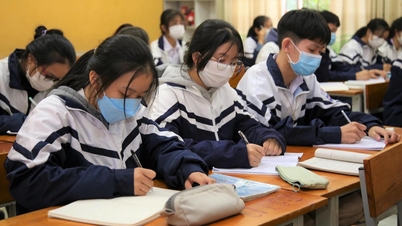
On the sidelines of the Exam Season Counseling program recently organized by Thanh Nien Newspaper in Dong Nai and Binh Duong, we conducted quick interviews with several 12th-grade students. Very few students said they were "100% self-studying" to prepare for the high school graduation exam and university entrance exam.
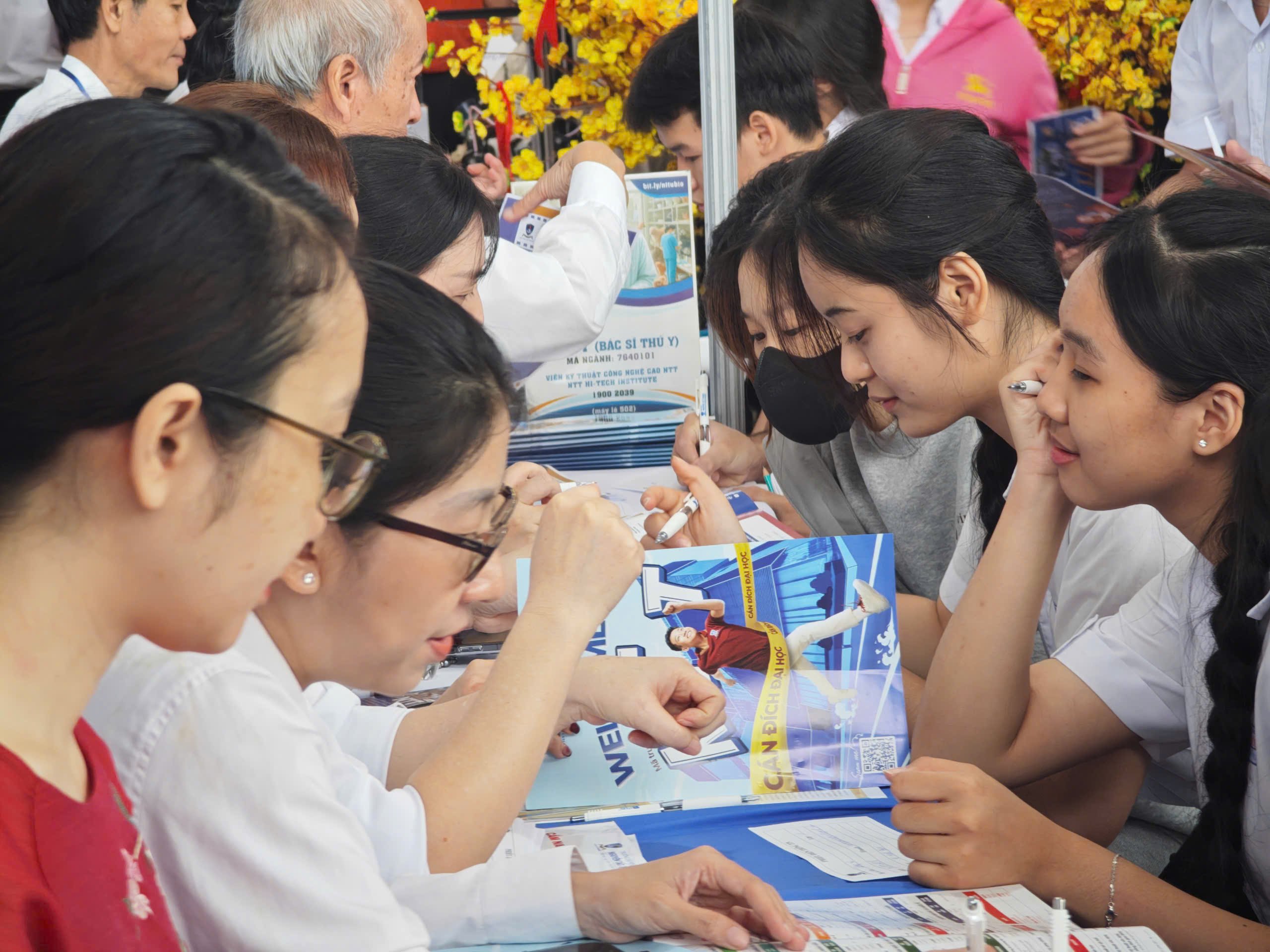
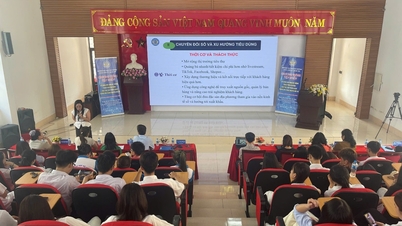
High school seniors asked many questions about studying, career guidance, and more to experts during the 2025 Exam Season Counseling program in Binh Duong last weekend.
PHOTO: DAO NGOC THACH
Pham Tuan Anh (12C1 class, Tran Van On High School, Binh Duong) aims to get into the Business Administration program at the University of Economics Ho Chi Minh City, so he's taking extra classes in math, physics, and English. "I'm taking extra classes to feel more confident when taking the exam. From this week, my school won't be teaching afternoon classes anymore, so I'll be studying at home. I think I can still get into university through self-study, but it will be difficult to get into top-tier schools," the male student said.
Le Hoang Tuyet Nhung (Tran Van On High School, Binh Duong) is taking extra classes in math, literature, and English to apply for the D01 subject combination for the English Language major at the Aviation Academy. In addition, Nhung is also studying geography to feel confident in her high school graduation exam. Nhung shared: "12th-grade students face many pressures, from academics to choosing a university, and worrying about their future careers, while everything is constantly changing and evolving."
Quynh Phuong (a 12th-grade student in Thuan An City, Binh Duong province) only attends extra math classes, while self-studying Vietnamese language, history, and geography to prepare for the C00 subject combination for the tourism major at the University of Social Sciences and Humanities (Vietnam National University Ho Chi Minh City). "Besides self-study and practicing exam questions, I learn from historical films on the internet. This week, my school also didn't have afternoon classes due to the implementation of Circular 29, requiring students to study more independently. Meanwhile, I don't know what the exam questions will be like based on the 2018 General Education Program, which makes me worried," Phuong shared.
Meanwhile, Tran Ha Nam (12C05 class, Le Hong Phong High School, Bien Hoa City, Dong Nai Province) chose self-study as his primary method. Nam participated in several online classes taught by renowned teachers and joined a self-study community with top students from all over. "Self-study online allows me to review parts I'm unclear about and learn from many excellent teachers. When faced with difficult problems, I can think of solutions myself, improving my problem-solving skills. However, the drawback is that if I'm not focused on the internet, it's very easy to get distracted," Nam said. This student aspires to study mechanical engineering at the University of Technology (Vietnam National University, Ho Chi Minh City), and also has experience consulting tips and tricks for solving problems from friends on TikTok. "However, this is only effective when you thoroughly understand the core of the problem to determine whether the knowledge shared on the internet is correct or incorrect," Nam added.
Self-learning is clearly very effective, if done correctly. So, what advice do those who have gone before offer?
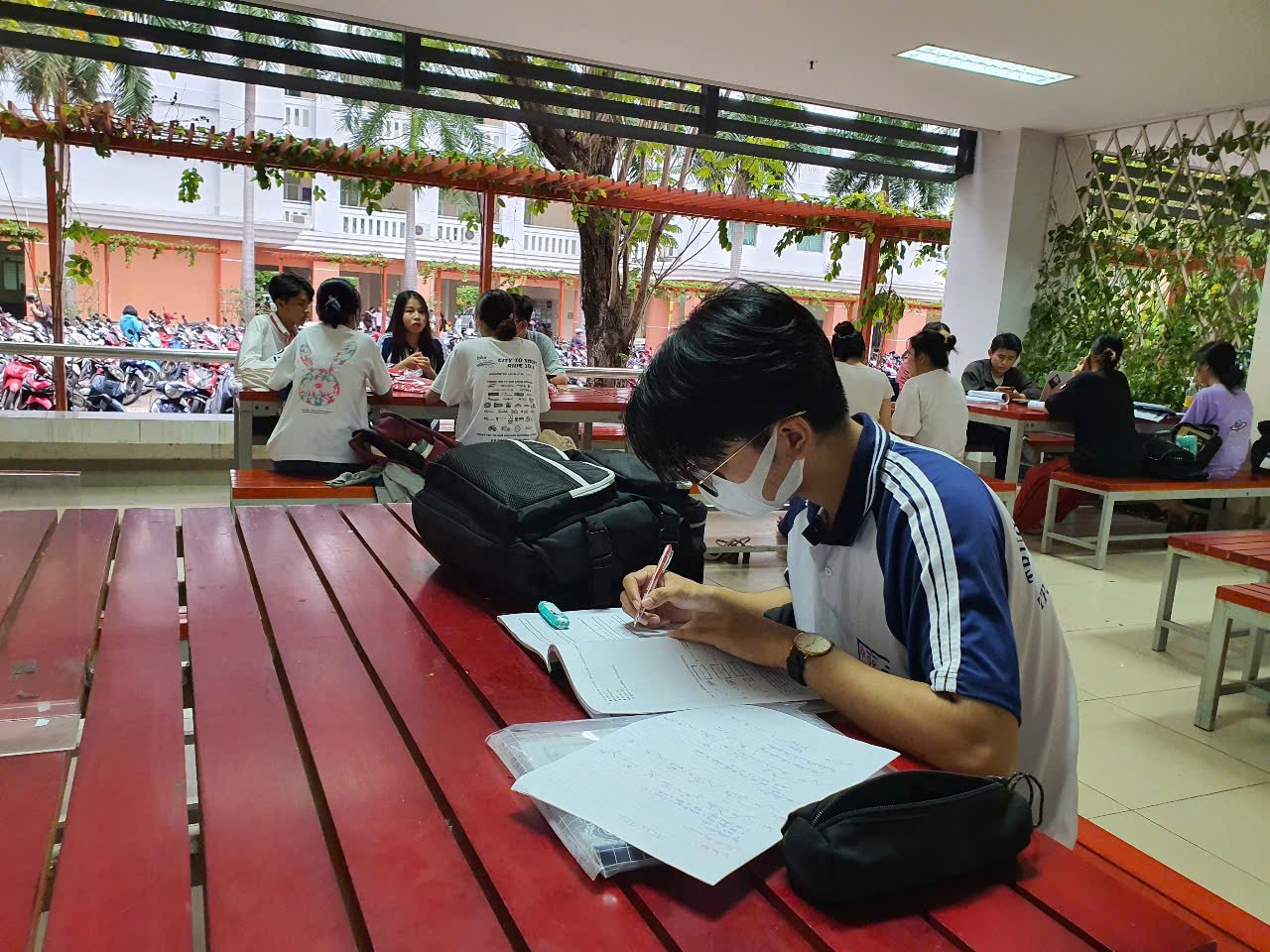
Students in the self-study area of Ho Chi Minh City University of Education.
Self-study is not about sitting and reading books or doing homework passively.
Having been an orphan since birth, Le Hoang Phong (currently the Academic Director of YOUREORG Education and Training Organization) lacked the opportunity for extra tutoring and after-school guidance, yet he still achieved many accomplishments. For example, he was selected from over 9,000 applicants to be one of four Vietnamese scholars participating in the British Council's Future Leaders Connect program in 2021, and also a scholar in the YSEALI Professional Fellowship program funded by the US Department of State in 2022. He doesn't deny the value of extra tutoring, but affirms that with good self-learning skills, anyone can go far. "The ultimate goal of learning is not to find ways to learn more, but to learn better. And to learn better, the core issue is not whether or not you have extra tutoring, but the ability to learn independently – a quality that determines anyone's success," he said.
"Self-learning isn't simply about passively reading books or doing exercises. It's about the ability to ask questions, think critically, search for information, and cultivate personal discipline," Phong emphasized. He gave the example of his time as a high school and university student, when he didn't have teachers or extra classes to support him, so he sought knowledge through libraries, online resources, and from those around him. He took advantage of every opportunity to learn through practical experience, from the smallest tasks to community programs.
"If we rely solely on extra tutoring, we may be limited by teachers, curriculum, and study time. But if we have the ability to learn independently, we can turn the whole world into a classroom. I believe that modern education needs to shift its focus from imparting knowledge to fostering self-learning abilities, because only when students can learn independently can they truly take control of their future," Phong shared.
"The rewards will be very sweet."
Master Vinh San, Director of Communications for the DOL English system, recounts his observations – having been fortunate enough to travel to all five continents and witness the diversity of culture, entertainment, and education in developed and developing countries and territories. According to him, a common trait in many developed countries is the strong self-learning ability of their citizens.
"In 2005, I received a full scholarship from the British Council to study at Salford University (UK). During the first week, I felt cheated because the professors lectured very little, mainly asking students to read ahead and then ask questions for discussion. At that time in Vietnam, schools were primarily places where students listened and took notes," he recounted. Later, he was very grateful for the course because it gave him the opportunity to independently find answers, while the professors only helped to expand and deepen the discussion. This helped him become the only Vietnamese journalist to have been sponsored seven times to attend the prestigious HLF computer science conference in Germany.
"When we are encouraged to learn independently, although it may be more challenging than being spoon-fed information from scratch, the rewards will be very sweet. Anything that requires effort and searching through various sources to understand will also mean that it will be remembered for a long time and in depth. And when learners are constantly actively involved in the vast ocean of knowledge, they will also develop significantly better critical thinking skills. Many surveys have shown that critical thinking is the most crucial skill in the era of rapidly rising artificial intelligence (AI)," said Vinh San. (to be continued)
The most important skill
Mr. Vinh San also reiterated the sharing from Professor Klaus Schwab, Chairman and Founder of the World Economic Forum (WEF), at a meeting with students in Ho Chi Minh City in October 2024. Professor Klaus Schwab emphasized that we are in a world of rapid change, and one of the most important skills that young people need to develop to "survive" is self-learning and lifelong learning. This is much easier for Gen Z than for previous generations due to the development of technology and the internet; many excellent and even free courses are available with just a click of a mouse.
Source: https://thanhnien.vn/siet-day-them-hoc-them-co-hoi-thuc-day-tinh-than-tu-hoc-185250219190930571.htm




![[Image] Hanoi's urban life under the challenge of a "scorching hot" environment](https://vphoto.vietnam.vn/thumb/1200x675/vietnam/resource/IMAGE/2026/05/25/1779706979265_nang-nong-t5-2026-minh-duy-7-4636-jpg.webp)




































































Comment (0)