

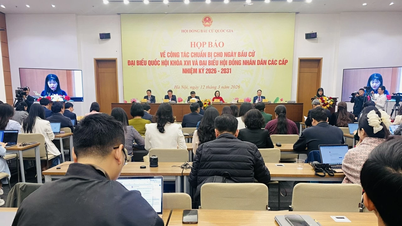
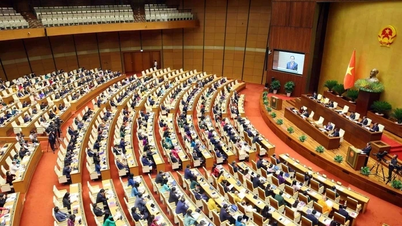
This issue was raised at the Conference of National Assembly Deputies working in specialized committees to provide feedback on the draft revised Value Added Tax (VAT) Law, on the morning of August 29th.

The Finance and Budget Committee, the reviewing body, stated that many opinions supported the proposal to move fertilizers, specialized machinery and equipment for agricultural production, and fishing vessels from the tax-exempt category to the 5% tax rate category. However, many also suggested maintaining the current regulations and proposed a thorough assessment of the policy change's impact from both the industry's perspective and the consumer's perspective.
Another opinion suggests that fertilizers should be subject to a 0% or 2% tax rate and be eligible for input VAT deduction, or that taxes on these items should be increased gradually.
Within the reviewing body, there are still two differing viewpoints, so the draft is presented in two options in Clause 2, Article 9 of the draft law.
Expressing his opinion, delegate Duong Khac Mai (from Dak Nong province) argued that including fertilizers in the VAT tax group with a 5% tax rate could resolve the shortcomings for businesses, but it would certainly increase fertilizer prices, impacting agricultural production and the lives of farmers.

Referring to the report on receiving feedback, explaining, and revising the draft law, some opinions suggest that taxing fertilizer manufacturers would reduce production costs. However, Mr. Duong Khac Mai stated that it is impossible to guarantee whether fertilizer prices will actually decrease. This is because businesses operate according to market forces, and the State cannot compel them to reduce fertilizer prices. Therefore, Mr. Duong Khac Mai proposed maintaining the current regulations.
Deputy Chairman of the Legal Committee Nguyen Truong Giang analyzed that VAT is an indirect tax, levied directly on consumers. The argument that applying the tax will reduce selling prices is unconvincing, as production costs and selling prices are different. While the selling price might be below the cost price, in the context of a market economy, it's crucial to align with international standards.
According to the drafting agency's assessment, if a 5% VAT rate is applied as proposed, approximately 5,700 billion VND will be collected. After deducting about 1,500 billion VND, the State will collect approximately 4,200 billion VND. However, Mr. Nguyen Truong Giang stated that economic experts say the budget will not collect that much money.

Therefore, according to Mr. Nguyen Truong Giang, it is necessary to accurately assess how much businesses will be reimbursed, how much the state budget will collect, and how much the people will be affected if a 5% VAT tax is imposed.
"Recently, in order to revive the economy, we tried to reduce VAT by 2% to stimulate consumption, but now imposing a 5% VAT to lower selling prices is inappropriate," he noted once again.
Further elaborating on this issue, delegate Trinh Xuan An, Standing Member of the National Defense and Security Committee, argued that a holistic view is needed, and policy decisions should not be based solely on price increases or decreases.
"It's unacceptable for an agricultural country like Vietnam to lack a proper and stable domestic fertilizer production industry, while policies are constantly being adjusted," said Mr. Trinh Xuan An, emphasizing that Vietnam needs a modern fertilizer production industry that is on par with the world and cannot depend on import markets.
"If the fertilizer industry performs well, then the people will benefit, society will benefit, and the agricultural sector will benefit," he stated.
Representative Trinh Xuan An supported the view of the Finance and Budget Committee that if a 5% VAT rate is applied, domestic manufacturing businesses will have room to reduce selling prices, meaning they don't have to lower prices immediately. At the same time, it creates an opportunity to collect taxes from importing businesses.
"If we keep focusing on whether to increase or decrease prices through tariffs, we'll never solve this problem. If we leave it as it is, the fertilizer industry will remain the same as it was 10 years ago, still dependent on the global market," Mr. An stated.

To harmonize the interests of businesses and farmers, Representative Dinh Ngoc Minh, a full-time member of the Economic Committee, proposed including fertilizers in the list of taxable goods, applying a 0% tax rate, so that businesses can still receive tax refunds and encourage agricultural development.
In response, Mr. Trinh Xuan An stated that the 0% tax rate only applies to exported goods, as stipulated by the VAT Law. Furthermore, applying a 0% tax rate to allow businesses to deduct or receive tax refunds would require the government to fund these refunds, which is illogical.
"Where will the budget come from to cover the costs when there are no recorded revenues?" Mr. Trinh Xuan An wondered.
Source: https://vov.vn/kinh-te/co-nen-danh-thue-vat-5-voi-phan-bon-post1117526.vov
![[Photo] My Son at night: A thousand-year-old heritage site amidst the Milky Way](https://vphoto.vietnam.vn/thumb/1200x675/vietnam/resource/IMAGE/2026/04/15/1776261039184_ndo_br_chon6-jpg.webp)
![[Photo] National Assembly Chairman Tran Thanh Man attends the opening session of IPU-152](https://vphoto.vietnam.vn/thumb/1200x675/vietnam/resource/IMAGE/2026/04/16/1776277863731_ctqh5-jpg.webp)
![[Photo] Mrs. Ngo Phuong Ly meets and exchanges views with Mrs. Peng Li Yuan](https://vphoto.vietnam.vn/thumb/1200x675/vietnam/resource/IMAGE/2026/04/16/1776277858080_phu-nhan-1-jpg.webp)

![[Photo] The General Secretary, President and his wife meet with Vietnamese-Chinese friendship leaders.](https://vphoto.vietnam.vn/thumb/1200x675/vietnam/resource/IMAGE/2026/04/15/1776264829725_vna-potal-tong-bi-thu-chu-tich-nuoc-to-lam-gap-mat-nhan-sy-huu-nghi-viet-nam-trung-quoc-8703641-3130-jpg.webp)


































































Comment (0)