

1. Walking a lot doesn't necessarily mean you'll lose weight.
Many people mistakenly believe that longer walking times mean burning more fat. In reality, once the body becomes accustomed to a certain level of exercise, the energy expenditure efficiency gradually decreases over time as the body becomes more energy-efficient. This is a natural adaptation mechanism, which is why exercisers don't see progress even with increased duration.
Furthermore, when the body is exhausted after a long walk, feelings of hunger and cravings often increase significantly, easily leading to calorie intake exceeding the amount burned. As a result, weight loss goals become more difficult to achieve, even with greater effort.

Walking is a healthy exercise suitable for most people, but effectiveness doesn't come from walking for as long as possible.
2. Burden on bones and joints
Low-intensity walking is a healthy activity, but when performed continuously for extended periods without sufficient recovery, repetitive stress on the knee, ankle, and lumbar spine begins to accumulate. Articular cartilage needs time to recover between workouts, and without that time, subtle micro-damage builds up that exercisers don't realize until real pain erupts.
Prolonged fatigue after strenuous walks can also have negative psychological consequences. When the body is constantly exhausted, the brain gradually associates exercise with feelings of heaviness and discomfort, motivation to exercise decreases, and the risk of giving up completely increases compared to those who exercise at a moderate level.

3. What is the ideal duration and intensity of walking?
Health organizations recommend 30 minutes of walking each day, ideally 3 to 5 times per week. A consistent 30-minute walk every day for a year will yield far greater benefits than two-hour walks that are irregular and can easily lead to exhaustion.
In terms of pace, you should walk slightly faster than usual, enough to break a light sweat and get your heart rate up, but still be able to talk without running out of breath. This is a moderate intensity level where the body burns fat most efficiently without putting excessive strain on the musculoskeletal system.
4. Proper walking technique is even more important than the duration of the walk.
One highly recommended method is interval walking, alternating between fast and slow walking. Specifically, walk fast for 3 minutes, then slow for 3 minutes, repeating this 5 times consecutively to reach a total fast walking time of 15 minutes. This method not only burns more energy in the same amount of time but also stimulates the cardiovascular system and metabolism more effectively than walking at a steady pace.
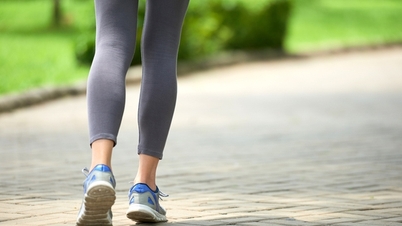
Posture while walking is crucial. Keep your back straight, chest slightly open naturally, and swing your arms rhythmically with your steps. Start walking from your heel, roll down to your toes, and finish on your toes, with a moderate stride. Correct posture not only reduces pressure on your joints and spine but also helps activate muscle groups more effectively.
5. Things to avoid when walking
You shouldn't walk immediately after waking up. After a long night's sleep, your body is slightly dehydrated, so drink at least two glasses of water upon waking and wait about 30 to 60 minutes before starting to exercise; you shouldn't walk immediately after a full meal because you need time for your digestive system to process.

If you want to take advantage of the blood sugar-controlling effects of walking after a meal, wait at least 30 minutes. Regular hydration throughout the walk is also essential, especially on hot days, as even mild dehydration significantly impairs physical activity and thermoregulation.
Comprehensive studies from multiple international cohorts suggest that the optimal benefit threshold for people over 60 is approximately 6,000 to 8,000 steps per day, equivalent to about 30 minutes of moderate-paced walking—a perfectly achievable for most. The key isn't how long you walk, but how consistently you maintain that habit over the years.
Please check out more videos of interest:
Source: https://suckhoedoisong.vn/co-nen-di-bo-qua-1-tieng-moi-ngay-169260603201210486.htm




























































![[Video] Sunset at Lap An Lagoon – Where the sun sets over the fishing nets](https://vphoto.vietnam.vn/thumb/1200x675/vietnam/resource/IMAGE/2026/05/31/1780192137701_beach-landscape-sea-water-nature-grass-745871-pxhere-com.jpeg)








































Comment (0)