

Over 20 editions, the Shangri-La Dialogue has become a prestigious brand, a leading forum for exchanging and discussing regional and international security challenges, issues of common concern, and hoping to find new approaches and solutions…
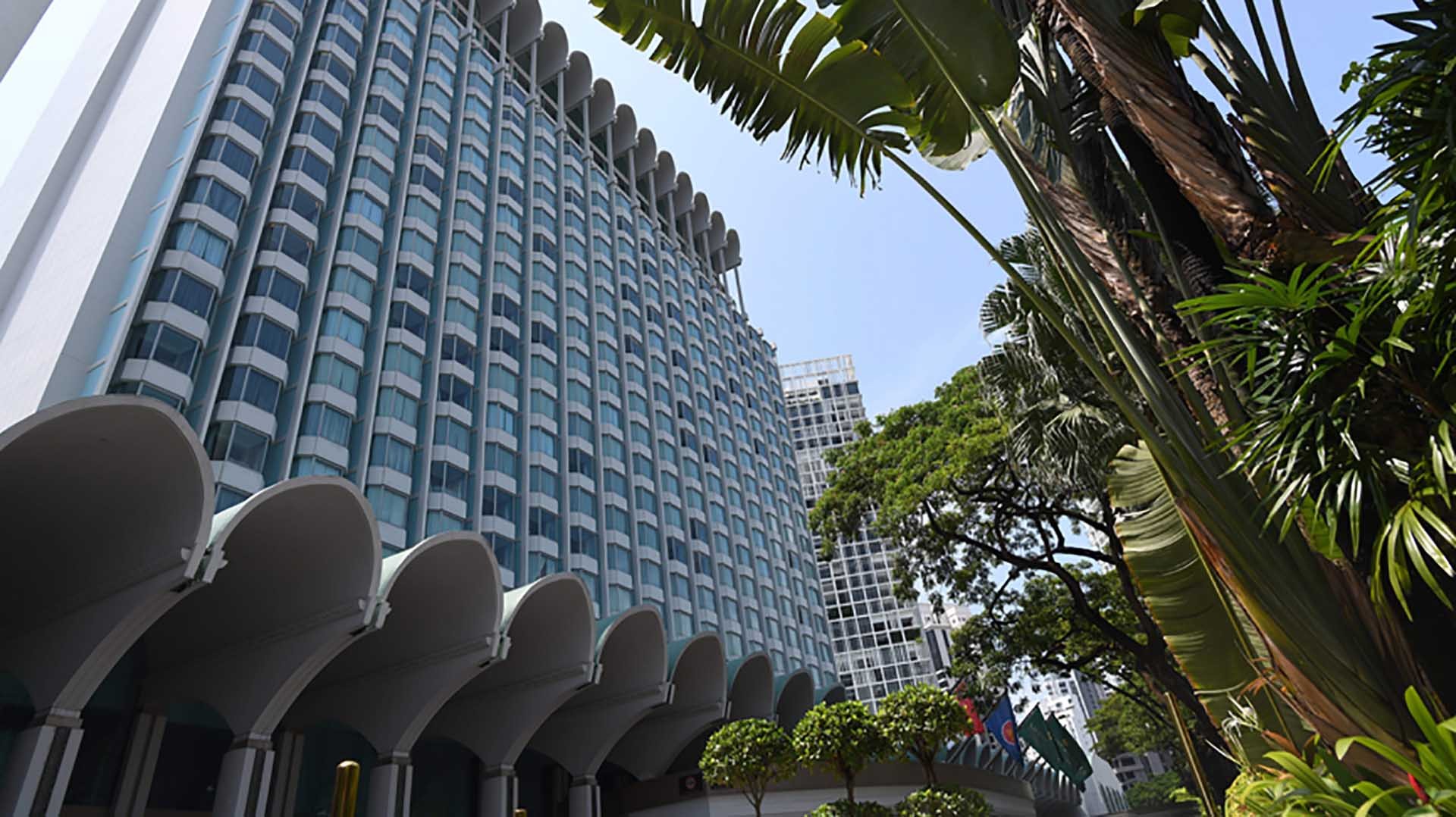 |
| The 21st Shangri-La Dialogue will take place at the Shangri-la Hotel in Singapore from May 31 to June 2. (Source: IISS) |
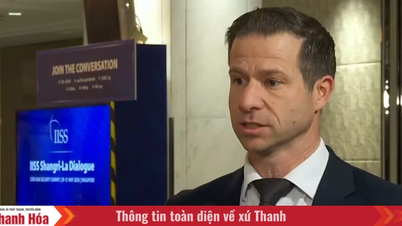
As scheduled, hundreds of high-ranking officials, defense ministers, military commanders, academics, security experts, and others from nearly 50 countries gathered in Singapore for the 21st Shangri-La Dialogue, which ran from May 31 to June 2.
In 2024, the global situation continued to be complex, with new and unpredictable developments. The prolonged and fierce conflicts in Ukraine and the Gaza Strip could escalate, risking a regional outbreak. If the parties involved do not exercise restraint, storms and undercurrents could arise in the Taiwan Strait, the South China Sea, the East China Sea, and the Korean Peninsula… Behind this lies the role and responsibility of major powers, and the US-China and US-Russia relations.
The global and regional context has led to increased interest from countries in the 2024 Shangri-La Dialogue. So what can we expect?
Firstly, these summits provide an opportunity to exchange views, discuss, and assess recent emerging trends and developments in the world and the region. Since the beginning of the year, there have been about a dozen bilateral, trilateral, quadrilateral, and multilateral regional and global summits. Notably, the summit participants include rivals and countries currently in conflict or tension with each other. The China-Japan-South Korea summit on May 27th is one such example.
Except for sanctions targeting key rivals, most countries do not want to "put all their eggs in one basket"; they strive to minimize the impact of geopolitical competition and security confrontations on economic and trade cooperation. Some countries show signs of "reducing their egos," making concessions within limits to gain greater benefits, promoting cooperation, and drawing countries of interest away from their main rivals.
Secondly, the international community expects countries to have a clearer understanding of their shared responsibility for peace, stability, cooperation, and development in the Asia-Pacific region and the world. First and foremost, major powers have a leading role and a very significant responsibility. At the same time, developing countries and emerging economies also play a very important role.
Thirdly, dialogue provides an opportunity for countries to openly exchange views and clarify their perspectives on regional and global security risks and challenges, as well as their own policies and strategies. Through this, they can identify areas of common interest and potential for mutually beneficial cooperation. Cooperation in economics , trade, people-to-people exchanges, and other fields will contribute, step by step, to building trust and preventing regrettable mistakes. On the other hand, through dialogue, the community will recognize who consistently "says one thing and does another."
This time, Defense Minister Dong Jun is expected to continue addressing China's concept of global security; concerns about alliances and security cooperation between the US and its allies, drawing some countries in the region into participating; and the prospect of meeting with his Japanese and South Korean counterparts on the sidelines of the Forum, following the China-Japan-South Korea summit…
US Defense Secretary Lloyd Austin is focusing on strengthening relationships between the US and its allies and partners to support a vision of a peaceful and stable region. The Pentagon chief will visit and meet with several partners and allies to implement the US policy.
The South China Sea issue, including the disputes and clashes at Scarborough Shoal/Small Shoal/Huangyan Island, will be discussed from various perspectives. According to information from the Philippines, President Ferdinand Marcos will deliver an important speech, likely addressing the situation, the causes of the conflict, and Manila's perspective. China does not want to internationalize the issue or involve outsiders.
Fourth, in addition to the plenary discussions, bilateral meetings between several countries—between the US, China, and Southeast Asian countries, Japan, South Korea, and others—are very important. Since the US and Chinese defense ministers did not meet in 2023, this year's bilateral dialogue is highly anticipated.
Fifthly, summarizing the above issues, what countries most desire is to work together to find practical approaches, feasible solutions, build conflict management mechanisms, and gradually resolve conflicts... The core principle is to maintain regular communication channels, especially at the high level; to build and strengthen strategic trust and the rule of law, both in declarations and actions.
***
Some issues have been addressed in previous dialogues, but this time there is still something new. Given the current regional and global context, the international community has the right and can expect, but cannot hope for, a breakthrough from the 21st Shangri-La Dialogue. The long and challenging journey will require many small steps.
No one attends the Shangri-La Dialogue merely to be present. Dialogue aims to understand the global and regional context, to understand ourselves, our partners, and our rivals; to identify common interests and obstacles that can be temporarily set aside for mutually beneficial cooperation. This is what the international community most desires and is the true meaning of the 2024 Shangri-La Dialogue. Expectations are one thing, but the actual outcome is another.
Source: https://baoquocte.vn/doi-thoai-shangri-la-co-the-va-khong-the-273159.html

![[Image] Hanoi Police officially crowned champions of V-League 2025/2026](https://vphoto.vietnam.vn/thumb/1200x675/vietnam/resource/IMAGE/2026/05/31/1780244769054_ndo_br_039d561b692be875b13a-jpg.webp)
![[Photo] The General Secretary, President and his wife begin their state visit to the Philippines.](https://vphoto.vietnam.vn/thumb/1200x675/vietnam/resource/IMAGE/2026/05/31/1780230559452_anh-man-hinh-2026-05-31-luc-19-28-11.png)
![[Photo] Admire the coral "masterpiece" amidst the million-year-old heritage of Dak Lak province.](https://vphoto.vietnam.vn/thumb/1200x675/vietnam/resource/IMAGE/2026/05/31/1780221235105_anh-man-hinh-2026-05-31-luc-16-53-27.png)
![[Photo] Solemn bathing ceremony and Buddha procession in Hue](https://vphoto.vietnam.vn/thumb/1200x675/vietnam/resource/IMAGE/2026/05/31/1780228263543_1-jpg.webp)



![[Infographic] Key points from the opening remarks of General Secretary and President To Lam at the Shangri-La Dialogue](https://vphoto.vietnam.vn/thumb/402x226/vietnam/resource/IMAGE/2026/05/31/1780196272740_anh-man-hinh-2026-05-31-luc-09-55-34.png)












![[Video] Sunset at Lap An Lagoon – Where the sun sets over the fishing nets](https://vphoto.vietnam.vn/thumb/340x192/vietnam/resource/IMAGE/2026/05/31/1780192137701_beach-landscape-sea-water-nature-grass-745871-pxhere-com.jpeg)





































![[Photo] Admire the coral "masterpiece" amidst the million-year-old heritage of Dak Lak province.](https://vphoto.vietnam.vn/thumb/402x226/vietnam/resource/IMAGE/2026/05/31/1780221235105_anh-man-hinh-2026-05-31-luc-16-53-27.png)





























Comment (0)