

According to the Vietnam News Agency correspondent in Paris, as the Ebola outbreak resurfaced in the Democratic Republic of Congo and began spreading to Uganda, international scientists entered an urgent race to develop a vaccine against the Bundibugyo strain – a rare but particularly dangerous variant of the Ebola virus. However, unlike previous outbreaks, this time the world is almost entering the battle without an effective preventative "shield" readily available.
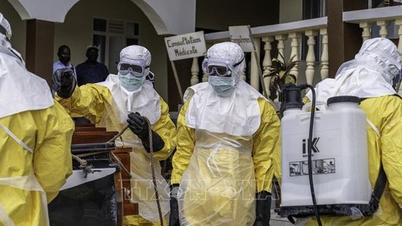
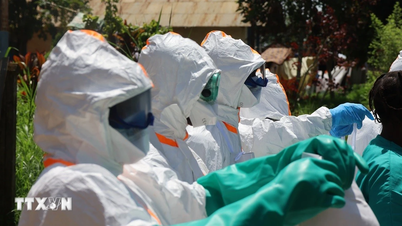
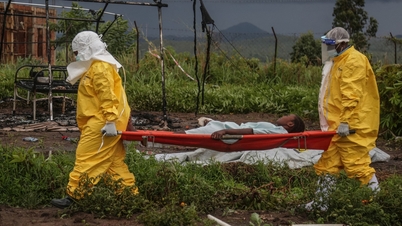
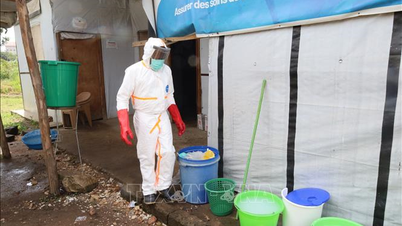
Since the outbreak was announced in mid-May, the death toll has exceeded 220. The World Health Organization (WHO) has been holding continuous emergency meetings with international experts as the disease spreads faster than the local health forces can control.
Worryingly, there are currently no vaccines licensed for use or even undergoing clinical trials to prevent the Bundibugyo strain.
In previous Ebola outbreaks in Africa, the world made significant progress thanks to vaccines against the Zaïre strain of Ebola – the variant that caused the devastating epidemic in West Africa in 2014-2015.
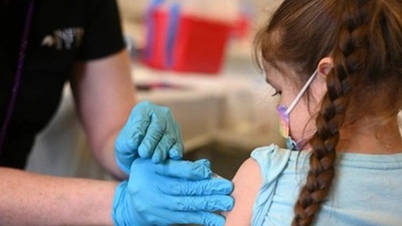
Vaccination campaigns at the time significantly reduced the number of infections and deaths. However, existing vaccines are formulated to protect against a different strain of the virus, while Bundibugyo has been studied far less because it rarely caused large-scale outbreaks in the past.
Researchers now face two difficult choices. The first is to try to adapt existing vaccine technologies to combat the Bundibugyo strain. This is considered a faster solution because it can leverage existing scientific and technological infrastructure for production.
Several research groups are exploring ways to replace the surface protein of older Ebola vaccines with a glycoprotein specific to Bundibugyo in order to activate the immune system to fight the novel virus.
In principle, this approach is similar to COVID-19 vaccines that have used spike proteins to "train" the immune system to recognize the virus. However, while the idea is quite promising, producing a clinically-grade vaccine still takes many months, not to mention the phases of safety and efficacy testing in animals and humans.
Another approach is to use mRNA technology – the foundation that revolutionized vaccines during the COVID-19 pandemic. This technology has the advantage of rapid development and easy adaptation to new viral variants.
Several collaborative projects between European universities and major biotechnology companies have been launched to research mRNA vaccines against Bundibugyo. However, experts acknowledge that there is still a long way to go from the laboratory to practical implementation.
While a specific vaccine is not yet available, some scientists are considering a "temporary" solution: using existing Ebola vaccines to create cross-protection. This idea is based on the hypothesis that the immune system activated by the Ebola Zaïre vaccine may partially recognize and protect against the Bundibugyo strain.
Some animal trials have yielded limited results, but given the current emergency, researchers want to leverage this outbreak to assess its effectiveness in humans.
Furthermore, many scientific groups are pursuing a far more ambitious goal: developing a "universal" vaccine that can protect against all strains of the Ebola virus, and even other dangerous filoviruses such as Marburg.
Several recent studies have attempted to combine glycoproteins from different Ebola strains in a single vaccine and have observed positive immune responses in laboratory animals. However, no one can yet confirm whether these vaccines will truly protect humans against future outbreaks.
This Ebola outbreak also highlights a familiar reality of global medicine: diseases that primarily appear in poorer countries often don't receive sufficient research investment until a crisis occurs.
The Bundibugyo strain was once considered relatively rare and not a top priority for pharmaceutical companies. Therefore, when the outbreak occurred, the world almost had to start from scratch.
Meanwhile, time is the most crucial factor. Experts warn that even in the most favorable scenario, it is difficult to have a vaccine approved for widespread use in less than a year.
This means that traditional measures such as isolating cases, contact tracing, and raising public awareness will remain the main line of defense in the current phase.
The race to combat Ebola Bundibugyo was therefore not only a scientific challenge, but also a test of the world's preparedness for future pandemics. After COVID-19, many had hoped that humanity had entered an era of rapid response to new viruses.
But the experience in Congo shows that when a little-noticed pathogen emerges, gaps in vaccines and research can still leave the world in a reactive position, as before.
Source: https://www.vietnamplus.vn/cuoc-chay-dua-day-kho-khan-de-phat-trien-vaccine-doi-pho-voi-dich-ebola-post1112811.vnp
![[Photo] General Secretary and President To Lam presides over a meeting on preparations for the review of one year of operation of the three-tiered government system.](https://vphoto.vietnam.vn/thumb/1200x675/vietnam/resource/IMAGE/2026/06/02/1780391821195_a1-bnd-4595-9717-jpg.webp)



























































































Comment (0)