In the heroic and tenacious struggle, the army and people of the capital fought hundreds of battles, inflicting heavy losses on the enemy and creating conditions for the entire country to embark on a long-term combat strategy.
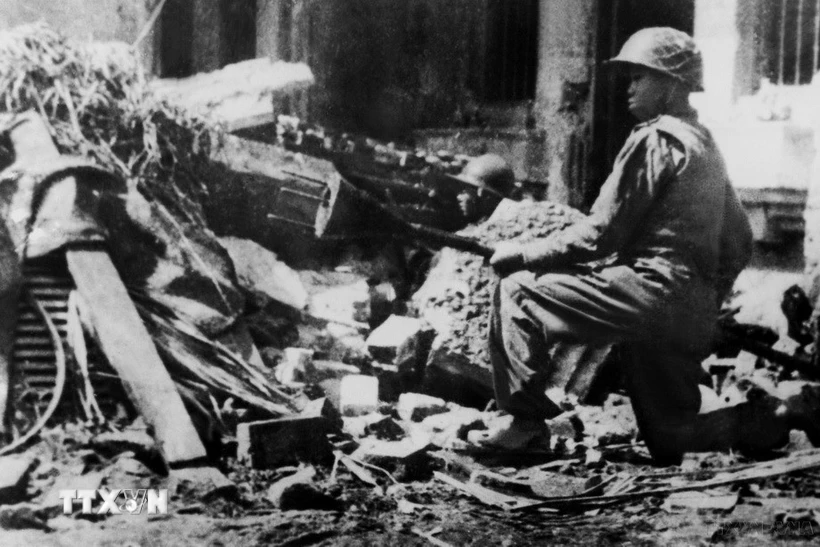
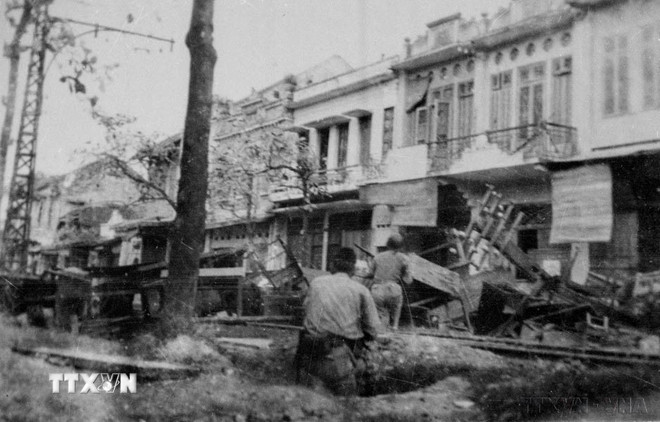
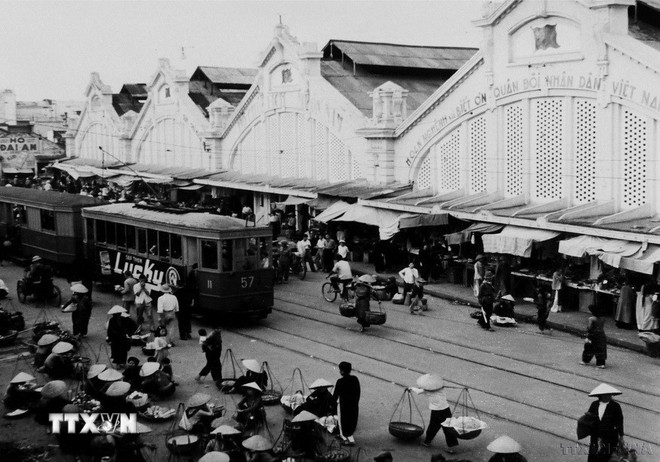
Seventy-eight years ago, in response to President Ho Chi Minh 's call for national resistance, the army and people of Hanoi raised the banner of "Fight to the death for the survival of the Fatherland," transforming every street and house into trenches and fortifications, deploying a people's war strategy, with the entire population fighting the enemy.
Through 60 days and nights of tenacious, heroic, and creative fighting, the army and people of Hanoi successfully completed the task of protecting the central government, evacuating and ensuring the safety of the people; transporting thousands of tons of machinery and supplies to safe zones, creating the initial potential for the resistance.
In that heroic and tenacious struggle, the army and people of the capital fought hundreds of battles, inflicting heavy losses on the enemy and creating conditions for the entire country to embark on a long-term combat strategy.
The proactive and creative resistance of a peace-loving nation.
The August Revolution was successful, and the Democratic Republic of Vietnam was born, a great achievement in the nation's arduous and heroic struggle. However, on September 23, 1945, the French colonialists opened fire on Saigon, officially beginning the war to reoccupy Vietnam and Indochina. Meanwhile, the fledgling revolutionary state faced countless challenges, and its government was not yet firmly consolidated.
Faced with this situation, through diplomatic means, our Party and President Ho Chi Minh strived to find solutions to preserve the independence, freedom, and peace of the country. We made concessions by signing the Preliminary Agreement (March 6, 1946) and the Provisional Agreement (September 14, 1946) with France. However, with the ambition to seize our country once again, the French colonialists broke their promises, encroaching further and declaring: They would implement all military measures to restore their rule.
But also soon realized that "sooner or later, France will attack us and we must definitely fight France" (1), our Party anticipated: "The crucial thing is that while opening negotiations with France, not only do we not stop for a minute the preparation work, but we are still ready to resist at any time and anywhere, and we must also promote it to the utmost and definitely not let negotiations with France dampen the fighting spirit of our nation" (2). Our Party and President Ho Chi Minh considered negotiations with France to prolong the preparation time, create a position and strength for the resistance war.
President Ho Chi Minh and the Central Committee of the Party made strenuous efforts to prepare ideologically, strategically, organizationally, and in terms of forces, as well as to build the determination for resistance among the entire Party, army, and people. The Party's basic viewpoints on the resistance strategy against French colonialism gradually took shape, as expressed in the Directive "Resistance and National Construction" (November 5, 1945), the document "Urgent Tasks Now" (November 5, 1946), "All People's Resistance" (December 12, 1946)... and were finalized at the expanded meeting of the Central Committee of the Party in Van Phuc (December 18 and 19, 1946). This was a strategy of all-people, comprehensive, and protracted resistance.
After nearly 16 months of comprehensive preparation, the revolutionary forces had matured in leading the revolutionary war; the ranks of Party members were strengthened, the revolutionary government was increasingly consolidated; the armed forces made new strides, gaining more combat experience from the resistance in Southern Vietnam. Most importantly, we had built up the fighting spirit and unwavering belief in victory among the people.
This is a great driving force to promote revolutionary development; it is a prerequisite factor to ensure the victory of the resistance war. President Ho Chi Minh once affirmed: "No army, no weapon can defeat the spirit of sacrifice of an entire nation." (3)
Unleash the power of patriotism.

Faced with the enemy's plot and acts of aggression, the Vietnamese people had no other choice but to take up arms to fight to protect the independence and freedom they had just won. On December 18 and 19, 1946, the Standing Committee of the Central Party Committee held a conference in Van Phuc (Ha Dong) and made the historic decision to launch a nationwide resistance war.
At 8 PM on December 19, 1946, Hanoi took the lead, opening fire to attack the French army, marking the beginning of the nationwide resistance war.
On the night of December 19, 1946, President Ho Chi Minh, on behalf of the Central Committee of the Party and the Government, issued a call to the people of the whole country to resist the enemy, clearly affirming:
“We want peace, we must make concessions. But the more concessions we make, the more the French colonialists advance because they are determined to seize our country again! No! We would rather sacrifice everything than lose our country, than be enslaved. Fellow countrymen! We must rise up! Regardless of gender, age, religion, political party, or ethnicity. As long as you are Vietnamese, you must rise up to fight the French colonialists to save the Fatherland. Whoever has a gun, use a gun. Whoever has a sword, use a sword; if you don't have a sword, use a hoe, shovel, or stick. Everyone must do their best to fight the French colonialists to save the country.” (4)
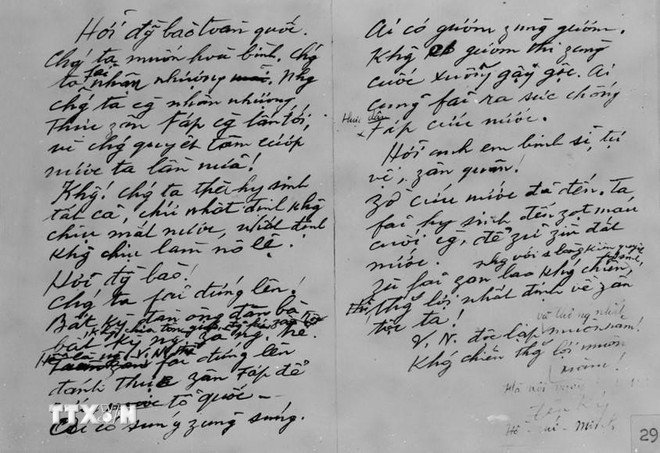
Responding to President Ho Chi Minh's call, the entire nation rose up in resistance with the determination to "fight to the death for the survival of the Fatherland." In Hanoi, after the order to open fire, the National Guard and Self-Defense Forces simultaneously attacked targets in the city center. In coordination with the army, all strata of the people actively participated in combat and support operations, creating a widespread people's war strategy to block the enemy.
Along with the army and people of the capital, the army and people of cities north of the 16th parallel, such as Da Nang, Hue, Vinh, Nam Dinh, Hai Duong, Bac Ninh, Bac Giang... also opened fire and attacked, pinning down the enemy in cities and towns, achieving initial victories.
In Southern Vietnam, South Central Vietnam, and the Central Highlands, the armed forces and people intensified guerrilla warfare, disrupting pacification plans and preventing the enemy from sending reinforcements to Central and Northern Vietnam. The fierce and heroic fighting of our army and people in the early days of the nationwide resistance achieved important victories, defeating the French colonialists' "quick strike, quick victory" strategy.
After nearly two months of continuous fighting, our army and people achieved important victories: inflicting casualties, destroying and pinning down the enemy in the city, and foiling the French colonialists' "quick attack, quick victory" plan; creating conditions for relocating agencies, warehouses, and materials (we transported nearly 40,000 tons of machinery and raw materials to the base area); and taking advantage of the time to organize the evacuation of hundreds of thousands of people to the base area to build a long-term resistance posture.
This will forever remain a lesson for the cause of building and defending the Fatherland.
The spirit of the nationwide resistance remains an epic, reminding every Vietnamese citizen, especially the younger generation today and in the future, to have a deeper understanding of a glorious period in the nation's history; at the same time, it provides further strength to successfully build socialism and firmly defend the socialist Vietnamese Fatherland.
The nationwide resistance has gone down in national history as a glorious milestone showcasing the patriotism and indomitable will of the Vietnamese people in the 20th century, leaving behind many invaluable lessons.
That is, our Party, led by President Ho Chi Minh, firmly grasped the unchanging goal of independence, unity, and territorial integrity; and flexibly employed tactics to divide, isolate, and eliminate the enemy, creating more time and conditions to consolidate the revolutionary government and prepare forces in all aspects for a protracted resistance war.


This is a great lesson about harnessing the strength of national unity in building and defending the Fatherland, for a strong and prosperous Vietnam. Harnessing the strength of national unity is the glue that binds together the nation's inherent strength to build a Vietnam that is "rich, strong, democratic, just, and civilized"; ensuring peace, independence, sovereignty, unity, and territorial integrity.
In the process of reform, in order to maintain and protect the country's long-term independence, freedom, and peace, the "peace" ideology that President Ho Chi Minh ignited from the very beginning of the people's resistance war against the French colonial invaders has always guided our Party, people, and armed forces to focus on implementing and effectively resolving the relationship between the two strategic tasks of building and defending the Fatherland.
Seventy-seven years have passed, but President Ho Chi Minh's immortal and historically significant call remains as relevant as ever, affirming the great lesson of harnessing the strength of national unity.
The aspiration for peace, the prevention and repelling of threats of sabotage and aggression, and the firm protection of our country's independence and freedom are not only nurtured, fostered, and promoted among all strata of the people and the armed forces, but are also concretized through specific actions and deeds in building an increasingly prosperous and happy country and the policy of defending the Fatherland early and from afar through peaceful means.
Nearly 80 years have passed, and we have a deeper understanding of the significance and historical value of the National Resistance Day (December 19, 1946). This event contributed to affirming the Party's independent, self-reliant, correct, and creative political and military lines in the historic confrontation with French colonialism. Furthermore, the victory of the National Resistance was the first victory in the 30-year long struggle for national liberation and defense of the Fatherland (1945-1975), creating a solid foundation for achieving revolutionary successes in the subsequent stages.
Source: https://www.vietnamplus.vn/cuoc-khang-chien-chu-dong-sang-tao-cua-dan-toc-yeu-chuong-hoa-binh-post1002526.vnp
![[Photo] Prime Minister Le Minh Hung presides over the thematic session on promoting science and technology development and innovation.](https://vphoto.vietnam.vn/thumb/1200x675/vietnam/resource/IMAGE/2026/06/23/1782207872934_ndo_br_dsc-1724-jpg.webp)