

A strong home - a lasting bond of love.
Over the years, Tay Ninh has not only focused on economic development but also on social welfare activities, caring for vulnerable groups. Accordingly, the province has identified the construction and repair of charitable and solidarity housing for the poor and families facing housing difficulties as a heartfelt imperative and a responsibility of the entire community.
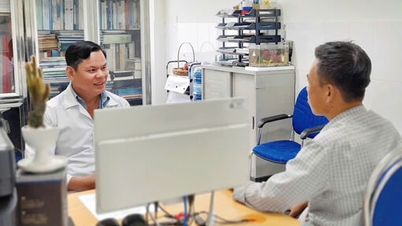
According to Ly Van Tri, head of Thanh An hamlet, Chau Thanh commune: “The hamlet always reviews and assesses poor and near-poor households in an open and transparent manner with the determination to ‘reduce poverty wherever possible, ensuring it is done properly,’ avoiding the situation of re-poverty or the emergence of new poverty. After understanding the thoughts, aspirations, and circumstances of each poor and near-poor household, the hamlet will propose specific poverty reduction measures suitable for each individual.”
Specifically, from 2021 to the present, the hamlet has mobilized resources to build 8 charitable homes; coordinated the construction of 21 solidarity houses, each costing between 40 and 80 million VND, for families facing housing difficulties; and facilitated the participation of 3 poor and near-poor households in a cattle breeding project, etc. To date, the hamlet only has 1 poor household remaining, the quality of life for the people is constantly improving, and the rural landscape is changing.”
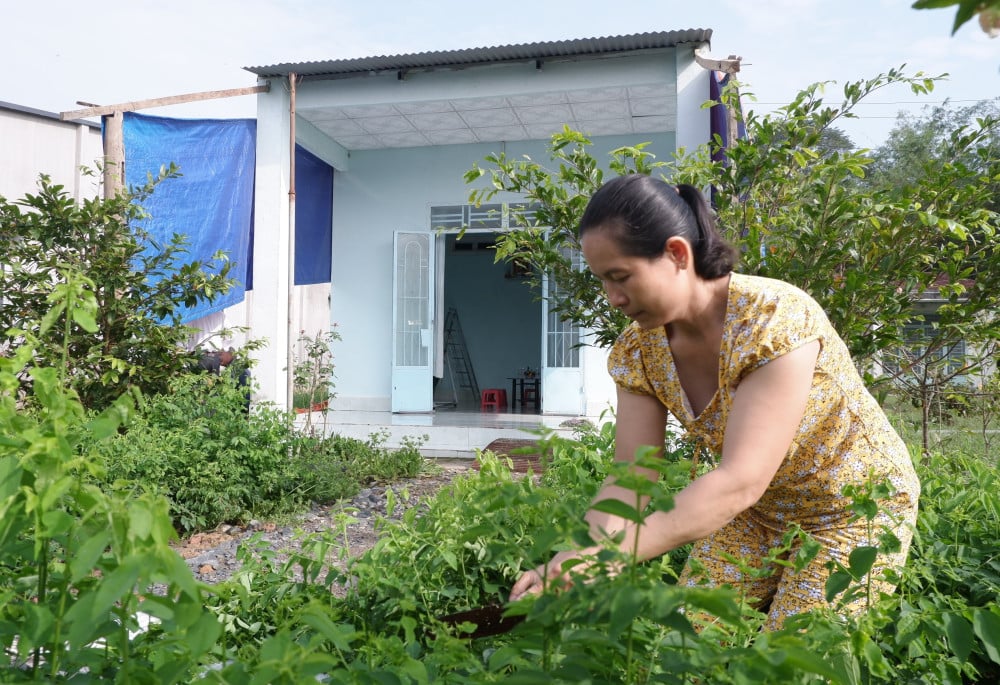
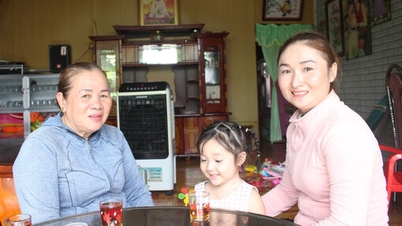
Ms. Nguyen Thi Thuy Nhu (residing in Thanh An hamlet, Chau Thanh commune) is no longer classified as a poor household; her life has entered a new chapter of prosperity and happiness.
Ms. Nguyen Thi Thuy Nhu (residing in Thanh An hamlet, Chau Thanh commune) was once a poor household in the commune. The entire family's income depended solely on her husband's irregular, day-to-day odd jobs, while they had to support three people. Sympathizing with their plight, the hamlet mobilized benefactors to help Ms. Nhu build a new house and also facilitated her receiving two breeding cows to support her livelihood.
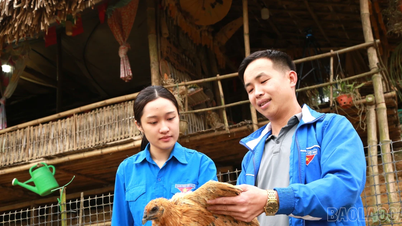
Ms. Nhu confided: “Since having this house, my husband and I have been given renewed strength and confidence to move forward. I utilize the land around the house to grow grass for cattle, grow vegetables, and raise chickens, so now our lives are much more stable than before, and we no longer suffer from financial difficulties. If it weren't for the care and support of the hamlet, my family would not have escaped poverty, and our lives would still be miserable.”
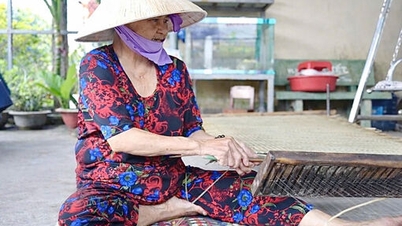
At nearly 70 years old, Mrs. Nguyen Thi Nhanh (residing in My Quy commune) finally has a clean and beautiful house. This has been her lifelong dream. Mrs. Nhanh lives alone; her children have their own families and are all poor, so they can't offer much help. Life was difficult, and she had to live in a house that was exposed to rain and wind for many years.
She shared: “When I heard the news that I would receive support to build a house, I was so happy I couldn't sleep, I kept thinking it was a dream! Now, living in a house with brick walls, I'm so happy. I have a place to worship my ancestors, and my children and grandchildren have a place to sleep when they come home. My life feels like it's turned a new page, more peaceful and happier.”
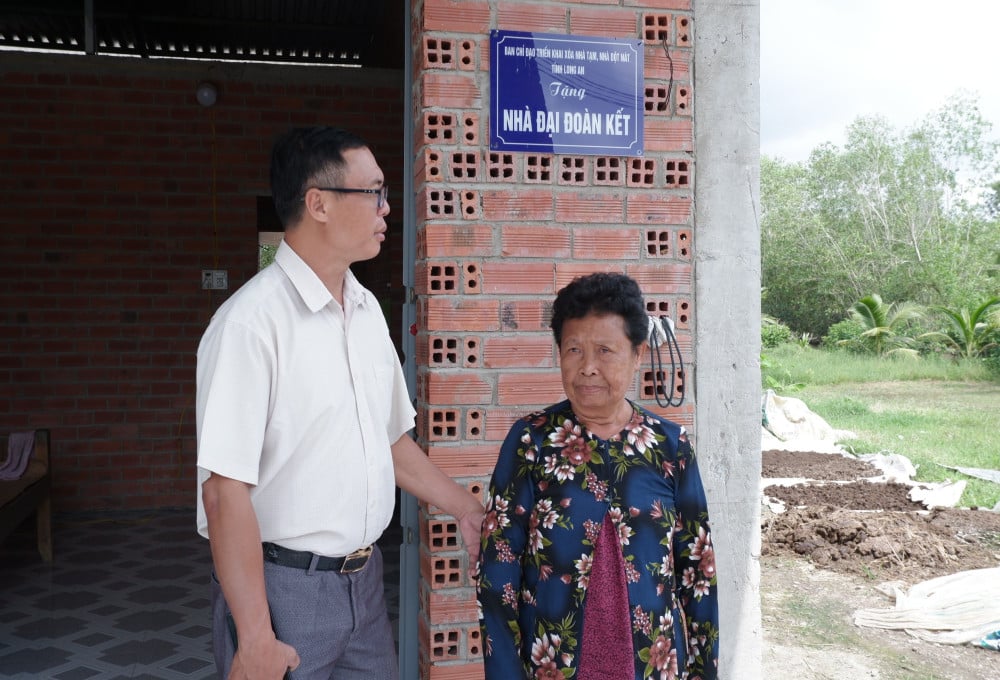
At nearly 70 years old, Mrs. Nguyen Thi Nhanh (residing in My Quy commune) finally has a clean and beautiful brick house.
Implementing the movement "The whole country joins hands to eliminate temporary and dilapidated houses," the entire political system and all strata of the people have responded actively, creating a vibrant emulation movement. By the end of May 2025, the entire province had completed 924 solidarity houses, including 774 newly built houses and 150 renovated houses, with a total value of over 73.1 billion VND, achieving 100% of the plan.
The success of the "Joining Hands to Eliminate Temporary and Dilapidated Houses" emulation movement is not only reflected in the number of houses built and donated, but also in the changes in the lives of many people who have been able to have stable housing.
Creating sustainable livelihoods
A noteworthy achievement in the province's successful poverty reduction efforts is the elimination of poverty in terms of awareness. Many poor and near-poor households, as well as families facing difficult circumstances, have realized that escaping poverty must depend on themselves, while local authorities and philanthropists only play a supporting role.
Mr. Huynh Minh Tri (residing in Chau Thanh commune) is from a poor household, lacks means of production, and earns a living through odd jobs and raising four young children alone. Sympathizing with his plight as a single father, the commune facilitated his purchase of a motorbike to use for buying and selling goods.
Mr. Tri said with a choked voice, "Seeing those children lacking both their mother's affection and material comforts, I feel heartbroken and sad, but I don't know how to make up for it. Now that I have a motorbike, I ride around the commune selling fruit, and my income is relatively stable, enough to cover the children's food expenses. I will try my best to work and save money to ensure my children receive a proper education so that they can have stable jobs and take care of themselves in the future."
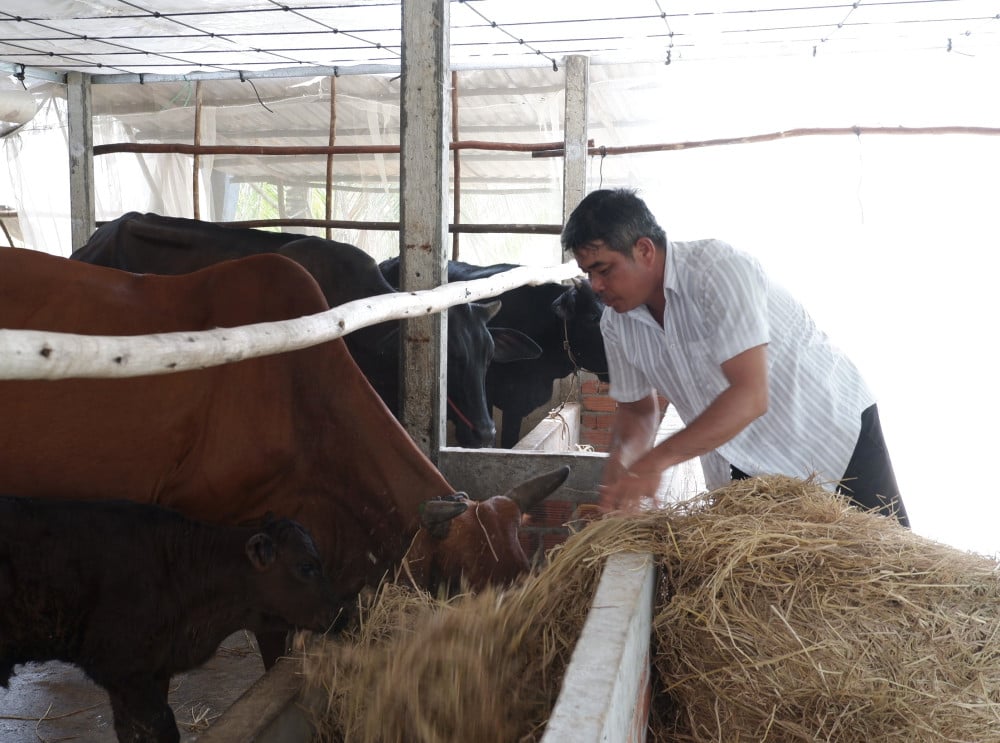
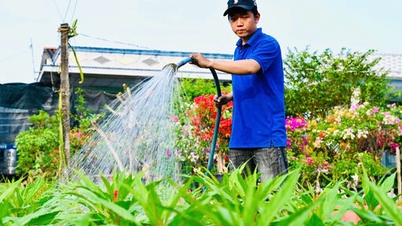
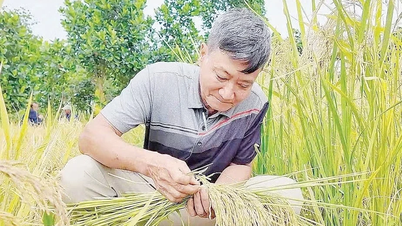
Mr. Vo Duy Man (residing in My Quy commune) escaped poverty thanks to the help of the local government and his own efforts.
As an orphan who lived under the care of his grandmother, Vo Duy Man (residing in My Quy commune) tried his best to build a happy family after getting married. Since then, he has always been diligent and hardworking in production. However, lacking the means of production and relying solely on hired labor, he has remained trapped in poverty.
Sympathizing with his situation, the local authorities facilitated his access to preferential loans from the Social Policy Bank to raise pigs, and also provided him with a pesticide sprayer and breeding cattle from the National Target Program for Sustainable Poverty Reduction. After acquiring the means of production and achieving a stable family income, he and his wife were able to expand their livestock farming operation.
Mr. Man excitedly said: “Starting from scratch, I've always been aware that I must strive to improve myself, constantly work hard, and never give up no matter how difficult things get. Looking back on my journey, I feel proud because I've never felt ashamed or inferior for being poor. I've always worked hard in production and have been able to provide for my children's education. Life is never easy, but with effort, we can gradually conquer our dreams.”
The self-reliance of the poor, coupled with effective poverty reduction plans from the local authorities, has enabled them to achieve sustainable livelihoods and rise out of poverty. This is the "sweet fruit" and a source of pride for the Party Committee, government, and people of Tay Ninh province in their journey of supporting vulnerable groups in society. Through this, they have been helped to build new lives and become relatively well-off or wealthy households in the locality.
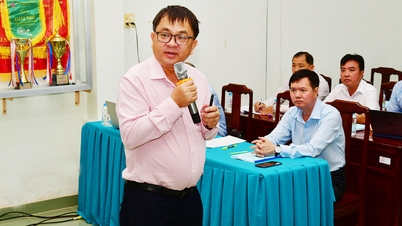
Through inspection and monitoring of the implementation of the National Target Program for Sustainable Poverty Reduction, all localities have used the capital effectively. Many poor and near-poor households, through timely support and assistance, have risen out of poverty and have a better life. As a result, localities are receiving an increasing number of applications to be removed from the poverty list. This is a positive sign, further confirming that poverty in terms of awareness is gradually being eradicated." Deputy Director of the Department of Agriculture and Environment , Truong Tan Dat |
Detailed 7-step process for reviewing poor, near-poor, and households that have escaped poverty: Step 1: Create a list of households that need to be reviewed. Step 2: Organize the review and classification of households. Step 3: Hold a meeting with residents to reach a consensus on the review results. Step 4: Publicly post and announce the information. Step 5: Seek the opinion of the Provincial People's Committee. Step 6: Recognize poor households, near-poor households, and households that have escaped near-poverty. Step 7: Report the results. The criteria for households with an average standard of living according to Decree No. 07/2021/ND-CP: + Rural areas: These are households with an average monthly income per person of between 1.5 and 2.25 million VND. + Urban areas: These are households with an average monthly income per person of 2 to 3 million VND. Low-income workers are those who are household workers (excluding workers from poor and near-poor households): according to Decree No. 30/2025/ND-CP. + Rural areas: where the average monthly income per capita is 2.25 million VND or less. + Urban areas with an average monthly income of 3 million VND or less. |
Le Ngoc
Source: https://baolongan.vn/cuoc-life-moi-tu-y-chi-va-nghi-luc-a207186.html


![[Image] National Assembly discusses the implementation of the socio-economic development plan.](https://vphoto.vietnam.vn/thumb/1200x675/vietnam/resource/IMAGE/2026/04/20/1776696707422_ndo_br_img-20260420-185419-jpg.webp)
![[Photo] General Secretary and President To Lam meets with National Assembly delegates from ethnic minorities.](https://vphoto.vietnam.vn/thumb/1200x675/vietnam/resource/IMAGE/2026/04/20/1776696701056_a1-bnd-8331-3342-jpg.webp)







































































Comment (0)