

Bringing parenting education to vulnerable families.
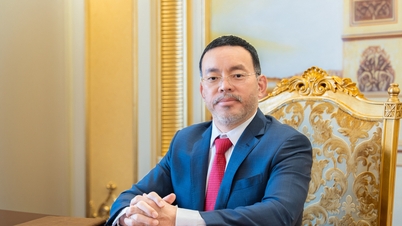
In light of the serious cases of child violence that have occurred recently, Mr. Le Hai Long, Permanent Vice Chairman of the Central Youth Union Council, stated that each case of violence and abuse against children is not only a tragedy for a family but also a sign of gaps in the child protection system in the community.
Besides strictly punishing acts of child abuse and violence, it is necessary to look deeper into the root of the problem, which is that many adults who are parents are not adequately prepared in terms of knowledge, skills, and even the ability to control their emotions in the process of raising their children.
According to Mr. Long, many cases of child abuse stem from a lack of understanding, economic pressure, family conflicts, psychological crises, or the misconception that "beating is a way to discipline" or "a naughty child must be punished with corporal punishment." When the pressures of adults are not identified and addressed promptly, children easily become vulnerable targets, bearing the brunt of anger, control, or abuse.
Therefore, child protection cannot simply stop at dealing with the consequences after each tragic incident, but must focus more on parental education and early risk prevention. In particular, attention should be paid to high-risk family groups such as disadvantaged families, remarried families, young parents, families with long-standing conflicts, and caregivers showing signs of mental instability or facing significant economic and life pressures.
In addition, it is necessary to build channels for psychological counseling, legal support, parenting skills support, and community connection for parents and caregivers. At the grassroots level, schools, youth organizations, women's unions, neighborhood officials, and residential groups need to coordinate more closely to identify at-risk families early, and then provide appropriate visits, counseling, and support.
In the coming period, the Central Committee of the Youth Union, the Central Council of the Young Pioneers, and all levels of the Youth Union and Young Pioneers will continue to promote awareness campaigns on children's rights, self-protection skills, and skills to identify risks of violence and abuse; at the same time, they will create more channels for children to express themselves, share their feelings, and seek help when they are in danger…
Don't ignore unusual signs.
Speaking to reporters , psychologist Le Phuong - Director of the NHC Vietnam Center for Psychology and Human Development (Quan Hoa branch, Hanoi ) - stated that parental abuse of children in the family does not occur randomly, but usually stems from multiple layers of causes: psychological trauma, life pressures, the family environment, and even the way the adults themselves were raised.
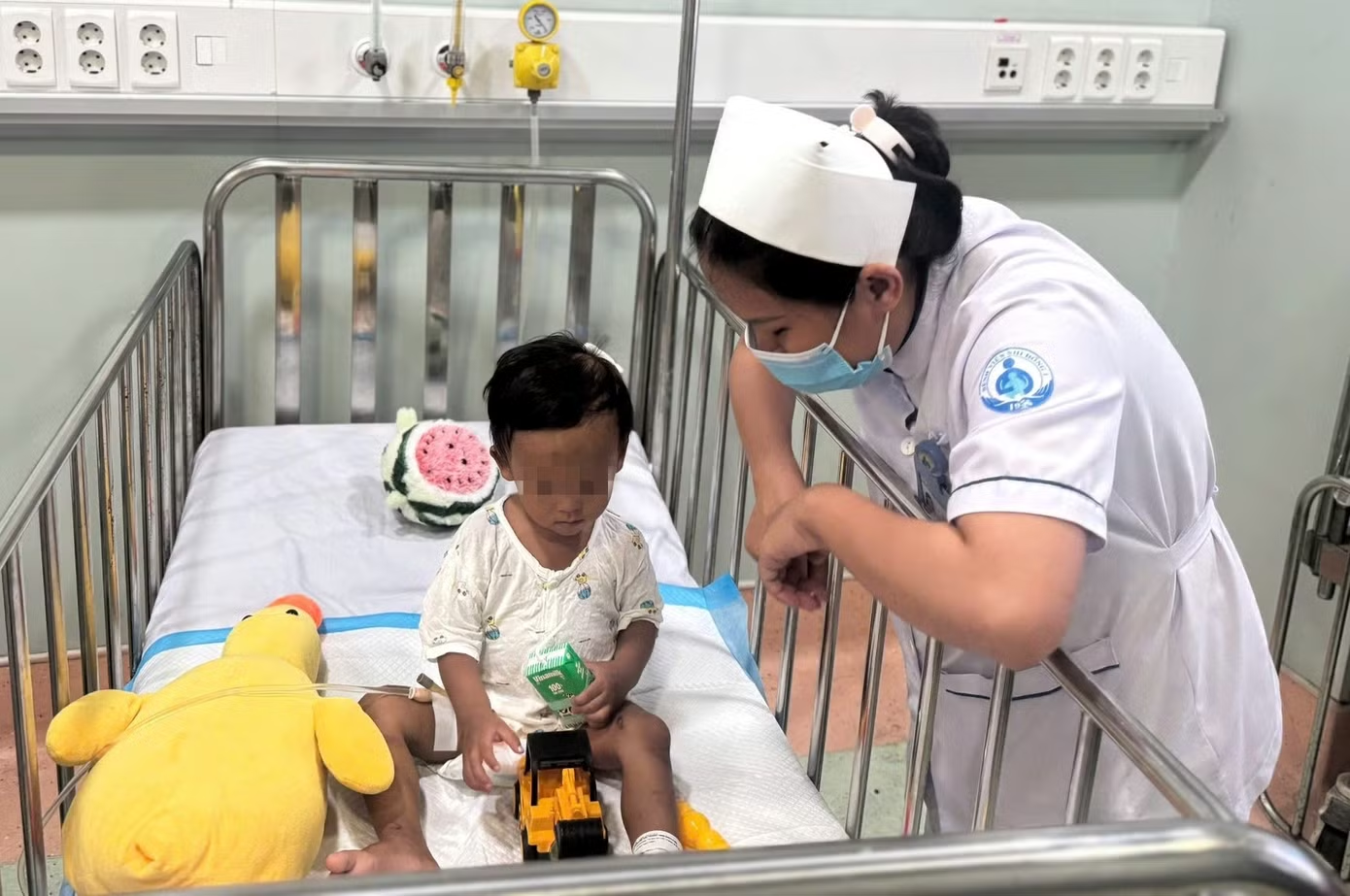
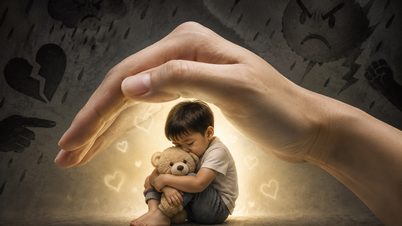
According to experts, many people who grew up in violent environments unconsciously view corporal punishment, yelling, and physical punishment as "normal." When they become parents, they repeat this pattern on their children, considering violence as a way to discipline and mold them. This is a dangerous cycle, where the trauma of the previous generation continues to be passed on to the next.
Furthermore, many parents lack emotional control and behavioral management skills. When faced with economic pressure, debt, unemployment, marital conflict, or prolonged work stress, they easily lose control and vent their anger on the most vulnerable members of the family: their children.
101 children experienced physical and psychological violence in April.
According to the latest report from the 111 hotline of the Department of Mothers and Children, Ministry of Health, in April alone, the hotline received 46,111 calls (an increase of 9,519 calls compared to March), providing support and intervention for 181 cases. Of these, 101 children suffered serious physical and mental harm due to violence (accounting for 56%), mainly concentrated in Hanoi, Ho Chi Minh City, and Hung Yen. Domestic violence by relatives such as parents, uncles, aunts, grandparents, and other caregivers accounted for nearly 3-4% of the total number of child abuse cases. Notably, some children who called the hotline reported experiencing psychological and health problems such as depression, autism, and self-harming behavior, but their parents did not believe they were ill and did not take them for examination.
Expert Le Phuong notes that in remarried families, children living with a stepfather or stepmother may face certain risks if the emotional bond is not strong enough. Without understanding, responsible care, and a foundation of love, conflicts in family life can easily escalate into violence.
To minimize child abuse within families, experts suggest a coordinated effort from families, schools, and the community. First and foremost, parents need to be equipped with the knowledge and skills to properly understand their responsibilities in raising, caring for, and educating their children. The family must be an emotionally safe place where children are listened to, respected, and can express their thoughts without fear of being scolded or punished.
In the school environment, teachers and peers are the people who interact with children most frequently, so teachers need to be trained to recognize early signs of abnormalities such as fear, withdrawal, frequent injuries, behavioral changes, or avoidance when discussing family. When suspicious signs are detected, the school needs to have a mechanism for timely coordination with the family, relevant authorities, and child protection organizations.
At the community level, experts suggest that neighbors, community groups, and relatives should not ignore unusual signs in children. Prolonged crying, bruises, fear, or unusual silence in a child can all be signals that require attention.
Source: https://baolaocai.vn/cuu-tre-truc-khi-xay-ra-bi-kich-post899194.html





















































































Comment (0)