

The action plan aims to build Da Nang into a high-quality education , training, and scientific research center, meeting regional standards and gradually approaching international standards; to perfect the national education system in an open and interconnected manner, ensuring fair and equal learning opportunities for all citizens, and narrowing the gap in educational quality between regions and localities.
By 2030, the city aims to have at least 50% of preschools and 80% of primary and secondary schools meeting national standards; 100% of higher education institutions and at least 80% of vocational education institutions meeting national standards. It also aims to achieve universal preschool education for children aged 3 to 5 and compulsory education up to the end of lower secondary school; and a rate of at least 85% of people of school age completing upper secondary school or equivalent.
The city aims to increase the proportion of the workforce with college degrees or higher, expand training in basic sciences , engineering, and technology, promote scientific research, innovation, and intellectual property registration. By 2045, Da Nang strives to have at least two higher education institutions ranked among the top 500 universities in the world in certain fields.
To achieve the above objectives, the action program identifies eight tasks and solutions. First and foremost is to raise awareness, innovate thinking and action throughout the entire political system, and create strong political will for breakthroughs in education and training development.
Party committees and organizations at all levels must thoroughly understand the Party's viewpoints and guidelines, and the State's policies and laws on education; innovate leadership methods, shifting strongly from administrative management to development-oriented and modern governance; and develop education and training within the city's socio-economic development orientation, planning, and plans, considering it a priority in resource allocation.
The city is focusing on strong institutional reforms, building and implementing unique and superior mechanisms and policies for the development of education and training; removing bottlenecks in mechanisms and policies, promoting decentralization and delegation of power associated with resource allocation, and strengthening supervision.
The state budget allocated to education and training must reach at least 20% of the total local budget expenditure; effectively implement preferential policies for teachers, financial support policies for learners, encourage the socialization of education, public-private partnerships, and attract businesses to invest in education and training.
In particular, we must strengthen comprehensive education, developing harmoniously moral, intellectual, physical, and aesthetic values, and forming a system of values for Vietnamese people in the new era. This includes focusing on moral education, lifestyle, life skills, legal awareness, and civic responsibility; and innovating the content and methods of teaching in a modern and active direction.
Strengthening science, technology, information technology, and arts subjects; gradually incorporating knowledge of digital skills and artificial intelligence into the general education curriculum. Simultaneously, implementing solutions to prevent school violence, mitigate negative impacts from the online environment, and ensure equal access to education for all.
Comprehensive digital transformation, widespread adoption, and strong application of digital technology and artificial intelligence in education and training. The city focuses on investing in technological infrastructure, deploying smart education platforms, digital schools, and smart classrooms; ensuring data safety and security; and providing 100% online public services throughout the entire education and training sector.
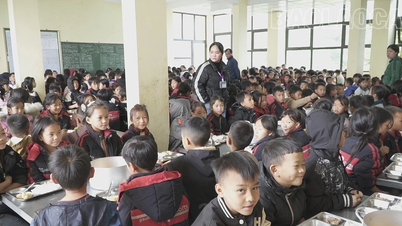
Focus on building a sufficient and qualified teaching staff; invest in building and upgrading school facilities to meet standards; improve the quality of preschool and general education, especially in disadvantaged areas, mountainous regions, border areas, and islands; develop a system of high-quality schools and specialized schools linked to training human resources in science, technology, innovation, and digital transformation.
The action plan also identifies the task of reforming and modernizing vocational education towards a streamlined and efficient approach, linking training with the needs of the labor market and businesses; prioritizing the training of highly skilled human resources in technical and technological fields, and key sectors of the city.
For higher education, the city focuses on modernization, improving the quality of training and research; investing in research infrastructure, establishing interdisciplinary research centers and innovation centers within universities; and developing a high-quality team of lecturers and scientists.
Expanding international cooperation, innovating training programs according to international standards, linking them with high-tech fields, semiconductors, and artificial intelligence; gradually building the University of Da Nang into a national university, a center for training high-level human resources in the region.
Promote extensive international cooperation and integration in education and training; encourage educational institutions to collaborate with advanced training institutions worldwide; attract foreign investment in higher education and vocational training; create conditions to attract foreign experts, scientists, and overseas Vietnamese to participate in teaching and research in the city.
Source: https://baodanang.vn/da-nang-trien-khai-chuong-trinh-hanh-dong-dot-pha-giao-duc-va-dao-tao-3315779.html

![[Photo] Prime Minister Pham Minh Chinh presides over a meeting on private sector economic development.](/_next/image?url=https%3A%2F%2Fvphoto.vietnam.vn%2Fthumb%2F1200x675%2Fvietnam%2Fresource%2FIMAGE%2F2025%2F12%2F20%2F1766237501876_thiet-ke-chua-co-ten-40-png.webp&w=3840&q=75)





















































































Comment (0)