

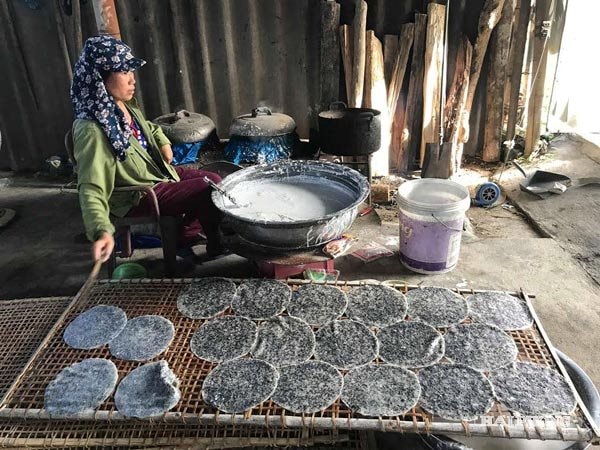
Those were long, drying yards, with golden rice crackers spread out on bamboo mats.
Keeping the flame of a century-old craft alive.
According to the elders in the village, the craft of making rice paper originated in Lang Con from their ancestors' time. Despite the changes in life, the craft has not only survived but has also been preserved and developed. To this day, many households still maintain the traditional processing method combined with technical improvements to increase productivity.
Lang Con rice crackers have a distinctive and unmistakable flavor: a strong aroma of rice, a rich and nutty taste of roasted sesame seeds; when baked, they are crispy but still retain their chewiness and the sweet aftertaste of local rice. This unique characteristic has helped the product thrive in the market for over 100 years, becoming a familiar snack for people in Hai Phong and many other provinces and cities.
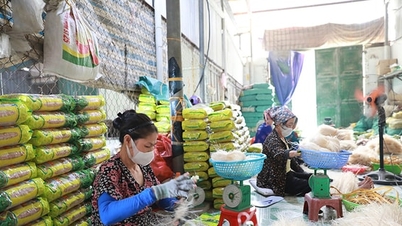
Ms. Hoang Thi Thin, who has been involved in the craft for over 30 years, said that in the past, when done manually, only a few hundred cakes could be made each day. It was labor-intensive, but the income was not high. Thanks to the support of machinery, especially in the dough mixing and cake making stages, productivity has increased significantly.
However, to ensure the quality of the rice cakes, the baker must maintain meticulous attention to detail, especially from the rice selection to the drying process. Delicious rice cakes require attention to detail in all aspects, from ingredient preparation and flour grinding to the techniques of spreading, steaming, drying, and baking. The batter is spread using a machine into thin, even, and soft layers. After spreading, the cakes are steamed, removed, and spread evenly on drying racks to dry in the sun.
According to Ms. Thin, the rice paper makers usually have to wake up at 2 a.m. each day to grind the flour and light the ovens to make the rice paper in time for the early morning sun. The rice flour must be fine and mixed in the correct proportions; the rice paper must be evenly made, thin, and dry naturally so that it becomes crispy and fragrant when baked.
Rice is the most important ingredient; only good quality rice can produce authentic Lang Con-style rice cakes. Thanks to the application of machinery, each household now produces an average of about 4,000 cakes per day, generating an income of 20-30 million VND per month, contributing to improving the lives of the people and preserving the craft more sustainably.
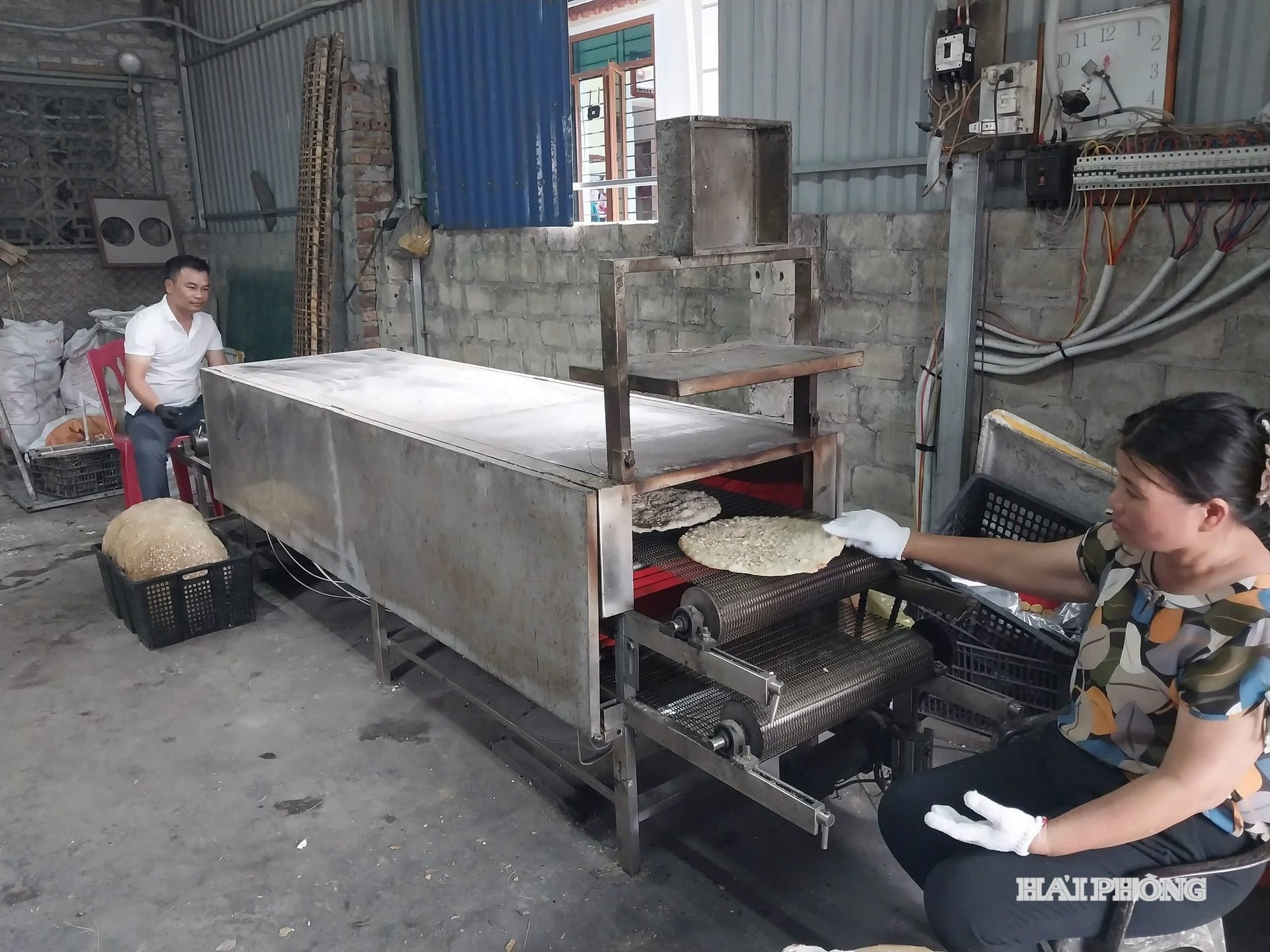
Currently, nearly 30 households in Lang Con still practice the craft of making rice paper. Each household maintains one to several rice paper making ovens, depending on scale and workforce. Despite the hard work, especially during unfavorable weather conditions with prolonged rain and humidity, the people still strive to preserve the craft because it is a livelihood connected to the memories, feelings, and pride of the entire community.
Lang Con rice crackers were granted trademark certification by the Intellectual Property Office in 2014, a significant recognition for those involved in the craft. Everyone hopes the product will be more widely promoted so that future generations will be motivated to follow in their footsteps.
According to Ms. Do Thi Thanh, a long-time maker, the strength of Lang Con rice crackers lies in preserving their traditional flavor, while many places have changed their recipes to increase productivity. Rice cracker makers hope that Lang Con rice crackers will reach a wider market by maintaining their authentic character, as that is what customers seek out.
Enhancing the value of traditional products
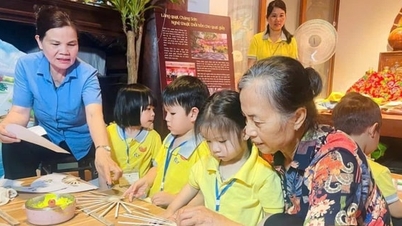
In recent years, Lang Con has also become a popular destination for many tourists. Not only do they come to buy local specialties, but many also want to experience the process of making the cakes – from grinding the flour, spreading the batter, drying it, to baking it right over a charcoal stove.
Ms. Nguyen Thu Ha ( Hanoi ) said that when visiting the century-old craft village, the most striking image is the sight of curved rice paper sheets drying all over the village courtyards and alleyways. Tourists visiting the production households can also try participating in the processes such as making, drying, and flipping the rice paper sheets, providing an interesting experience.
Many visitors to Lang Con share the same feeling of peaceful, rustic beauty in this century-old craft village. The distinctive cuisine , the beauty of labor, and the way of life blend together, creating the image of a craft village that is both traditional and vibrant. This is also why tours experiencing craft villages, including Lang Con village, are increasingly attracting the attention of tourists.
.jpg)
Recognizing the economic and cultural value of rice paper making, the Kiến Minh commune government is implementing various solutions to support local people in selling their products. The local authorities are coordinating with relevant departments to standardize production processes, raise food safety standards, and guide households in improving packaging and labeling to suit current market demands.
From propaganda and mobilization efforts, local authorities provide support and advice to households engaged in OCOP product registration, collective trademark development, and ensuring food safety standards, to connecting with businesses and developing consumer markets.
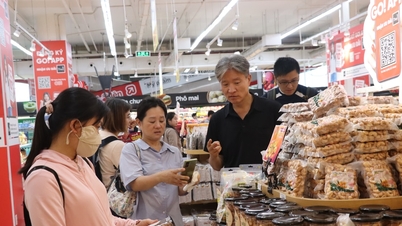
A typical example is Mr. Pham Van Phac's household, which received support in completing the application and registering their Lang Con rice crackers as an OCOP product in 2024. Their rice crackers are gradually becoming available in supermarkets and stores selling clean produce nationwide.
The locality is also focusing on developing experiential tourism based on traditional crafts to create additional income for the people. Lang Con is currently a destination that strongly reflects the charm of a vibrant, authentic, and culturally rich traditional craft village.
THU HANGSource: https://baohaiphong.vn/dac-sac-banh-da-lang-con-527737.html


![[Image] "Journey of Hope" promotes the organ and tissue donation movement in Vietnam.](https://vphoto.vietnam.vn/thumb/1200x675/vietnam/resource/IMAGE/2026/05/20/1779294400833_1-8910-jpg.webp)







































































Comment (0)