

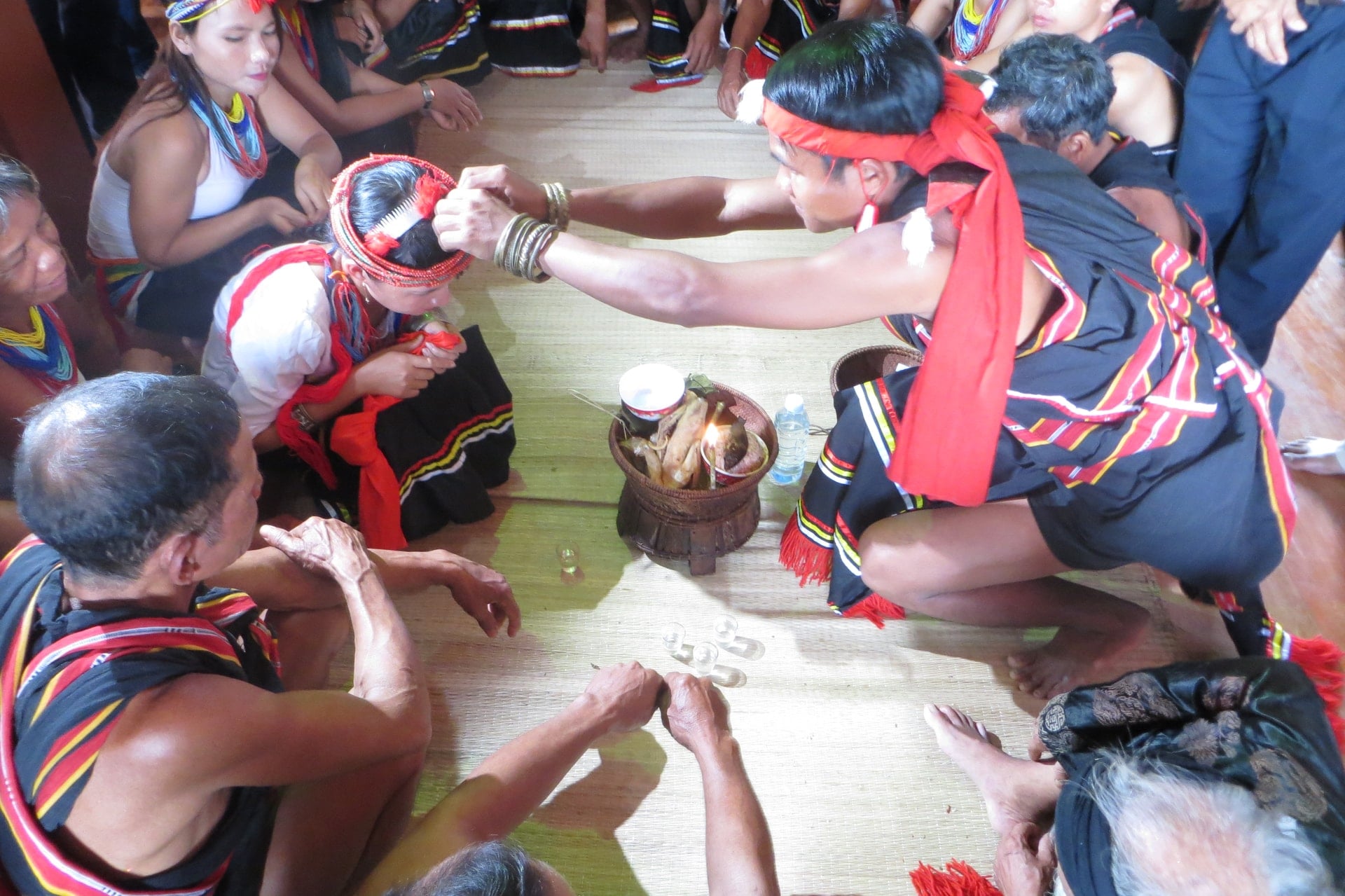
For the Co people, a wedding is not just an event for one family, but a shared celebration for the entire hamlet and village. Typically, when the harvest season is over, the golden rice grains are stored in the granary, and the weather turns to spring, the people excitedly prepare for the big day.
The journey to marriage for young Co people often begins with working in the fields, fetching water from the village's water trough, or singing love songs under the moonlight. At the engagement ceremony, the young man and the matchmaker bring gifts including white wine, betel nuts, tobacco, fish, etc., to the girl's house. If the couple agrees, they will drink a cup of sacred wine to inform their ancestors.
Next comes the house-breaking ceremony, where the two families discuss the details of the official wedding day. The gifts are prepared more meticulously at this time, demonstrating the sincerity and responsibility of the groom's family. The Co people have a strong tradition of community cohesion; if the groom's family is in dire straits, the village head and other villagers will join hands to contribute and provide gifts so that the young couple can soon be together.
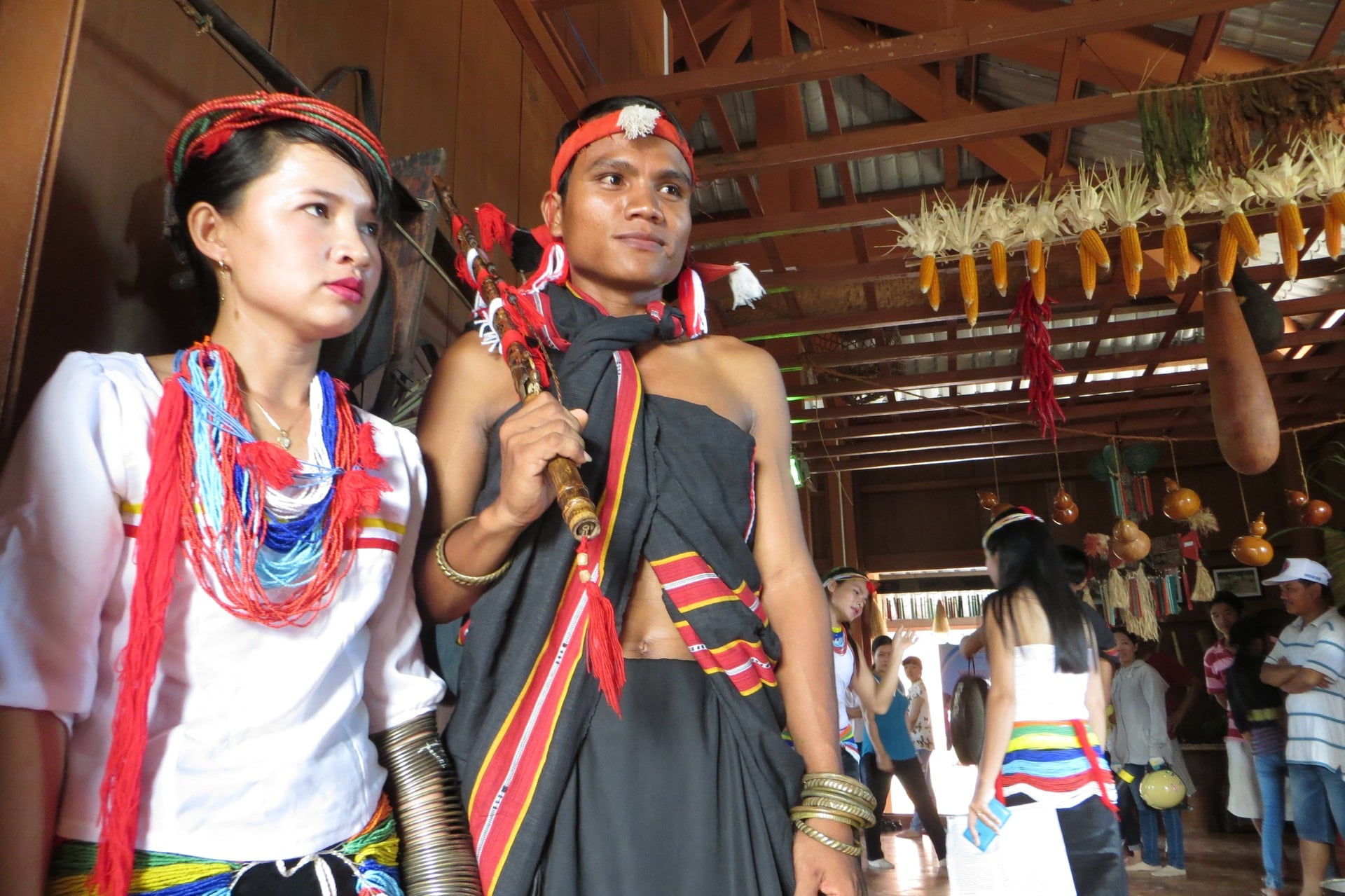
The official wedding ceremony usually takes place alternately between the groom's and bride's families over several days in a strict sequence. Amidst the resounding drums and gongs, folk melodies such as the A Gioi songs blend with the vibrant Ca Dao dance of the Co women, creating a cultural space that is both captivating and deeply epic, reflecting the spirit of the people of the mountains and forests.
The appeal and core value of the Co wedding ceremony lie in its intricate system of spiritual rituals, deeply rooted in the animistic belief that "all things have spirits." Among these, the "spirit-catching" ceremony (or "spirit-catching ritual") is the most distinctive and sacred, symbolizing the gathering of the souls of both individuals into one place. From this point on, they are no longer two separate entities but merge into one will and one soul under a shared roof.

Furthermore, the rituals for educating the younger generation are deeply rooted in local education . For example, in the ritual of worshipping the water trough and fetching water at the village's source, the village elders incorporate the instruction for the young couple to be grateful to and protect the headwater forests, preserving clean water for the community. Similarly, the ritual of catching fish in the stream and clearing the fields in the mountains serves as a formal announcement to the spirits about the beginning of a life of shared labor.
The couple goes to the stream together to catch fish, and together they sow seeds in the fields, symbolizing their commitment to building a shared economy and nurturing their home on their ancestral land. When the Co woman begins cooking a meal in her husband's "postpartum kitchen," it marks a milestone affirming prosperity and officially becoming an inseparable member of her husband's family.
Source: https://baodanang.vn/dac-sac-le-cuoi-nguoi-co-3333808.html

![[Photo] General Secretary and President To Lam presides over a working session with the Central Policy and Strategy Committee on the development of the materials industry.](https://vphoto.vietnam.vn/thumb/1200x675/vietnam/resource/IMAGE/2026/05/21/1779359935432_a3-bnd-3129-1412-jpg.webp)
































































Comment (0)