

 |
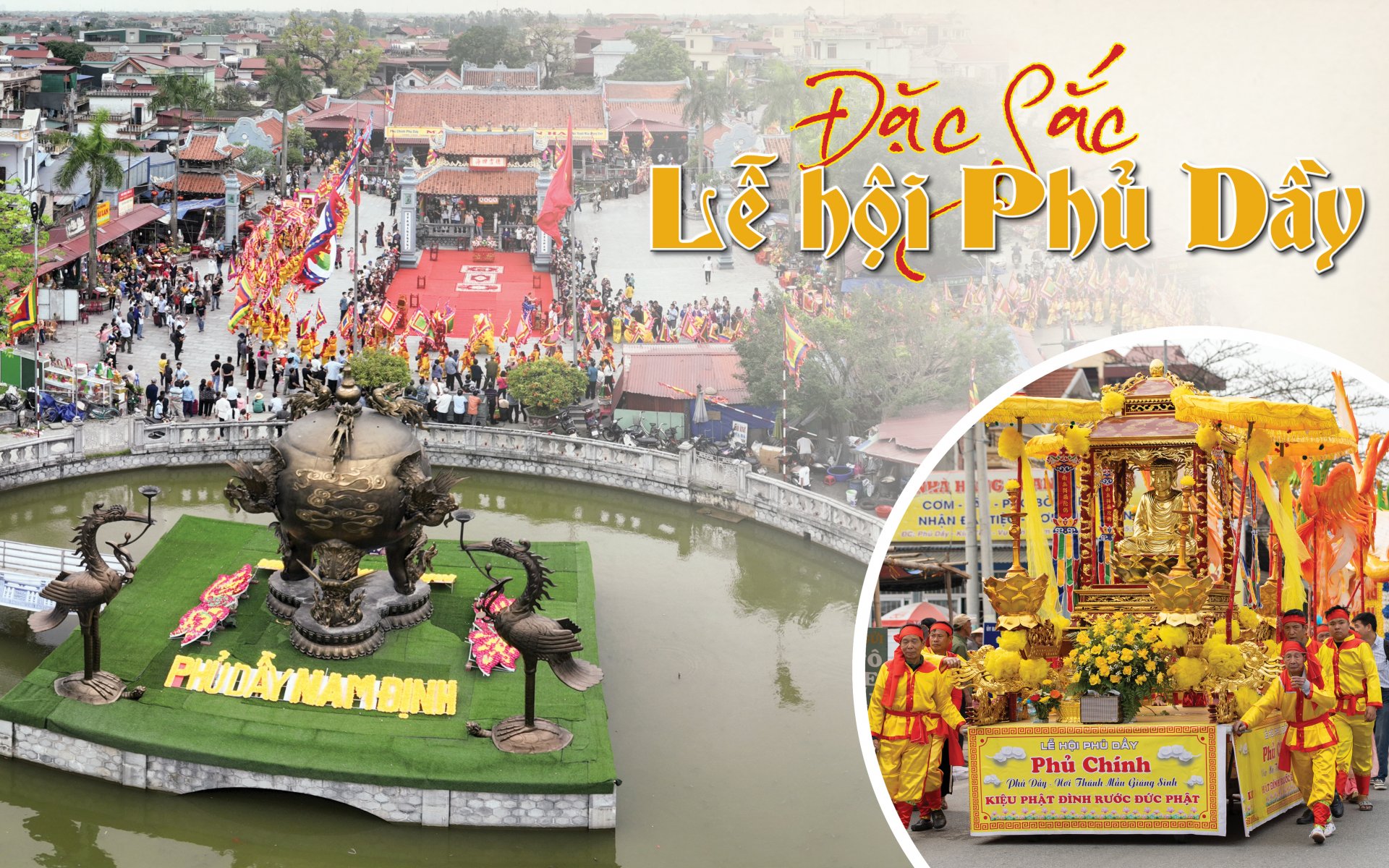
The Phu Day historical site complex in Kim Thai commune (Vu Ban district) is considered one of the largest centers of Mother Goddess worship in Vietnam. Every year in the third lunar month, the sacred land of Kim Thai comes alive with the Phu Day Festival, featuring many rich folk art activities that attract numerous pilgrims and visitors from all over to come and worship.
March is considered the "month of Mother's commemoration" – the anniversary of the passing of Saint Mother Lieu Hanh, a powerful goddess revered by the people as a symbol of the aspiration for freedom, filial piety, patriotism, and compassion. Along the winding roads amidst the lush green rice fields of Kim Thai commune, visitors can find more than 20 different historical sites. Each site is associated with legends about the Mother's merits, from her "incarnation" to her "ascension to heaven," forming a diverse system of relics such as Phu Chinh Tien Huong, Phu Van Cat, and Lang Chua Lieu… The cluster of these spiritual structures contributes to Nam Dinh's reputation as one of the country's major religious centers. Notably, the Phu Day Festival not only carries religious significance but also reflects the rich folk culture of the rice-farming agricultural communities in the Red River Delta.
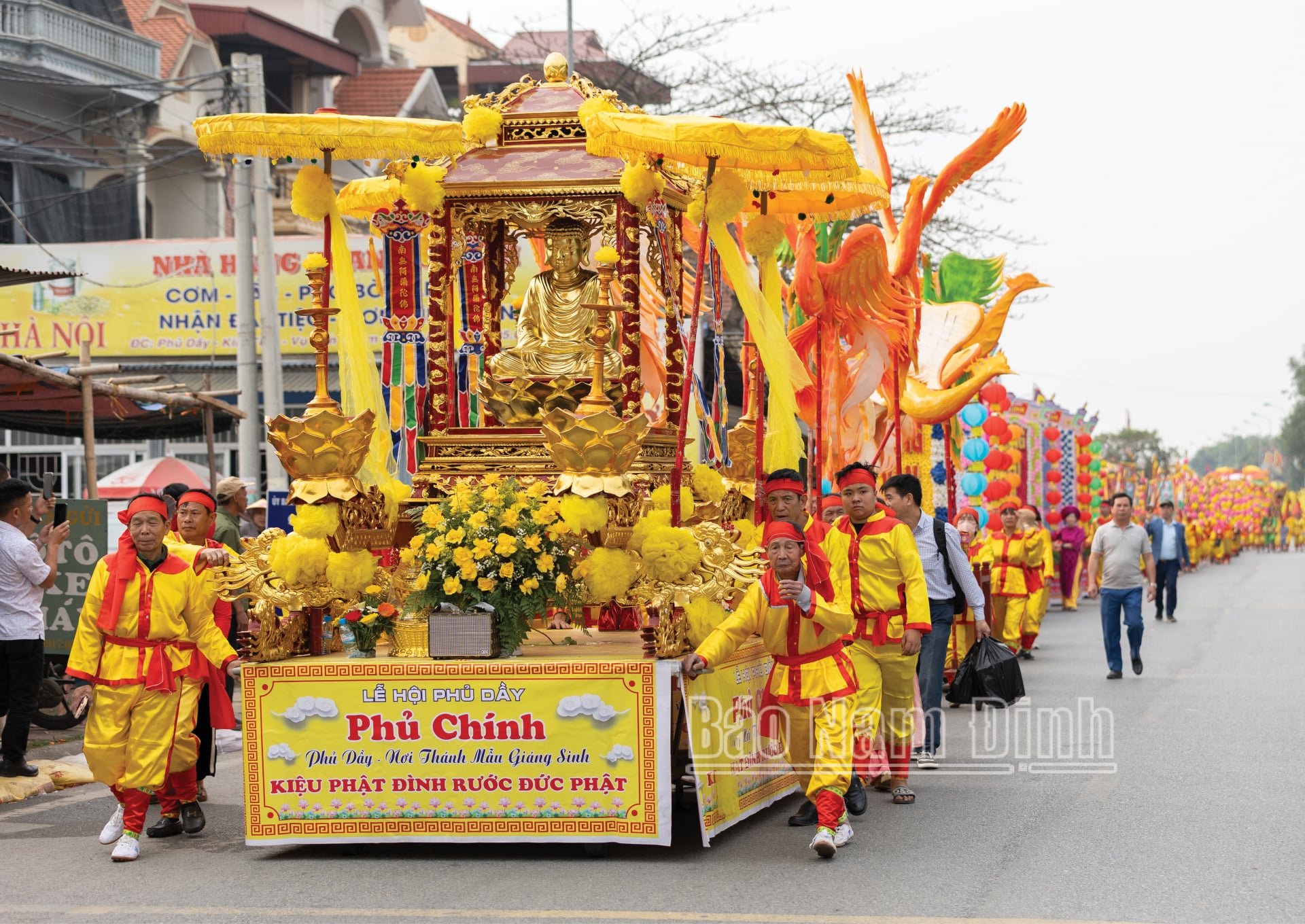 |
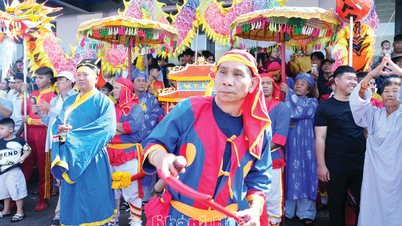
| The procession carrying the palanquin of Phu Chinh Tien Huong. |
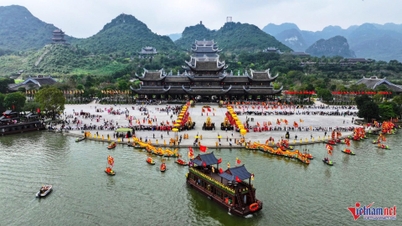
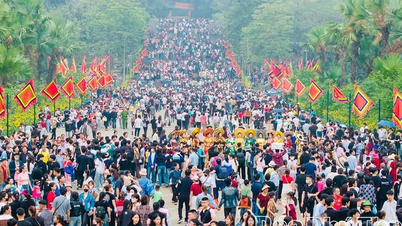
From the very first days of the third lunar month, Kim Thai commune was bustling with the resounding sounds of gongs and drums, vibrant festival flags, shimmering lanterns, and a throng of enthusiastic people. Many tourists chose to stay in the village and surrounding areas to fully immerse themselves in the festival. Walking along the village roads, one could feel the fragrant scent of young rice, mingled with the incense from the temples and pagodas. Each house here seemed to open its doors to welcome guests, demonstrating the hospitality that is a beautiful tradition of the people of Nam Dinh . For more than a week (from the 1st to the 10th of the third lunar month), many rituals of the Mother Goddess worship were solemnly performed. Rituals such as the "water bathing" ceremony (also known as the ritual of bathing the sacred statue), torch procession, scripture procession, flower procession, etc., were interspersed with cultural performances and folk games. In many ceremonies, the procession of the scriptures, the torch procession, and the flower-decorated banner parade are considered three special "highlights," attracting large numbers of participants and drawing the attention of visitors from far and wide. The scripture procession symbolizes the harmonious connection between the worship of the Mother Goddess and Buddhism. It is also an opportunity for people to show their respect, pray for blessings from the Mother Goddess, and seek peace of mind. Long lines of people in vibrant red, yellow, and green traditional costumes, accompanied by brass bands, drums, flags, and parasols, follow one another along the streets.
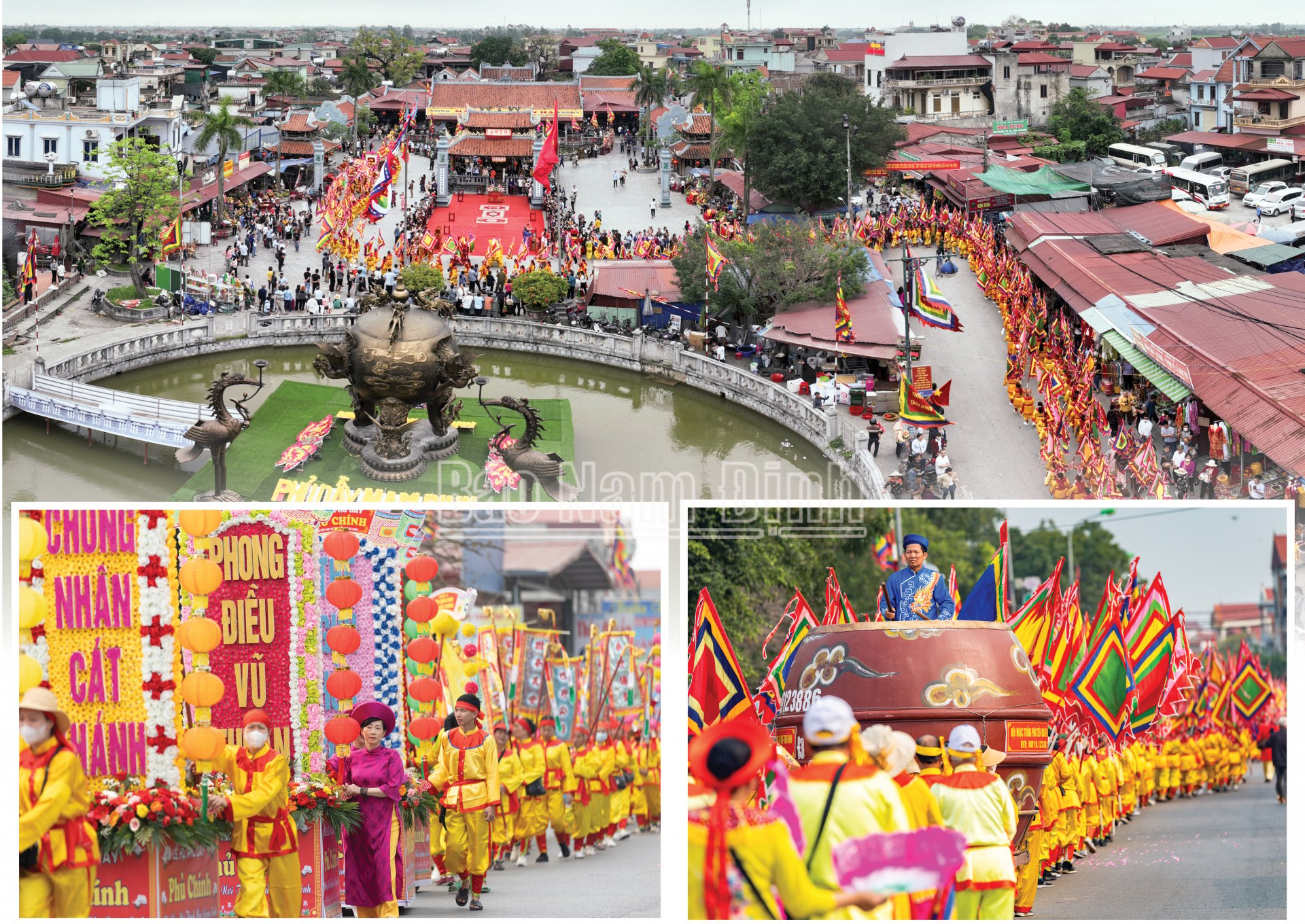 |
| A view of the procession returning to the Tien Huong Main Palace. |
The torch procession, with its dragon-shaped flame, creates a magnificent and dazzling spectacle at night. At Phu Chinh Tien Huong, as darkness falls, the sacred flame is lit in a solemn place within the Forbidden City and then passed on to the "heroes" responsible for carrying it. From this initial flame, thousands of torches successively ignite, forming a giant, winding "river of fire" symbolizing a dragon. Leading the procession are dragon and lion dances; followed by a large, brightly lit dragon model, illuminating the entire countryside. The flame symbolizes the strength and light of faith, spreading aspirations for prosperity and peace. People from the surrounding areas flock to watch, filling both sides of the road, joining in the rhythmic drumming, witnessing the moment the countryside brightens in the night festival. Meanwhile, the "flower staff procession" (or "pulling the characters") is a collective performance art originating from the ancient customs of the Ke Day laborers. According to legend, long ago, a girl named Ngo from Ke Day was selected to serve in the Trinh Lord's palace, becoming a princess. At that time, the people of Ke Day were suffering from continuous natural disasters and floods, yet they still had to go to the capital to build dikes as ordered by the court. Seeing the laborers struggling and lacking food, the princess asked the Trinh Lord for more provisions and allowed them to return to their hometown to take care of the dike construction in their area. Overjoyed, the group stopped by Phu Day before returning to express their gratitude to the Mother Goddess. It is said that they arranged their hoes and shovels into letters to show their appreciation. From then on, the letter-pulling festival became an indispensable part of Phu Day. Today, people use long sticks wrapped in colorful paper, with bunches of chicken feathers tied to the ends, forming formations of several hundred people, following the commands of the "chief flag bearer" and "flag bearer" along with the rhythm of drums to create Chinese characters such as: "Long Live the Holy Palace," "Peace and Prosperity Under Heaven ," "National Prosperity and People's Peace," etc. After each character is formed, a panel of elderly judges will review and score it, and then they will continue to form another character. A spacious and vibrant atmosphere, filled with excitement and enthusiasm, continues the centuries-old tradition of "pulling the strings" (a traditional Vietnamese writing practice).
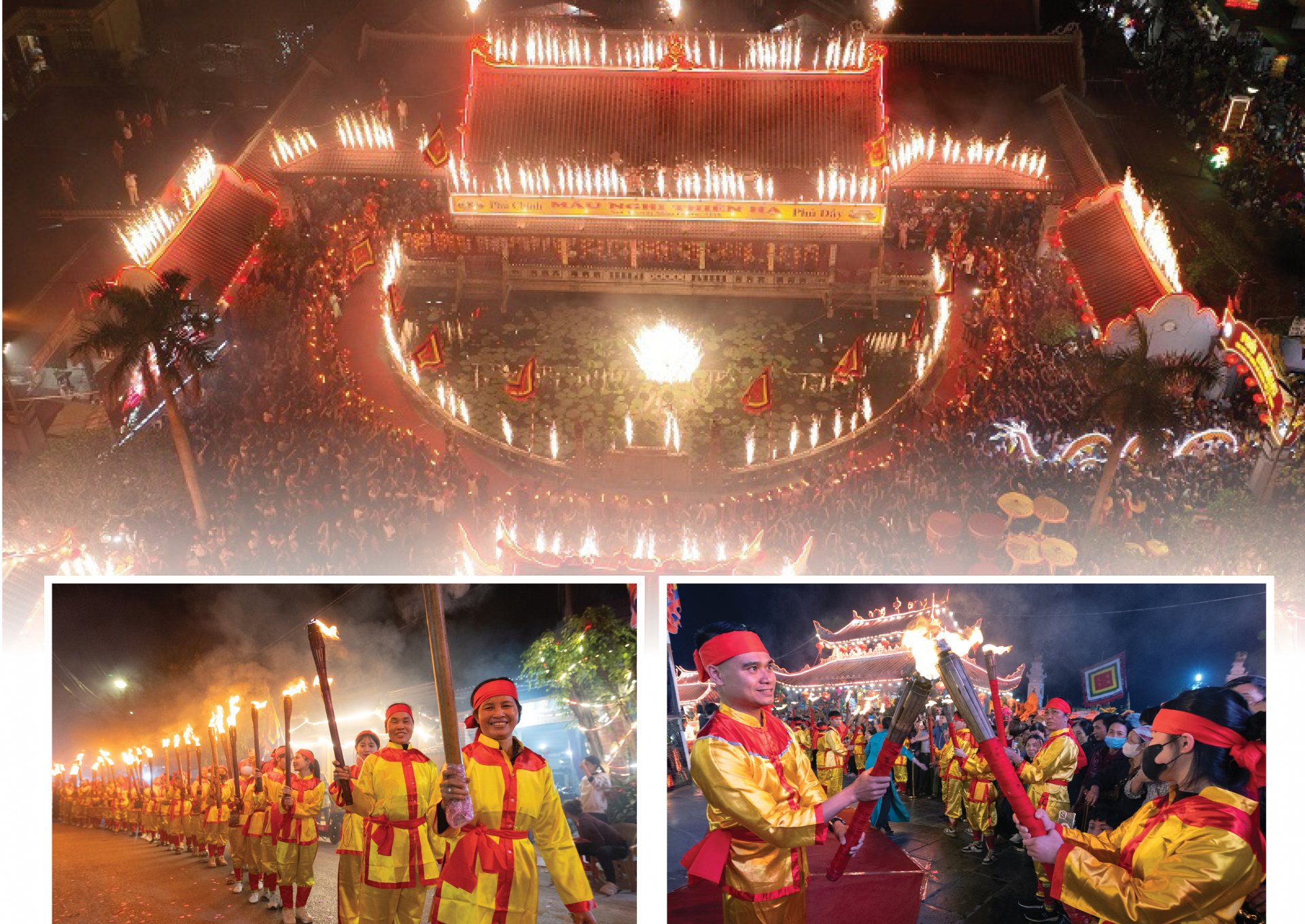 |
| Torch procession at Tien Huong Temple. |
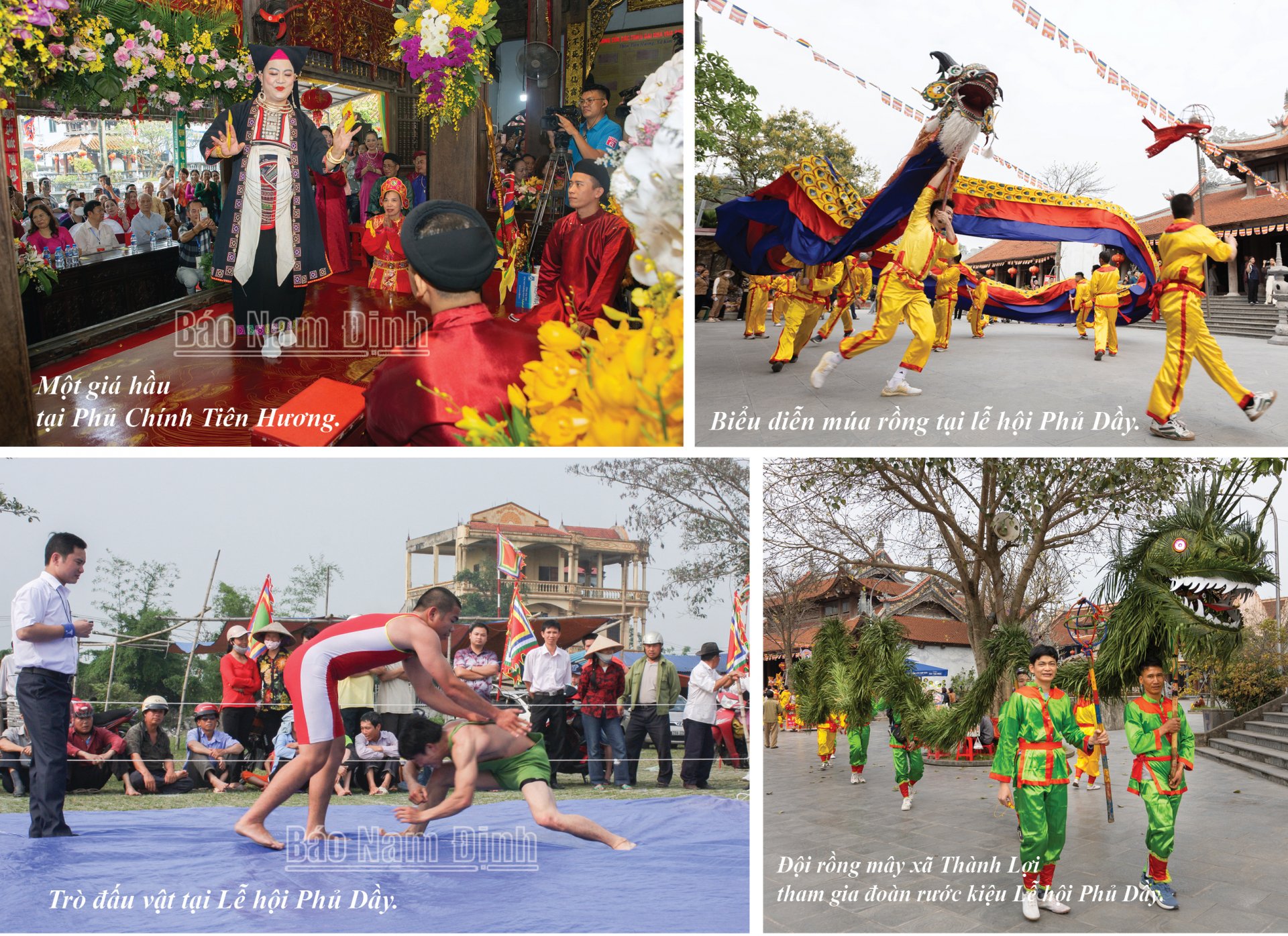
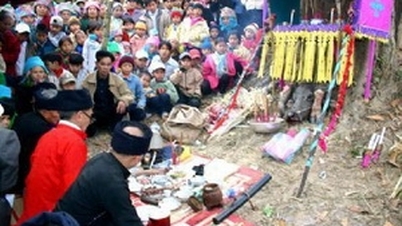
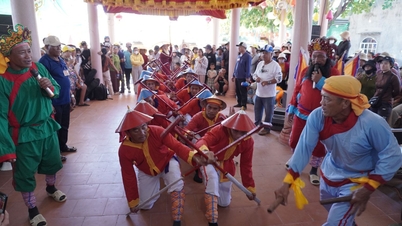
An indispensable part of the Phu Day Festival is the spirit medium ritual and folk singing – a quintessential expression of the Mother Goddess worship practice. Pilgrims visiting Phu Chinh Tien Huong and Phu Van Cat are captivated by the shimmering spirit mediums, their costumes changing to correspond with each deity descending to the altar. The melodious folk singing evokes sacred emotions, guiding listeners back to their roots. The harmonious blend of drums, clappers, moon lute, two-stringed fiddle, and the singing creates a sacred atmosphere. Through each spirit medium ritual, viewers contemplate the spiritual beauty and witness the traditional cultural identity of the nation. The festival is further enriched by folk competitions and games: human chess, dragon dance, lion dance, martial arts, wrestling, rice cooking competitions… All of these create a lively atmosphere like an extended village festival. In human chess, young men and women play the roles of "chess pieces," wearing hats and colorful robes. Every move, every strike is vividly and gracefully portrayed by the "chess pieces." In martial arts and wrestling, the wrestlers, wrapped in their belts and with their sturdy stances, compete, exciting the surrounding audience.
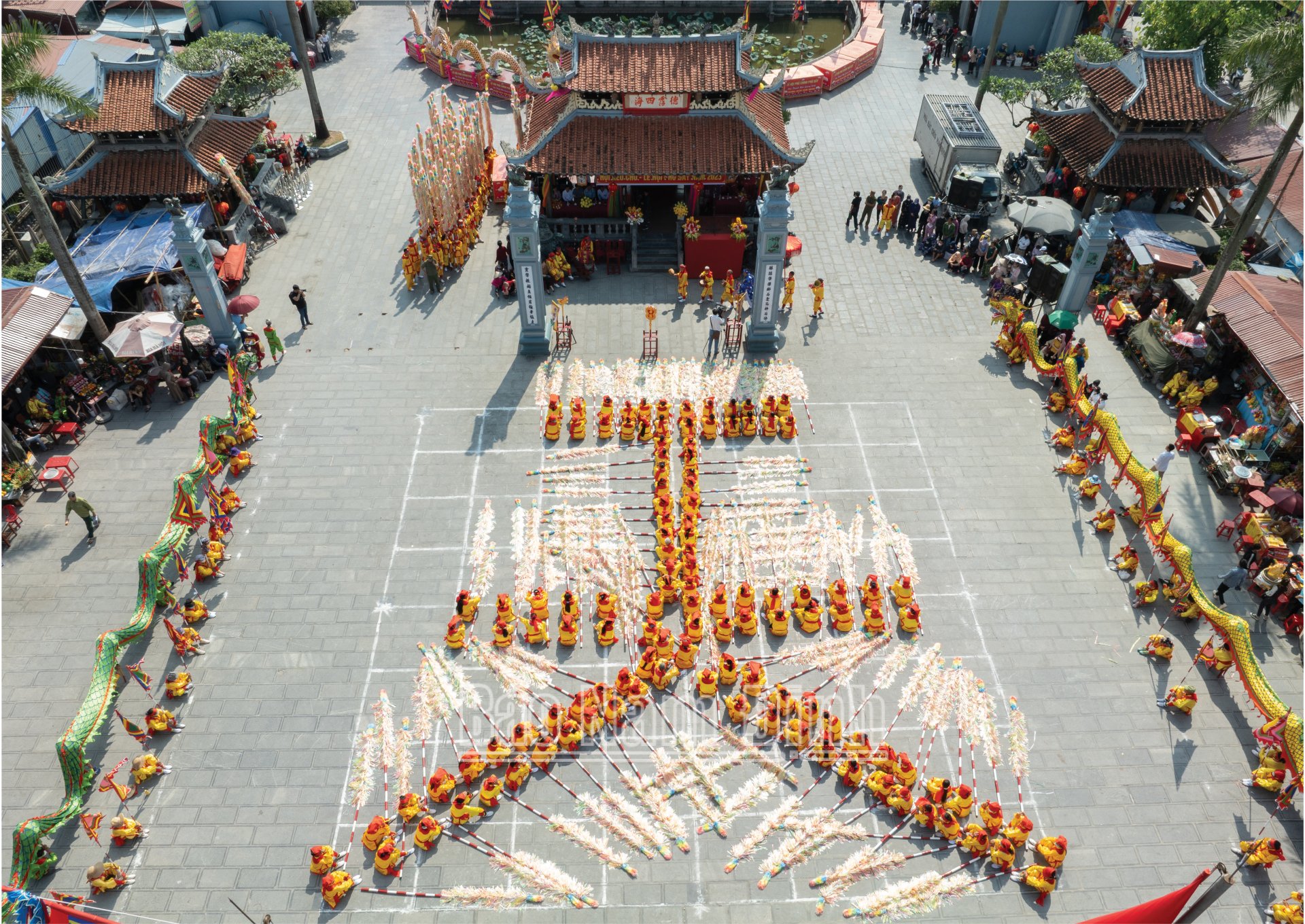 |
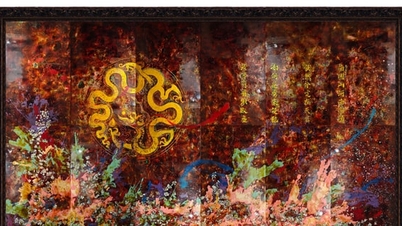
| Arranging the word "Thiên" (Heaven) in the Phủ Dầy festival. |
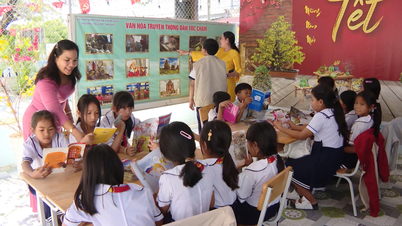
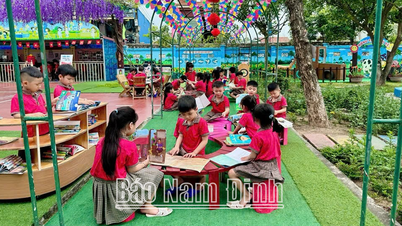
To manage and organize the Phu Day Festival in a systematic manner, the Kim Thai commune government and the festival organizing committee annually develop specific plans to ensure security, order, and traffic safety. According to Mr. Tran Khac Thieng, Chairman of the Kim Thai Commune People's Committee: “For many weeks before the festival, functional forces have deployed patrols and controls, coordinating with religious establishments to maintain order and create favorable conditions for pilgrims. In terms of decoration and infrastructure, the organizing committee has set up a lighting system, hung lanterns, flags, arranged a reasonable parking area, and reminded people and visitors to avoid littering…”. Along with that, the education and dissemination of the heritage's significance are also emphasized. Many schools in Kim Thai commune have integrated the theme of “Phu Day Festival” into extracurricular activities, inviting folk singers and elders knowledgeable about the history of the Holy Mother to share stories and religious customs. Students are exposed to diverse information, ranging from the legend of the Holy Mother and bronze statues to the architectural structures and sculptures in temples and shrines. Activities such as visiting historical sites, practicing traditional folk singing, and making paper torches nurture the younger generation's love for their homeland's heritage, ensuring the sustainable transmission of cultural traditions.
 |
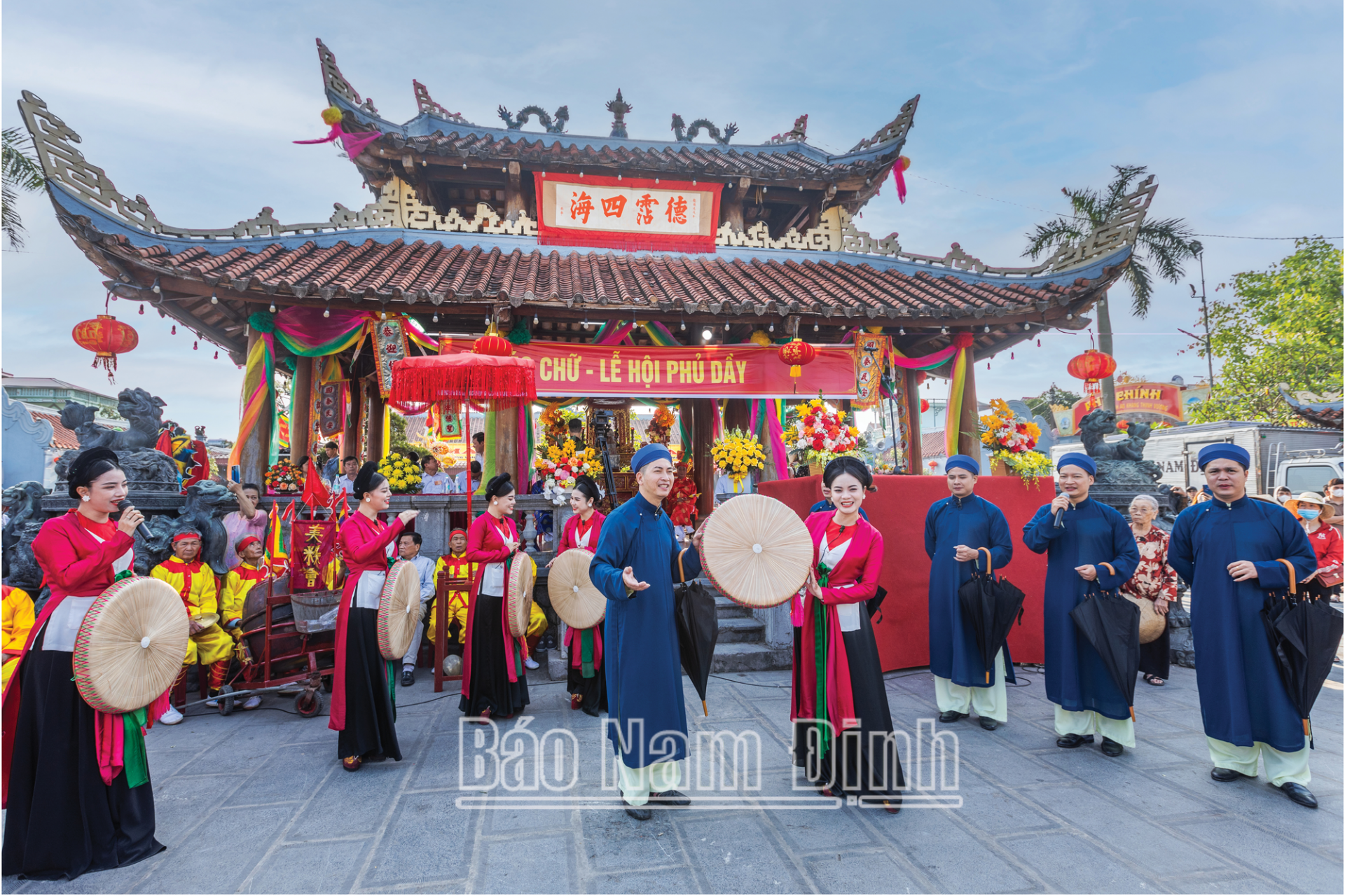 |
| Folk art performances at Phu Chinh Tien Huong. |
The Phu Day Festival is not only a unique cultural and spiritual event associated with the worship of the Mother Goddess, but also an opportunity for the community to connect with their roots and honor beautiful traditional values. With its vibrant festival atmosphere, solemn rituals, exquisite spirit mediumship and folk singing, and lively folk games, Phu Day has become a spring destination for tens of thousands of visitors from all over. In the midst of modern life, the festival retains its enduring vitality, contributing to the dissemination and preservation of Vietnamese national cultural identity.
Text and photos: Viet Du - Phuong Anh
Source: https://baonamdinh.vn/multimedia/202504/dac-sac-le-hoi-phu-day-cb47736/











































Comment (0)