

VietNamNet is pleased to present an article by Associate Professor Bui Hoai Son, a full-time member of the National Assembly working at the Committee on Culture and Social Affairs.
From the historical depth of a leading university center in the country, we see not only the memory of knowledge, but also a reminder of the university's responsibility in the new era of development. The speech by General Secretary and President To Lam at the ceremony conveyed a powerful message: National universities should not only train people for the present, but also lead the future of the country.
National stature, national responsibility, and national aspiration.
The two words "national" in the name of Hanoi National University carry a special meaning. It's not just a designation, not just a position within the higher education system, but a commitment to the nation. A national university must embody national stature, national responsibility, and national aspirations. Such a university cannot be measured solely by the number of students, the number of training programs, the number of research projects, or its international ranking. The greatest measure must be: what the university has contributed to the development of the country, what kind of people it has trained, what knowledge, technology, policies, and values it has created for the nation.
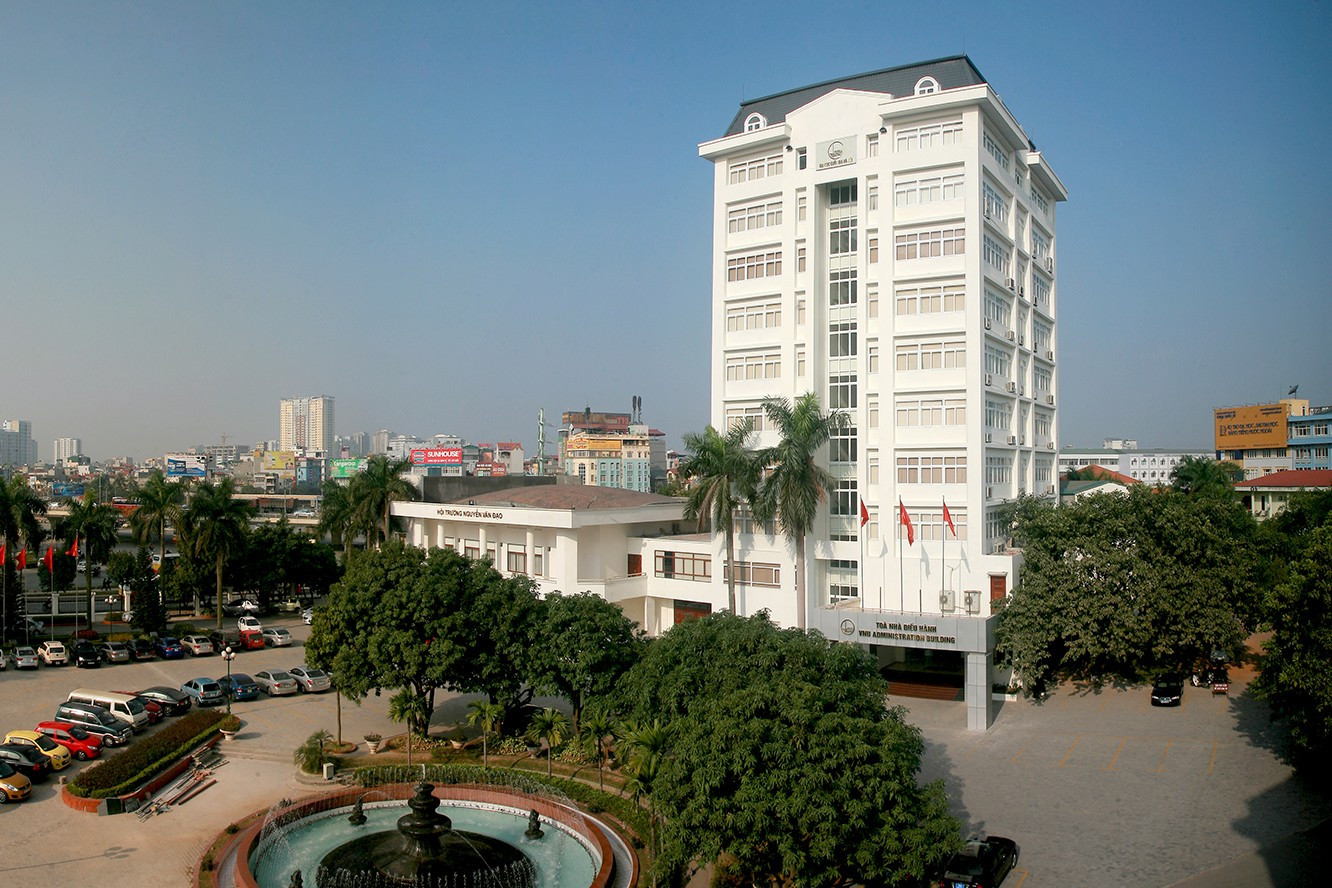
Throughout history, our nation has always valued talented individuals. "Talented people are the lifeblood of the nation" is not just a beautiful saying found in inscriptions, but a philosophy of development. A strong nation must have talented people. A nation that wants to progress must have intelligence. A country that wants self-reliance must have the capacity to master knowledge, science, technology, and culture. In the new era, this truth becomes even more urgent. Because competition between nations today is no longer just about resources, investment capital, or cheap labor, but about the quality of human resources, creative capacity, core technologies, data, institutions, and soft power.
Therefore, universities cannot simply be places for transmitting existing knowledge. Universities must be places for creating new knowledge. They cannot just train workers for the current market, but must prepare people capable of mastering the future. They cannot just provide degrees, but must cultivate character, resilience, independent thinking, creativity, and a spirit of service. A great university must help students not only know how to work, but also how to live responsibly; not only achieve personal success, but also connect that success with the benefit of the community, the country, and the nation.
Hanoi National University has a proud 120-year tradition. But the greater the tradition, the greater the responsibility. A glorious past should not lead to complacency, but rather to set stricter demands for the present. A university that has been a gathering place for many generations of the nation's great intellectuals must continue to be a place for shaping new generations of intellectuals for the new era. A university that has contributed to the cause of national liberation, nation-building, and national defense must today contribute even more to the rapid, sustainable, modern, and humane development of the country.
The new era of development presents very different demands. The country is facing a great aspiration: to become a developed, high-income nation with a worthy position in the region and the world. This aspiration cannot be achieved by willpower alone. Willpower must be supported by knowledge. The aspiration must be realized through science, technology, innovation, modern governance, and high-quality human resources. Without strong universities, we can hardly have strong technology sectors. Without strong research centers, we can hardly have good policies, good businesses, and strong competitiveness. Without a strong academic environment, we can hardly nurture great talents.
It is worth considering that the risk of falling behind in this era is no longer a simple matter. Falling behind is not just about being poorer, slower, or having lower incomes. A deeper level of backwardness lies in not mastering technology, lacking innovation capacity, not having a high-quality workforce, and not having the ability to predict and manage new issues. A nation may experience growth for a period, but without a foundation of knowledge, science and technology, and strong universities, it will be very difficult to go far, and even more difficult to achieve sustainable growth.
Therefore, national universities must lead the way. Lead in developmental thinking, in talent training, in scientific research, in digital transformation, in innovation, in international cooperation, and in building an academic culture that is honest, open, and responsible. Leading the way is not about separating oneself from society, but about leading society. Leading the way is not about standing higher, but about paving the way for the country to go further.
A truly national university must become the "brain bank" of the country. When the State needs scientific arguments for major policy decisions, universities must have the answers. When businesses need technology, new business models, and high-quality human resources, universities must be reliable partners. When localities need solutions for sustainable development, urban management, heritage preservation, digital transformation, and climate change adaptation, universities must be able to provide support. When society needs faith in knowledge, science, and education, universities must be places that uphold standards and disseminate values.

University knowledge cannot be confined to lecture halls, laboratories, or scientific papers. Knowledge must enter real life. Valuable research must contribute to solving practical problems. A good training program must produce people capable of action. A good scientist must be placed in an environment where they can contribute. A talented student must be inspired to connect their future with the future of the country. Only then will universities truly become a driving force for development.
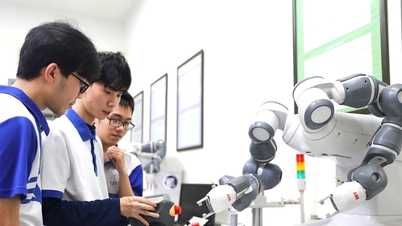
National universities should be centers for developing cutting-edge fields that the country needs.
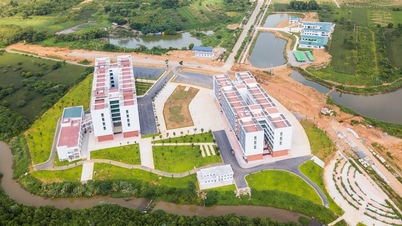
In this new era, universities must be viewed as strategic national institutions. Investing in universities is not just an ordinary expenditure, but an investment in the future. Investing in laboratories, faculty, scientists, scholarships for talented individuals, an innovation ecosystem, and modern academic spaces is an investment in the country's competitiveness. A road, a bridge, or an industrial park may generate immediate growth; but a strong university can create the capacity for development for many generations.
Of course, for universities to lead the country's future, they themselves must undergo radical innovation. We cannot use the old model to train people for the new future. We cannot manage according to bureaucratic habits to create an environment of creativity. We cannot demand high quality without genuine autonomy, accountability, mechanisms for valuing talent, and a healthy academic culture. Universities need to be empowered more, but they must also bear greater responsibility. Autonomy must be linked to quality. Decentralization must be linked to transparency. Integration must be linked to identity. Creativity must be linked to integrity.
National universities must also be centers for developing cutting-edge fields that the country needs. Artificial intelligence, semiconductors, biotechnology, new materials, new energy, big data, green technology, social sciences and humanities in the new context, public administration, digital culture, cultural industries, non-traditional security… are all areas that require strong university involvement. These fields not only determine labor productivity but also determine national autonomy, soft power, and standing.
But universities are not just about science and technology. A great university must also be a place for cultivating culture, character, and national spirit. The faster technology develops, the more people need a solid foundation in humanities. The deeper integration, the more important it is to preserve national identity. The fiercer the competition, the more important it is to uphold academic ethics and social responsibility. A country cannot achieve sustainable development if it only has people who are technically skilled but lack culture, who are highly skilled in their field but lack ideals, and who achieve personal success but are indifferent to the community.
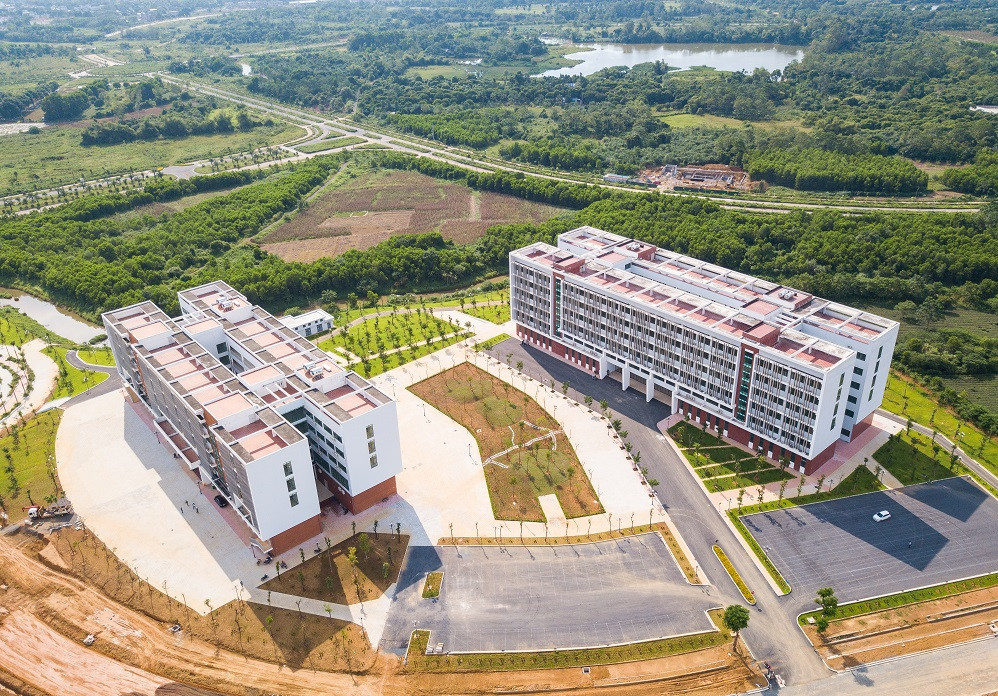
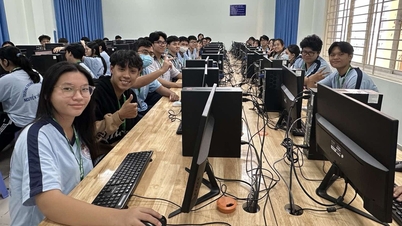
That is why higher education must be linked to holistic human development. Today's students need not only specialized knowledge, foreign languages, digital skills, and global thinking, but also patriotism, civic responsibility, discipline, collaborative skills, the ability to learn independently throughout life, and a spirit of service. Universities must help young people understand that their future is inseparable from the future of their country. Their success will be more meaningful when they contribute to making Vietnam stronger, more civilized, more compassionate, and happier.
National universities must also become an important channel of Vietnam's soft power. The world knows a country not only through its history, heritage, cuisine, tourism, or economic achievements, but also through the quality of its universities, scientific prestige, creative capacity, and intellectual demeanor. Every internationally recognized research project, every respected Vietnamese scientist, every confident Vietnamese student in a global environment, and every high-quality academic cooperation program contributes to enhancing the country's image. That is how Vietnam tells its story through the language of intellect.
From that perspective, the mission of Hanoi National University is not merely the mission of a university. It is the mission of a national intellectual center in the new era. This center must connect the past with the future, tradition with innovation, nation with humanity, science with humanities, education with development, and academia with service. This center must help the country gain more confidence that Vietnam can absolutely rise up using Vietnamese intellect, Vietnamese resilience, and Vietnamese aspirations.
Twelve hundred years is a long journey, but the future ahead is even brighter. Hanoi National University, like other leading universities in the country, is facing a historic opportunity to redefine its role in national development. It must be more than just a place for teaching and learning. More than just a place for research and publication. More than just a place for awarding degrees and imparting knowledge. Universities must become places that prepare for the future, cultivate talent, nurture aspirations, generate ideas, solve national problems, and spread Vietnamese values.
The national university and its mission to lead the country's future is not just a slogan. It is a very specific, urgent, and sacred requirement. From every lecture hall, laboratory, research project, teacher, student, and creative idea, the future of the country is being prepared every day. When universities lead the way, the country will have more paths to reach further. When knowledge is placed in its rightful place, the nation will have more strength to become self-reliant. When talent is nurtured and valued, Vietnam will have more confidence to enter a new era of development with a firm foundation, strong character, and great aspirations.
Source: https://vietnamnet.vn/dai-hoc-quoc-gia-va-su-menh-dan-dat-tuong-lai-dat-nuoc-2516453.html


































































































Comment (0)