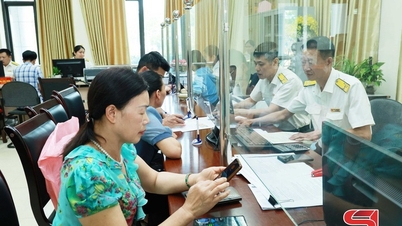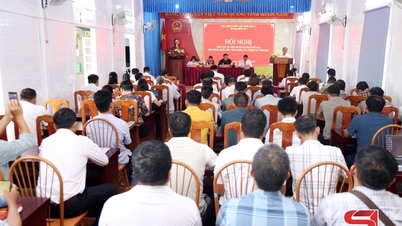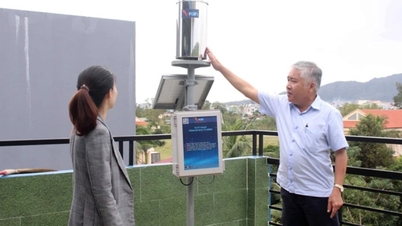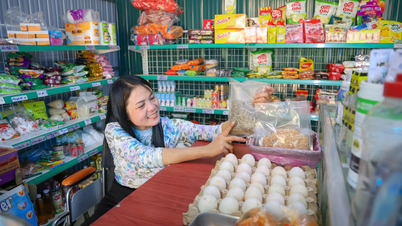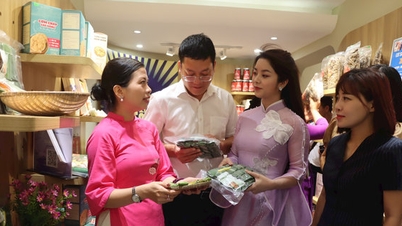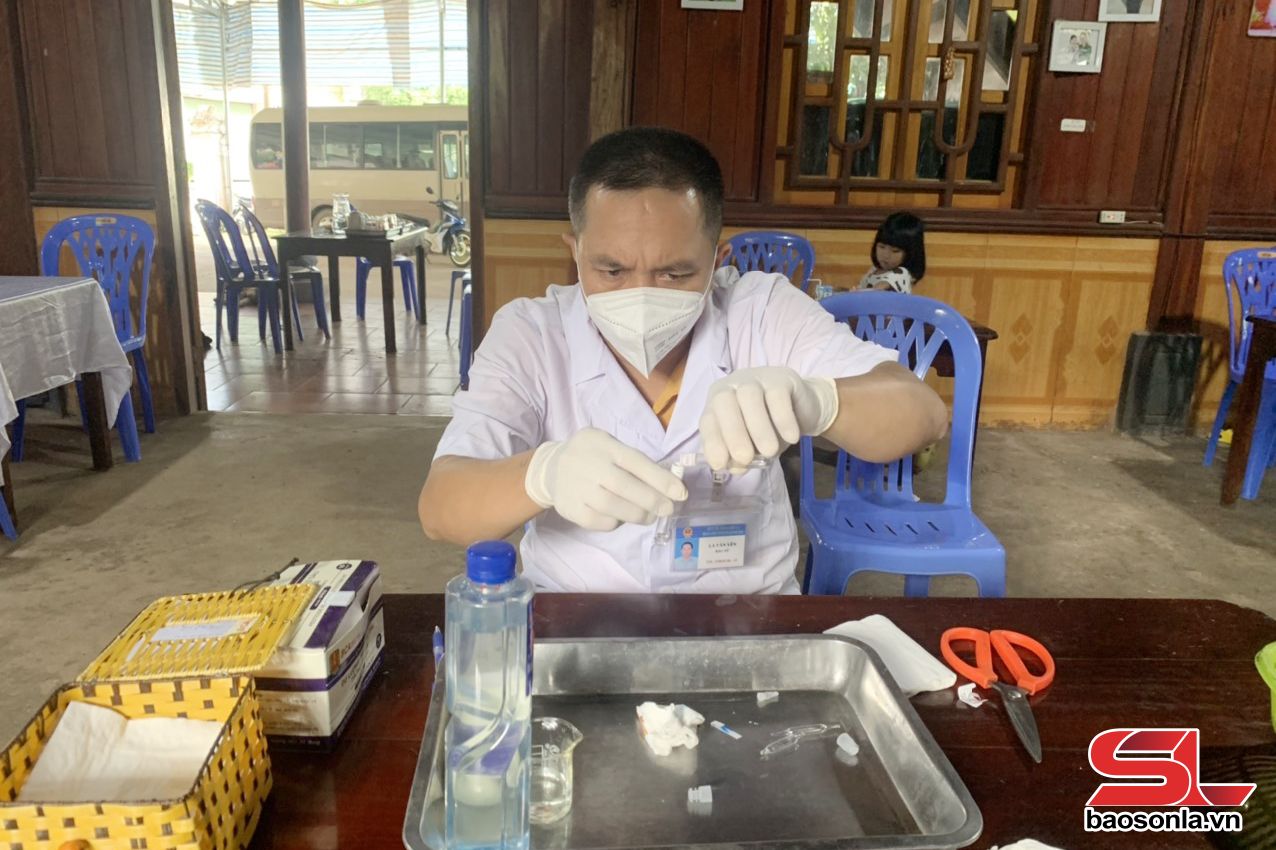
Officials from the Quỳnh Nhai Regional Health Center inspect food samples at a business establishment in Mường Giôn commune.
Ensuring food safety and hygiene.
Food safety is an indicator in Criterion No. 17 of the New Rural Development program, requiring 100% of households and food production and business establishments in the area to comply with food safety regulations. In implementing this, various levels of government, sectors, and localities have implemented numerous solutions in management and control, contributing to protecting the health of the people.
 Báo Sơn La•22/09/2025
Currently, the province has 18,850 food production, business, and food service establishments. To strengthen state management of food safety, all levels, sectors, and localities have intensified the dissemination of policies and laws, raising public awareness of safe food production and consumption for themselves, their families, and the community. Simultaneously, consumers are advised to buy fresh food with clear origins, pay attention to product expiration dates, and absolutely avoid consuming food that shows signs of spoilage, mold, or damage.
Mr. Tran Manh Duc, Head of the Provincial Food Safety and Hygiene Department, stated: Food safety management in the province is assigned and decentralized in accordance with regulations, enhancing the responsibility of the government and food production and business enterprises. The Department focuses on organizing training and capacity building for food safety officials at all levels; coordinating control from the agricultural production stage; strengthening inspections of livestock farms, slaughterhouses, processing facilities, and food businesses; and resolutely handling violations. From the beginning of the year until now, functional agencies have inspected more than 8,300 establishments; detected and handled nearly 1,000 violations related to food safety and hygiene, and the sale of counterfeit and substandard goods, collecting nearly 2 billion VND for the state budget.
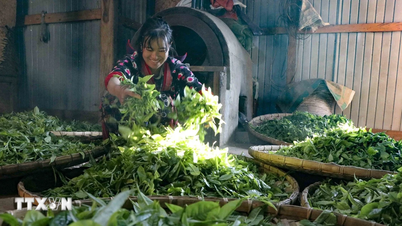
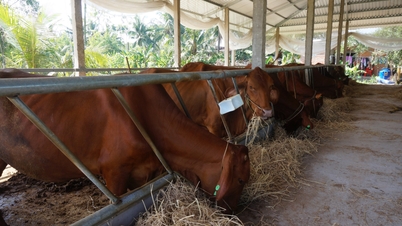
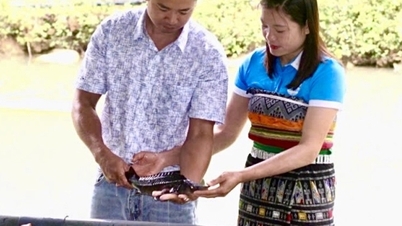
Authorities at all levels, sectors, and local governments are also paying attention to developing safe agricultural and aquatic product supply chains. The province currently has 44 safe vegetable supply chains covering 378 hectares; 188 safe fruit supply chains covering 4,184 hectares; 5 coffee supply chains covering 2,160 hectares; 11 tea supply chains covering 565 hectares; 3 rice supply chains covering 170 hectares; 5 safe pork supply chains with a scale of 95,000 pigs; and 3 safe chicken supply chains with a scale of 62,500 chickens, producing 80 tons per year... Maintaining 218 planting area codes for export purposes and developing the province's agricultural product brands.
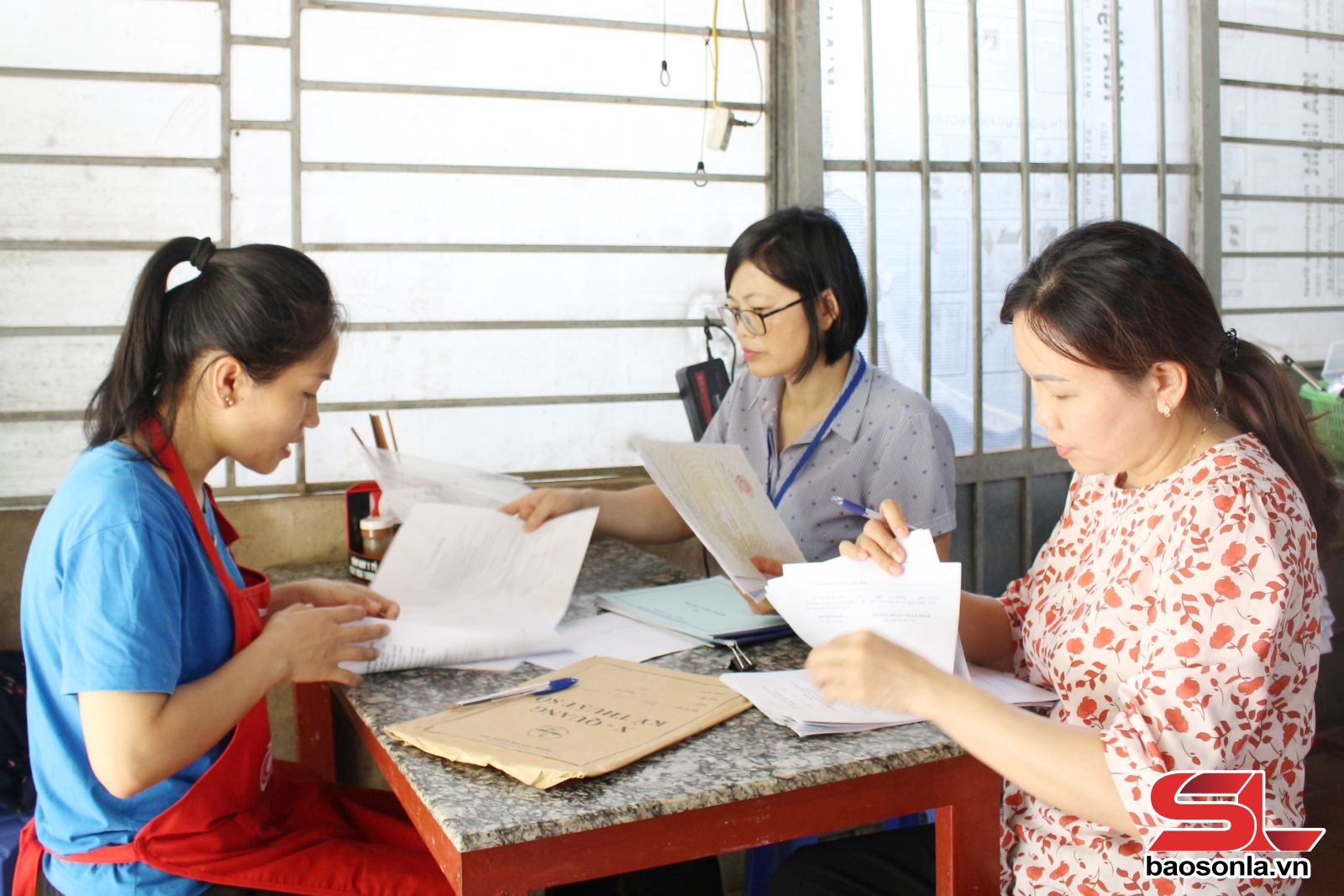
Officials from the City's Regional Health Center are checking the paperwork of a food service business in Chiềng An ward.
In Quynh Nhai commune, there are 166 establishments involved in food production, processing, and trading, as well as school canteens. To maintain food safety standards, the commune's People's Committee has developed inspection plans and established food safety inspection teams during the Lunar New Year, Action Month, and Mid-Autumn Festival. Through these inspections, 100% of establishments have been granted food safety certificates; 100% of owners and staff have participated in food safety training courses. All food products on display have clear origins and are labeled with integrated traceability information.
Mr. Vu Thai Bao, owner of Bao Minh Restaurant in sub-district 2, Quynh Nhai commune, said: "Our family specializes in food service and event organization, so we must ensure the origin and source of our food; maintain regular hygiene in the processing area; and strictly adhere to regulations regarding food preservation and sample retention... During operation, we are regularly inspected by relevant authorities who conduct awareness campaigns, inspections, and rapid testing of food samples."

Vietnam encourages US businesses to expand investment in high technology.On the morning of June 26th, at the Government Headquarters, Deputy Prime Minister Ho Quoc Dung received Mr. Jeff Place, Supply Chain Director of Coherent Group (USA). During the meeting, the Deputy Prime Minister affirmed that Vietnam encourages US businesses to expand investment, especially in high-tech, innovation, and semiconductor industries.

Encourage U.S. businesses to expand investment in high-tech sectors.Deputy Prime Minister Ho Quoc Dung said that Vietnam welcomes US businesses to continue expanding their operations in Vietnam, especially in high-tech industries and sectors with high added value.

Vietnam and the United States strengthen cooperation in addressing the consequences of war.VTV.vn - On June 22, General Secretary and President To Lam received Acting Secretary of the US Navy Hung Cao.
Responsible for 10 communes, the Thuan Chau Regional Health Center regularly coordinates with local authorities to strengthen management, inspection, and supervision according to the management hierarchy, covering 2,285 establishments involved in food production, processing, trading, catering services, and collective kitchens. Mr. Vu Duy Khang, Director of the Center, stated: "Since the beginning of the year, the Center has advised and coordinated with communes to inspect over 330 establishments involved in food production, trading, catering services, and collective kitchens. Through these inspections, 47 establishments were found to be in violation, resulting in fines totaling over 80 million VND being paid into the state budget."
In practice, achieving food safety standards is not only about fulfilling a criterion in building new rural areas, but also about ensuring sustainable rural development. When clean, reputable products are established, the value of agricultural products will increase, farmers' lives will improve, and public health will be guaranteed.
Source: https://baosonla.vn/xa-hoi/dam-bao-an-toan-ve-sinh-thuc-pham-dE4MNlCNR.html




![[Photo] "Hanoi Lotus Festival" honors the lotus flower that has been associated with Vietnam for thousands of years.](https://vphoto.vietnam.vn/thumb/1200x675/vietnam/resource/IMAGE/2026/06/27/1782516943048_sen-ha-noi-2026-minh-duy-1-jpg.webp)