

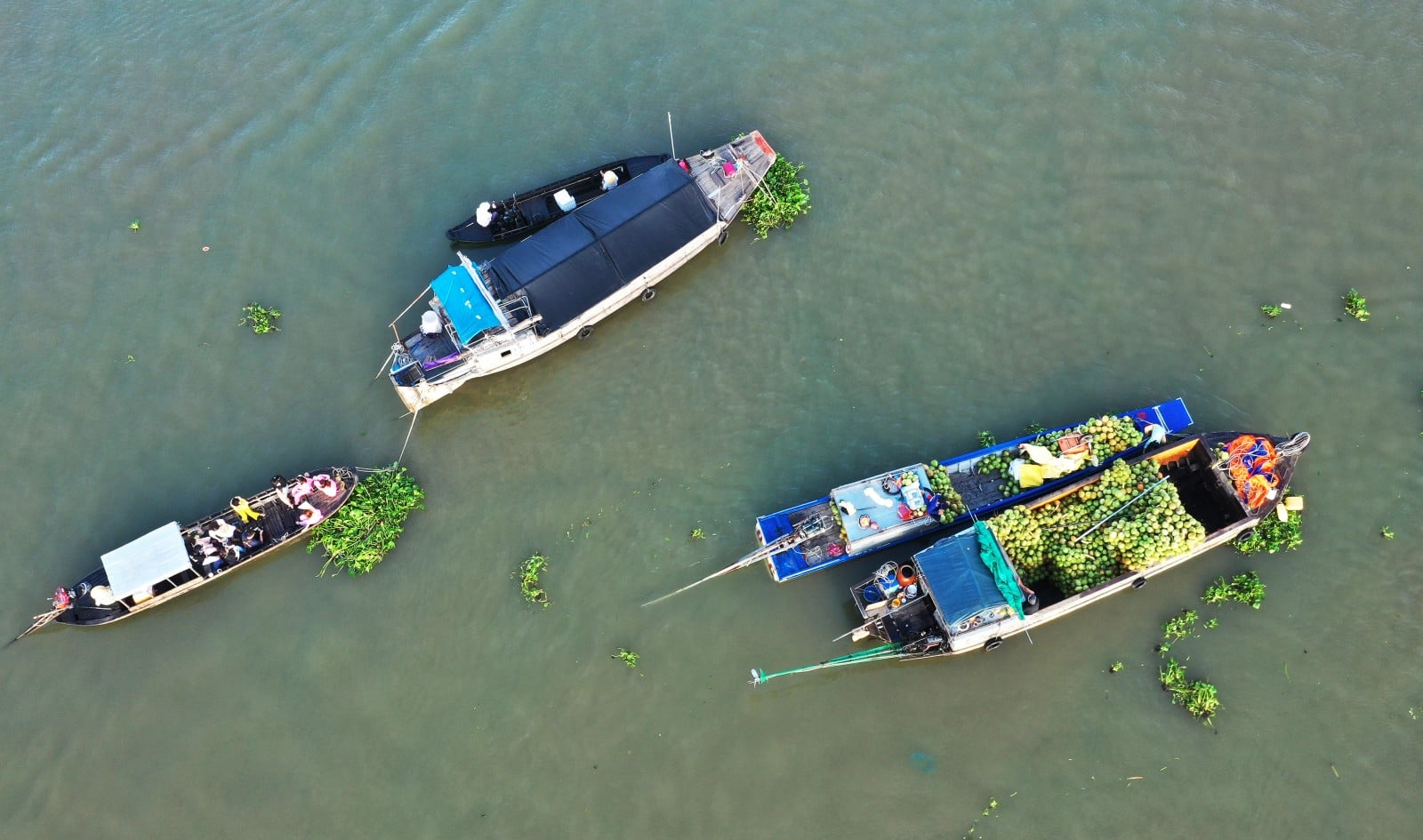
A corner of Long Xuyen floating market. Photo: GIA KHANH
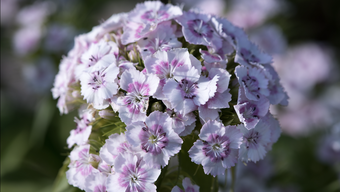
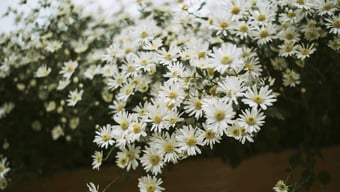
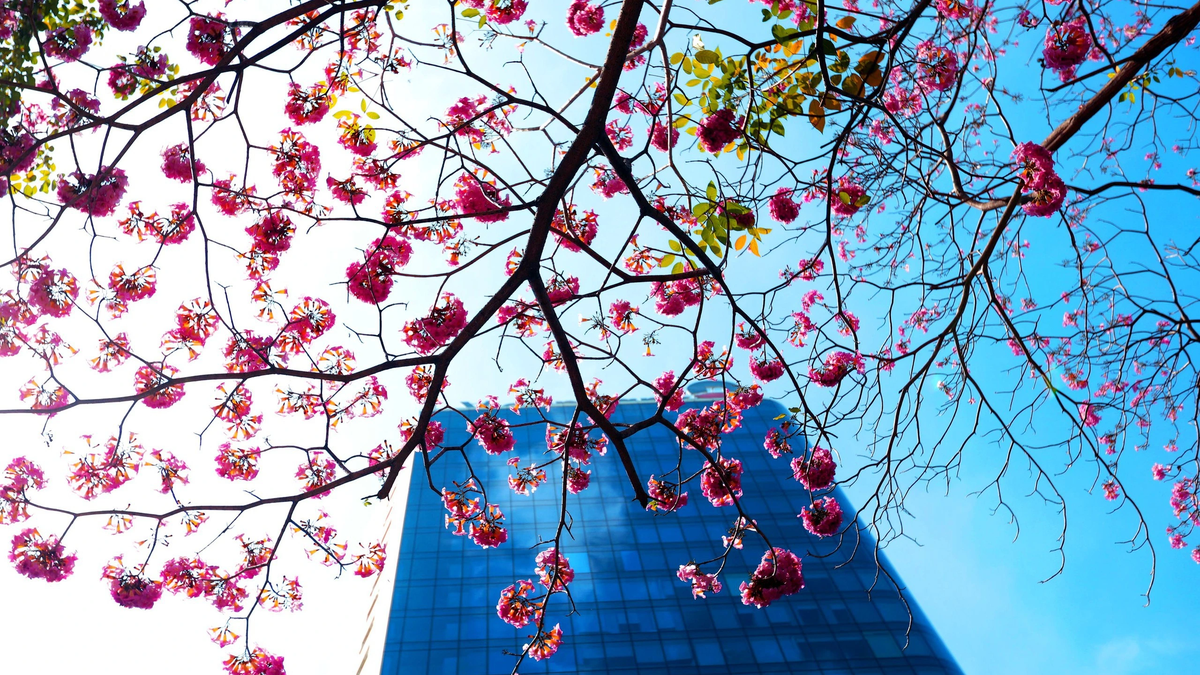
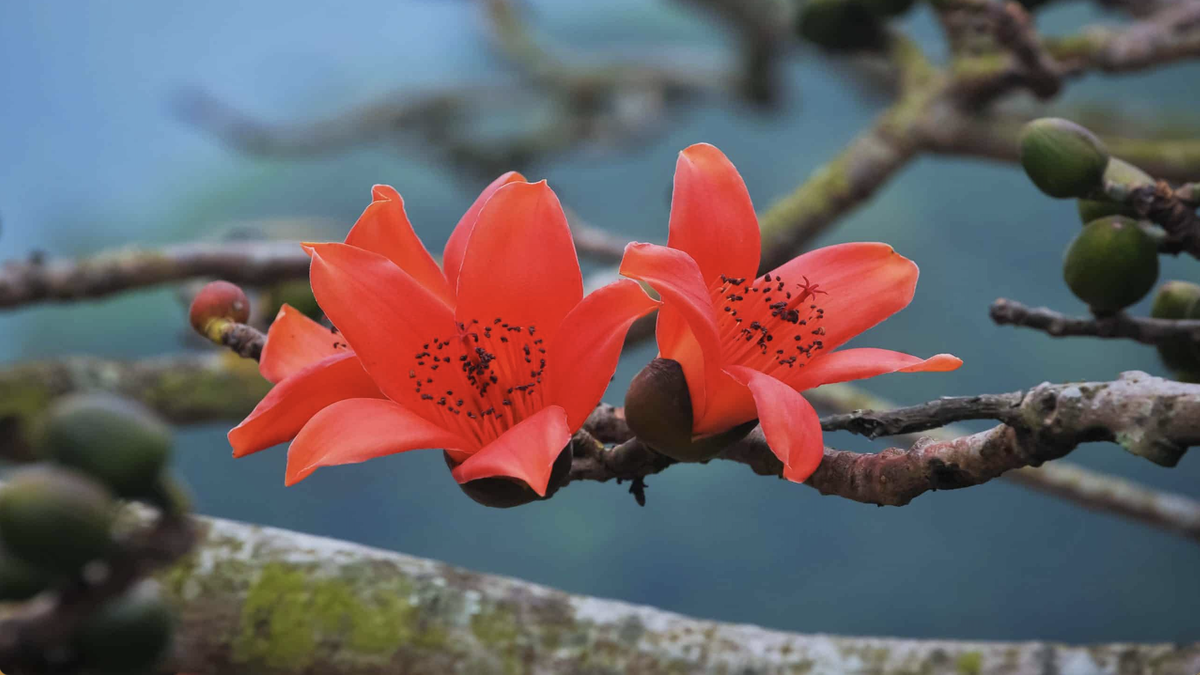
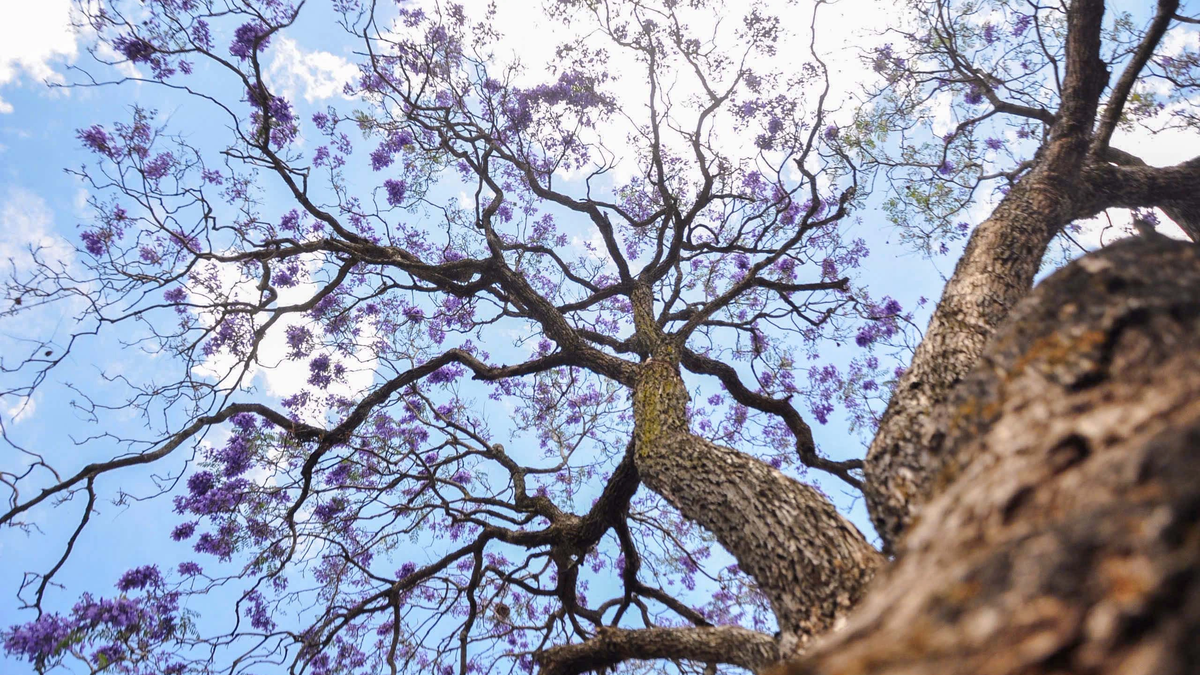
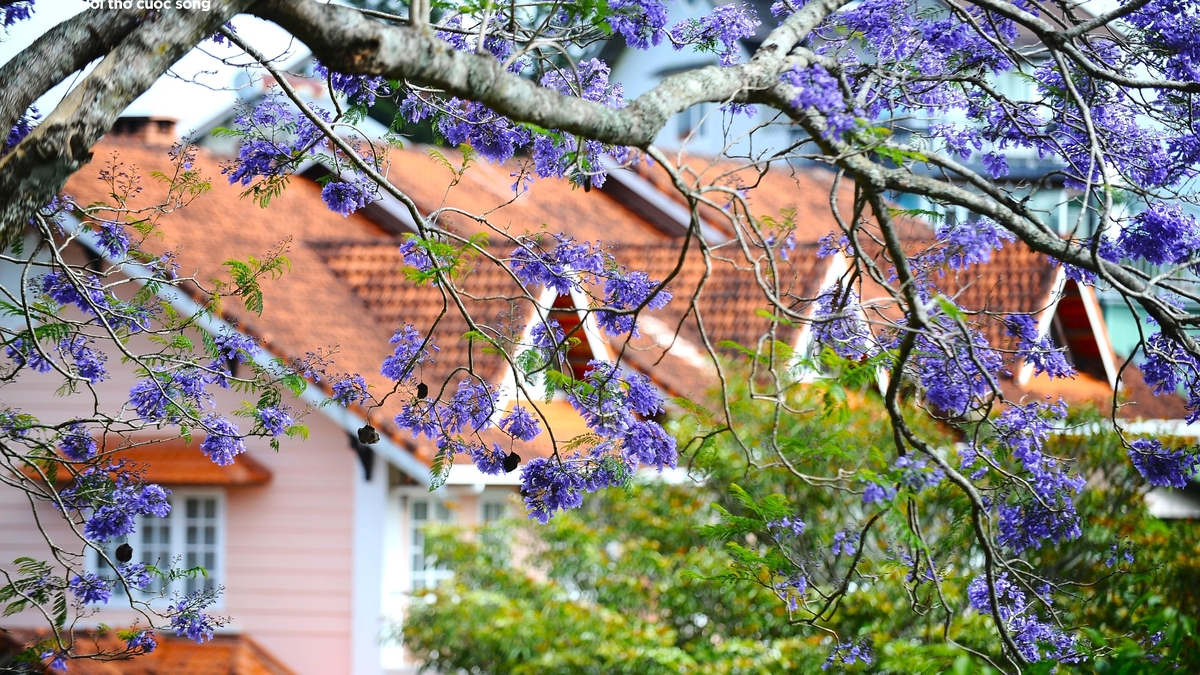
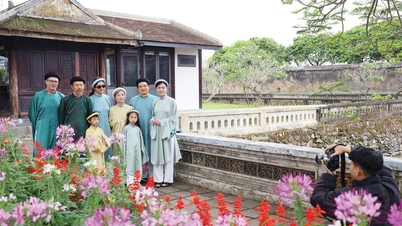
In the Southern Vietnamese countryside, natural beauty is often intertwined with everyday life. Each season, whether it's the rainy season, the flowering season, or a market day, can become a unique " tourism product." For example, the Omoi flower road in Nhon Hoi commune. Around March and April each year, when the Omoi trees bloom simultaneously, the entire road is bathed in a gentle pink hue. Without much artificial arrangement, this simple beauty attracts many people to take photos and visit. Mrs. Tran Thi Hong (66 years old), residing in Khanh Binh commune, excitedly said in her ao dai (traditional Vietnamese dress): "I've heard about this flower road for a long time, but only now have I had the chance to visit with friends. Indeed, this beauty is worth the effort to come and take pictures and check in!"
Taking advantage of this opportunity, locals have opened stalls selling soft drinks and local specialties along the small road. Mr. Phan Van Phu (50 years old), a resident of Nhon Hoi commune, is very familiar with this 4km long road. He witnessed everything from the planting of the Omoi trees to their growth, flowering, and fruiting. “Actually, the Omoi flowers have only been blooming brilliantly for the past three years. Each time they bloom, it only lasts a few weeks, so if you miss the chance to see them, you have to wait until next year. Seeing so many people visiting, I brought my ice cream cart in to join the season. The customers are so numerous, the cart is full and empty, it's so much fun!” Mr. Phu shared.
Gradually, the blooming season of the Omoi tree has become a short but promising source of income for the local people. Besides Mr. Phu's ice cream cart, there are many other mobile beverage and food vendors , making the entire rural street corner lively under the blossoms. Simple yet friendly services provide tourists with more experiences and generate additional income for the locals. In the future, services such as parking, renting traditional Vietnamese clothing like the "áo bà ba," "khăn rằn," "nón lá," and "áo dài," or organizing small stalls to showcase local products, should be considered to encourage tourists to stay longer and have a richer experience.
Another example is the culture of the Long Xuyen floating market, a distinctive feature of the riverine lifestyle that is quite unspoiled and unplanned. The scene of buying and selling on boats and canoes every morning creates a unique atmosphere, evoking memories of the past. Boats laden with fruits and vegetables, displaying their goods on poles, and the lively calls of vendors on the river create a vibrant picture that many tourists want to witness firsthand. Local people both earn their living through their long-standing professions and participate in community tourism, such as taking tourists on market tours, selling breakfast on the river, or telling visitors about the lives of river traders. But above all, their daily lives can become a fascinating experience.
As the afternoon sun faded, Mr. Nguyen Van Cho (64 years old), residing in Long Xuyen ward, decided to go home and rest, but upon hearing a customer's call, he patiently waited at the O Moi ferry terminal. For each trip transporting passengers across the Hau River, he earns a few hundred thousand dong. The river and his boat have sustained his family for nearly 40 years; how could he not cherish and appreciate them! “Customers often ask about the floating market, about Ong Ho islet, about the rhythm of life at the ferry terminal… I tell them what I know, acting as an amateur tour guide. Besides me, there are 5-7 other people who have been ferrying passengers on the floating market for many years. We only hope that the local authorities will pay attention to developing suitable river tourism so that the floating market attracts tourists and provides a livelihood for the people who depend on it,” Mr. Cho expressed.
However, to develop tourism based on the natural beauty of one's homeland, the most important thing is to preserve its identity. Tourists often seek out rustic, rural landscapes not for the glitz and glamour, but for the simple, authentic beauty of local life. Therefore, the challenge is for locals to preserve the environment, protect the natural landscape, minimize waste, and avoid excessive commercialization that would destroy its inherent beauty. In addition, support from the local government is essential. With proper planning, guidance on tourism development, training in customer service skills, and promotion of the local image, small-scale tourism models run by locals will gradually develop sustainably.
Experiencing the beauty of my homeland, I believe that tourism isn't something far-fetched; it can begin with a refreshing drink by a flower-lined road, a leisurely boat trip at dawn, or a heartfelt story about the simple life in the Mekong Delta. It is from these small things that community-based tourism can naturally grow, providing livelihoods for the people while helping to sustainably spread the values of the region.
GIA KHANH
Source: https://baoangiang.com.vn/danh-thuc-du-lich-tu-canh-sac-que-nha-a480659.html








![[Photo] Prime Minister Pham Minh Chinh successfully concludes his official visit to the Russian Federation.](https://vphoto.vietnam.vn/thumb/1200x675/vietnam/resource/IMAGE/2026/03/26/1774482837673_vna-potal-thu-tuong-pham-minh-chinh-ket-thuc-tot-dep-chuyen-tham-chinh-thuc-lien-bang-nga-8663158-4245-jpg.webp)
































Comment (0)