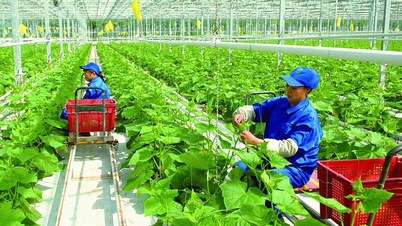
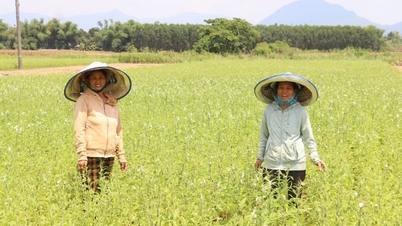
Phu Tho is a convergence of three regions with different geographical conditions, climates, and products, yet they complement each other naturally. Hoa Binh is a mountainous region with vast land and a mild climate, suitable for temperate vegetables, specialty fruits, medicinal plants, and free-range livestock farming. Products such as Cao Phong oranges, Tan Lac red pomelos, Lac Son hill chickens, Muong cattle, and Luong Son organic vegetables have long been highly regarded for their quality.
Meanwhile, the former Phu Tho province is a midland region with a long tradition of agricultural and forestry production. It boasts strengths in tea, cassava, specialty rice, plantation timber, bamboo and rattan products, and a convenient river and stream system for transportation. Large raw material areas such as Thanh Ba tea, Ga Gay sticky rice, and Ha Hoa cassava starch are all important agricultural product sources that can supply further processing.
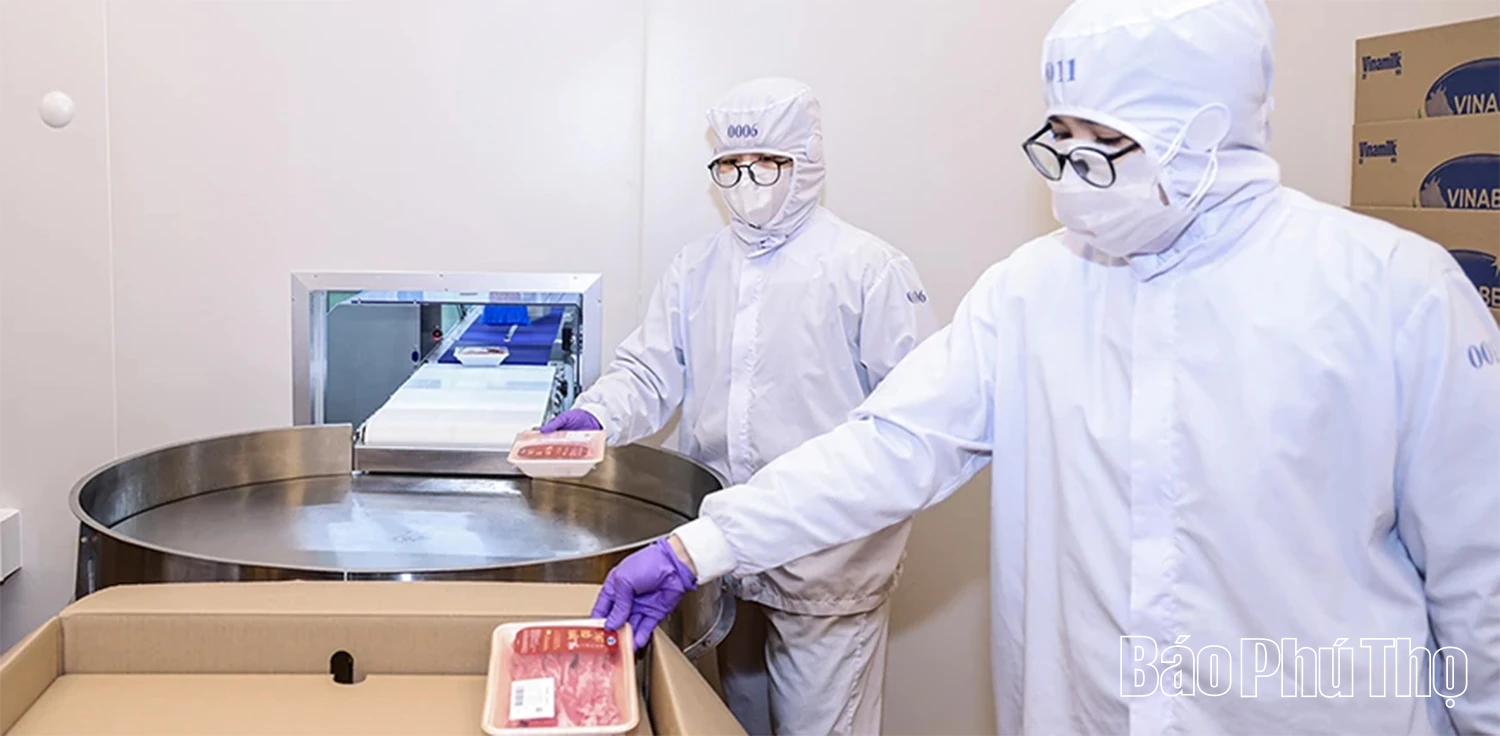
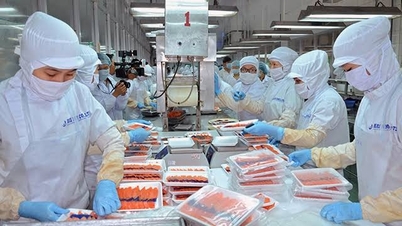
The process of processing beef using modern technology at the Vinabeef Tam Đảo factory.
In Vinh Phuc, despite its prominent manufacturing industry, there are still strong agricultural areas such as Song Lo, Lap Thach, and Tam Dao, with advantages in fruit trees, livestock farming, and clean vegetable production areas serving urban areas.
The merger creates a new development space where the three agricultural economic regions can form a closed, interconnected, and mutually supportive raw material belt. This is a rare advantage for developing the agricultural processing industry in a systematic, large-scale, and sustainable manner.
However, the reality shows that the agricultural processing industry in all three provinces still has many limitations. The scale of production facilities is mostly small, fragmented, and manual. Processing technology is outdated and does not meet the requirements of the modern market, leading to high post-harvest losses and inconsistent product quality.
Furthermore, the link between raw material sources, processing businesses, and consumer markets remains weak and unsustainable. Many agricultural products have large production volumes but lack stable outlets, are subjected to price manipulation, or have to be sold fresh at low prices. The phenomenon of "bumper harvest, low prices" recurs annually.
Another drawback is the lack of branding for processed products. Many local specialties are of good quality but have not been standardized, do not have geographical indications or collective trademarks, making them less competitive, especially when introduced into modern distribution systems.
Furthermore, the infrastructure for processing, preservation, and logistics in production areas remains very limited. Except for a few industrial zones, most mountainous and midland areas lack modern processing plants, cold storage facilities, and distribution centers. These factors prevent the agricultural processing industry from playing a leading role in the agricultural value chain.


Against this backdrop, Phu Tho province has identified agricultural processing as one of its key directions for effectively exploiting agricultural resources, increasing people's income, and promoting economic growth in rural areas. The planning for the development of the processing industry is being oriented towards dynamic economic zones, tailored to the specific conditions of each locality.
Accordingly, the Northwest region, including localities of the former Hoa Binh province such as Tan Lac, Da Bac, and Lac Son, will be prioritized for the development of facilities processing temperate fruits and vegetables, medicinal products, and traditional foods such as dried meat and local wines. Factories in this area are encouraged to apply biotechnology and clean, low-emission processing methods to suit the mountainous ecological environment.
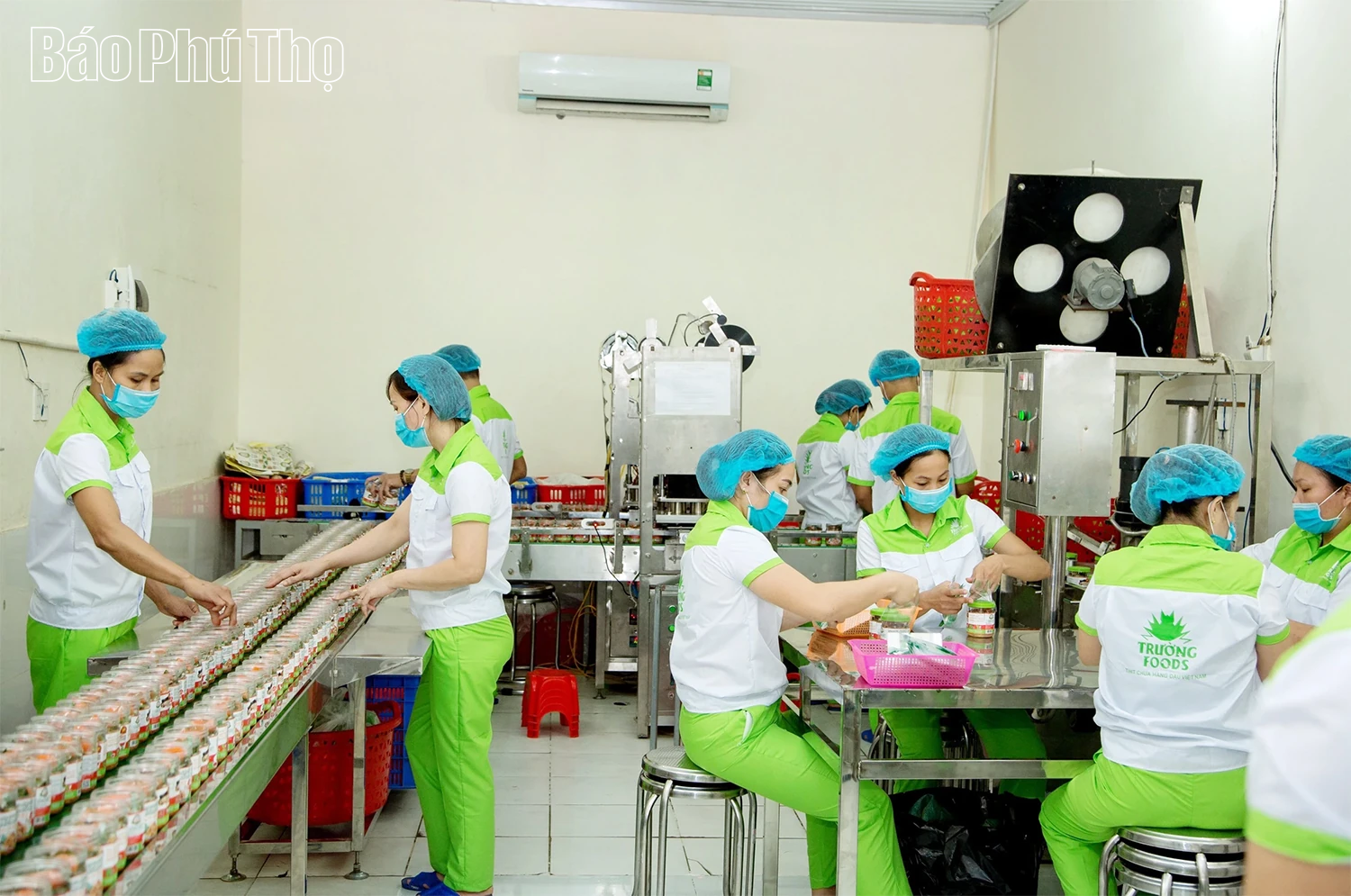
Truong Foods' fermented pork is one of the strong branded foods of the ancestral land region.
The central area, encompassing regions such as Thanh Son, Thanh Ba, Ha Hoa, Lam Thao, and the former Cam Khe – areas rich in raw materials like tea, cassava, and rice – will develop into centers for deep processing, starch processing, tea export, and naturally fermented products. The convenient transportation infrastructure, thanks to its proximity to the Noi Bai - Lao Cai expressway and the Hanoi - Yen Bai railway, provides ideal conditions for connecting goods to major distribution centers.
The eastern and southeastern regions, including areas of the former Vinh Phuc province such as Tam Dao, Lap Thach, and Yen Lac, will develop centers for processing and preserving high-quality agricultural products, serving both domestic and export markets. This area also has the potential to develop agricultural logistics, cold storage, refrigerated transport, and business support services.
To realize this strategy, the province needs to focus on several fundamental solutions. First, it is necessary to plan concentrated raw material areas for each key product group, ensuring stability and sufficient scale to supply processing plants. Simultaneously, it is crucial to encourage chain linkage models between businesses, cooperatives, and farmers to ensure a harmonious balance of interests among all parties, and to effectively control product quality and output.
Along with organizing production, strong policies are needed to attract investment in the processing industry. The province can build medium and small-scale agricultural processing industrial clusters in key areas, while also issuing preferential support mechanisms regarding land, loans, technology transfer, and labor training. In particular, the application of new technologies in processing, preservation, and packaging should be prioritized to increase added value and meet domestic and international market standards.
Another noteworthy direction is the development of OCOP products and the building of brands for processed products made from local specialties. In reality, many agricultural products only increase in value many times over after processing, packaging, and branding. Brand development needs to go hand in hand with protecting geographical indications, registering collective trademarks, and boosting communication on digital platforms.
In addition, the province needs to support small businesses and agricultural startups in accessing technology, connecting with markets, and training business skills. The formation of a startup ecosystem in the food processing sector will be a crucial leverage to attract young, creative individuals back to rural areas to prosper in their own hometowns.



An equally important factor is the development of human resources for the agricultural processing industry. Vocational schools and colleges in the area need to adjust their training programs, adding majors related to food technology, preservation techniques, and agricultural logistics. At the same time, they should strengthen the connection between businesses and schools to train according to market needs.
Phu Tho is facing a great opportunity to make a breakthrough in the field of agricultural product processing – an industry that not only brings economic value but also contributes decisively to the quality of agricultural and rural growth. Transforming potential into reality, turning agricultural products into value, is the path the province needs to persistently pursue to gradually assert its position on the national agricultural economic map in this new development phase.
Quang Nam
Source: https://baophutho.vn/danh-thuc-nganh-cong-nghiep-che-bien-237096.htm