


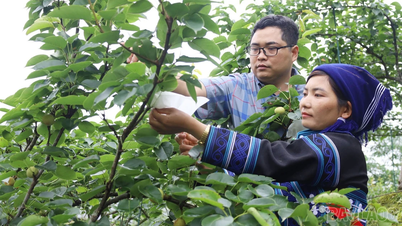
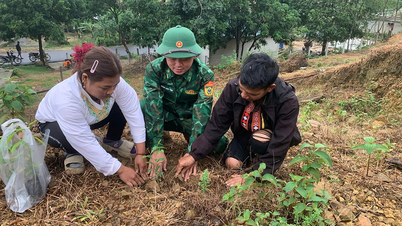
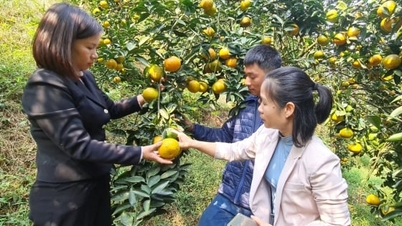
In previous years, the land owned by Ms. Ly Gi Su's family (Kin Chu Phin 2 village, Nam Pung commune) was primarily used for growing corn and soybeans. Despite working diligently year-round, her family's income was always unstable, and they frequently struggled to make ends meet. When the local government encouraged her to switch crops and provided support with seeds and techniques, Ms. Su boldly experimented with planting VH6 pear trees.
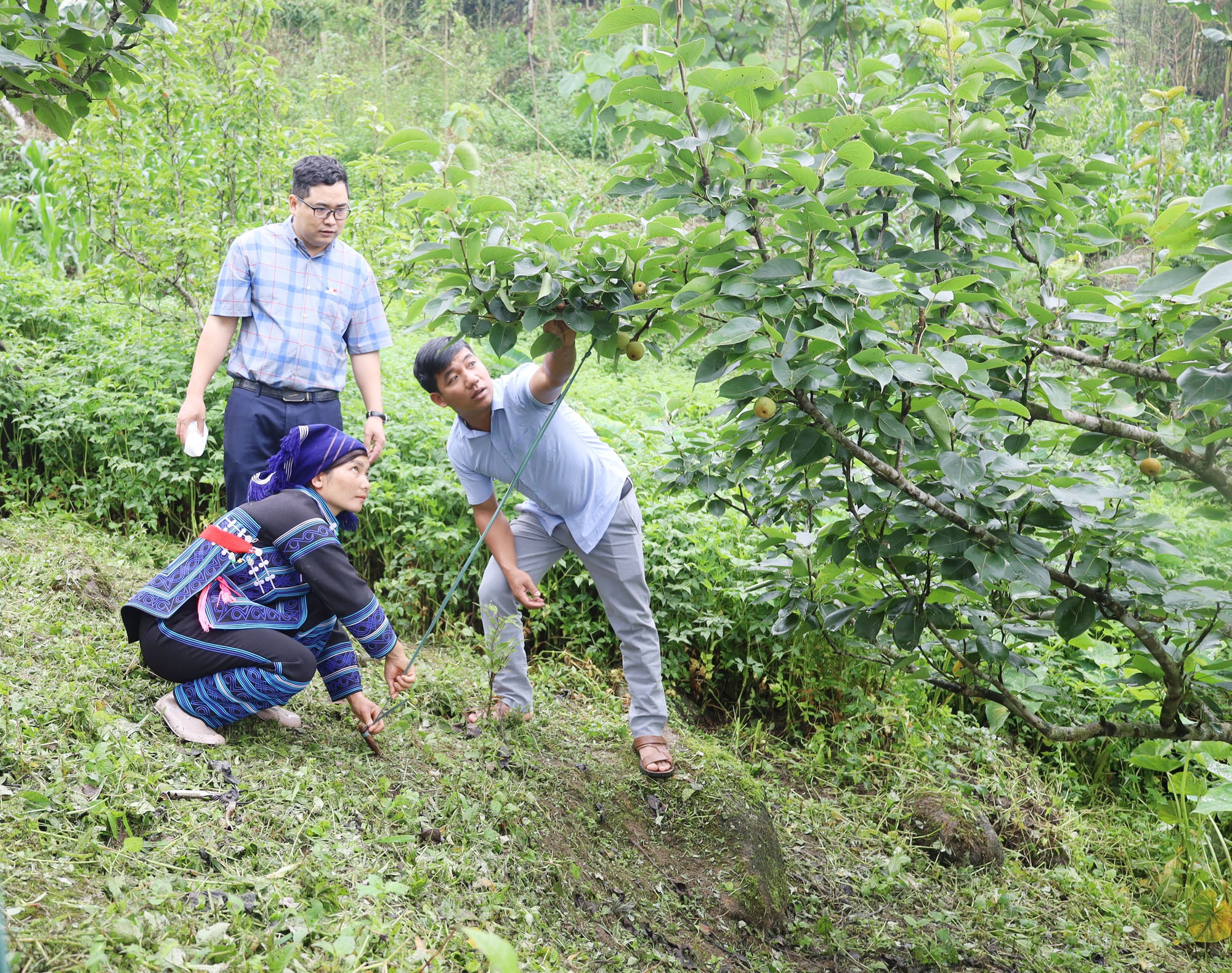
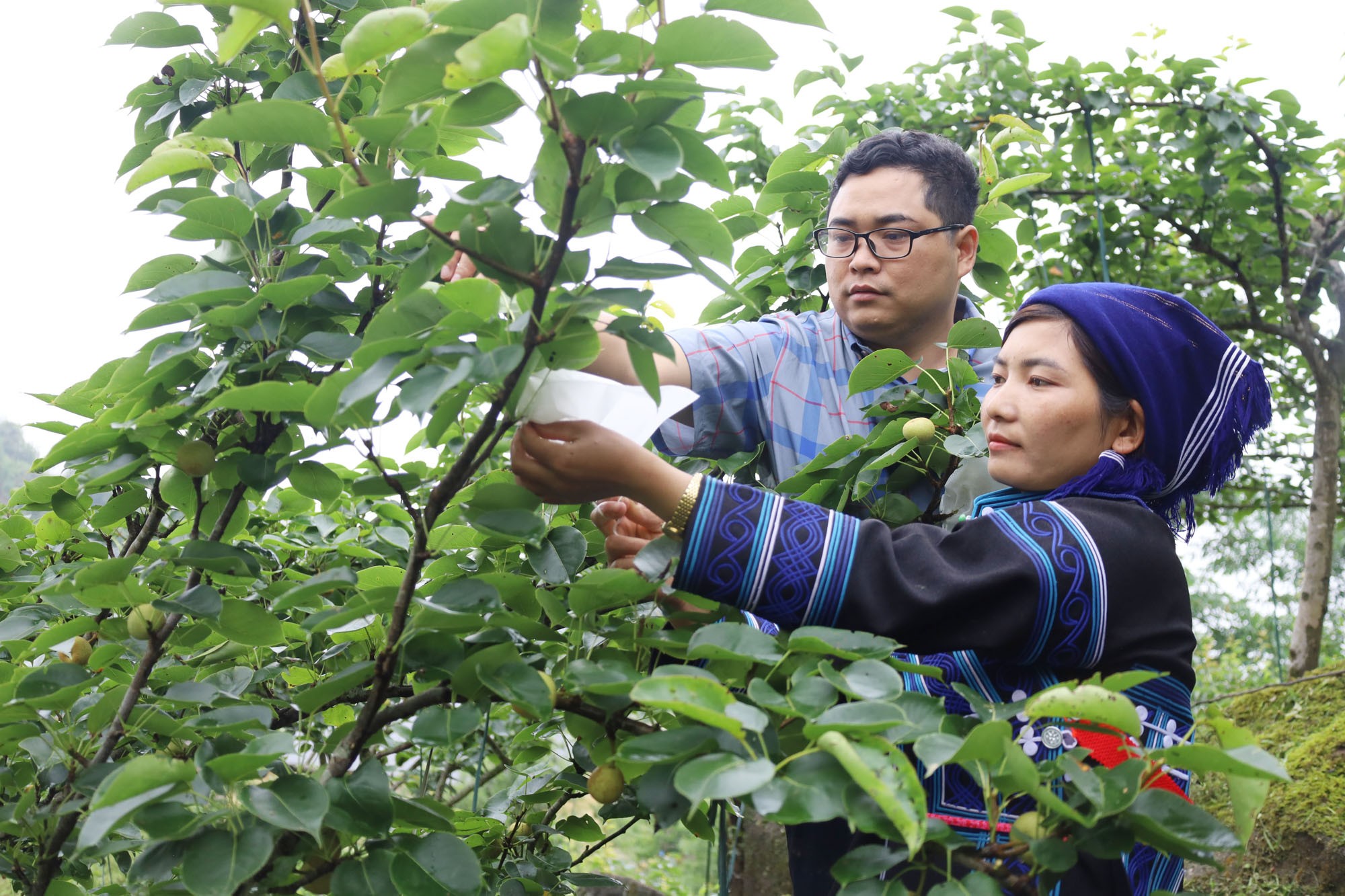
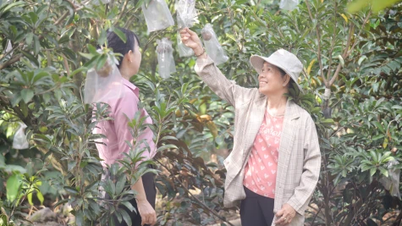
Ms. Ly Gi Su shared: "Initially, I was worried because VH6 is a perennial tree, requiring significant investment and effort, and since it was a trial planting, I lacked experience. However, after being encouraged and guided by commune officials on how to plant, fertilize, prune, shape the canopy, and bag the fruit, I felt reassured. Last season, 100 pear trees bore their first fruits, and I earned nearly 40 million VND. This year, there are more fruits, and I hope to earn double that amount. My family has also recently planted another 200 pear trees on the remaining cornfield area with the hope of achieving higher income in the future, helping to stabilize our family's lives."
Not only Su's family, but many other households in Nam Pung have also converted their corn fields to VH6 pear orchards. Typical examples include the Tan Ta May family in Kin Chu Phin 1 village, who currently cultivate over 1.5 hectares of VH6 pear trees, earning hundreds of millions of dong annually; and the Tan Lo May family in the same village, who cultivate nearly 1 hectare, earning over 40 million dong each year. To date, Nam Pung commune has over 176 hectares of VH6 pear orchards, with nearly half of the area already yielding stable harvests.
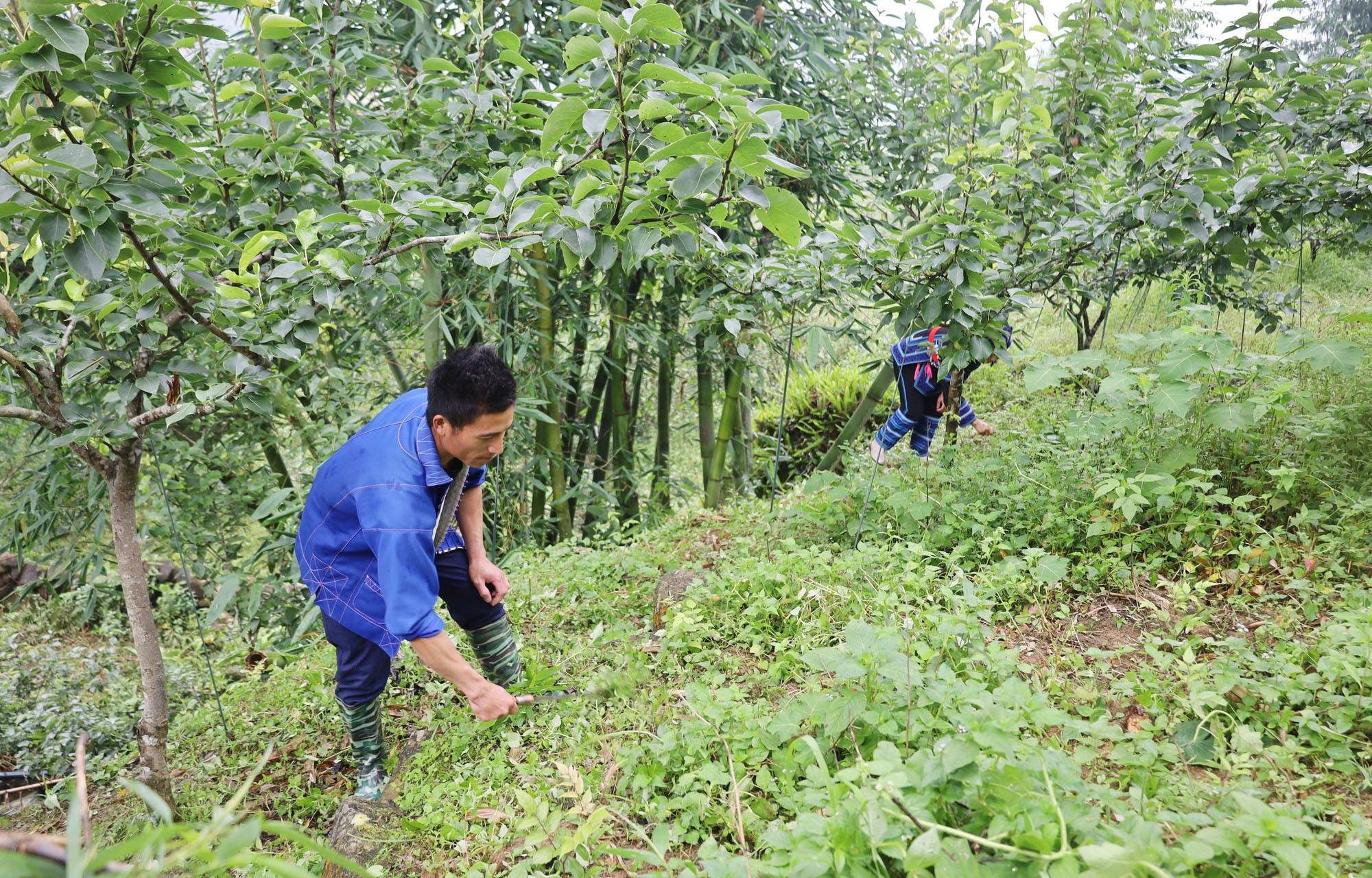
Determined to develop pear cultivation as a commercial crop, Nam Pung commune has advocated for the establishment of cooperative groups and cooperatives to provide technical support, market access, and product promotion. Among these, the Nam Pung Agricultural Service Cooperative was established early on.
The Nậm Pung Agricultural Service Cooperative currently has over 20 members. Mr. Lý Dì Go, the Cooperative's Director, shared: “We guide farmers in caring for pear trees using clean farming practices, avoiding herbicides, and prioritizing bio-fertilizers to protect the soil and produce high-quality fruit with attractive appearance for better market access. Although pear cultivation requires a lot of care, the results are clear, and farmers' incomes are steadily increasing.”
On average, one hectare of VH6 pear trees has about 400 trees, with a yield of 30-50 kg of fruit per tree. With a selling price ranging from 30,000 to 50,000 VND/kg, this will bring in an income of 300-400 million VND per year, 2-3 times higher than growing corn or upland rice previously.
Not only in Nam Pung, the VH6 pear cultivation model is being replicated in many other highland communes such as Pa Cheo, Y Ty, A Lu, Den Thang, Sang Ma Sao… To date, Bat Xat district has planted 388 hectares of pears, of which about 130 hectares have entered the production period, with an estimated yield of over 320 tons per year. Notably, most of this area was converted from low-yield corn and upland rice fields.
To develop pear cultivation sustainably, Bat Xat district has implemented a comprehensive set of solutions, including planning planting areas, investing in drip irrigation systems, constructing water reservoirs in key areas, organizing technical training, and providing seedlings and fertilizers to households. Every year, the district organizes a pear festival in Nam Pung to honor the local product, promote its image, and promote the product on e-commerce platforms to reach a wider consumer base.
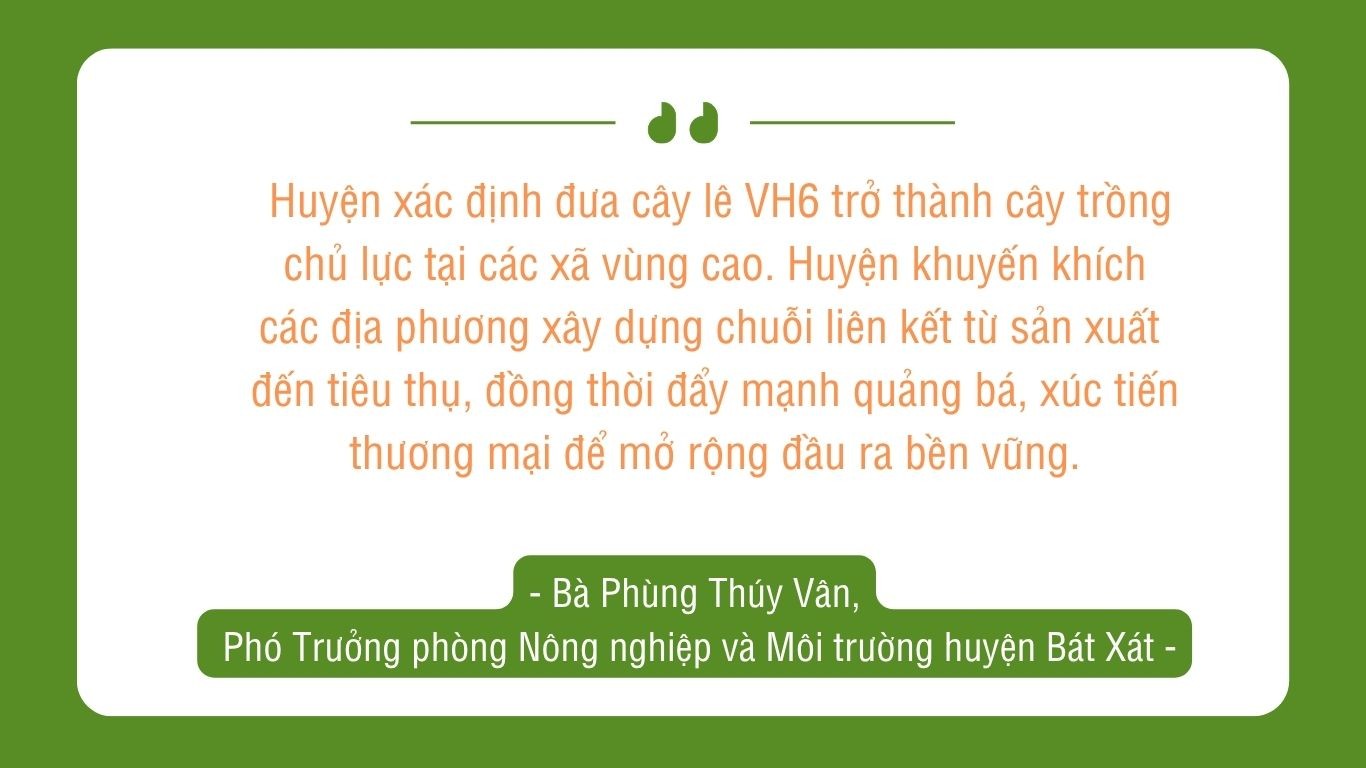
From hilly areas accustomed to short-term, low-yield crops, the VH6 pear variety has opened a new direction for agricultural development in the highland communes of Bat Xat district. The successful conversion to this crop variety has not only helped increase income and improve people's lives but also contributed to the formation of a commodity production area and the building of a distinctive local agricultural brand. This is a suitable and sustainable development direction that needs to be further expanded and invested in comprehensively in the future.
Source: https://baolaocai.vn/dat-doi-cho-qua-ngot-post403074.html



















































Comment (0)