

During the fierce years of the resistance war against the US, the Quang Ninh mining region left a strong mark with two vibrant emulation movements: the "Three Ready" movement of the youth and the "Three Capable" movement of the women. These movements not only contributed to maintaining production but also fueled the front lines, affirming the pioneering role of this heroic working-class region.
"Three Ready" - Fire from the Mining Region
In 1964, the resistance war against the US entered a tense phase. To prepare the youth and the people mentally for the war, on May 19, 1964, the province launched the "Three Ready" movement. Starting with young workers, the movement spread to the youth throughout the province. The "Three Ready" were: "Ready to fight; ready to join the armed forces; ready to go anywhere and do anything the Fatherland needs."
On August 5, 1964, the first bombing campaign against North Vietnam began. The American forces relentlessly bombed the mining region, but the young people of Quang Ninh, well-trained and ready to face the attack, fought valiantly. The entire province fought bravely, shooting down three American planes and capturing the first enemy pilot in the North. Heroic examples such as Le Sy Hang, who, despite a broken leg, tied his leg to a cannon to continue fighting, or Dong Quoc Binh, who, despite a protruding intestine, calmly put it back in and continued to hold his rifle firmly, shone brightly with the spirit of "Three Ready." An entire generation of young people from the mining region unhesitatingly volunteered for battle, ready to sacrifice themselves for the Fatherland.
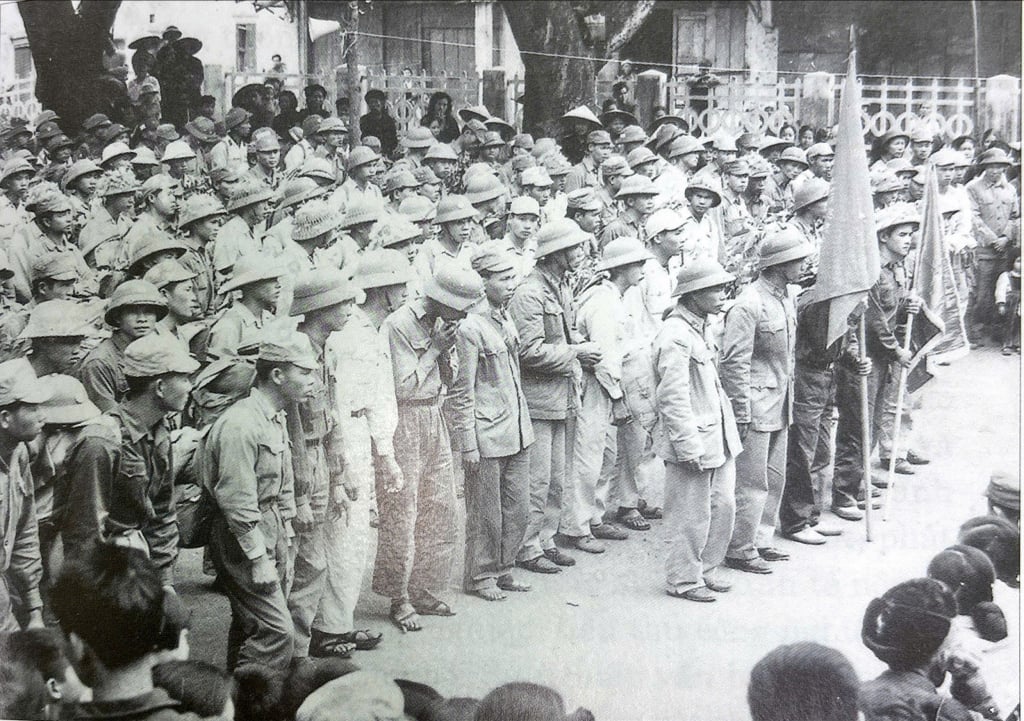
Responding to the State's "Partial Mobilization Order" and President Ho Chi Minh 's call to arms against the US on July 17, 1966, some families with four sons already fighting on the battlefield still applied for their fifth son to enlist. Many demobilized military officers transferred to civilian jobs and applied to re-enlist; many police officers volunteered to go to the South to reinforce the Southern security forces. Many Southern cadres who had relocated to the North and were working in Quang Ninh volunteered to return to the South to fight. On July 22, 1966, 3,000 militia members from Yen Hung district (mostly young people) held an armed rally, raising banners with the slogan: "Determined to fulfill President Ho Chi Minh's call on July 17, 1966," ready to enlist, ready to go anywhere, and do anything when the Fatherland and the people needed them. In Hon Gai town, 3,214 young people applied to re-enlist or join the army, and 1,293 young people joined the shock troop unit.
On July 30, 1967, at the entrance of the Bach Dang cinema in Hon Gai town, the Quang Ninh Provincial Party Committee and People's Committee solemnly held a ceremony to announce the establishment of the "Coal Brigade," bidding farewell to the outstanding sons of the mining region who were enlisting to fight in the South. From 1965 to 1968, Quang Ninh province consistently exceeded its military recruitment quota (by 2% or more) each year. Notably, by mid-March 1975, the entire province exceeded its quota by 16% and was one of the two provinces that excelled in recruiting soldiers to support the battlefield, earning commendation from the Military Region and the Government . These actions demonstrated the boundless affection of the Quang Ninh Party Committee and its people and military for their compatriots in the South and the soldiers throughout the country.
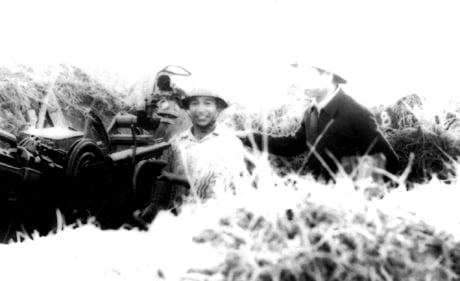
Youth volunteer teams, shock troops, and red flag youth groups were successively established to serve in combat, be ready for combat, and overcome the consequences of war. The youth of Quang Ninh were brimming with enthusiasm with slogans such as: "Hammer in hand - Gun in hand"; "Plow in hand - Gun in hand", "Pen in hand - Gun in hand"... Hundreds of outstanding young people who excelled in both production and combat were commended by the Provincial Youth Union.
In production, thanks to his intelligence and creativity, Comrade Vu Huu Son's drilling technique at the Deo Nai coal mine conquered even the hardest rock formations. Similarly, the tunneling team of Dao Xuan Ngoc at the Thong Nhat underground mine, and the outer chute team of the Cua Ong Coal Screening Company, thanks to their technical innovations, continuously improved productivity while also participating in combat operations and shooting down American aircraft. In early 1965, President Ho Chi Minh visited Quang Ninh and attended a rally at Hon Gai High School. He praised the two leading production teams of the youth movement, Vu Huu Son and Dao Xuan Ngoc. Later, Vu Huu Son was awarded the title of Hero of Labor.
Furthermore, it's impossible not to mention the "Dien Bien Phu" coal campaign with a target of 3.2 million tons of coal; the "For Our Beloved South" coal campaign with a target of 4.3 million tons of coal… These campaigns were all successfully completed under harsh wartime conditions. In addition, the Youth Union widely launched a movement encouraging young people to develop initiatives, improve technology, and rationalize production. From this movement, hundreds of innovative ideas and experiences from young people in mines, factories, construction sites, and young scientific and technical cadres were presented as exemplary cases.
During those years, one notable achievement of Quang Ninh's youth was the "youth project" to restore the Cua Ong coal screening plant. On April 10, 1966, American bombing severely damaged the Cua Ong screening plant, paralyzing production. In response, the Party Committee of the Vietnam Coal Corporation assigned the project to the Corporation's Youth Union. The Executive Committee of the Corporation's Youth Union discussed and agreed to mobilize highly skilled young workers from factories and mechanical workshops throughout the coal industry, from Mao Khe, Vang Danh, Hon Gai, Cam Pha, etc., to repair the plant. This was considered a "youth project" to be completed before May 19, 1966, to celebrate President Ho Chi Minh's birthday. Despite the fierce war, the workers diligently worked day and night, utilizing their intellect, strength, and enthusiasm to complete the work ahead of schedule.
On May 10, 1972, the second American bombing campaign began in Quang Ninh. They destroyed Hon Gai town and the Quang Ninh industrial zone, while our forces were mostly deployed to the Southern battlefield. The remaining forces in the mining region were very thin. Taking advantage of the presence of veterans who had fought in the anti-French resistance, the Youth Union mobilized young people to volunteer to join the anti-aircraft artillery units of the mining region. In a short time, anti-aircraft artillery units in the mining region were formed, with over 80% of the members being Youth Union members. Notably, the unit led by Comrade Dang Ba Hat at the Hon Gai Port Enterprise had nearly 100% Youth Union members. The self-defense units, anti-aircraft artillery units, and Youth Volunteer and Shock Troop units closely coordinated with the main units, sometimes even replacing them, actively contributing alongside the military and people of the province to shooting down 200 American aircraft, capturing many enemy pilots, and protecting the mining area. It is truly a source of pride that, at the conclusion of the "Three Ready" movement, the youth of Quang Ninh were awarded the most outstanding rotating flag of President Ho Chi Minh by the Central Youth Union.
In the heroic atmosphere of those historic April days, we had the opportunity to talk with Mr. Dong Duy Hung (born in 1947, residing in Hon Gai Ward, Ha Long City), who experienced the fervent spirit of the "Three Ready" movement. Mr. Hung emotionally shared: "The youth of Hon Gai, as well as the entire Quang Ninh province at that time, all longed to participate in the 'Three Ready' movement. In the summer of 1965, when I was a 9th-grade student at Hon Gai Secondary School, I participated in the 'Three Ready Youth for Public Service' movement at the Nga 2 - Cam Pha Forestry Station. Our entire class went for a month, but everyone was very happy and enthusiastic. Coming from city backgrounds, we didn't hesitate or shy away from the difficulties of working in the forestry station doing the hard work of the workers, such as forest maintenance and tree care… We worked diligently for the cause of protecting the Fatherland."
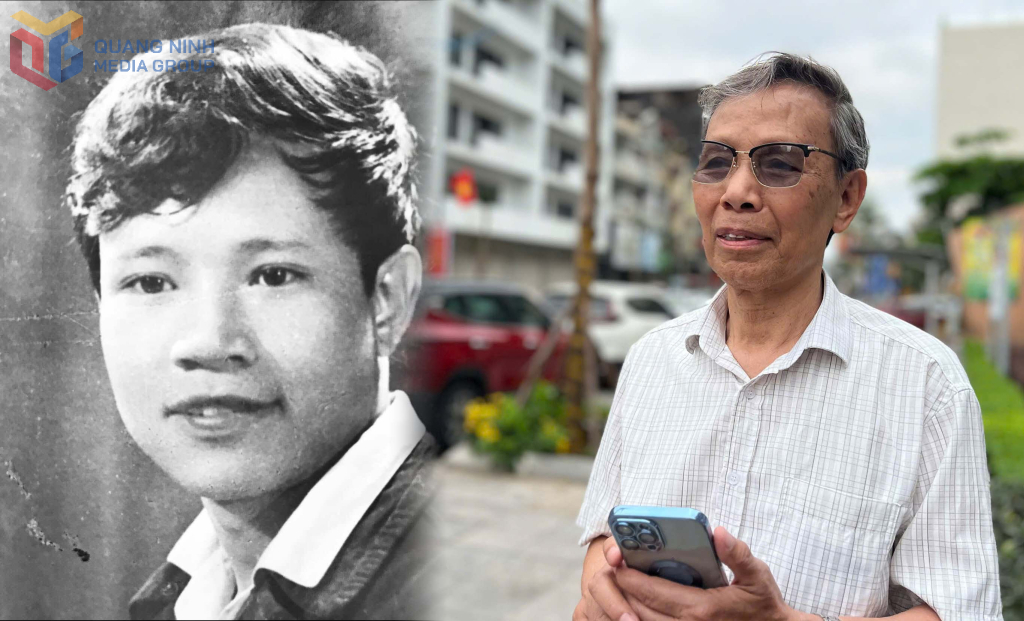
"That period was extremely difficult and full of hardships, but the youthful energy was unwavering. We young people were still full of life. During group activities, we would sit together and sing songs that stirred our love for our homeland and country, forgetting about hunger and thirst, sharing a common belief that one day the country would be at peace and independent," Mr. Hung recalled.
Sixty-one years after the "Three Ready" movement was launched, that oath has gone down in history as a heroic and powerful testament to the revolutionary fervor, the spirit of sacrifice, and the unconditional voluntary dedication of the youth of Quang Ninh and of all Vietnamese youth for the people, for the beloved mining region, and for the Fatherland.
Proud of Quang Ninh's "Three Responsibilities"
Amidst the fervent atmosphere of the anti-American war for national salvation, the "Three Responsibilities" movement became a vibrant and widespread revolutionary movement among women throughout Quang Ninh province. The movement promptly met the urgent demands of the resistance war: protecting the socialist North, liberating the South, and unifying the country; and promoting the patriotic and revolutionary traditions of Vietnamese women. By striving to achieve the "Three Responsibilities," women not only effectively served the struggle to defend the country but also enhanced their status in the family and society. This policy perfectly matched the aspirations and capabilities of women, and therefore quickly became a part of their lives.
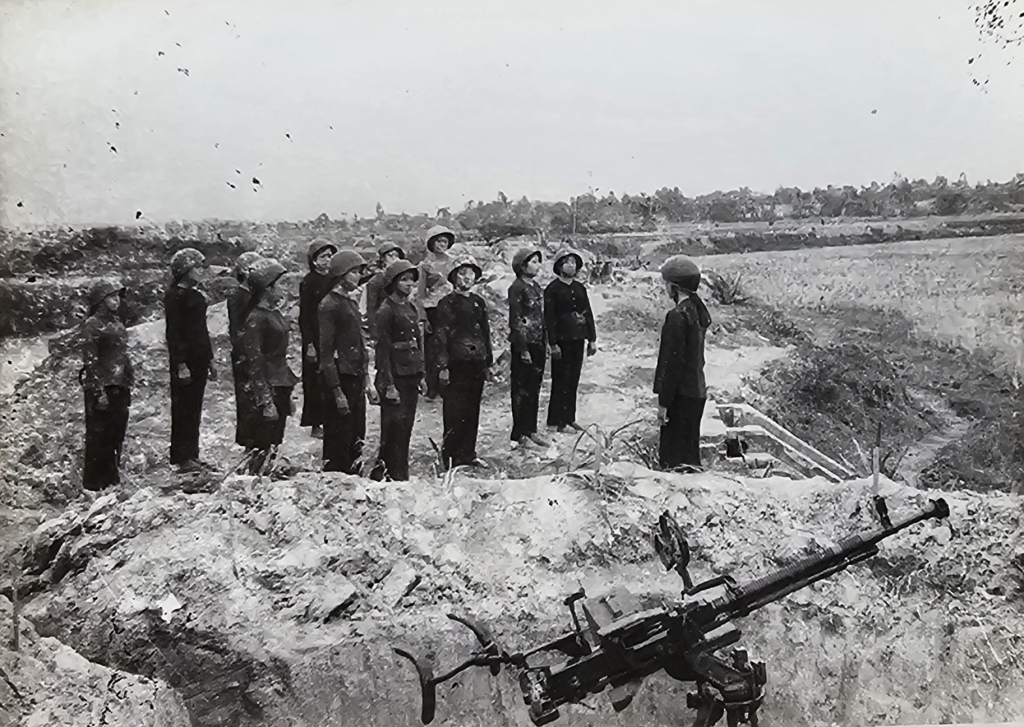
The movement saw the emergence of many exemplary women and socialist labor teams. On construction sites, factories, enterprises, and mines, women actively participated in the "Skill Training, Excellent Craftsman Competition" and "Mastering One Trade, Knowing Many" movements, promoting initiatives, improving techniques, and increasing labor productivity. Women in small-scale industries actively studied, improving their cultural and professional skills, and ensuring consistent work attendance and product quality.
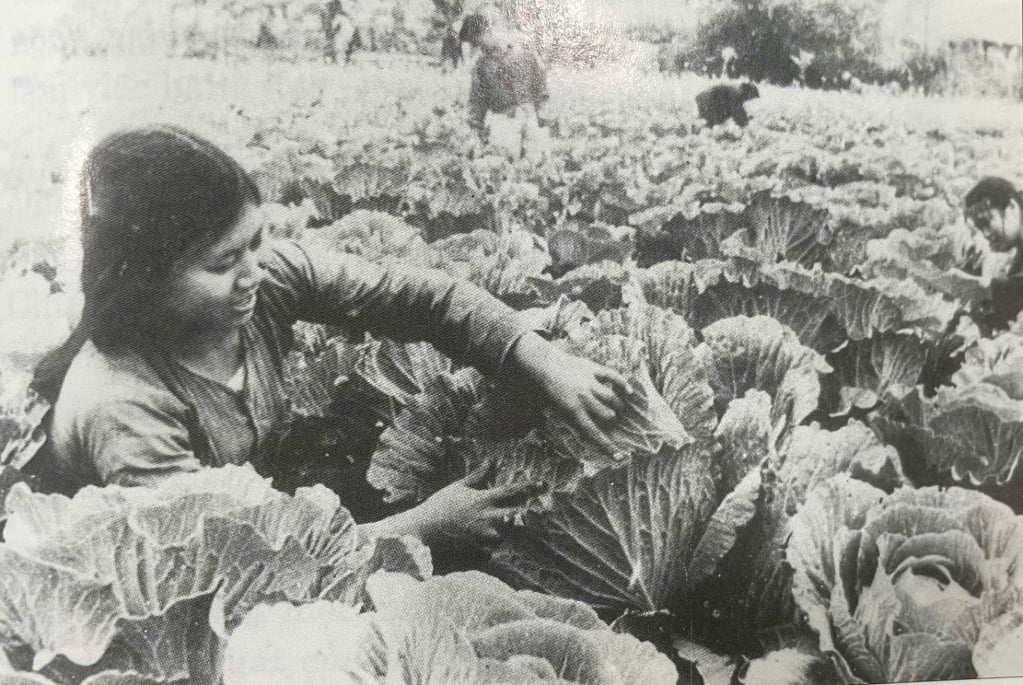
Implementing the principles of "hammer in one hand, gun in the other," and "plow in one hand, gun in the other," women in Quang Ninh participated extensively in the militia and self-defense forces, contributing to people's air defense, maintaining public order and security, providing medical care, transporting ammunition, defusing bombs and mines, and directly engaging in combat... coordinating with army and militia units to shoot down American aircraft. At that time, the province had 92 platoons of female militia and self-defense forces; all combat units and teams had female participants. During the "Three Responsibilities" period, Quang Ninh had 7 women who achieved the title of "Determined to Win" soldier, 150 outstanding soldiers, and 891 women participating in grassroots Party committees... These women overcame all difficulties, exemplaryly fulfilling their assigned tasks, taking over the responsibilities of both country and family from their husbands and children.
Women enthusiastically participated in production and labor, and increasingly took part in combat and combat support tasks. The activities of women's associations at all levels gradually focused on educating members, encouraging husbands, sons, and brothers to enlist, making significant contributions to the army's rear-area support, and mobilizing women to actively engage in livestock farming in their family areas, planting trees, and adopting a new cultural lifestyle. In particular, on the occasion of International Women's Day (March 8, 1972), three women from Quang Ninh who achieved outstanding accomplishments were honored with the Ho Chi Minh Badge by President Ton Duc Thang.
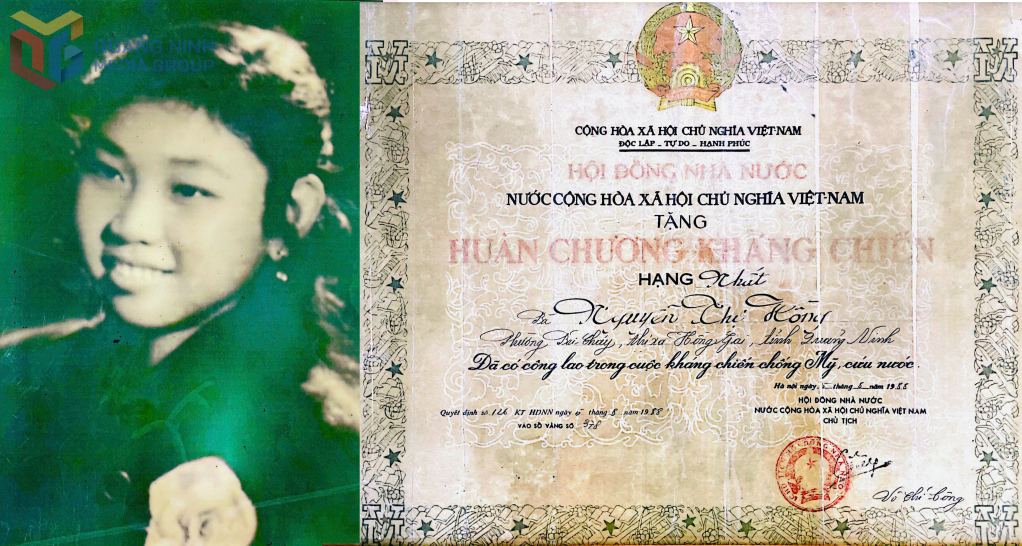
We were fortunate to meet and talk with Mrs. Nguyen Thi Hong (born in 1938, residing in Bai Chay ward, Ha Long city), a worker at the screening plant of Hon Gai Wharf Enterprise – a typical woman in the "Three Responsibilities" movement of the coal industry at that time.
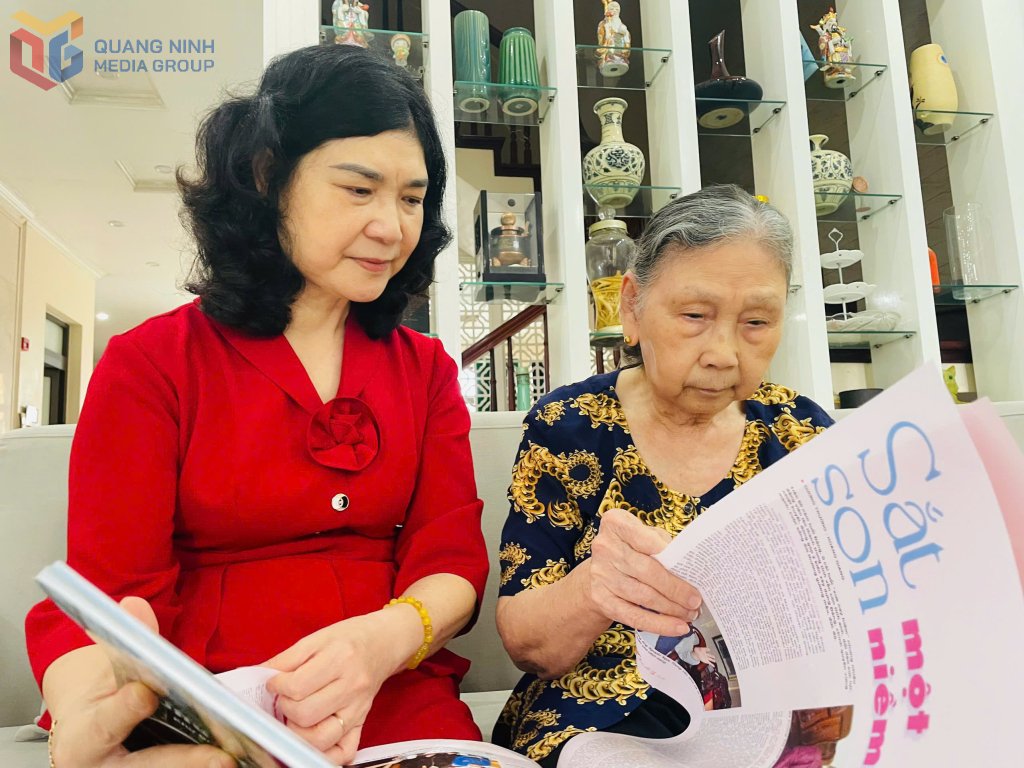
When asked about her time participating in the "Three Responsibilities" movement, she quickly produced a still-clear black-and-white photograph taken in December 1960 during the movement's summary meeting. She said, "Back then, I was proud to be one of the exemplary women. I received three roses on my shirt and my picture was published in the Mining Region newspaper – that was a great honor!" In 1959, working sorting coal at the screening plant, I and everyone else worked continuously two shifts a day, without a single day off, despite the strenuous work. Some women had husbands fighting in the war, others were unmarried, but we all worked tirelessly, forgetting the time and fatigue, with the sole goal of maximizing productivity. Everyone competed to win the "Three Responsibilities" title; the atmosphere was very enthusiastic. And in December 1959, I was admitted to the Party in the first batch of Quang Ninh coal miners."
It can be affirmed that, during those proud years, together with the entire nation, the women of Quang Ninh dedicated all their talents and strength to the Fatherland, writing glorious chapters in the history of the Ho Chi Minh era, the pinnacle of revolutionary heroism, and enriching the tradition of heroism, indomitability, loyalty, and resourcefulness.
More than half a century has passed, but the "Three Responsibilities" movement remains vibrant and resonates in our hearts with pride and admiration for the women of Quang Ninh, as well as all Vietnamese women in the 20th century. It serves as an encouragement for Vietnamese women to continue contributing to building a prosperous and civilized nation, achieving new feats in this era of national progress.
Thu Hoai
Source










































![[Video] Sunset at Lap An Lagoon – Where the sun sets over the fishing nets](https://vphoto.vietnam.vn/thumb/1200x675/vietnam/resource/IMAGE/2026/05/31/1780192137701_beach-landscape-sea-water-nature-grass-745871-pxhere-com.jpeg)




























Comment (0)