

Toothache , or dental pain, is a condition where the surface or inside of a tooth feels painful or sensitive. This is a fairly common problem, often experienced by people who don't practice proper oral hygiene or have poor oral health.
- Causes of toothache
- Tooth decay, pulpitis
- Temporomandibular joint disorders
- Cracked or broken teeth
- Tooth neck erosion
- wisdom teeth eruption
- Proper oral hygiene is essential for preventing toothaches.
Clinically, toothache is described as a dull ache, aching pain, or intense pain inside or around the tooth. The pain may be constant or intermittent, and may worsen with chewing or contact with hot or cold food.
Depending on the cause, toothaches can be accompanied by various symptoms, typically including:
- Oral symptoms: Pain in the tooth and surrounding gums, sharp pain when touching the tooth or when biting or chewing food.
- Systemic symptoms: May include mild fever, malaise, and marked sensitivity to hot or cold food and drinks.
If persistent toothache is left untreated, oral health will progressively deteriorate, easily leading to dangerous complications such as widespread infection, tooth loss, impaired chewing function, and overall health problems. Therefore, patients should seek early examination at specialized dental clinics for accurate diagnosis and appropriate treatment.

When experiencing toothache, patients should visit a medical facility for examination.
Causes of toothache
Tooth decay, pulpitis
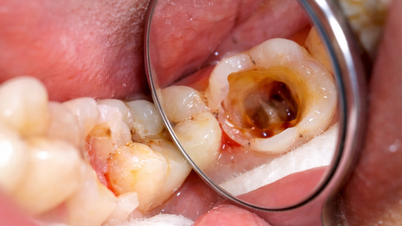
Tooth decay is the most common cause of toothache. The process of tooth decay begins when bacteria in the mouth produce acid, attacking the enamel surface and forming small cavities. If left untreated, tooth decay can cause pain, infection, and even tooth loss.
Beneath the enamel is dentin. When the enamel is worn away or destroyed, the dentin is exposed. Because dentin is softer and more sensitive than enamel, it is rapidly degraded by acids from plaque bacteria. Dentin contains small tubules that lead to nerves, so damage to it causes sensitivity and pain.
When tooth decay progresses further and completely destroys the dentin, the pulp – which contains nerves and blood vessels – becomes exposed. At this stage, patients usually experience severe pain, high tooth sensitivity, and swelling and inflammation. Pulp damage in the early stages can be treated conservatively, but if detected late, root canal treatment or tooth extraction may be necessary.
Temporomandibular joint disorders
Temporomandibular joint disorders can cause pain in the area in front of the ear, on one or both sides. The pain often radiates to the molars, especially increasing during chewing, causing patients to experience prolonged and increasingly uncomfortable toothache.
Cracked or broken teeth
Cracked or broken teeth lose their protective enamel layer, making the dentin and pulp more susceptible to irritation during chewing. Simultaneously, bacteria can easily penetrate, causing inflammation, leading to persistent pain and sensitivity.
Tooth neck erosion
Tooth erosion is a condition where the enamel layer on the tooth closest to the gum line is lost, exposing the dentin. In this case, even minor factors like temperature changes, brushing, or eating can cause persistent sensitivity and pain.
wisdom teeth eruption
wisdom teeth (the eighth teeth) are a group of four teeth located at the very back of the jaw, usually erupting between the ages of 17 and 25. The eruption process is often lengthy, easily causing swollen gums, redness, pain, and soreness. In particular, in cases where wisdom teeth erupt incorrectly, are impacted, or are trapped within the bone, patients may experience prolonged pain and even severe infection.
Proper oral hygiene is essential for preventing toothaches.
When experiencing toothache, patients should visit a medical facility for examination. Depending on the specific cause, the doctor will prescribe an appropriate treatment plan to completely resolve the pain.
In addition, proper oral hygiene at home plays a very important role, including:
- Brush your teeth at least twice a day, especially after meals, to remove plaque and bacteria.
- Rinse your mouth regularly with clean water or a suitable mouthwash to help clean your oral cavity.
- Avoid letting food get stuck between your teeth for too long; prioritize healthy foods that are less harmful to your teeth.
- Adding foods that are good for teeth, such as yogurt, milk, cheese, apples, nuts, and green vegetables, helps increase saliva production and protect tooth enamel.
In summary: Toothaches during chewing may initially only cause difficulties in daily life, but if ignored and left untreated, they can lead to many dangerous complications in the long run, seriously affecting health.
Therefore, when experiencing toothache, especially pain while chewing, patients should promptly visit a dental clinic for examination. After accurately identifying the cause, the dentist will advise and prescribe appropriate treatment methods to alleviate the pain and protect long-term oral health.
Source: https://suckhoedoisong.vn/dau-nhuc-rang-lien-tuc-la-do-dau-169260203090118786.htm


![[Photo] National Assembly Chairman Tran Thanh Man working with the Standing Committee of the National Assembly's Delegation Affairs Committee.](https://vphoto.vietnam.vn/thumb/1200x675/vietnam/resource/IMAGE/2026/05/20/1779294340023_ndo_br_1-1691-jpg.webp)
![[Image] "Journey of Hope" promotes the organ and tissue donation movement in Vietnam.](https://vphoto.vietnam.vn/thumb/1200x675/vietnam/resource/IMAGE/2026/05/20/1779294400833_1-8910-jpg.webp)

![[Photo] General Secretary and President To Lam works with the Party Committee of the Ministry of Health on the work of Vietnamese traditional medicine.](https://vphoto.vietnam.vn/thumb/1200x675/vietnam/resource/IMAGE/2026/05/20/1779294323718_a1-bnd-2978-3319-jpg.webp)



































































































Comment (0)