


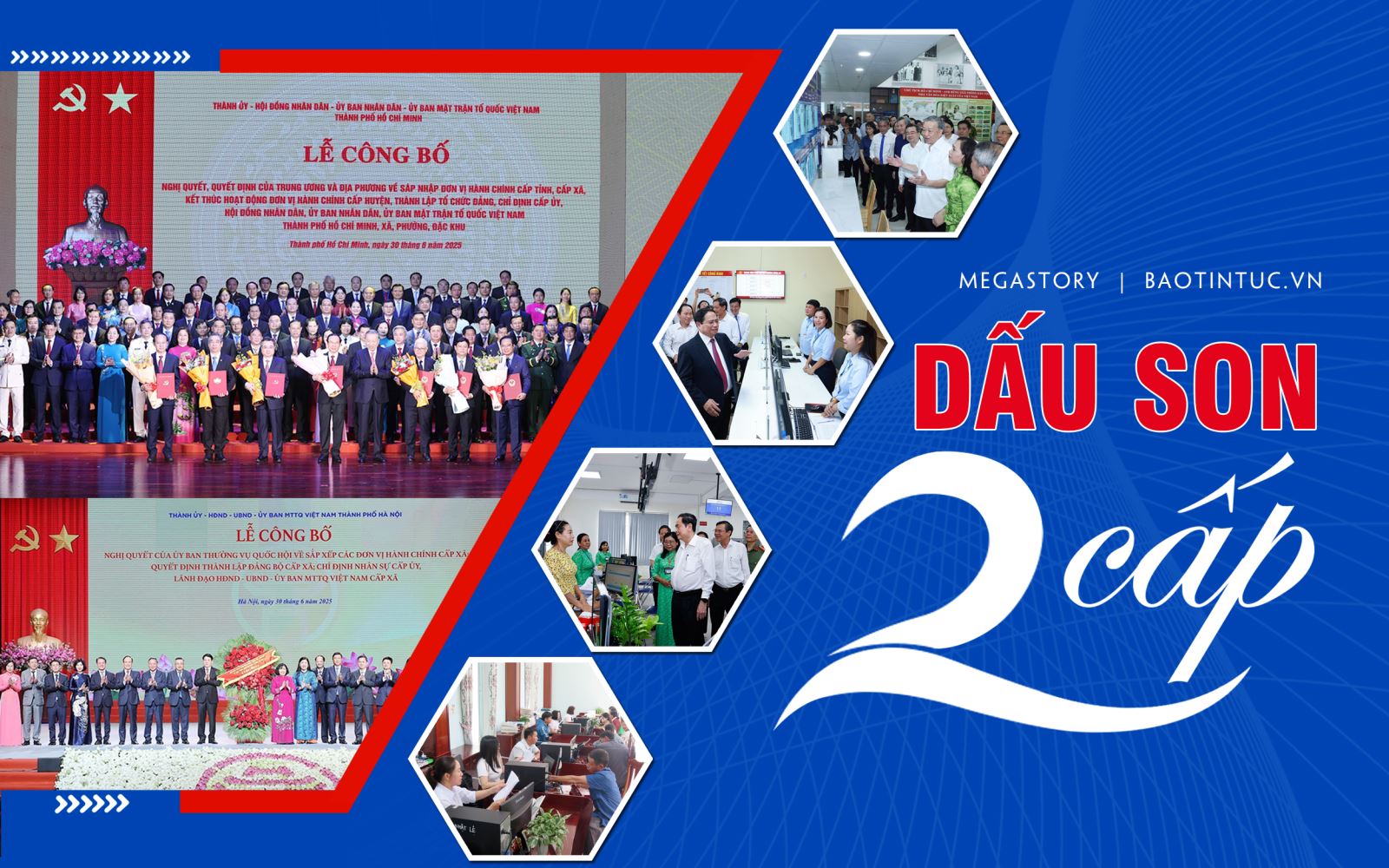
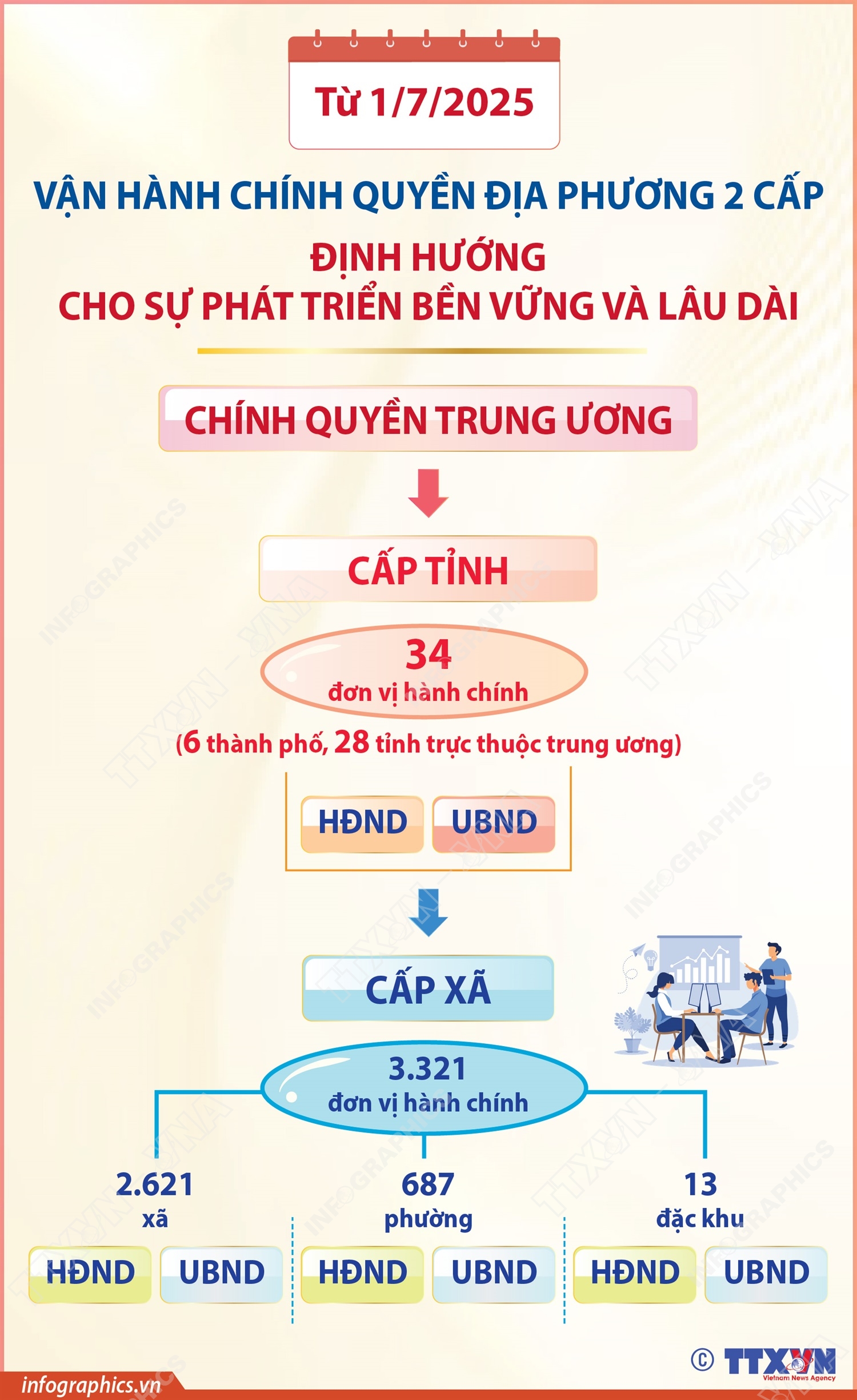
From July 1st, 2025, the country will have 34 provinces and cities and 3,321 communes and wards. During the first week of implementing the two-tiered local government model, the working atmosphere in localities was urgent and serious, demonstrating high political determination. All activities were geared towards the goal of avoiding delays and ensuring that the rights of citizens and businesses were not affected.
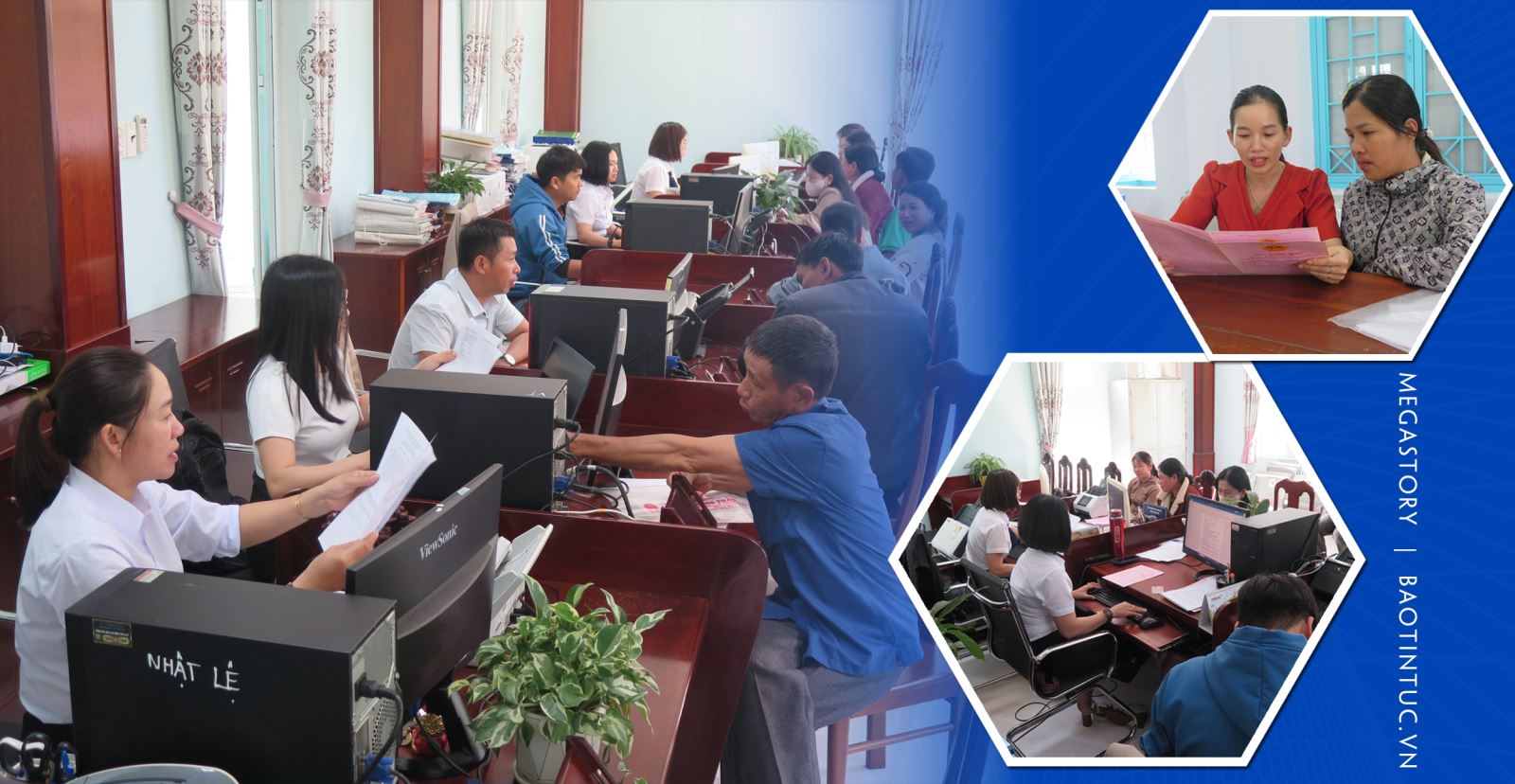
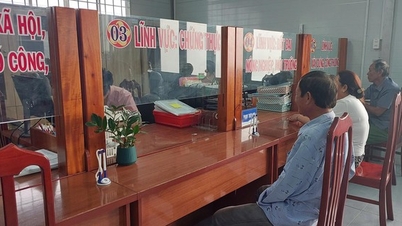
Officials from the Public Administrative Service Centers of Bo Y and Duc Nong communes ( Quang Ngai province) processed procedures for residents on the morning of July 1st.
Bo Y Commune – the “border junction” commune of Quang Ngai province – after being merged from three former commune-level administrative units: Plei Kan town, Dak Xu commune, and Po Y commune, formerly belonging to Ngoc Hoi district, Kon Tum province, has a vast area of over 242 km2. With thorough preparation and a spirit of dedication to their work, the commune's officials have performed their duties well, providing attentive and dedicated service to the people, ensuring that work is not interrupted.
On the morning of July 1st, Ms. Le Thi Dung (from Dak To commune) came to the Public Administrative Service Center of Bo Y commune to complete the procedures for receiving the Land Use Right Certificate for her plot of land in Bo Y commune. She said that consolidating administrative procedures at the Public Administrative Service Center makes it convenient for people, eliminating the need to travel to multiple locations. She expressed great satisfaction with the two-tiered local government model.
Mr. Hoang Huu Suu (residing in Sa Loong commune, Quang Ngai province) said that due to old habits, he had incorrectly written his administrative address when completing land inheritance procedures. After being guided by officials, he corrected it promptly and completed the application. "I found the officials very dedicated and thoughtful. The administrative procedures have been faster, and I don't have to go to many places," he shared.
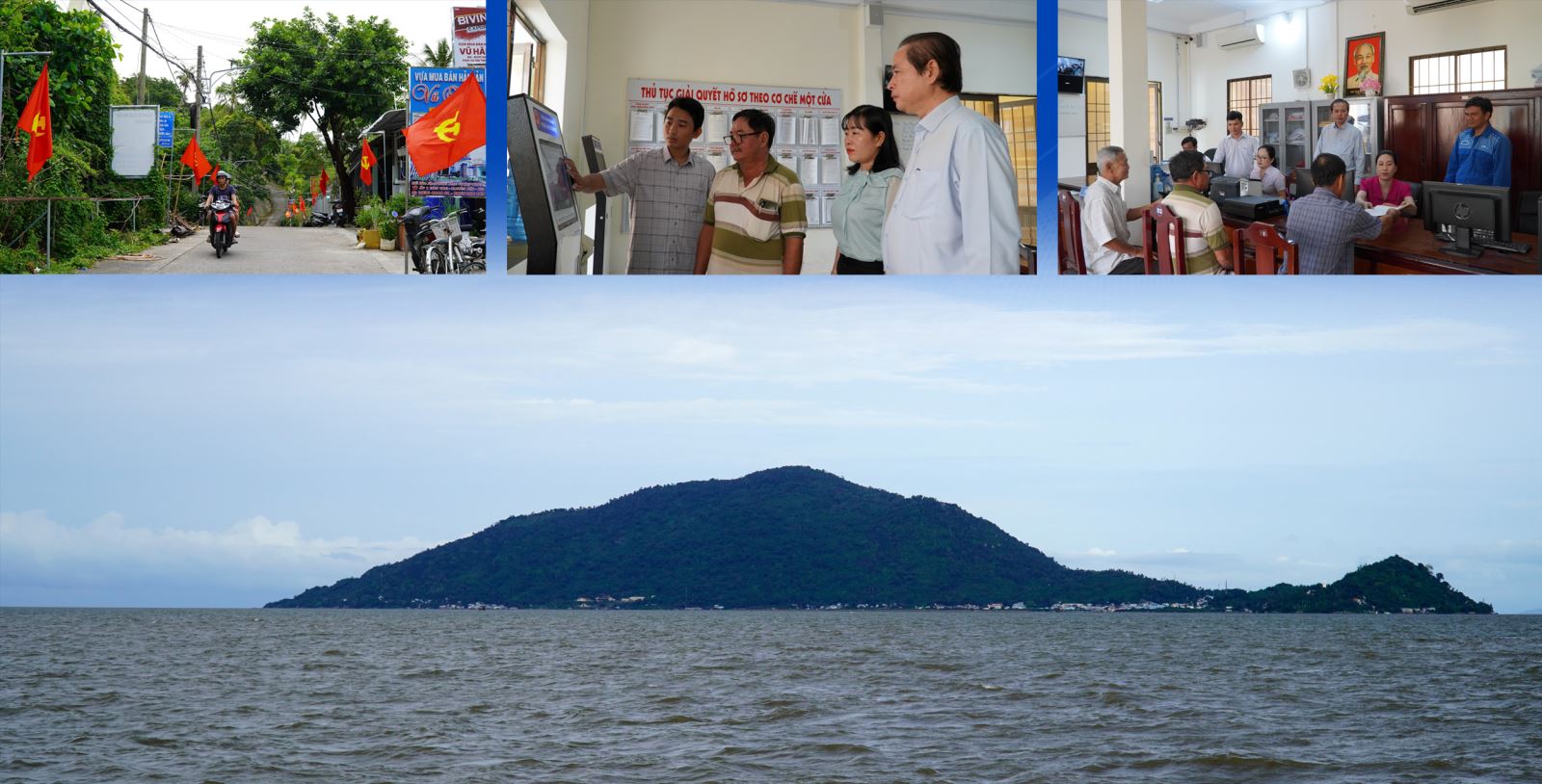
The administrative center of the Kien Hai Special Zone, An Giang province, is located on Hon Tre island.
Similarly, Mr. Phan Minh Son, from Hamlet 1, Kien Hai Special Economic Zone (An Giang province), said that on the morning of July 2nd, he went to the Special Economic Zone's Public Administrative Service Center to renew his land use right certificate. The officer in charge instructed him to photocopy some relevant documents and accepted his application, promising to return the results within a week. "I'm happy that I don't have to travel far or take ferries to the city center to complete the procedures like before. Not only that, I'm even more pleased with the spirit and attitude of the officers in serving the people," Mr. Son said.
At a meeting with voters in Bac Ninh province on July 5th, Deputy Prime Minister Nguyen Hoa Binh affirmed: "The reorganization of the country and the redrawing of the national map have been highly appreciated and supported by the people. This is a great source of encouragement, demonstrating the people's trust in the leadership of the Party and the bright future of the country."
Earlier, on June 30th, localities across the country simultaneously announced resolutions and decisions from the central and local governments regarding the merger of provincial and commune-level administrative units. This was a major national event, marking a historic milestone in the process of reforming the institutional and organizational structure of local governments, opening a new phase of national development.
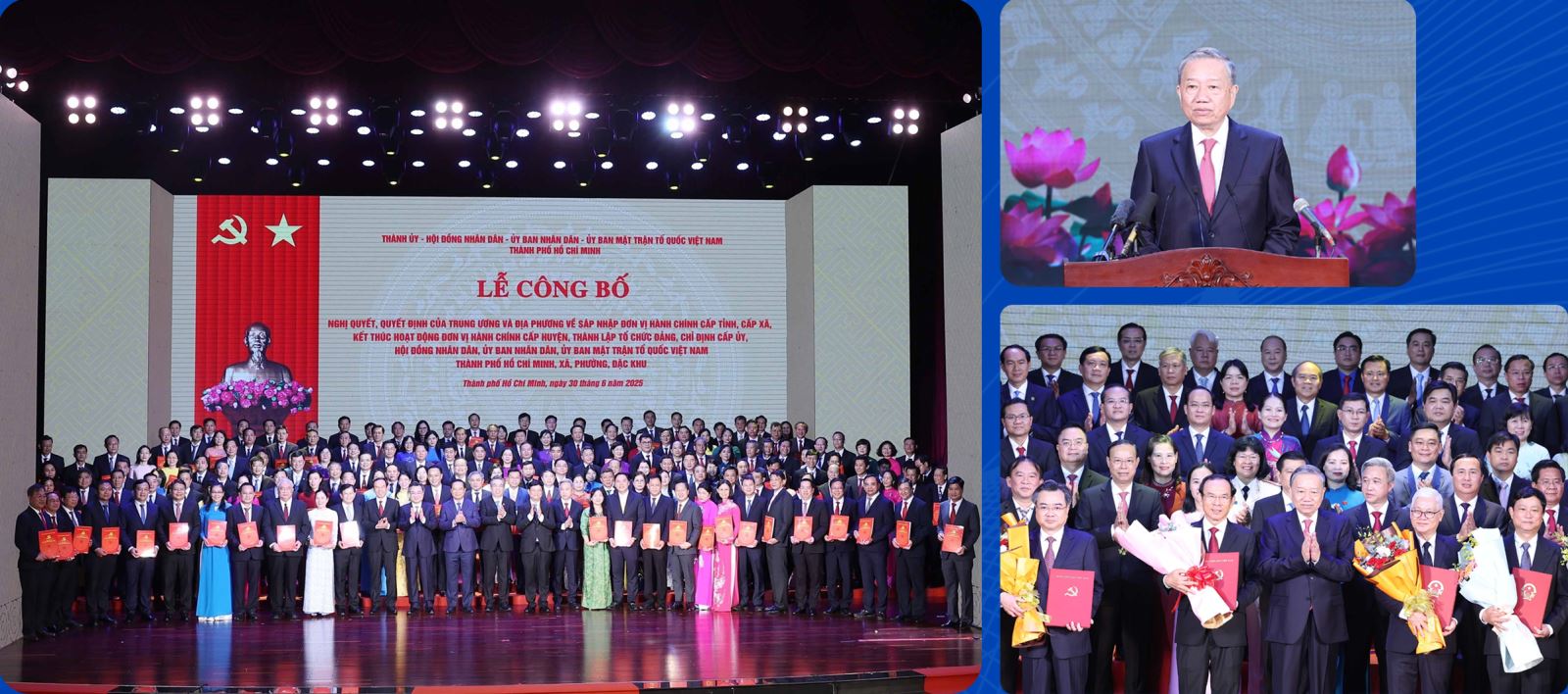
General Secretary To Lam presented the resolutions and decisions of the Central Committee on the merger of administrative units and the establishment of Party organizations, as well as the appointment of Party committees, People's Councils, People's Committees, and the Vietnam Fatherland Front Committee of Ho Chi Minh City.
Speaking at the announcement ceremony in Ho Chi Minh City, General Secretary To Lam stated that the reorganization of administrative boundaries and the operation of a new local government model are objective and inevitable requirements for national development in the context of globalization, digital transformation, and the fourth industrial revolution. This is a valuable opportunity for us to innovate leadership thinking, reform methods of state management, strongly apply science and technology, improve the quality of national governance, and enhance the effectiveness of serving the people.
The General Secretary called on all compatriots nationwide, from the highlands and border regions to the remote islands, from cities to rural areas, to continue to uphold the tradition of national unity, maintain and further cultivate patriotism, community spirit, and mutual support to create a strong and unified bloc – the invincible strength of our people. All levels of government, agencies, organizations, civil servants, and workers should make a strong transformation in thinking and action, grasp development trends, innovate their thinking and working methods, improve their leadership and management capabilities, and promote a spirit of daring to think, daring to act, and daring to take responsibility, ready to sacrifice personal interests to move towards a service-oriented, modern, transparent administration that is of the people, by the people, and for the people.
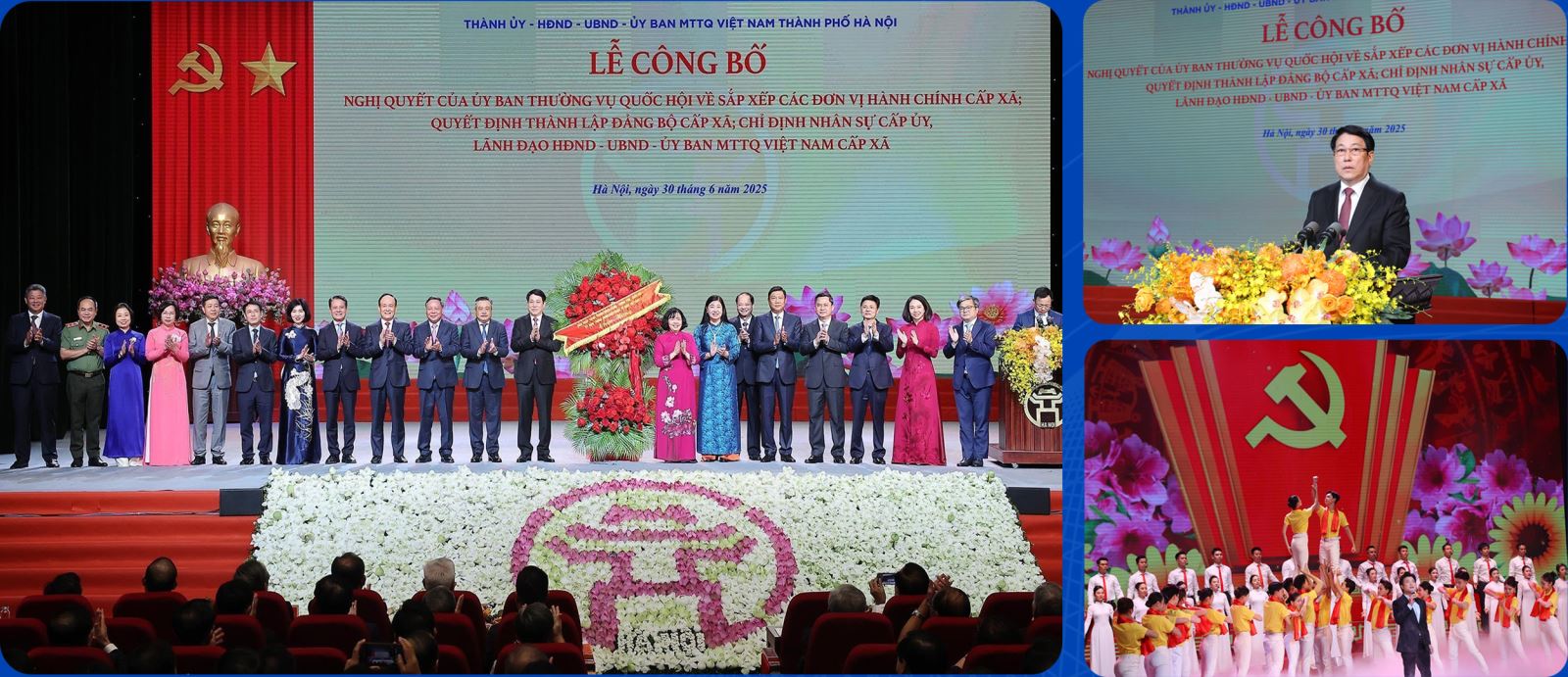
President Luong Cuong attended the ceremony to announce the resolution of the National Assembly Standing Committee on the reorganization of commune-level administrative units; and the decisions of Hanoi City on the implementation of the organization of commune-level administrative units.
Speaking at the ceremony announcing the National Assembly Standing Committee's resolution on the reorganization of commune-level administrative units and Hanoi City's decisions on the implementation of commune-level administrative unit organization, President Luong Cuong stated that this is a very special milestone for the whole country and Hanoi, marking the official transition from July 1, 2025, of the nationwide local government apparatus to a new phase – moving from a three-tiered local government system that has operated for 80 years since the founding of the country to a two-tiered local government system. This is not merely a simple adjustment of administrative boundaries, but also a step of great political and organizational significance, ensuring the sustainable development of the country.
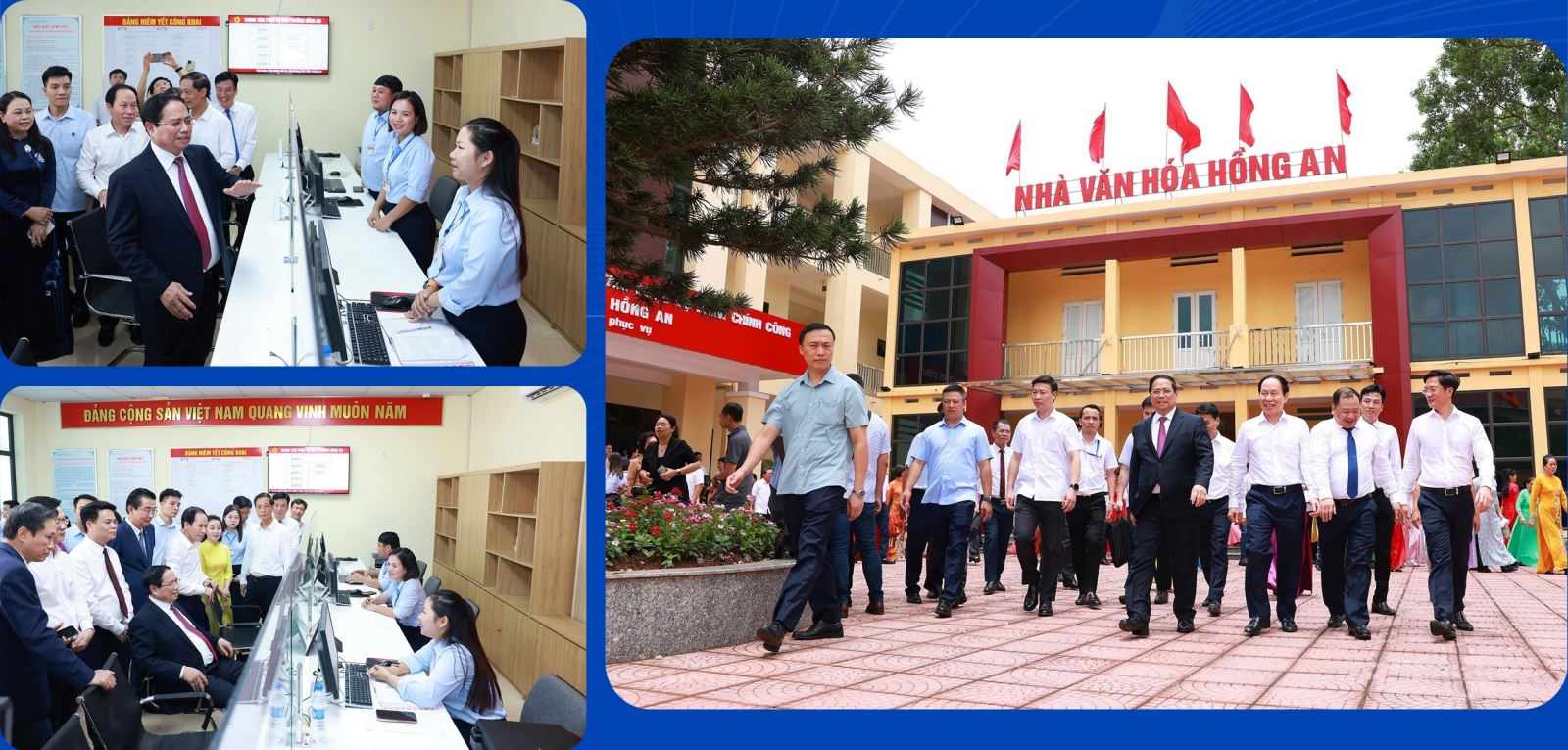
Prime Minister Pham Minh Chinh visits the Public Administrative Service Center of Hong An Ward, Hai Phong City.
Emphasizing the reorganization of administrative units, the consolidation of provincial-level units, the elimination of district-level units, and the merger of commune-level units to perfect a streamlined state administrative apparatus, enhance efficiency and effectiveness, be closer to the people, and better serve the people, at the announcement ceremony in Hai Phong, Prime Minister Pham Minh Chinh stated that the merger of Hai Duong province and Hai Phong city into a new administrative unit named Hai Phong city reflects the strategic, long-term vision of the Party and the State, opening up development space, optimizing resources, combining potentials and advantages, creating a new growth pole, and contributing to leading and promoting the development of the region and the country.
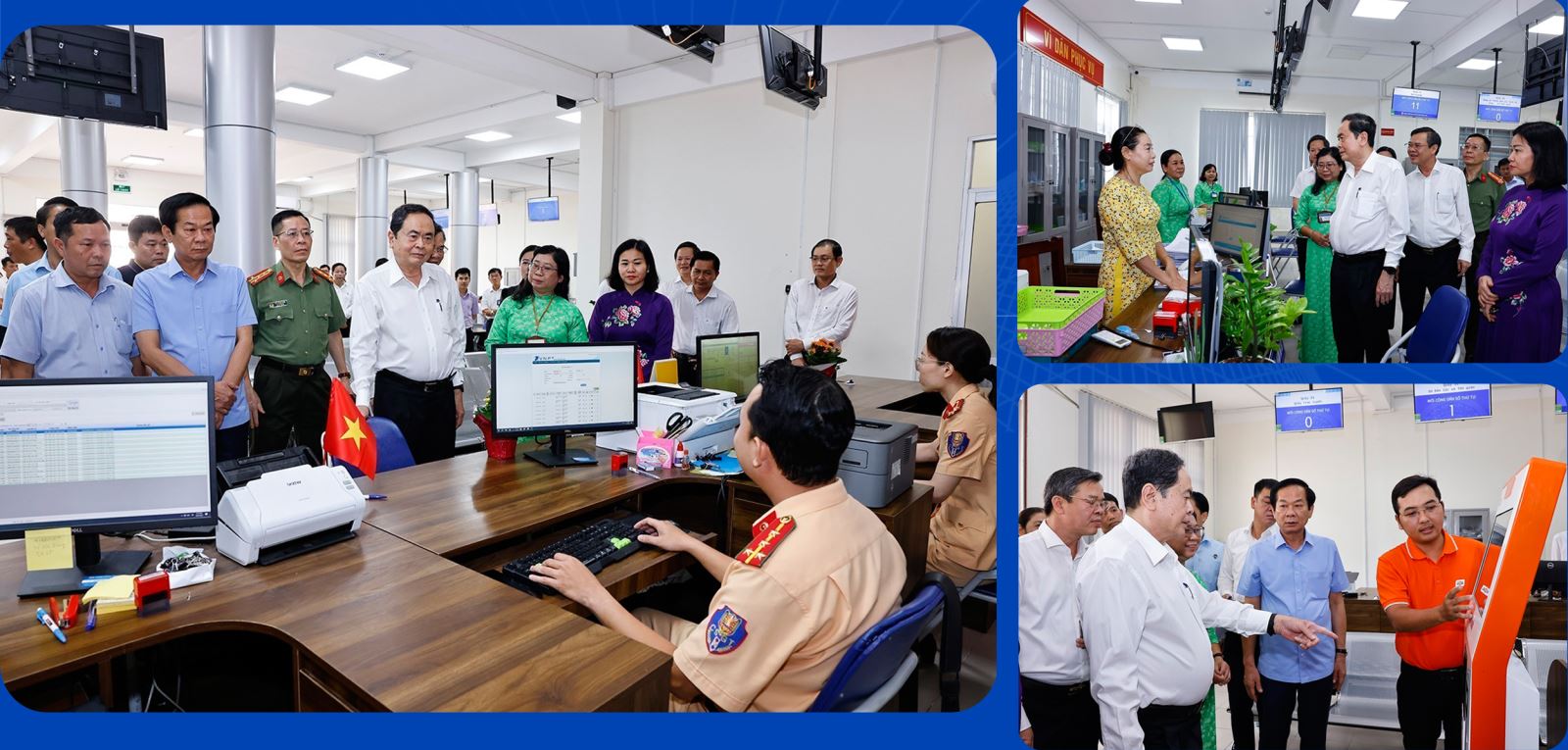
National Assembly Chairman Tran Thanh Man visits the new Public Administrative Service Center of Can Tho City.
Delivering decisions, resolutions, and directives in Can Tho City, National Assembly Chairman Tran Thanh Man shared that the reorganization of administrative units is a difficult, sensitive, and complex task, significantly impacting the organization and operation of agencies and organizations within the political system, the staff of officials, civil servants, and workers, as well as the ideology, psychology, and long-standing cultural and customary differences of the people in each locality. At this historic moment, the National Assembly Chairman expressed his deep respect, honor, and gratitude for the immense and enduring contributions of the Party committees, governments, the Fatherland Front, and mass organizations at the local level, especially at the district and commune levels, before the administrative unit reorganization. This historic decision not only marks a turning point in administrative organization but also recalls the three localities that were once closely connected under the common roof of Hau Giang province.

Reporting at the Politburo meeting on July 4th, the Secretariat gave its opinion on the implementation of the Central Committee's Resolution and the Politburo's Conclusion on the reorganization of the administrative apparatus and units; the draft report on the results of implementing Resolution No. 18-NQ/TW dated October 25, 2017, of the 12th Central Committee of the Communist Party of Vietnam from November 2024 to July 2025 showed that localities simultaneously implemented many measures to ensure the efficient and stable operation of the apparatus, such as arranging transportation to and from administrative offices in the new provinces and cities; organizing training and professional development (especially in handling documents in an electronic environment) for commune-level officials and civil servants; assigning experienced officials and civil servants to directly guide newly appointed officials and civil servants...
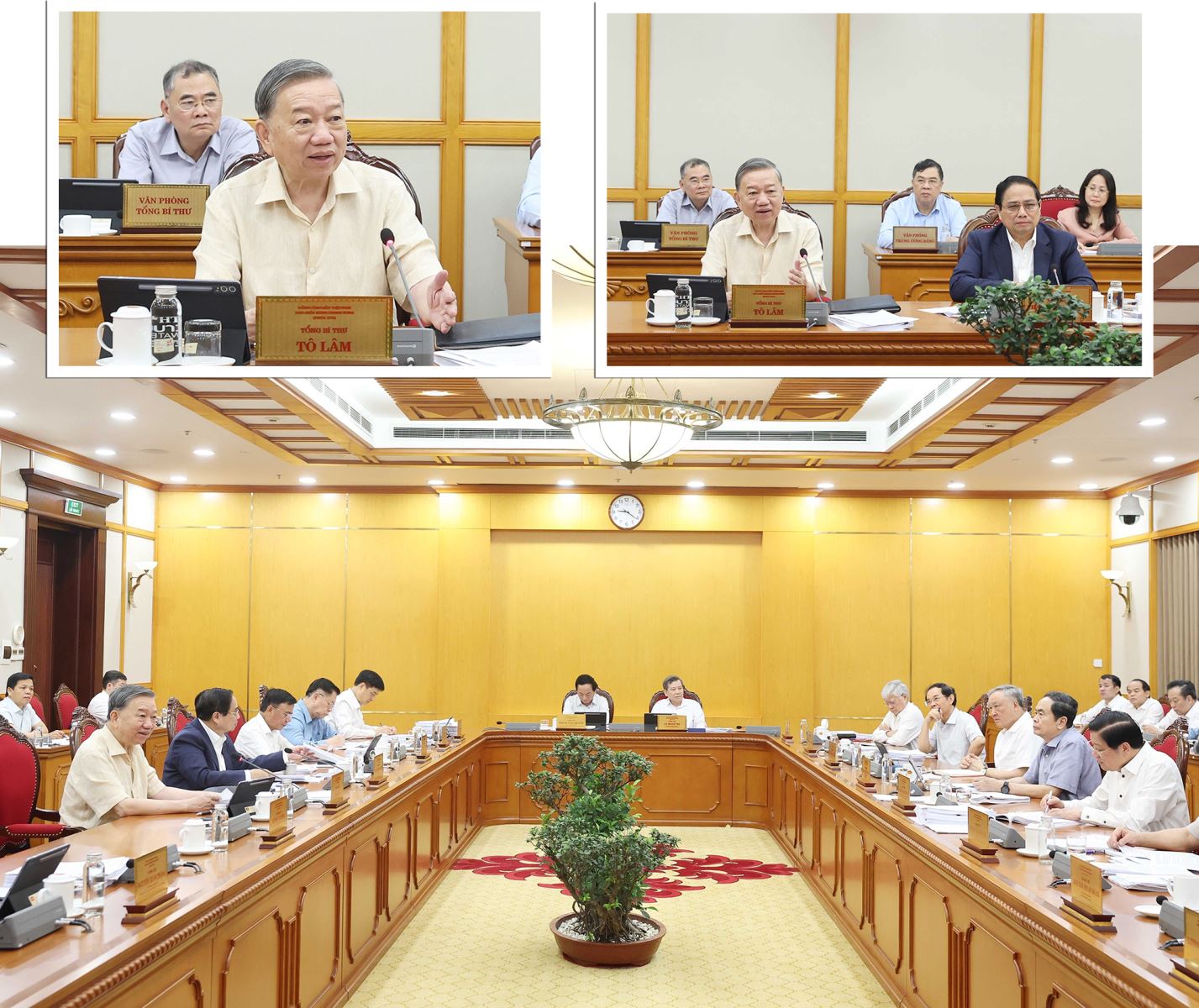
The Politburo and the Secretariat of the Central Committee gave their opinions on the implementation of the Central Committee's Resolution and the Politburo's Conclusion on the reorganization of the organizational structure and administrative units.
Many localities have successfully conducted pilot tests of the entire system, especially the Public Administrative Service Center. According to initial reports from these localities, the operation of the two-tiered administrative unit model is generally smooth and stable; administrative procedures are processed quickly and without interruption. In the initial stages of officially operating the new commune-level system, the grassroots officials and civil servants have shown greater determination and responsibility in striving to develop their homeland and country.
Recent public opinion suggests that the administrative reorganization revolution is not simply a change in geographical boundaries or personnel organization, but more fundamentally a change in mindset, an improvement in qualifications, responsibility, and public service ethics. The vast majority of officials and civil servants have demonstrated a proactive and receptive attitude, actively learning and improving their professional skills, and always being dedicated and committed to their work.
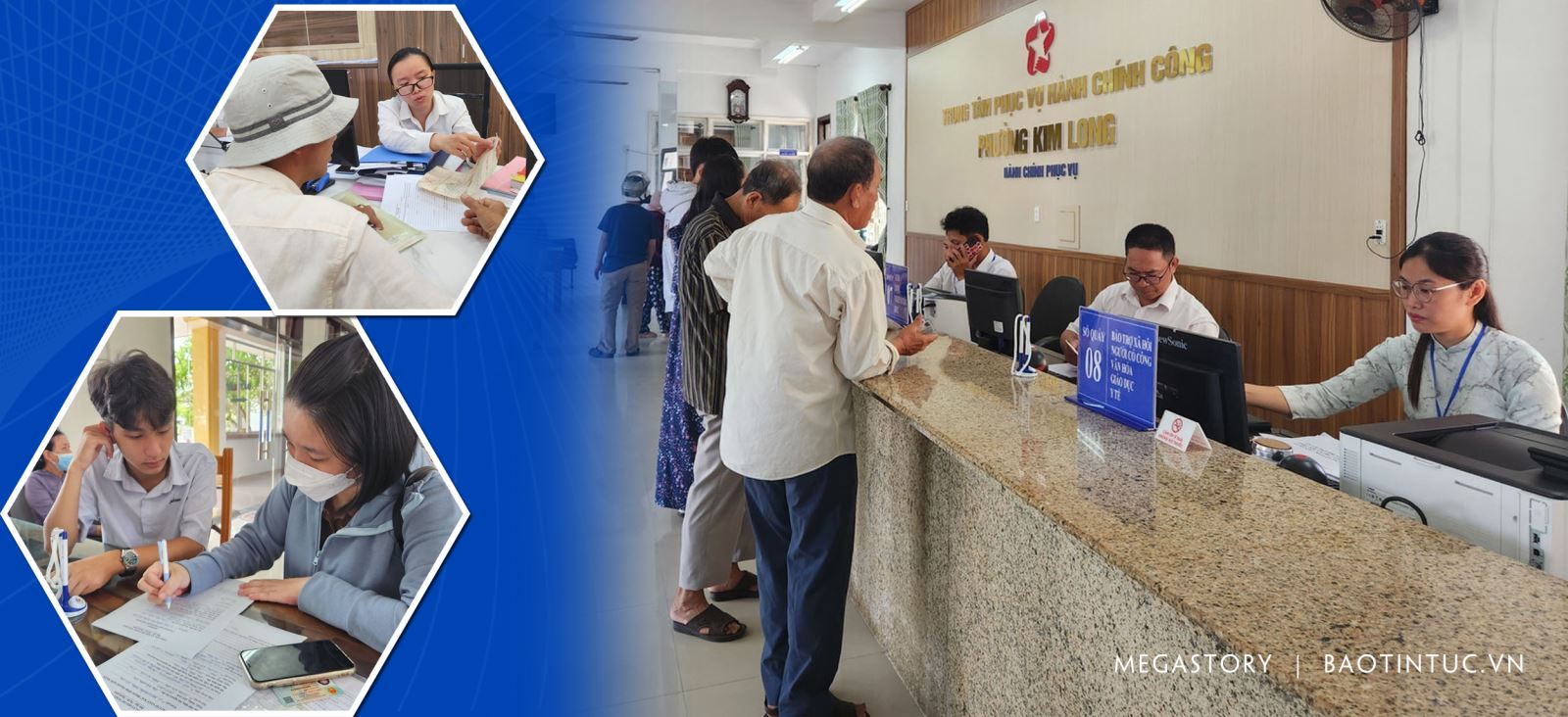
Officials from the Public Administration Centers of Phu Xuan and Kim Long wards (Hue City) guide residents on the first day of operation of the two-level government system.
After the two-tiered administrative model came into operation, many localities in Hue City faced numerous difficulties regarding personnel, large geographical areas, and inconsistent infrastructure. However, instead of delaying or waiting, many communes and wards flexibly sought their own approaches to address shortcomings and better serve the people. For example, Phong Dien ward, the commune-level unit with the largest administrative area in Hue City, with a spirit of urgency and a "work while perfecting" approach, instead of leaving people to fend for themselves, the ward government proactively implemented comprehensive solutions to serve the people from the very first days of the new model's operation.
Phong Dien Ward has set up mobile document reception points in remote areas such as Phong My and Phong Xuan, saving residents from having to travel dozens of kilometers to the Ward's Public Administrative Service Center. Simultaneously, the ward has contracted with the Vietnam Post and Telecommunications Group in Hue to transport documents twice daily, from the reception points to the processing center, ensuring timely delivery of results on the same day. The transportation costs are fully covered by the ward's budget, eliminating any additional expense for residents.
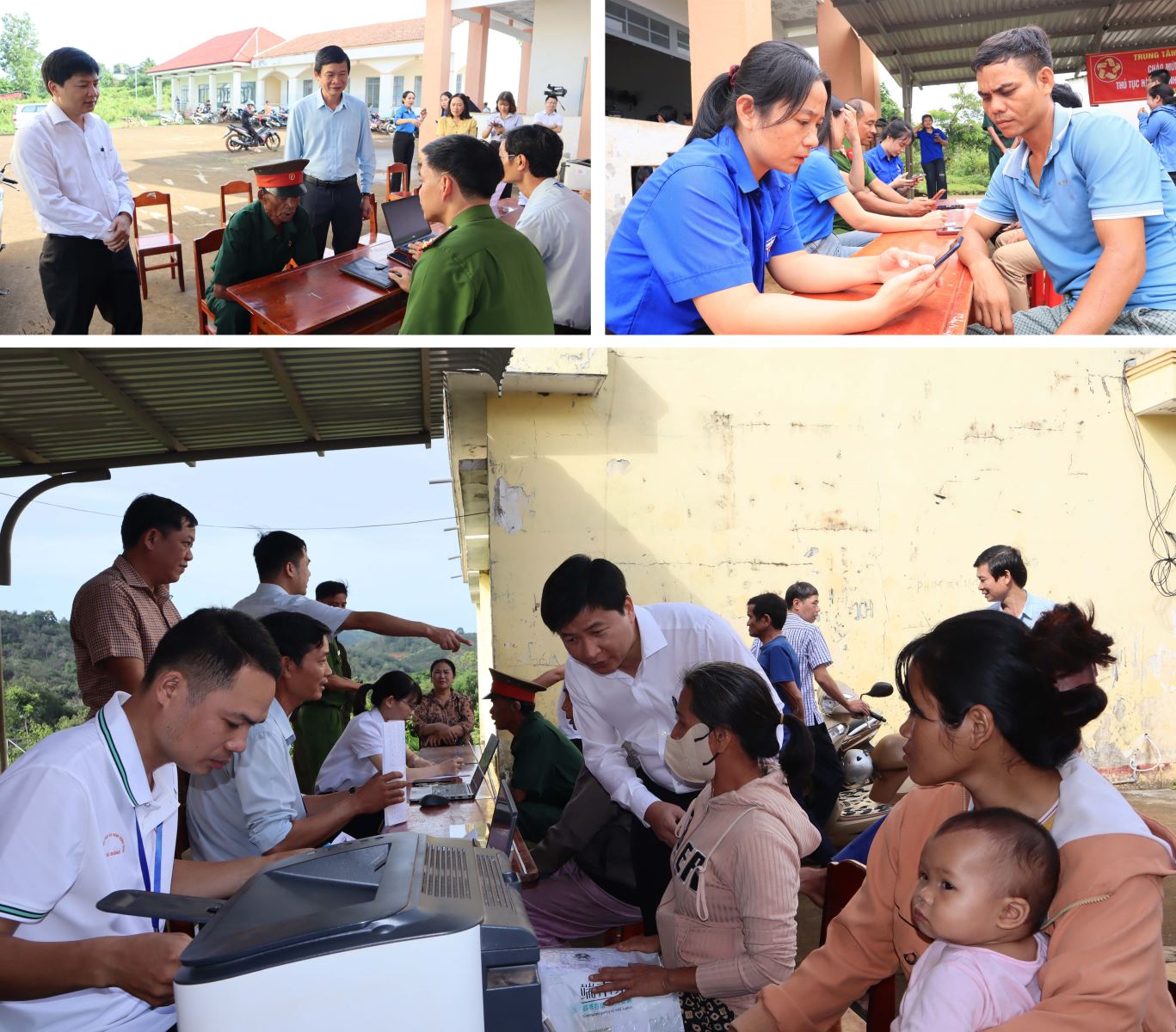
A model for mobile administrative procedure processing in Bu Dang commune, Dong Nai province.
Bu Dang, a remote commune in Dong Nai province, also demonstrates proactiveness and flexibility in implementing the model of building a government that is close to the people, serves the people, and is responsive to their needs through the mobile public administrative service center model.
According to Mr. Nguyen Thanh Tung, Chairman of the People's Committee of Bu Dang commune, immediately after announcing the decisions to establish the commune and reorganize the administrative apparatus, the People's Committee of Bu Dang commune developed a plan and deployed a mobile team to receive applications directly in the villages to resolve administrative procedures and address pressing issues of the people at the grassroots level. In the very first operation, the commune's Mobile Public Administrative Service Center processed administrative procedures for 40 people, including some quite complex land-related procedures.
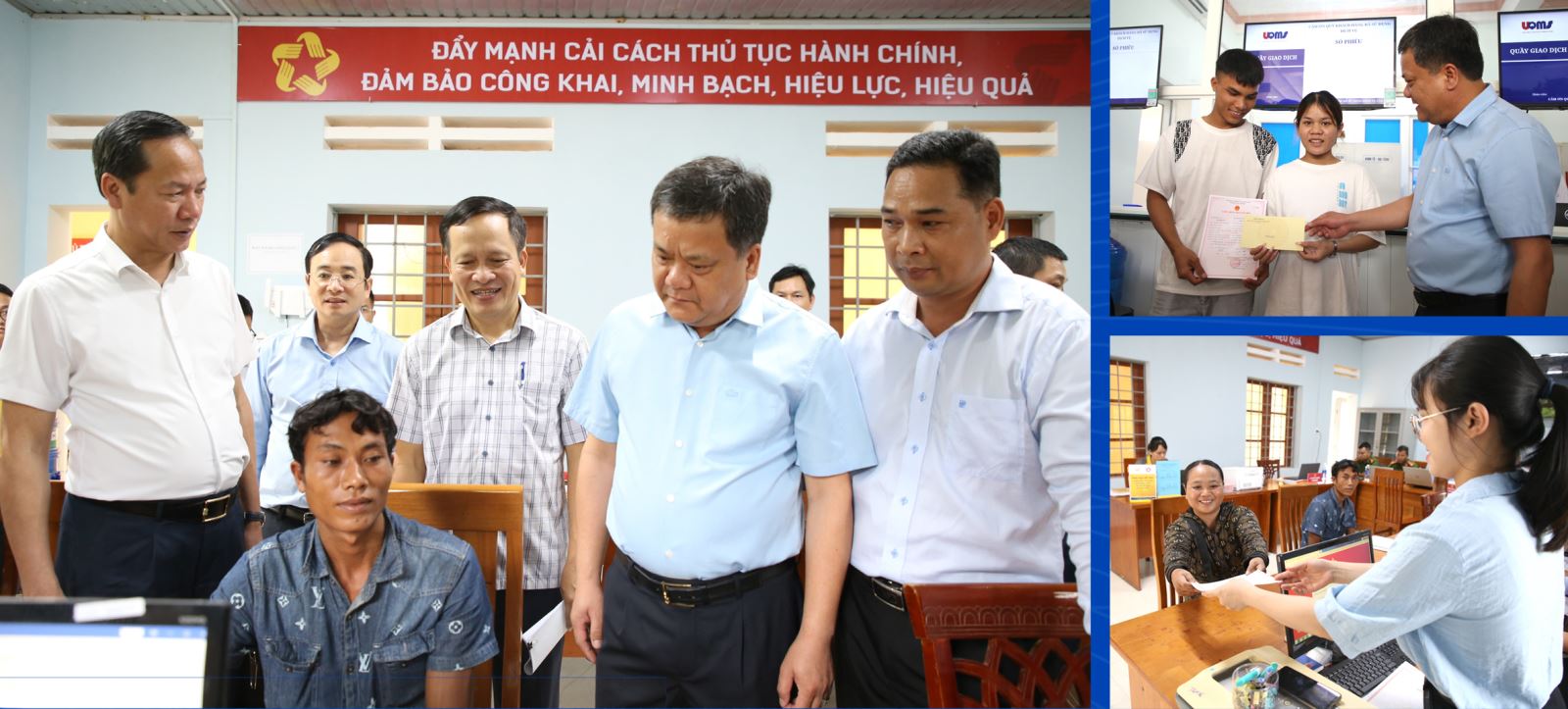
Administrative procedures in Dakrong commune (Quang Tri province) are handled quickly.
According to the Ministry of Interior, the Prime Minister has issued decrees decentralizing and delegating authority from the central to local levels for 556 administrative procedures. Specifically, the Provincial People's Committee has 262 administrative procedures, the Chairman of the Provincial People's Committee has 217 administrative procedures, and specialized agencies under the Provincial People's Committee have 70 administrative procedures. The Commune People's Committee has 6 administrative procedures, the Chairman of the Commune People's Committee has 1 administrative procedure, and 24 administrative procedures have been abolished. At the same time, the authority to resolve 346 administrative procedures under the jurisdiction of the district level has been defined, including transferring 18 procedures to the provincial level, transferring 278 procedures to the commune level, and abolishing 50 procedures. Thus, the total number of administrative procedures after decentralization, delegation of authority, and delineation of authority is 2,161 at the provincial level, 463 at the commune level, and 74 procedures have been abolished.
At the regular Government meeting in June 2025 and the nationwide online conference between the Government and localities on July 3rd, local leaders reported that since July 1st, 2025, the two levels of local government have been operating smoothly, with continuous and uninterrupted work. The government is closer to the people and serves them better, especially in handling administrative procedures, and no significant problems have arisen. However, leaders from some localities requested early guidance on the implementation of large-scale projects in their areas. Currently, commune-level governments have been delegated more tasks and cover larger areas; therefore, commune officials need more thorough training in skills and software for providing online public services.
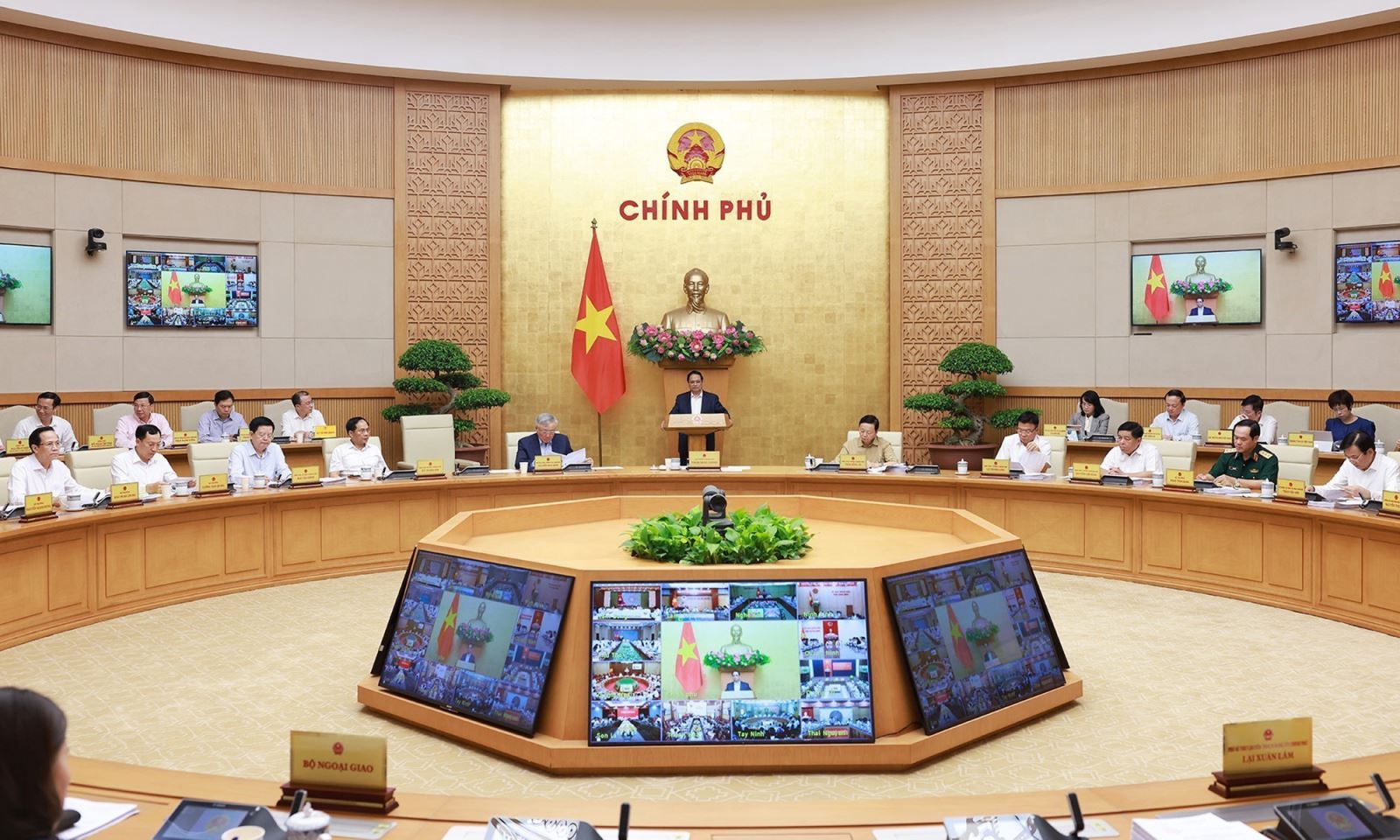
Prime Minister Pham Minh Chinh chaired the regular Government meeting in June 2025 and the online Government conference with localities.
In his directive speech at this conference, Prime Minister Pham Minh Chinh emphasized the need to strictly implement the resolutions and conclusions of the Politburo, and the directives of the Government and the Prime Minister regarding the reorganization of administrative units and the two-tiered local government model. “It is essential to ensure smooth processing of administrative procedures for citizens and businesses; to prevent any citizen from lacking food or clothing; to ensure access to healthcare, medical examinations, and treatment for the people; and to prevent ongoing projects in localities from being disrupted or interrupted,” the Prime Minister stressed.
Concluding the Politburo and Secretariat meeting on July 4th, General Secretary To Lam requested that the Standing Committees of the provincial and city Party Committees directly under the Central Committee continue to strengthen leadership and guidance on all matters within their jurisdiction at both levels (province and commune), ensuring smooth implementation without delays or omissions, with the overarching goal of better serving the people and businesses.
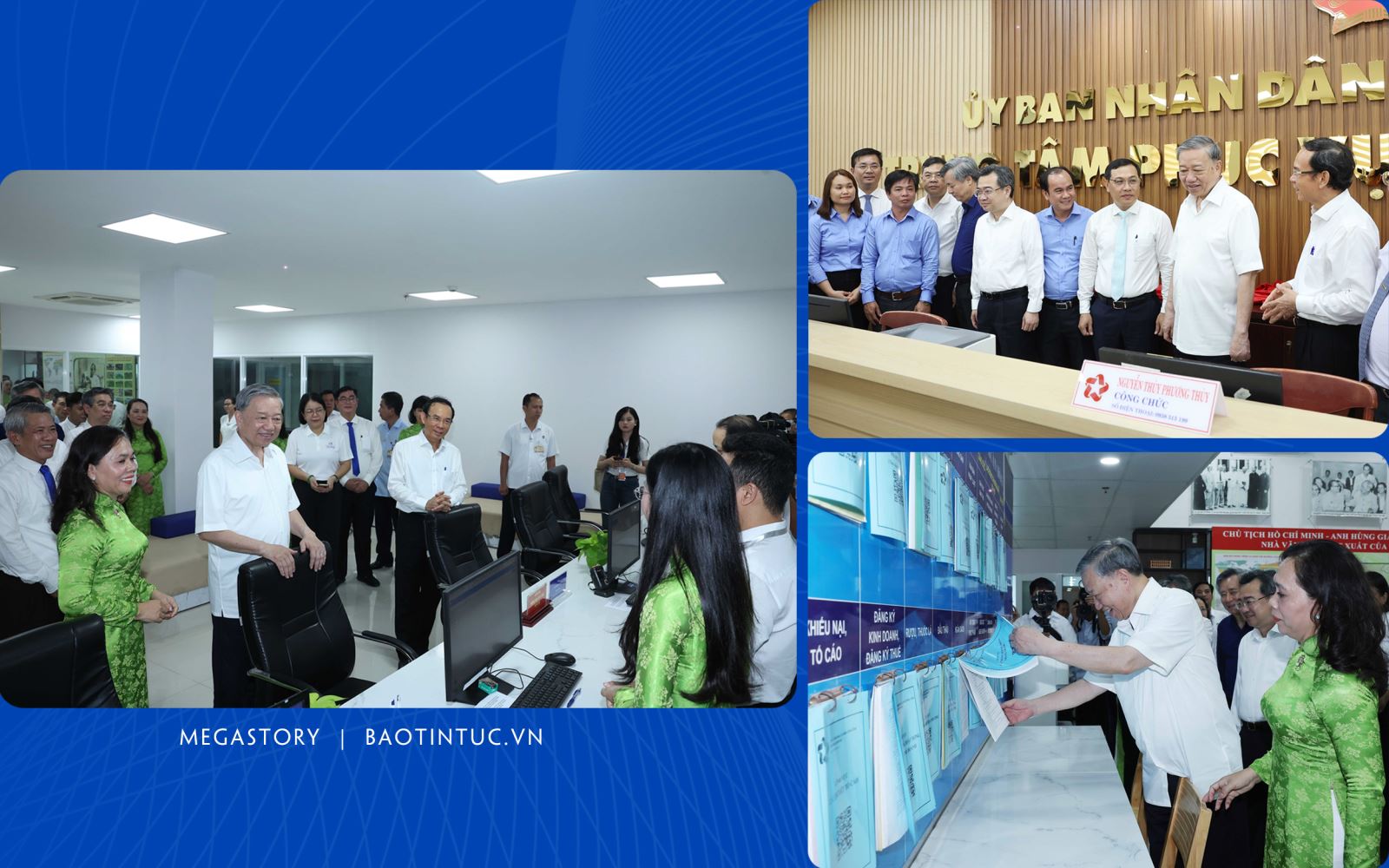
General Secretary To Lam visits the Public Administrative Service Center of Xuan Hoa Ward and Tan Vinh Loc Commune, Ho Chi Minh City.
Provincial and municipal Party committees directly under the Central Committee must urgently review all work related to the assignment, placement, and arrangement of cadres, civil servants, public employees, and workers in agencies and units at the provincial and commune levels; for communes, wards, and special zones lacking specialized cadres, the provincial level must promptly and adequately assign and reinforce personnel, providing support and assistance to ensure effective work performance.
The General Secretary emphasized the need to strengthen inspections and monitoring to promptly resolve difficulties and obstacles for commune-level authorities when operating the new administrative apparatus.
Provincial and city Party committees directly under the Central Committee should continue to do a good job in political and ideological education, fully address the entitlements and policies for cadres, Party members, civil servants, public employees, and workers who are currently working, retiring early, or ceasing work according to the Central Committee's guidelines; strengthen propaganda and guidance work so that the people understand the new regulations and the new locations and working methods of local state agencies; consolidate and maintain the consensus and support of the people for the implementation of the two-level administrative unit.
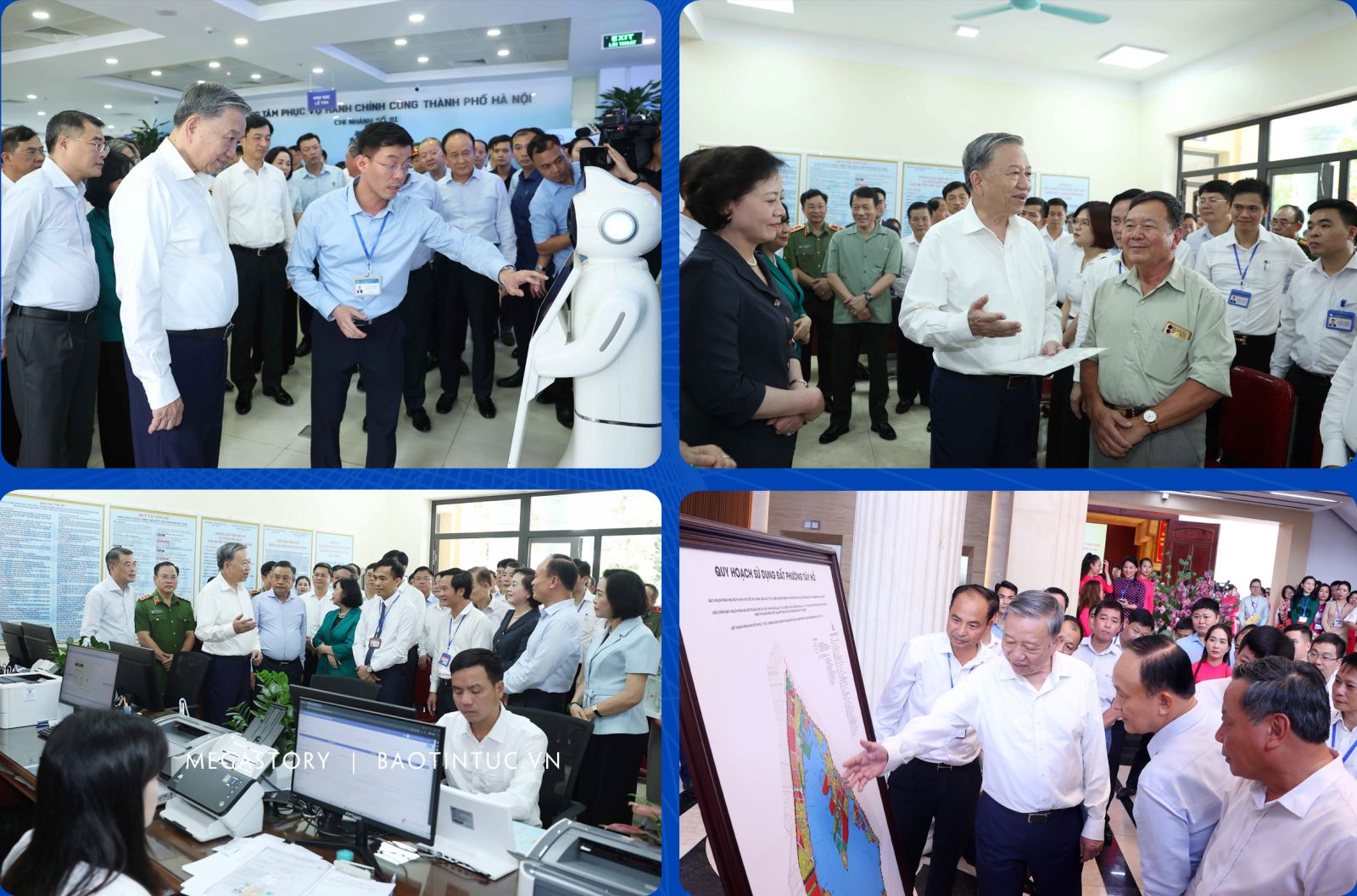
General Secretary To Lam inspects the operations of the two-tiered local government in Tay Ho ward, Hanoi city.
Provincial and city Party committees directly under the Central Committee will preside over and coordinate with the Central Committee of the Ho Chi Minh Communist Youth Union and relevant agencies, units, and organizations to deploy youth union members who are students with basic knowledge of information technology from universities and colleges, and young volunteers to support officials, civil servants, employees, and people in communes, wards, and special zones (especially remote and difficult areas) in operating the administrative apparatus, providing online public services, and resolving administrative procedures... in the initial phase of implementing the two-level administrative unit model.
The General Secretary requested the Party Committee of the Government to thoroughly investigate and compile a complete and timely report to the Politburo on the situation of cadres, civil servants, public employees, and non-specialized workers at the commune level who are retiring due to organizational restructuring, and to address their entitlements and policies according to regulations, ensuring that the right people are assigned to the right jobs and that capable and qualified individuals are retained. Along with this, they should continue to review, amend, and supplement regulations on salary and responsibility allowances for cadres, civil servants, and public employees to suit the new organizational structure, and regularly monitor, inspect, and guide the implementation of regulations on the functions, tasks, and organizational structure of agencies and units within the central and local administrative systems.
Two-tiered local government: Closer to the people, greater responsibility.
Article by: Chu Thanh Vân - Nguyễn Hồng Điệp - TTN
Photos, graphics, videos: VNA
Editor: Ky Thu
Presented by: Ha Nguyen
Source: https://baotintuc.vn/long-form/emagazine/dau-son-2-cap-20250707204705892.htm

![[Photo] Thousands of tourists visit the Quang Trung Emperor Temple in Nghe An during the early spring season.](https://vphoto.vietnam.vn/thumb/1200x675/vietnam/resource/IMAGE/2026/02/26/1772095410680_img-9305-3882-jpg.webp)


![[Photo] National Assembly Chairman Tran Thanh Man working with the Hai Phong City Election Committee](https://vphoto.vietnam.vn/thumb/1200x675/vietnam/resource/IMAGE/2026/02/26/1772103806795_ndo_br_bnd-8224-jpg.webp)
![[Photo] National Assembly Chairman Tran Thanh Man inspects election preparations in Hai Phong city.](https://vphoto.vietnam.vn/thumb/1200x675/vietnam/resource/IMAGE/2026/02/26/1772095420401_ndo_br_bnd-8016-jpg.webp)






































































Comment (0)