

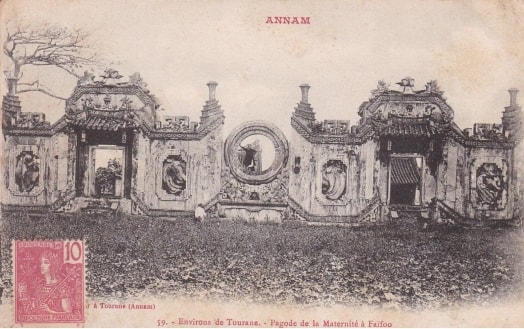
This place not only preserves traces of cultural exchange over the past centuries but is also a favorite stop for tourists who want to rediscover the "soul of Hoi An" in a contemporary setting.
A mark of cultural exchange
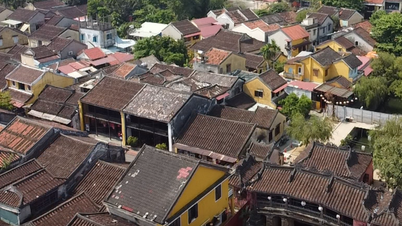
Located at 81 Phan Chu Trinh Street, Ba Mu Pagoda, also known as Ong Chu Pagoda or Cam Hai Nhi Cung, is one of the ancient religious architectural works closely associated with the Minh Huong community. The pagoda is considered a unique convergence point of three cultures—Japanese, Chinese, and Vietnamese—clearly reflecting the intermingling that has shaped the identity of the ancient town of Hoi An.
Many sources indicate that before the pagoda was built, this place was a Japanese trading post established by the merchant Shichicobei Eikichi in 1631. This was a time when Japanese merchant ships frequently docked at Hoi An port, leading to bustling trade. Many merchants stayed and married Vietnamese women, and were permitted by the Nguyen lords to build streets and houses, ushering in a prosperous period for this once-international trading port.
After Japan implemented its isolationist policy, the Chinese community in Hoi An flourished, acquiring the Japanese quarter and continuing the trade. In 1686, Minh Huong village moved the Cam Ha Cung ancestral temple, built in 1626 on the border between Cam Pho and Thanh Ha villages, to this location, constructing Cam Hai Nhi Cung, the predecessor of today's Ba Mu Pagoda. According to a stone stele discovered in 1972, the structure was designed by scholar Truong Chi Thi and built with the contributions of the Minh Huong community.
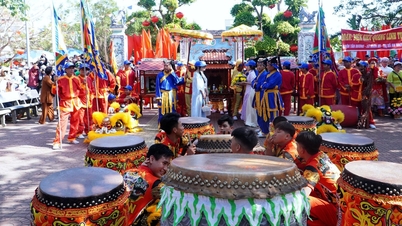
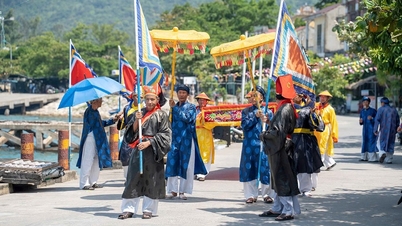
More than just a place of worship, Ba Mu Pagoda is also a center of cultural and religious activities for the Minh Huong people in Hoi An. Every year, on the 2nd day of the 2nd lunar month, the Sanh Thai Thap Nhi Tien Nuong festival is solemnly held to commemorate the goddesses who protect fertility and to pray for peace and prosperity for the villagers. Amidst the incense and the resounding sounds of drums and gongs, the beauty of traditional culture is expressed through each ritual, costume, and the friendly smiles of the people of Hoi An.
A new meeting point for tourists.
Ba Mu Pagoda consists of two main parts: the pagoda architecture and the triple gate. The overall layout is designed in the "front three, back temple" style: the outer triple gate is followed by the pagoda courtyard, and the innermost part is the main worship area including the Goddess Shrine, Cam Ha Palace, and Hai Binh Palace - forming the character "one" (一) characteristic in East Asian architecture.
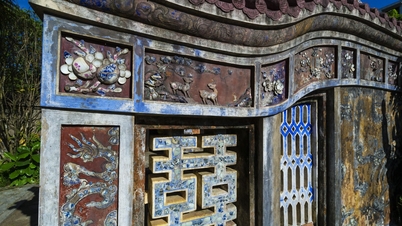
The most striking feature is the temple's triple gate, approximately 60 meters long and nearly 7 meters high, constructed of brick, stone, and wood, with a zigzag layout resembling a scroll-shaped screen. In the center of the gate is a large circle decorated with a relief of "two dragons vying for a pearl," surrounded by 37 embossed chain links symbolizing strong connections. On either side are two large, solidly built gate blocks with yin-yang tiled roofs, creating a balanced and elegant appearance.
On the roof of the triple-arched gate, ancient artisans sculpted bas-reliefs of blooming chrysanthemums, symbolizing longevity, along with delicately stylized floral motifs. As the afternoon sun sets, its golden light illuminates the moss-covered roof, giving the gate a timeless, both ancient and poetic feel. Every architectural detail, from the round windows to the shapes of peaches, Buddha's hand citrons, or pomegranates, holds symbolic meaning of blessings, prosperity, and longevity—a harmonious and humane philosophy of life in East Asia.
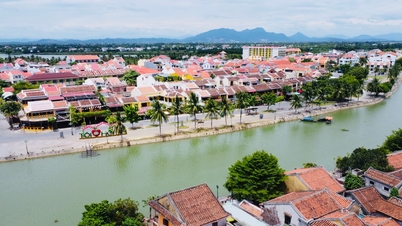
After years of damage, only the main gate of Ba Mu Pagoda has been restored and renovated, returning it to its original majestic and ancient appearance. The surrounding grounds are covered in greenery, combined with a lake, walking paths, and artistic lighting to create a serene yet modern setting that attracts visitors.
Today, the triple gate of Ba Mu Pagoda has become a familiar check-in spot for tourists visiting Hoi An. Couples choose this place to capture romantic wedding moments, foreign visitors like to stop and admire the reflection of the structure on the lake, while locals see it as a peaceful haven to find themselves amidst the hustle and bustle of life.
The triple-arched gate of Ba Mu Pagoda not only evokes memories of the golden age of the port city, but also serves as a vibrant symbol of heritage preservation efforts, where the past and present blend together in a single rhythm.
Preserving the soul of the old town for future generations.
From Japanese trading posts to Chinese ancestral temples and then to Vietnamese influences, Ba Mu Pagoda is a vivid testament to the cultural exchange between East and West in the history of the ancient city of Hoi An. In the same area, three cultural streams met and blended, creating a diverse range of beliefs, architecture, and art.
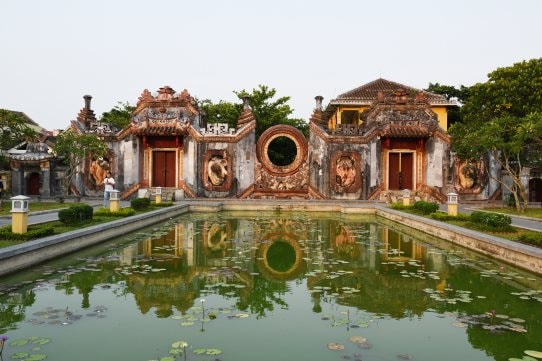
The restoration and preservation of the Three-Gate Entrance of Ba Mu Pagoda is not only the reconstruction of an ancient structure, but also the revival of cultural and spiritual memories for the residents of Hoi An, contributing to spreading the value of the heritage to the community and tourists from all over the world. Along with the Japanese Bridge, the Assembly Halls of Chaozhou, Hainan, Fujian, and Guangdong, the Three-Gate Entrance of Ba Mu Pagoda contributes to completing the unique heritage picture of Hoi An – a vibrant world heritage site in the modern era.
Preserving the triple gate of Ba Mu Pagoda means preserving a part of Hoi An's soul, a place that holds stories of harmony, creativity, and human faith over hundreds of years. The revival of this structure is proof that when heritage is cherished, Hoi An ancient town will forever endure and shine brightly in the hearts of tourists.
Source: https://baodanang.vn/dau-xua-giua-long-pho-hoi-3308929.html

![[Photo] National Assembly Chairman Tran Thanh Man working with the Standing Committee of the Law and Justice Committee](https://vphoto.vietnam.vn/thumb/1200x675/vietnam/resource/IMAGE/2026/05/21/1779378929214_ndo_br_1-4610-jpg.webp)
![[Photo] General Secretary and President To Lam presides over a working session with the Central Policy and Strategy Committee on the development of the materials industry.](https://vphoto.vietnam.vn/thumb/1200x675/vietnam/resource/IMAGE/2026/05/21/1779359935432_a3-bnd-3129-1412-jpg.webp)




























































Comment (0)