

It's the moment when hands clasp tightly after a play, between an ordinary person and someone with a physical disability. Or simply the bright smiles of people who are used to receiving pitying glances, now standing in the center of attention, competing, being recognized, and being treated equally like everyone else.
In a society where people with disabilities often struggle to find opportunities for inclusion, sports have opened another door. But a tournament as humane as the Para Natuh Pickleball Bac Ninh 2026 also raises a bigger question: how far is the journey to finding equality for disabled sports in Vietnam?

Handshakes that overcome inhibitions
This is a pickleball tournament organized using a pairing model between people with and without disabilities. There is no longer a boundary between "supporter" and "supported"; on the court, they become teammates.
It's not just a novel way of organizing the event, but also a powerful message about equality and inclusion. 32 pairs of athletes stepped onto the field together with a spirit of sharing and companionship, where achievement is no longer the sole goal, but the greater value lies in the connection between people through understanding.
Amidst the cheers at Sports Arena 1 in Bac Giang Ward, Bac Ninh Province, one can easily sense a different atmosphere. There is no distance of pity. No reserved glances directed at those with physical disabilities. Only skillful plays, synchronized high-fives, and genuine joy.
Speaker and athlete Nguyen Son Lam enthusiastically shared that this is a very humane tournament, because "disadvantaged people are the center of attention and get to express themselves equally with their peers." For him, the special thing about pickleball lies in the fact that people with disabilities and able-bodied people can compete together under the same rules. This makes disadvantaged people feel truly integrated and their self-worth is affirmed.
Perhaps, for many disabled athletes, what they need is not special treatment, but the opportunity to overcome their invisible insecurities. Because behind the medals and competitions, disabled people still face many obstacles in their daily lives, including difficulties with employment, livelihood, social interaction, and the self-doubt that has plagued them for too long.
In that case, sports become a special form of mental therapy. It helps them rediscover a sense of usefulness, the ability to contribute, and recognition. It's no coincidence that the organizers of the Para Natuh Pickleball Bac Ninh 2026 are not just holding one tournament.
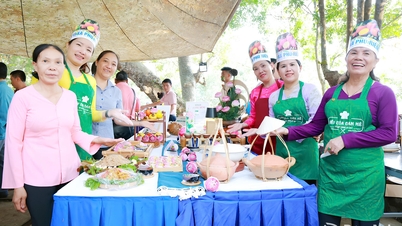
They have built an entire ecosystem centered around the spirit of inclusion, from the "Inclusive Cuisine" competition, journalism and photography contests, to programs like "Para Natuh Livelihood," "Understanding - Inclusion," and pickleball training for people with disabilities. In this ecosystem, sports are at the center, but the ultimate goal is not just competition. It's a journey to help people with disabilities integrate into the community with confidence and self-respect.
Distance outside the stadium lights
But it is precisely from these beautiful images at Para Natuh that people can see even more clearly the gap that disabled sports are facing.
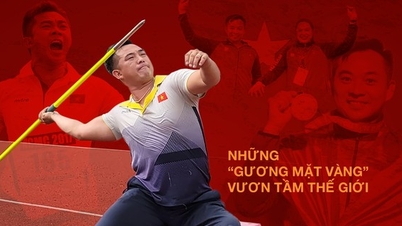
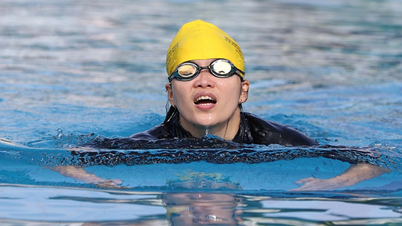
Over the years, thanks to the attention of all levels and sectors, Vietnamese disabled sports have continued to thrive through the perseverance of athletes, coaches, and those involved in promoting the sport. They have brought home medals at regional, continental, and even Paralympic competitions, but the resources from society allocated to them are still not commensurate.
It's not difficult to see the disparity between high-performance sports for the general population and sports for people with disabilities. From training conditions and nutrition to prize money, sponsorship opportunities, and media coverage, there's a gap everywhere.
There are disabled athletes who have won international medals, but life after the glory remains a struggle. Some have to train while also earning a living through simple jobs to make ends meet. Some national teams train in inadequate facilities. And there are also many tournaments that take place quietly, receiving almost no public attention.
In this context, models like Para Natuh become even more valuable because, at the very least, they demonstrate a new approach that does not view people with disabilities as "objects in need of support," but rather as valuable individuals capable of inspiring and contributing to society.
Speaking at the event, Ms. Nguyen Thi Thu Thuy, Chairwoman and CEO of Natuh Investment Joint Stock Company and Head of the Organizing Committee, said that the tournament aims to expand the "circle of values," where every person, regardless of their circumstances, has their own unique value that needs to be discovered and nurtured. This is a thought-provoking perspective. For a long time, society has talked a lot about compassion for people with disabilities, but sometimes forgets the most important thing: they need opportunities, not just sympathy. An opportunity to play sports like everyone else. An opportunity to appear in the media with stories of resilience instead of pity. An opportunity for businesses to boldly partner and invest. And an opportunity for spectators to enter the stadium and cheer them on with genuine respect.
From a pickleball tournament in Bac Ninh, that message spread naturally. When a disabled athlete and a able-bodied person stand together on the same part of the court, the distance between them seems to disappear.
And perhaps, the greatest significance of inclusive sports lies not in who wins or loses, but in society viewing people with disabilities with greater equality, fairness, and humanity. Because ultimately, fairness isn't about creating a separate playing field. Fairness is when everyone has the opportunity to step onto that field with their own confidence and pride.
Source: https://baovanhoa.vn/the-thao/de-khong-ai-bi-bo-lai-ngoai-san-225874.html













































































Comment (0)