

The Ministry of Public Security is seeking feedback on the draft Law on Road Traffic Order and Safety. This includes proposals for situations where stopping or parking is prohibited.
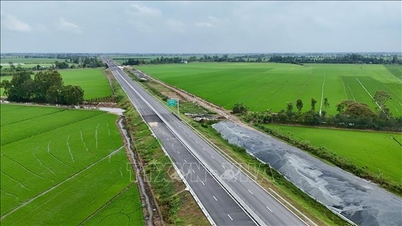
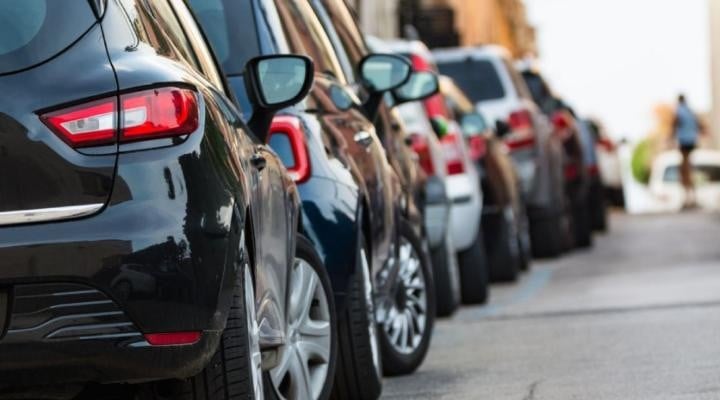 |
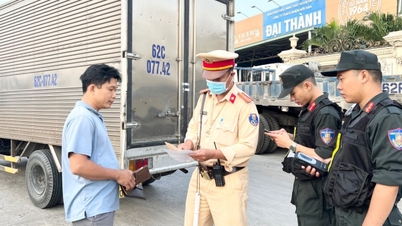
| Proposing situations where stopping or parking is prohibited. (Source: Internet) |
Draft Law on Road Traffic Order and Safety
Propose situations where stopping or parking is prohibited.
The draft regulations regarding parking are as follows:
- Stopping refers to the temporary stationary state of a vehicle for a necessary period of time to allow passengers to board or alight, load or unload goods, or perform vehicle technical checks.
When stopping the vehicle, do not turn off the engine and do not leave the driver's seat, except when leaving the driver's seat to open or close the vehicle doors, load or unload goods, or perform a vehicle technical inspection, but in these cases, the parking brake must be used or other safety measures must be taken.
- Parking is the state of a vehicle being stationary for an unlimited period of time.
When parking, only leave the vehicle after using the parking brake or taking other safety precautions.
Vehicles parked on a slope must have their wheels chocked and be steered toward the curb.
- Drivers must comply with the following regulations when stopping or parking their vehicles on the road:
+ There are signals to alert other drivers when entering a stopping or parking space;
Parking and stopping should not obstruct pedestrians or other vehicles on the road.
- Drivers are not allowed to stop or park their vehicles in the following locations:
+ On the left side of a one-way street;
+ On curves or near the top of slopes where visibility is obstructed;
+ On bridges, except in cases where traffic regulations permit;
+ Under overpasses, except in areas permitted by competent authorities;
+ Parallel to another vehicle that is stopped or parked;
+ The distance between a parked car and a parked car facing the opposite direction is less than 20 meters on a street, and less than 40 meters on a road with one lane for motor vehicles in one direction;
+ On the pedestrian crossing area;
+ At intersections and within 5 meters from the edge of the intersection;
+ Bus stop;
+ Roads for vehicles to enter and exit are provided in front of the gate and within a 5-meter radius on either side of the gate of the headquarters of agencies and organizations;
+ Where the road width is only sufficient for one lane of motor vehicles;
Within the safety zone of the railway;
+ Obstructing road signs and traffic lights;
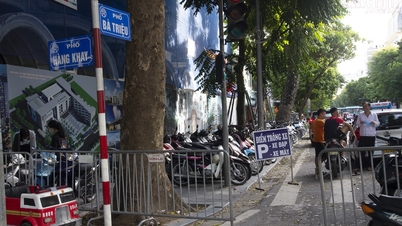
+ On tram tracks, bus lanes, manhole covers, telephone and high-voltage power line access points, fire hydrant access points; on the road and sidewalk in violation of regulations.
- On roads, drivers must stop or park their vehicles in areas with wide shoulders or on land outside the carriageway; if the shoulder is narrow or there is no shoulder, they must stop or park close to the right edge of the road in the direction of travel.
- On the street, drivers must stop and park their vehicles close to the curb or sidewalk on the right side in the direction of travel; the nearest wheel must not be more than 0.25 meters away from the curb or sidewalk and must not obstruct or endanger pedestrians and vehicles participating in traffic.
- In cases where a vehicle experiences a technical malfunction or other force majeure event and is forced to park, occupying part of the roadway or in a prohibited parking area, emergency lights must be used to signal and warning signs or lights must be placed in front of and behind the vehicle to alert other drivers.
- When the transportation infrastructure is adequate, the provincial People's Committee shall regulate the areas and times when vehicles are permitted to stop and park on the streets.
Source

![[Photo] General Secretary and President To Lam presides over a meeting on preparations for the review of one year of operation of the three-tiered government system.](https://vphoto.vietnam.vn/thumb/1200x675/vietnam/resource/IMAGE/2026/06/02/1780391821195_a1-bnd-4595-9717-jpg.webp)












































































Comment (0)