

In recent days, a series of conflicting reports regarding the dialogue between the US and Iran have emerged, ranging from positive signals at the negotiating table to tough statements from both sides. This development shows that the diplomatic landscape between Washington and Tehran remains unclear, despite mediation efforts to de-escalate tensions in the region.
Conflicting information
 |
| US President Donald Trump (left), Vice President JD Vance (center), and Secretary of War Pete Hegseth (right). (Source: AP) |
According to the German magazine Spiegel , a 60-day negotiating roadmap is still being considered by both sides, and so far the US and Iran have not reached any formal agreement. Meanwhile, Tehran claims to have shot down a US plane, but this information has been denied by the Pentagon.
To date, sources offer differing assessments of the outcome of negotiations between Washington and Tehran. Nevertheless, the negotiation process is believed to be ongoing, aiming to find solutions to de-escalate tensions and resolve remaining disagreements between the two sides.
At the same time, Iranian state television reported that Iranian forces had shot down a US aircraft near the city of Bushehr. However, this claim was quickly denied by Washington. The US Central Command (CENTCOM) affirmed that no US aircraft had been shot down and all operational assets were safe.
In other news, CNN, citing US officials, reported that Washington and Tehran have reached a preliminary agreement on reopening the Strait of Hormuz and initiating negotiations related to Iran's nuclear program. However, the agreement still needs final approval from President Donald Trump before it can take effect.
On the US side, Vice President JD Vance, one of the key figures involved in the negotiations, stated that the parties had made "significant progress." He made this statement when responding to reporters about the talks aimed at extending the current ceasefire between the US and Iran.
Still awaiting orders from President Trump.
 |
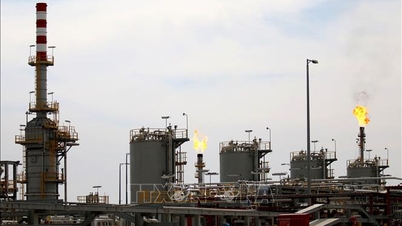
| The Strait of Hormuz continues to be the focus of attention as negotiations between the US and Iran enter a crucial phase. (Source: CNN) |
Despite acknowledging significant progress in the negotiations, US Vice President JD Vance stated that President Donald Trump has not yet accepted the current results. According to him, the draft agreement still does not fully meet the demands set by the US leader.
Vice President Vance emphasized that Iran's nuclear program remains a key issue in the negotiations. The American leader also acknowledged that it is currently difficult to predict when President Trump will make a final decision, and it is even impossible to say whether he will sign the agreement at all.
According to sources in Washington, US and Iranian representatives have agreed on a framework for the next round of talks. AFP reported that the preliminary draft includes extending the ceasefire for another 60 days.
If implemented, this would be the first time since the conflict erupted in late February 2026 that the two sides resumed large-scale negotiations concerning Iran's nuclear program. The current ceasefire has been in effect since April 8, while the framework for the new agreement also addresses the goal of ending fighting between Israel and Hezbollah in Lebanon.
Continue to impose sanctions.
 |
| US Treasury Secretary Scott Bessent said Washington will continue to tighten sanctions targeting Iran's oil exports. (Source: CNN) |
To date, US President Donald Trump has not yet assessed the outcome of the negotiations as sufficient to reach a final decision. On the Iranian side, officials have also repeatedly denied reports that an agreement has been reached. The Iranian Islamic Revolutionary Guard Corps (IRGC) asserts that Tehran has not informed Pakistan, the mediator, that the negotiating document has been finalized.
Iran's Tasnim news agency also rejected Western media reports that the agreement had been signed and was only awaiting official announcement from both sides.
Contrary to expectations of a positive outcome from the negotiations, the US continues to increase economic pressure on Iran through new sanctions targeting its oil exports.
The US Treasury Department has now added eight Iranian ships carrying crude oil and petroleum products to its sanctions list. US Treasury Secretary Scott Bessent declared that Washington will not allow Tehran to increase its oil revenues to rebuild its armed forces and strengthen its military capabilities. In addition, restrictions have been imposed on more than 15 other businesses, including many companies based in Hong Kong (China) and Dubai (UAE).
Overall, the prospects for reaching a comprehensive agreement between the US and Iran remain fraught with obstacles. The final outcome will depend on the extent of concessions and political decisions from both sides.
Source: https://baoquocte.vn/dam-phan-my-iran-tien-trien-da-co-dong-thuan-van-o-phia-truoc-400969.html

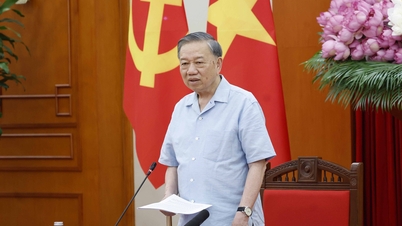
![[Photo] General Secretary and President To Lam presides over a meeting on preparations for the review of one year of operation of the three-tiered government system.](https://vphoto.vietnam.vn/thumb/1200x675/vietnam/resource/IMAGE/2026/06/02/1780391821195_a1-bnd-4595-9717-jpg.webp)









































































Comment (0)