

On the afternoon of April 20th, continuing its first session, the National Assembly discussed socio-economic issues in the plenary hall. According to delegate Nguyen Ngoc Son (from Hai Phong delegation), practical experience shows that the major difficulties of the real estate market still lie in the institutional framework, planning, investment procedures, land valuation, compensation, resettlement, and project approval time.
Many localities still rely on revenue from land.
"When legitimate supply remains constrained while speculation, rumors about zoning plans, and land auctions continue to create artificial price increases, it is very difficult to stabilize the market," Mr. Son said, suggesting that solutions to cool down the unreasonably escalating price levels should be clarified further.

Representative Nguyen Ngoc Son ( Hai Phong delegation)
PHOTO: QH
At the same time, there needs to be a way to strike a balance between the goal of market stability and the reality that many localities still tend to rely on revenue from land, from auctioning land use rights.
The delegates also proposed a thorough assessment and more specific solutions for real estate projects entangled in legal cases, and projects that have been delayed and left abandoned for many years. Projects that are no longer capable of implementation or are deliberately stalled should be resolutely revoked, re-auctioned, re-tendered, or repurposed accordingly.
Regarding solutions to boost growth, the Hai Phong delegation requested the Government to clarify two points: clearly defining the priority order of policies in case of conflicts between the goal of high growth and the requirements of maintaining macroeconomic stability, controlling inflation, ensuring public debt safety, and ensuring the safety of the financial system.
At the same time, it is necessary to clarify the resources for growth, identifying which sources of capital can be mobilized immediately in 2026 and which sources depend on the market, procedures, or the absorption capacity of the economy.
There can be no further delay.
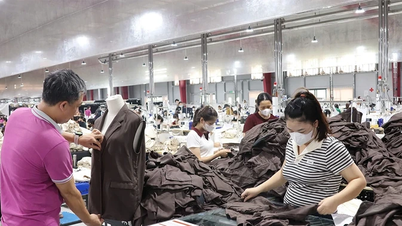
Representative Pham Trong Nhan (Ho Chi Minh City) pointed out that, according to the Government's report, GDP growth in 2025 is projected to reach 8.02%. This result is contributed not only by the state-owned economy and FDI, but also by the resilience of the private sector – accounting for approximately 51% of GDP annually, over 30% of the state budget, creating jobs for over 82% of the workforce, and nearly 60% of total social investment.

Representative Pham Trong Nhan (Ho Chi Minh City)
PHOTO: QH
However, behind those growth figures, the number of businesses leaving the market remains high. And despite contributing more than half of GDP, the private sector accounts for only about 30% of exports, with the remainder belonging to FDI.
This disparity reflects the reality that the private sector still primarily operates in the domestic market, outsourcing, or low-value segments, while strategic, high-tech, and infrastructure sectors lack a leading role from the private sector.
"Despite numerous efforts to improve policies, it must be acknowledged that the approach still leans towards 'support,' while what businesses need is not support. As long as the mindset of support persists, it will be difficult to remove the 'request-and-grant' barriers," Representative Nhan stated, adding that what businesses need is a stable and equitable legal framework.
According to a delegate from Ho Chi Minh City, the shift from identifying the private sector as an "important driving force" to the "most important driving force of the economy" represents a significant leap in perspective and thinking, "but unfortunately, until now, the National Assembly has not had a specialized annual report on the implementation of the rights of the private sector."
Therefore, he suggested that the National Assembly could not delay any longer and should include in its legislative agenda a fundamental framework law – the Law on Guaranteeing the Right to Develop the Private Economy.
Mr. Nhan also cited the example of South Korea, which enacted the Law on Monopoly Regulation and Fair Trade in 1980, creating an institutional foundation for the private economy to develop alongside large corporations, laying the groundwork for the Han River Miracle.
Successful countries are not successful because they offer more incentives to businesses, but because they have created a sufficiently solid institutional foundation to allow the private sector to confidently develop and have the capacity to participate in areas that determine the nation's future.
"The National Assembly needs to begin a new chapter in its development journey with a foundational law for the private economy, to move from promises to institutions, from policies to legal guarantees," Representative Pham Trong Nhan recommended.
Source: https://thanhnien.vn/de-xuat-co-dao-luat-rieng-ve-kinh-te-tu-nhan-185260420152305893.htm
![[Image] Hanoi's urban life under the challenge of a "scorching hot" environment](https://vphoto.vietnam.vn/thumb/1200x675/vietnam/resource/IMAGE/2026/05/25/1779706979265_nang-nong-t5-2026-minh-duy-7-4636-jpg.webp)


![[Image] Close-up view of the interchange connecting the two expressways and Long Thanh Airport.](https://vphoto.vietnam.vn/thumb/1200x675/vietnam/resource/IMAGE/2026/05/25/1779703378210_ndo_br_z7863716673926-224453a31600126cce10622af6290afd-4549-jpg.webp)

































































































Comment (0)