

In recent days, public opinion has been buzzing about the developments and results of land auctions in suburban districts of Hanoi such as Thanh Oai and Hoai Duc, with a large number of applications and winning bids skyrocketing, reaching dozens of times the starting price. These developments and results raise serious questions about whether or not there are signs of speculative profiteering.
Is the unusually high winning bid "abnormal"?
Accordingly, on August 10th, Thanh Oai district successfully held an auction for 68 plots of land in Ngo Ba area, Thanh Than village, Thanh Cao commune (Thanh Oai, Hanoi), with areas ranging from 60m2 to 85m2 and starting prices from 8.6 million VND/m2 to 12.5 million VND/m2. The auction attracted 4,600 applications, but only 4,201 applications from 1,545 people met the eligibility criteria.
Notably, at the end of the auction, the corner lot fetched the highest price at nearly 100.5 million VND/m2, eight times higher than the starting price. Regular lots had winning bids of 63-80 million VND/m2, 5 to 6.4 times higher than the starting price.
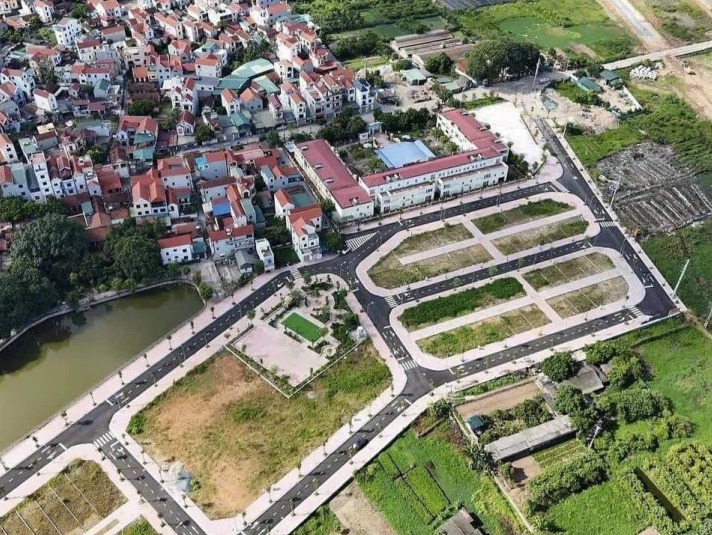
Public opinion is constantly buzzing about the developments and results of land auctions in suburban districts of Hanoi such as Thanh Oai and Hoai Duc. (Photo: VARS)
Following the controversial land auction in Thanh Oai district, a recent auction on August 19th of 19 land plots in the LK04 area, Long Khuc village, Tien Yen commune, Hoai Duc district, Hanoi, continued to attract significant public interest and participation.
Nineteen plots of land, ranging in size from approximately 74m2 to 118m2, were put up for auction. The starting bid was 7.3 million VND/m2. The deposit amount ranged from 109 to 172 million VND per plot.
After a 19-hour auction, 19 land plots were successfully sold. The highest winning bid reached 133.3 million VND/m2, nearly 20 times the starting price, while the lowest bid was still 91.3 million VND/m2, 12.5 times the starting price.
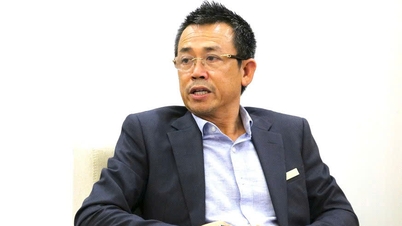
VARS argues that the developments and results of these land auctions are both abnormal and normal. This is because the line between what is normal and abnormal seems to have blurred. What is abnormal has become normal, and then continues to exist "normally" in an abnormal way.
In fact, this is not a new phenomenon. Even in the first six months of 2024, while the land market in general remained sluggish, some land auctions in certain localities still attracted thousands to tens of thousands of participants, mainly investors. In some places, the winning bids were recorded at prices up to 10 times higher than the starting price.
Explaining the reasons, VARS stated: Firstly, in the coming time, money will certainly flow into auctioned land in urban and residential areas as localities organize many auctions to boost budget revenue. This is because this type of land is clean, free from disputes or lawsuits, already has land ownership certificates, infrastructure, and is ready for building houses for business, rental, and generating monthly income.
This is particularly attractive given that in recent years, Hanoi has seen almost no new projects, and the supply of land plots is predicted to become increasingly scarce as the new Real Estate Business Law prohibits the subdivision and sale of land plots in 105 cities and towns, forcing businesses to build houses on the land for sale in these areas. Meanwhile, the demand for real estate, including both residential and investment purposes, is very strong and constantly increasing.
Secondly, the price increase, which is dozens of times higher, sounds very unusual, but in reality, it's due to the low starting price of the land auction. Specifically, previously, regulations for determining land prices allowed for the hiring of consultants.
Land auctioned on August 10th in Thanh Oai district also had its starting price determined by consultants, who set it at 40-45 million VND/m2. However, Decree 12 (Decree amending and supplementing some articles of Decree 44 guiding the implementation of the 2013 Land Law), now Decree 71 (Decree regulating land prices, issued by the Government on April 27, 2024), has removed the provision for hiring consultants, shifting to determining the price using a coefficient K multiplied by the city's land price table.
According to Decision 46 dated July 18, 2024, of the Hanoi People's Committee, the land price adjustment coefficient for Thanh Oai district is 2.35. The currently valid land price list issued in 2020 ranges from 3.6 to 5.3 million VND/m2. Therefore, multiplying these two coefficients together only yields a price range of 8.6 to 12.5 million VND/m2.
The product's safety, coupled with a low starting price and a small deposit (from 100 to 200 million VND), made it highly attractive to buyers. Therefore, it's not surprising that this auction attracted thousands of applications. Such a large number of participants is entirely normal.
Imposing high taxes on land accumulation.
VARs argue that this high winning bid reflects the normal reality of supply-demand imbalance, as the number of applications far exceeded the number of land lots in the auction.
However, the fact that land prices in a location with unremarkable infrastructure and amenities, in a suburban area with normal potential for price appreciation, have reached over 100 million VND/m2—equal to land prices in urban areas and densely populated areas—is abnormal and far exceeds its actual value. This is the result of unethical motives.
Specifically, many investors participating in these auctions are people who are "professionals" in land auctions. They often participate with the "simple" goal of "speculating," not caring about the real value, just winning the bid and then immediately buying and selling to make a profit, or readily forfeiting their deposit if the market doesn't respond.
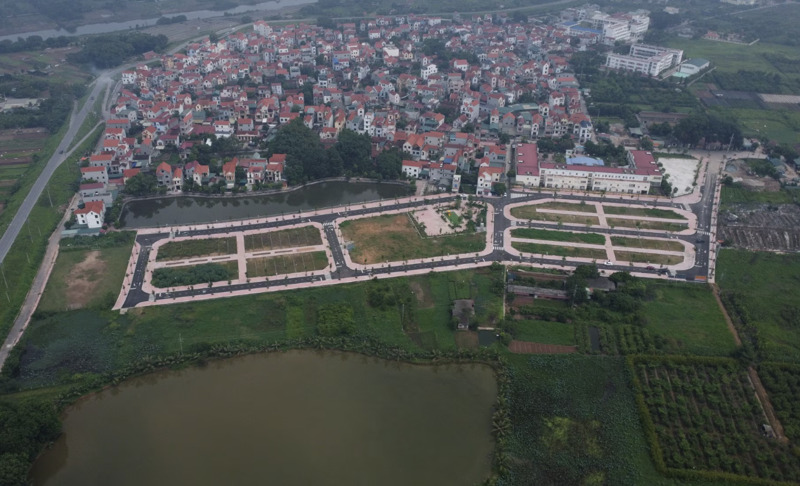
VARs propose imposing high taxes on land accumulation. (Photo: VS)
Or, more dangerously, they aim to create a land "fever." These individuals exploit the auction deposit system to inflate the prices of the land in question. Even disregarding the risks, they legitimize the price by paying the full winning bid price, using this price as a basis to artificially inflate land prices in suburban districts, causing land prices in many areas to skyrocket, even creating an artificial "fever."
The consequence of these situations is that already high real estate prices are rising even further, making the dream of owning a home increasingly unattainable for people, especially young people. The exorbitant auction prices, far exceeding the true value, not only complicate the property valuation process for subsequent auctions at the local auction site but also in many other parts of the country.
With the spread of media attention, when real estate prices maintain an upward trend for a sufficiently long period, the FOMO (fear of being left behind) mentality will "rise," investors will expect prices to continue to rise, and then make risky decisions.
This decision is further driven by the belief that adjustments to land price tables in localities in the near future will indirectly push up land prices. As a result, many investors will have their capital tied up, creating abandoned land areas and negatively impacting the process of recovery and development in a safe and healthy direction.
To ensure transparency in auctions and increase budget revenue, the State needs to quickly establish mechanisms to control speculation. To solve the problem of speculation and price manipulation, and thereby bring down urban housing prices, people's mindset about housing must change. Housing should be seen as a place to live, fulfilling people's basic living needs, rather than an asset for accumulation.
By imposing taxes targeting those who accumulate and speculate, rather than those who purchase real estate for residential or business purposes, the element of accumulated wealth will decrease.
Tax rates may gradually increase for real estate transactions where the seller holds the property for a short period, or if the property owner does not use the property for business purposes or does not begin construction after receiving the land.
Properly taxing real estate will reduce or eliminate the incentive for people to speculate on real estate because, along with interest costs and other opportunity costs, owning speculative real estate becomes riskier. Buying and selling real estate for profit, or creating artificial supply and demand to inflate real estate prices, gradually becomes meaningless.
The idle funds held by the public will therefore be redirected to productive business sectors, creating products and added value for society. This will help the real estate market develop more healthily and efficiently in the long term, instead of experiencing land price surges and price fluctuations.
Source: https://www.congluan.vn/de-xuat-danh-thue-cao-doi-voi-chu-dat-dau-gia-khong-su-dung-dat-post309107.html

![[Photo] Prime Minister Pham Minh Chinh presides over a meeting on private sector economic development.](/_next/image?url=https%3A%2F%2Fvphoto.vietnam.vn%2Fthumb%2F1200x675%2Fvietnam%2Fresource%2FIMAGE%2F2025%2F12%2F20%2F1766237501876_thiet-ke-chua-co-ten-40-png.webp&w=3840&q=75)























































































Comment (0)