

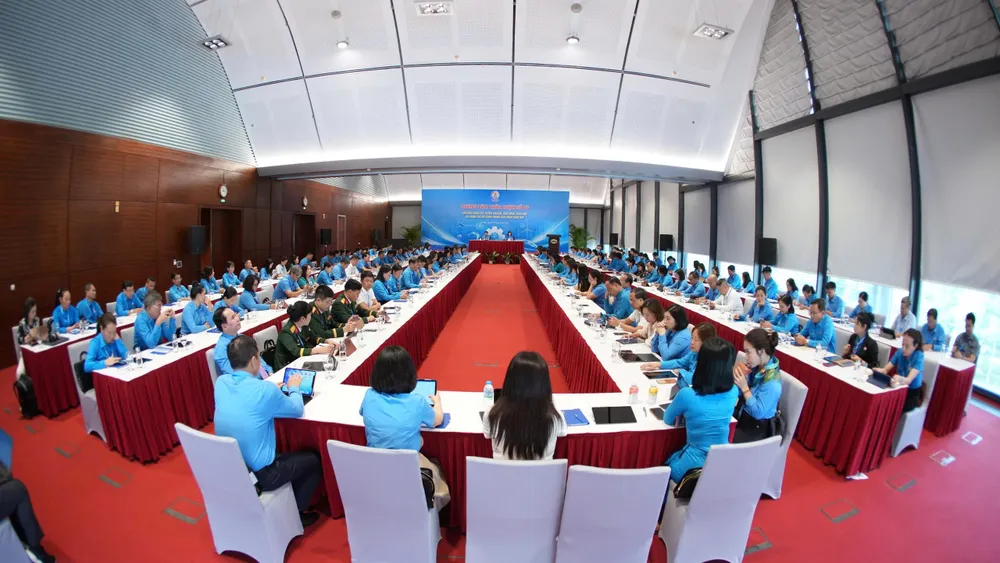
According to Mr. Nguyen Xuan Hung, Vice President of the Vietnam General Confederation of Labor , the draft revised Charter of the Vietnam Trade Union proposes reducing the union dues contribution rate from 1% to 0.5% of the monthly salary used as the basis for social insurance contributions for union members. The new Charter will be considered and decided upon by the 14th Congress of the Vietnam Trade Union on June 4th and 5th.
However, behind the discussion about contribution levels lies a series of opinions regarding the mechanisms for managing, allocating, and utilizing trade union financial resources in the new era.
Delegate Huynh Thi Phuong Nam, Chairwoman of the Ben Thanh Corporation Trade Union (Ho Chi Minh City Trade Union), stated that the unit currently manages approximately 6,400 union members across 21 affiliated grassroots trade unions. Following the organizational restructuring, the corporation's trade union operates as a level 3 trade union but faces significant financial resource challenges.
Delegate Huynh Thi Phuong Nam suggested that the Vietnam General Confederation of Labor should study a more appropriate mechanism for allocating funds and membership fees to trade unions in corporations. According to her, the current practice of directly transferring 75% of trade union funds and 70% of membership fees to grassroots trade unions restricts third-level trade unions in organizing movements, caring for workers, and fulfilling assigned tasks.
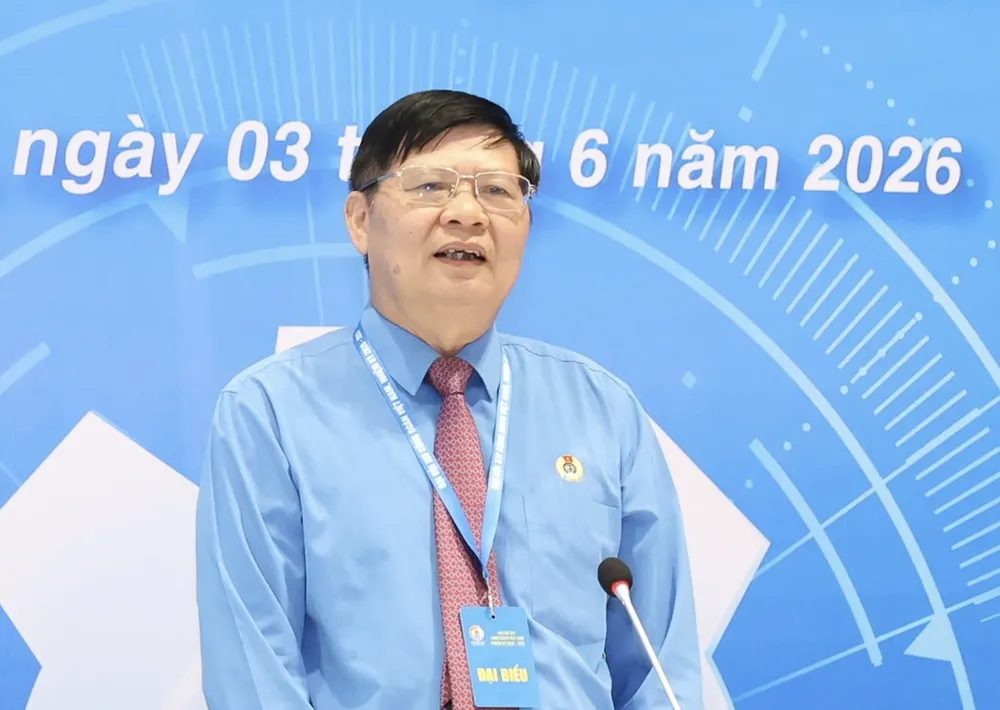

Discussing this issue, Mr. Phan Van Anh, Vice President of the Vietnam General Confederation of Labor, said that the draft regulations on trade union finances still maintain the principle of allocating 75% of trade union funds and 70% of trade union membership fees to grassroots trade unions. For new organizational models such as level 3 trade unions, industrial park trade unions, or commune/ward trade unions, operational resources will be considered and allocated according to appropriate mechanisms.
Besides the discussion on resource allocation, many presentations also focused on solutions to increase revenue and improve the efficiency of trade union finances.
The presentations from the Vietnam Trade Union of Industry and Commerce and the Hanoi City Federation of Labor proposed strengthening the management of trade union fees and membership dues, limiting revenue losses, reducing outstanding debts, and promoting digital transformation in financial management and membership data.
According to the delegates, financial resources should be prioritized for activities that directly serve union members, workers, and grassroots trade unions. The effectiveness of caring for union members should be considered a measure of the efficiency of trade union financial utilization.
Meanwhile, some presentations emphasized the need to continue ensuring resources for grassroots trade unions. The Hanoi City Federation of Labor stated that for many years it has maintained the full allocation of 75% of trade union funds to grassroots trade unions to create conditions for those closest to workers to have sufficient resources to carry out activities to care for and protect the rights of union members.
Representatives from the Da Nang City Trade Union proposed that unified guidelines be issued soon regarding the use of 75% of trade union funds and 70% of trade union membership fees at the grassroots level, especially for expenses related to the activities of commune and ward trade union officials.
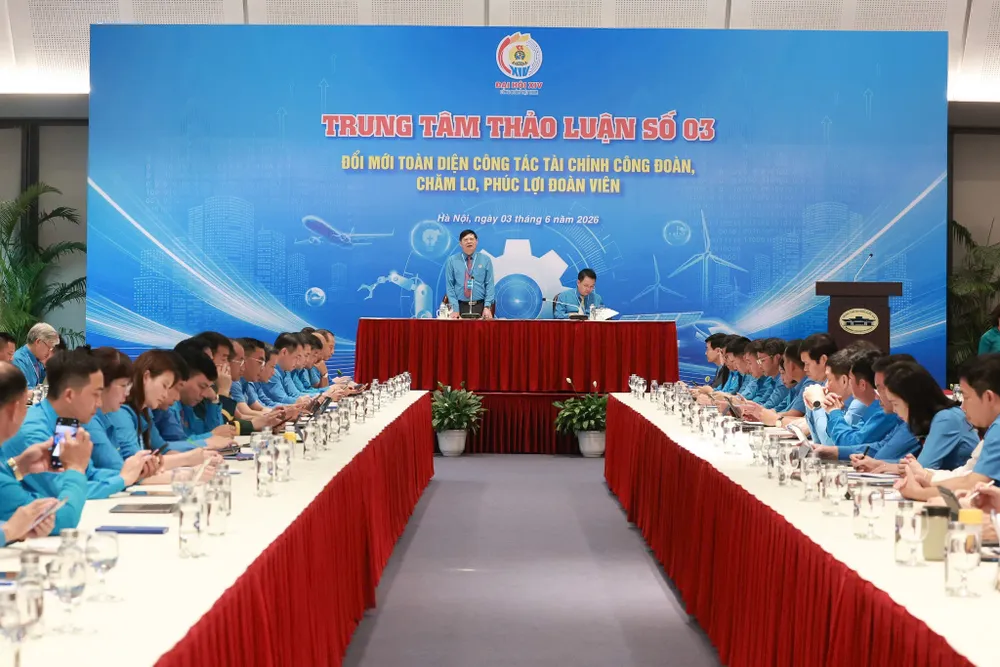

Other presentations suggested improving regulations on the 2% trade union fee collection, strengthening measures to combat fee evasion in the non-state enterprise sector, addressing outstanding trade union fee debts, and enhancing transparency in trade union financial management.
According to Mr. Phan Van Anh, data summarizing the implementation of the Trade Union Law shows that approximately 87% of trade union finances are currently spent directly on union members, workers, and grassroots trade unions, while the proportion spent on the trade union apparatus at all levels accounts for only about 13%.
Source: https://www.sggp.org.vn/de-xuat-giam-doan-phi-cong-doan-con-05-post855825.html




















































![[Video] Sunset at Lap An Lagoon – Where the sun sets over the fishing nets](https://vphoto.vietnam.vn/thumb/1200x675/vietnam/resource/IMAGE/2026/05/31/1780192137701_beach-landscape-sea-water-nature-grass-745871-pxhere-com.jpeg)






























Comment (0)