


The program is organized by the Vietnam Classical Music Association in collaboration with Impressivo Production & Enterprise.
"In Gratitude" is structured as a contemplative artistic journey, where music becomes part of the story of memory.
"Gratitude" is not only a thank you to the audience, but also to the generations before us, for music is the ever-flowing source that sustains our spiritual lives. "Gratitude" becomes a wordless dialogue between the artist and their predecessors, between the performer and the audience, between the past and the present, encompassing a range of emotions, sometimes a state of quiet reflection on the passage of time.
The program is structured into three parts, corresponding to the three layers of meaning of the theme "Gratitude": The visual journey of the program begins in a space with a deep, tranquil blue hue, evoking memories of the past – corresponding to "Gratitude for Heritage". The light then gradually moves, opening up new layers of space – like a path being formed, leading the way – that is "Gratitude for the Journey".
And in the final section, the light converges sharply around the two artists, creating a vibrant space of interaction – where dialogue, connection, and sharing are elevated to the highest level – which is "Gratitude to Humanity." Parallel columns of light appear on the stage as symbols of the coexistence between past and present, between generations of artists, and between inherited and continued values.
Part I - Paying Tribute to Heritage opens with Chopin's "Piano Concerto No. 1 in E minor, Op. 11." This work was written when the composer was very young, during a crucial transitional period before leaving Poland. While the work affirms his individual spirit, it also reflects a solid foundation from his family tradition, education , and national cultural identity.
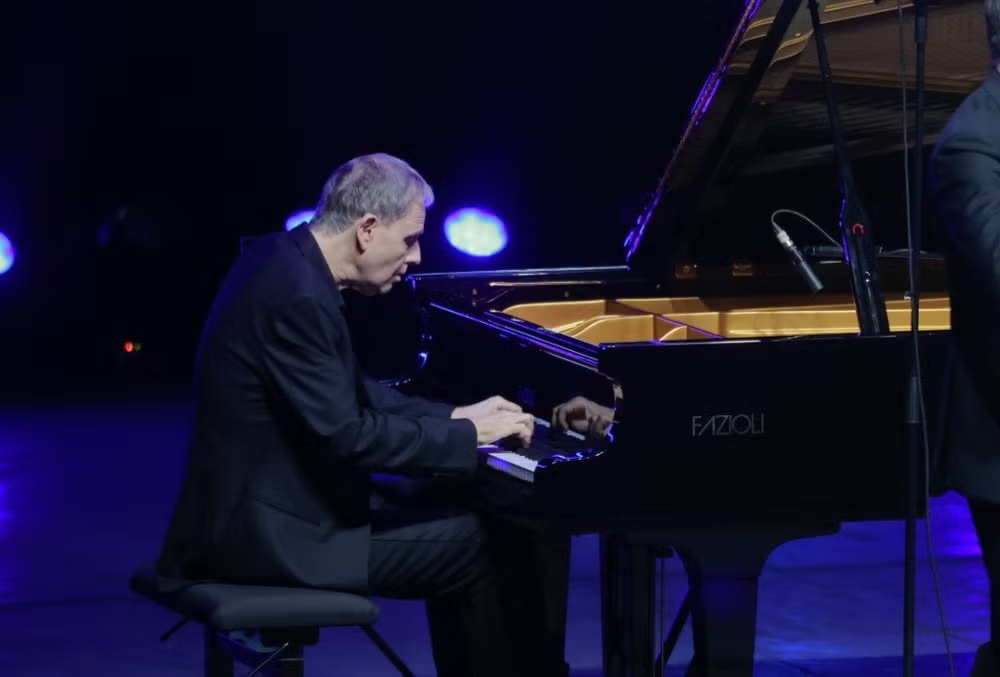
In Chopin's music, Poland is not just a geographical location, but a memory preserved through melody. With the piano playing of artist Kevin Kenner, the work exists not only as a legacy of the 19th century, but becomes a living entity – preserved, understood, and inspiring through generations of artists. This journey is not only expressed through music, but also conveyed through a theatrical language with layers of moving light and visual imagery, aiming to offer audiences a multifaceted perspective on classical concerts. There, visual art accompanies music, evoking and opening up layers of emotion that are more relatable to each audience member.
Part II - Gratitude for the Journey. If the first part was introspective and nostalgic, then "Andante spianato and Grande Polonaise brillante, Op. 22" opens up a bright, radiant space, yet retains Chopin's characteristic subtlety. In Nguyen Viet Trung's approach, the music is like a self-narrative, an expression, a humble and quiet thank you to those who have guided him on his educational journey. Here, "gratitude" is no longer an abstract concept, but becomes a personal experience transformed into sound.
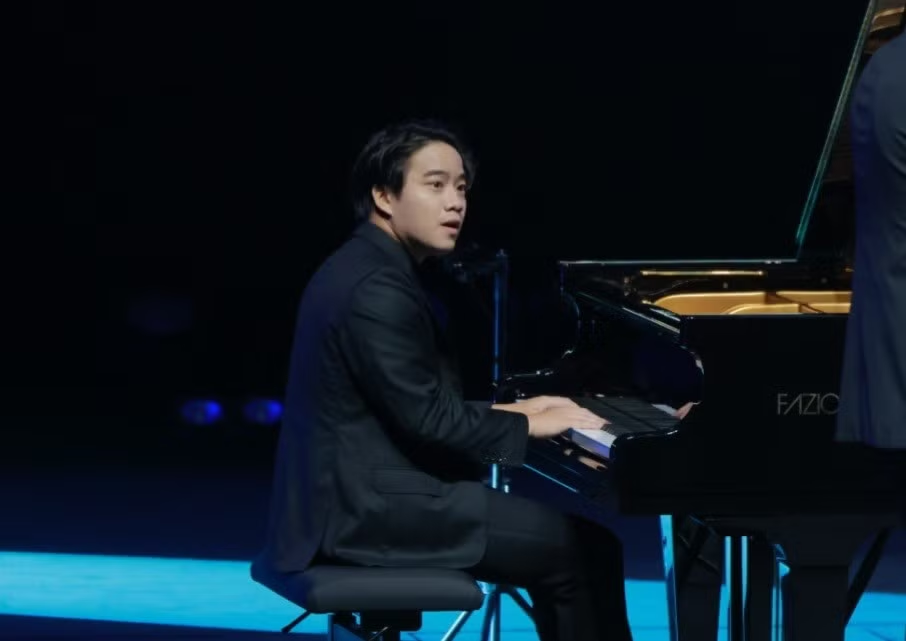
Along with the music, the stage space in this section also undergoes a clear shift – from focused, soft, and deep lighting, suggesting a tranquil inner world , gradually brightening and spreading into brilliant streams of light – like an explosion of emotion, energy, and a desire to move forward.
In Part III, the program immerses the audience in a direct dialogue between the two artists through works for two pianos. Johannes Brahms' "Variations on a Theme by Haydn, Op. 56b" is a prime example of how a composer engages with the past – not through repetition, but through recreation and transformation, a constant evolution. Meanwhile, Dmitri Shostakovich's "Concertino for Two Pianos, Op. 94" offers a different nuance: intimate, flexible, and highly interactive.
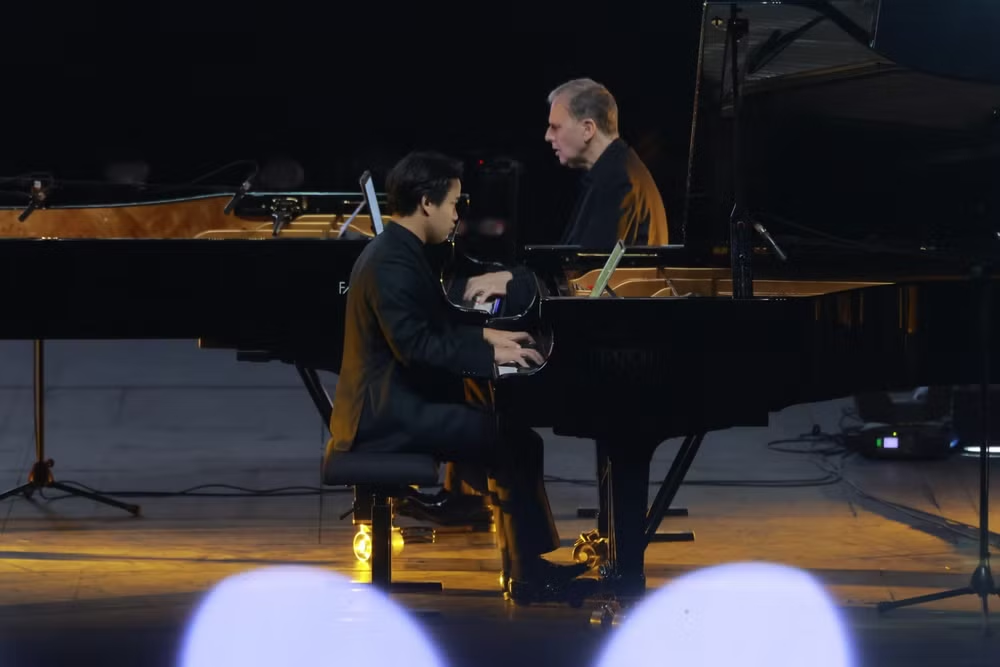
Piano duo is not just a form of performance, but a space for connection, dialogue, and listening to each other. At this time, music becomes a means of giving, trusting, and accompanying.
With its delicate and emotionally rich sounds, the concert told a poetic and philosophical story, offering the audience the multifaceted, gentle, and serene beauty of chamber music.
Source: https://nhandan.vn/dem-hoa-nhac-tri-an-giau-chat-tho-va-cam-xuc-post964151.html


![[Image] Close-up view of the interchange connecting the two expressways and Long Thanh Airport.](https://vphoto.vietnam.vn/thumb/1200x675/vietnam/resource/IMAGE/2026/05/25/1779703378210_ndo_br_z7863716673926-224453a31600126cce10622af6290afd-4549-jpg.webp)















![[Image] Close-up view of the interchange connecting the two expressways and Long Thanh Airport.](https://vphoto.vietnam.vn/thumb/402x226/vietnam/resource/IMAGE/2026/05/25/1779703378210_ndo_br_z7863716673926-224453a31600126cce10622af6290afd-4549-jpg.webp)




























































Comment (0)