

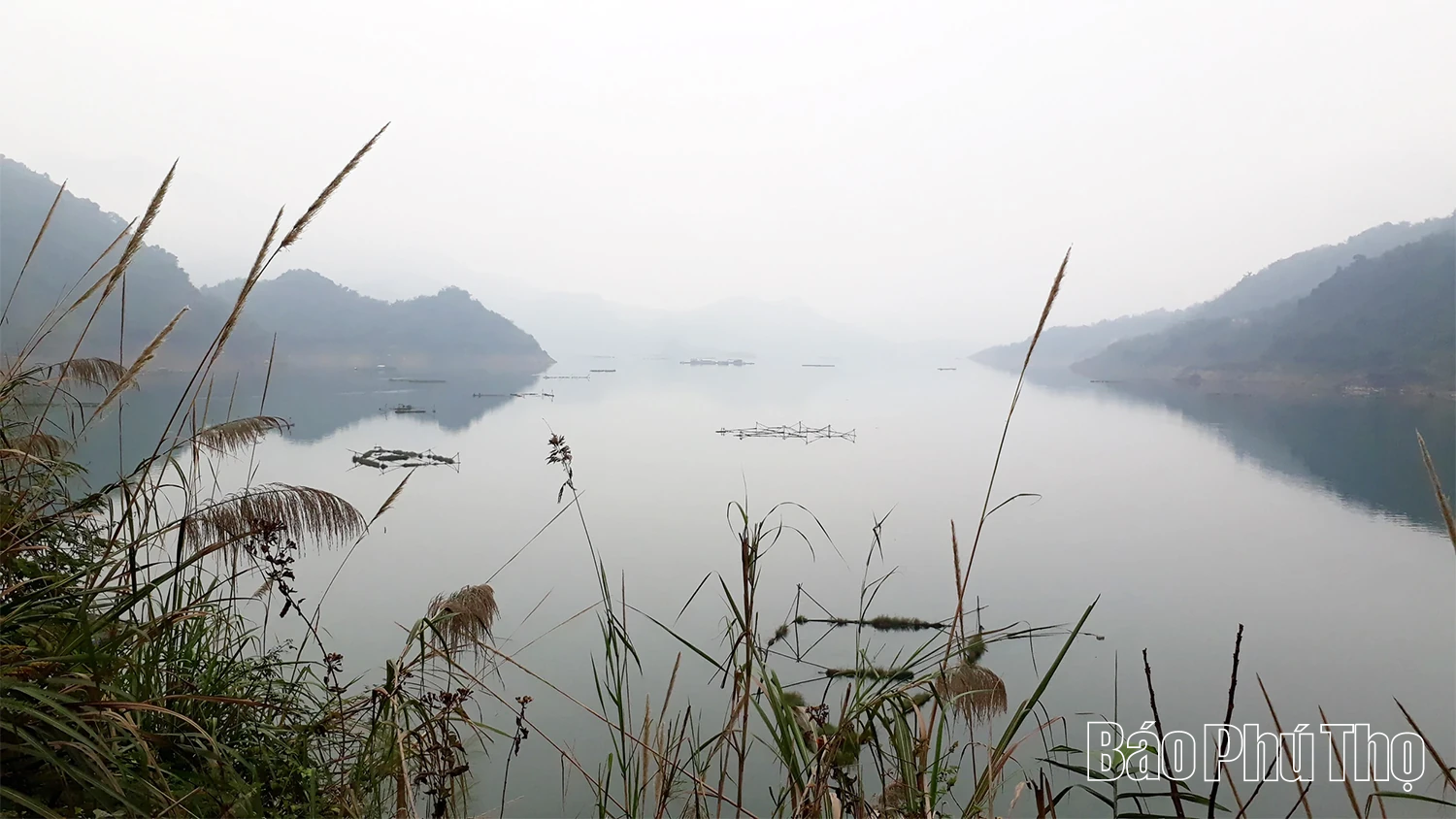
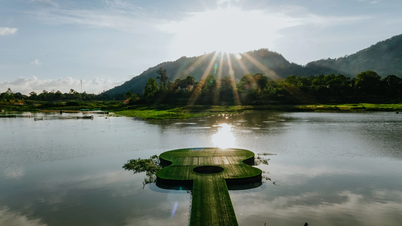
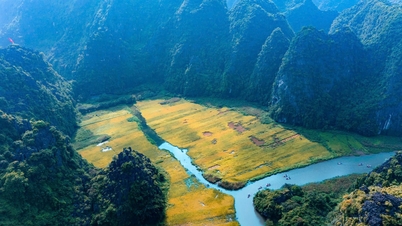
The majestic scenery from the road to Da Bia (Stone Monument) in Tien Phong commune, Phu Tho province.
"The 'specialty dish' at the end of the road"
“Go and experience it for yourself…” My friend’s challenge sounded a little irritating. The Hoàng Liên Sơn mountain range, the deep and mysterious mountains of the (old) district, or the towering Fansipan peak, thousands of meters high, had all been conquered on foot on sharp, jagged rocks. Even the thousand-meter-high peaks in the Pu Canh Nature Reserve or the Biều mountain, shrouded in clouds and mist year-round beneath the canopy of centuries-old Shan Tuyet tea trees, had been conquered. And what about Tiền Phong? Is there any place I haven’t been to yet? Well then! I’ll go and see for myself.
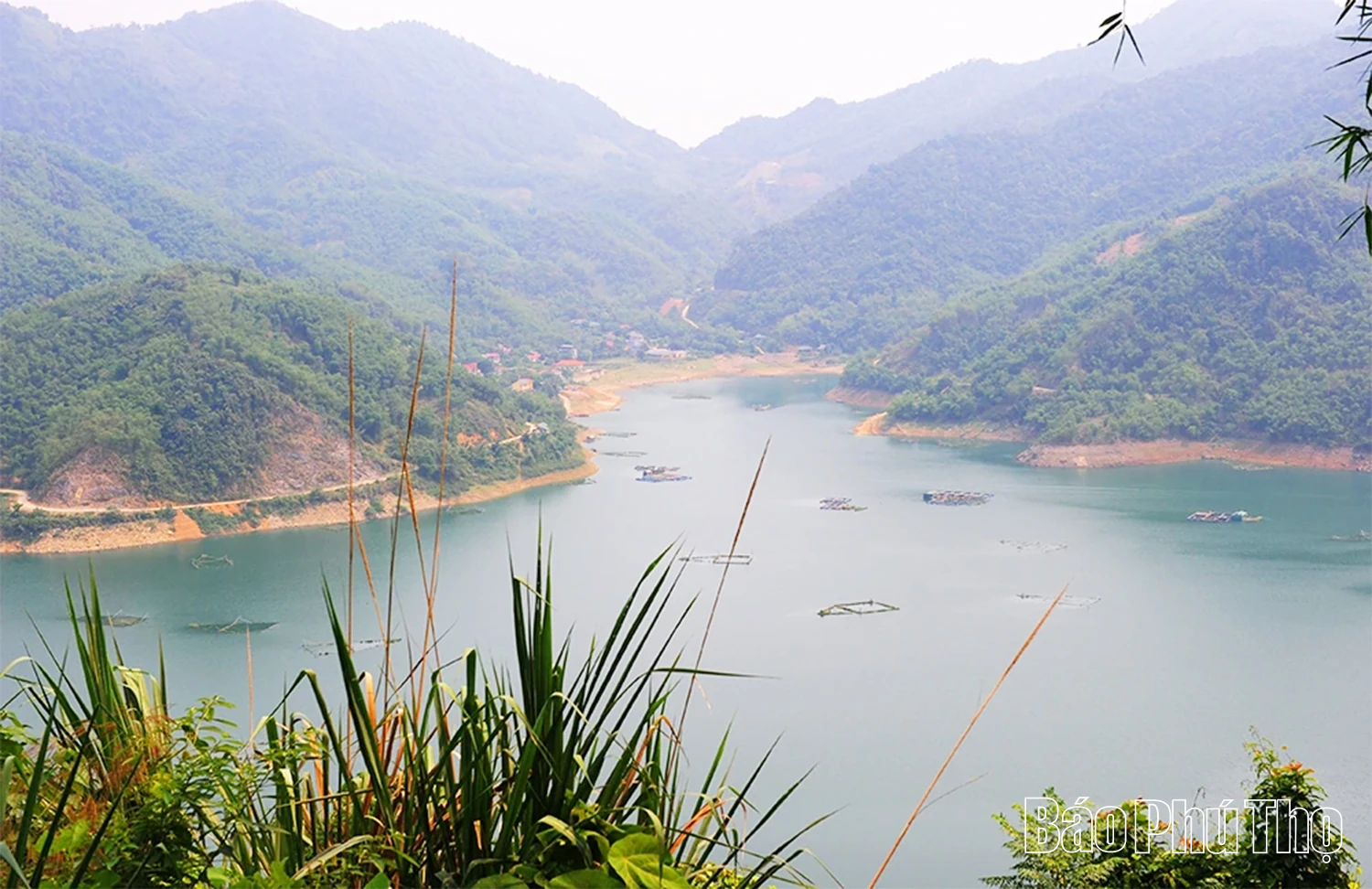
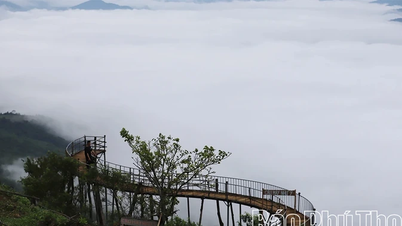
Looking down from above, the lake unfolds into a majestic landscape of clouds, mountains, and water, as if opening a gateway to another world .
According to my local friend, there are two ways to get to Đá Bia: by water and by land. The most convenient way is by water on the Đà River reservoir. However, going by land is also a good option, as many people believe it's the most scenic. Although the road is in poor condition due to ongoing repairs, you'll best appreciate the pristine, majestic beauty of the sky, clouds, rivers, and mountains; the beauty of the lakeside villages with their friendly, approachable people... I've traveled by water many times before. I decided to go to Đá Bia by motorbike along the walking route. From my house to Đà Bắc commune is over ten kilometers. The road isn't bad. The next leg of the journey is from the center of Đà Bắc commune to Tiền Phong.
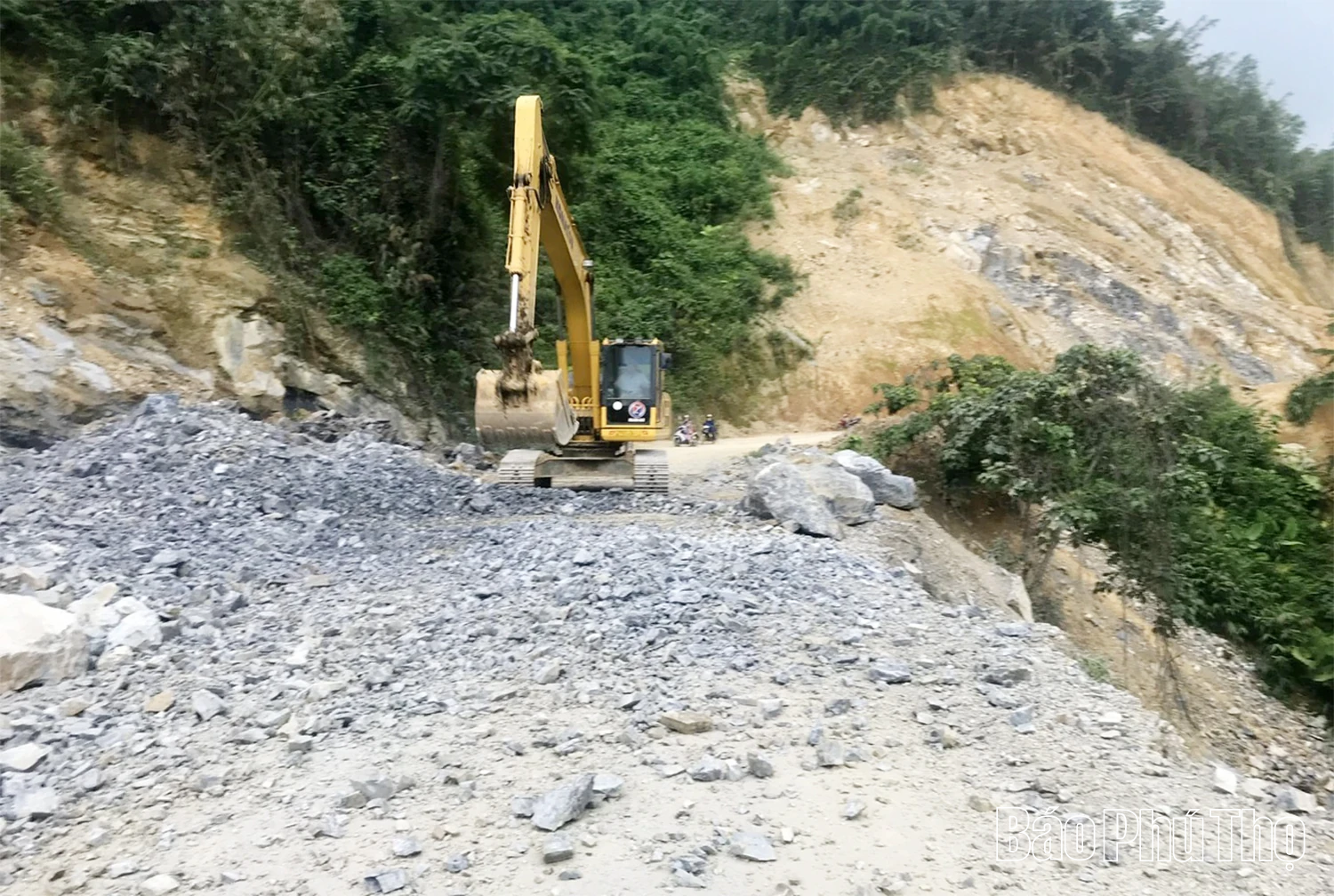
The Da Bac - Tien Phong road is under construction, so the journey to Da Bia is still fraught with difficulties.
"A shiver ran down my spine" at the unfinished "construction site" of the Vầy Nưa - Tiền Phong road. The road was mostly steep and slippery after the rainy days. The car shifted to a low gear, slowly navigating the steep inclines, then accelerated over the bumps and rocks blocking the road. Overcoming my fear, a "small gift" suddenly appeared. Wooden stilt houses nestled precariously along the mountainside and lake's edge, with the innocent, angelic smiles of mountain girls peeking through the doorways. A majestic landscape of clouds, mountains, and water unfolded before my eyes, like a gateway to another world. Suddenly, I thought:
- That's enough for the trip! But no, this is just the beginning. A small corner of a colorful tapestry.
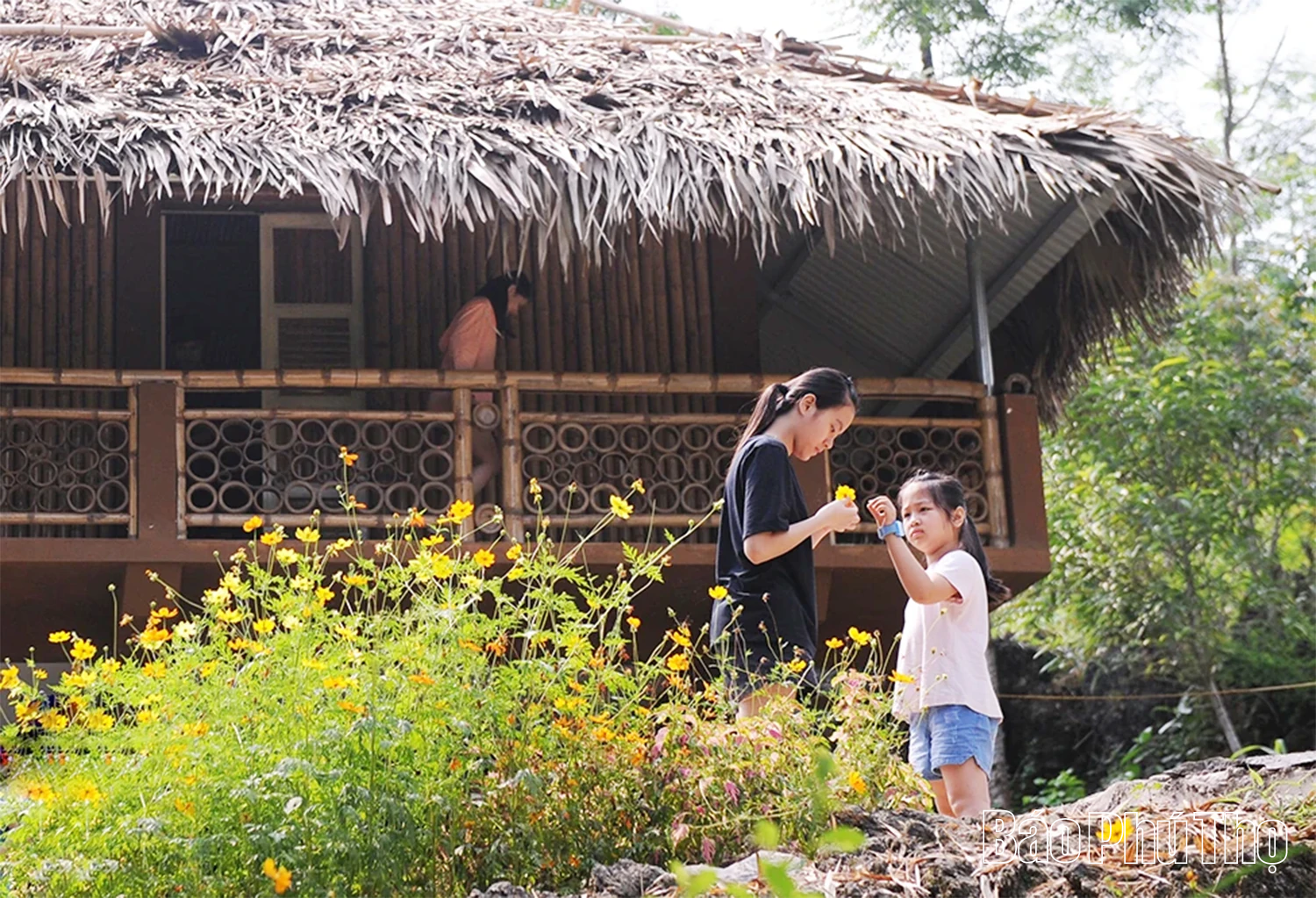
Upon arriving at Da Bia, visitors can experience a vibrant and colorful landscape.
Indeed, the further I went, the more I regretted having missed the opportunity to experience the lakeside scenery along this secluded road. The road to Tien Phong, passing through the villages of Ngu, Mai, Vay Ang, Duong..., winds around the mountains from the edge of the lake to the towering sky. The higher I climbed, the more the "heavenly painting" unfolded, stretching and wide, with clouds and mountains sharply reflected on the lake's surface when viewed from the mountaintop or from the distant, misty road. But that's not all. Because "the best part is usually at the end of the feast." To truly appreciate the beauty, you have to travel the entire road...
Where the mountains and forests radiate their beauty and fragrance.
If we liken the majestic mountain and cloud scenery of Da Bac region along the lakeside road to a feast, with each stop along the way being a delicious dish, then Da Bia is the special dish served at the end of this lavish feast.
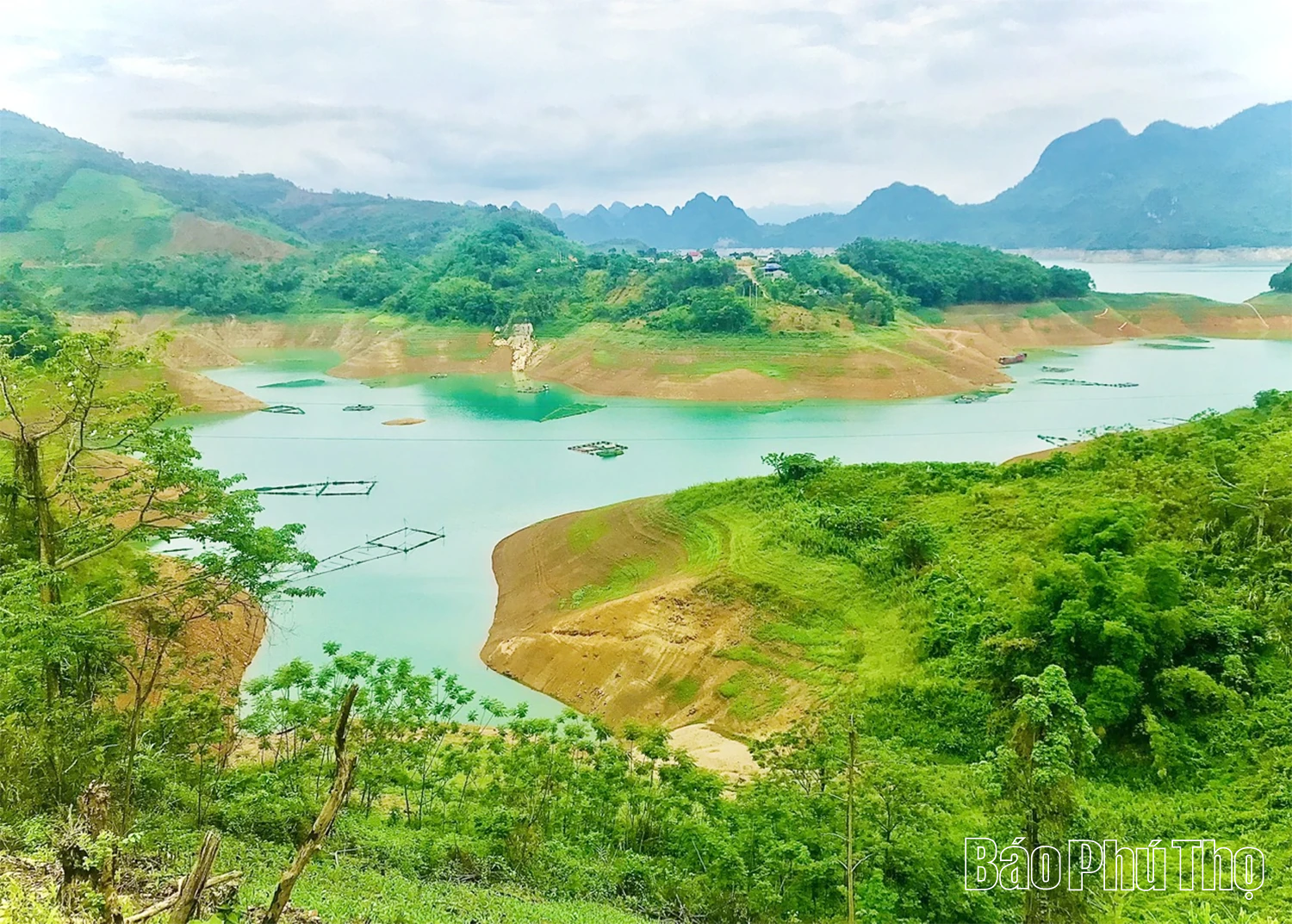
With its pristine forests and majestic mountains surrounding the lake, Da Bia is truly a "specialty."
For a long time, Da Bia has been considered one of the most interesting destinations for those who enjoy exploring. According to Bui Thi Nhem, a young woman from Muong Ao Ta and one of the first people to develop community tourism in Da Bia, Da Bia used to be a small hamlet with a few dozen households. Before the road was built, it was an isolated island surrounded by mountains, forests, and rivers. The only way to get there was by boat on the Da River reservoir. The road to the hamlet was only built 3-4 years ago. Therefore, it still retains its rustic, unspoiled beauty, free from dust and noise.
Recently, with support and investment, Da Bia is transforming into an attractive homestay destination for those who enjoy experiences and exploration. At Da Bia, there are not only paths winding deep into the forest canopy, a wide lake with clear blue water, and white clouds, but also beautiful walking trails through the forest with crystal-clear streams flowing from within.
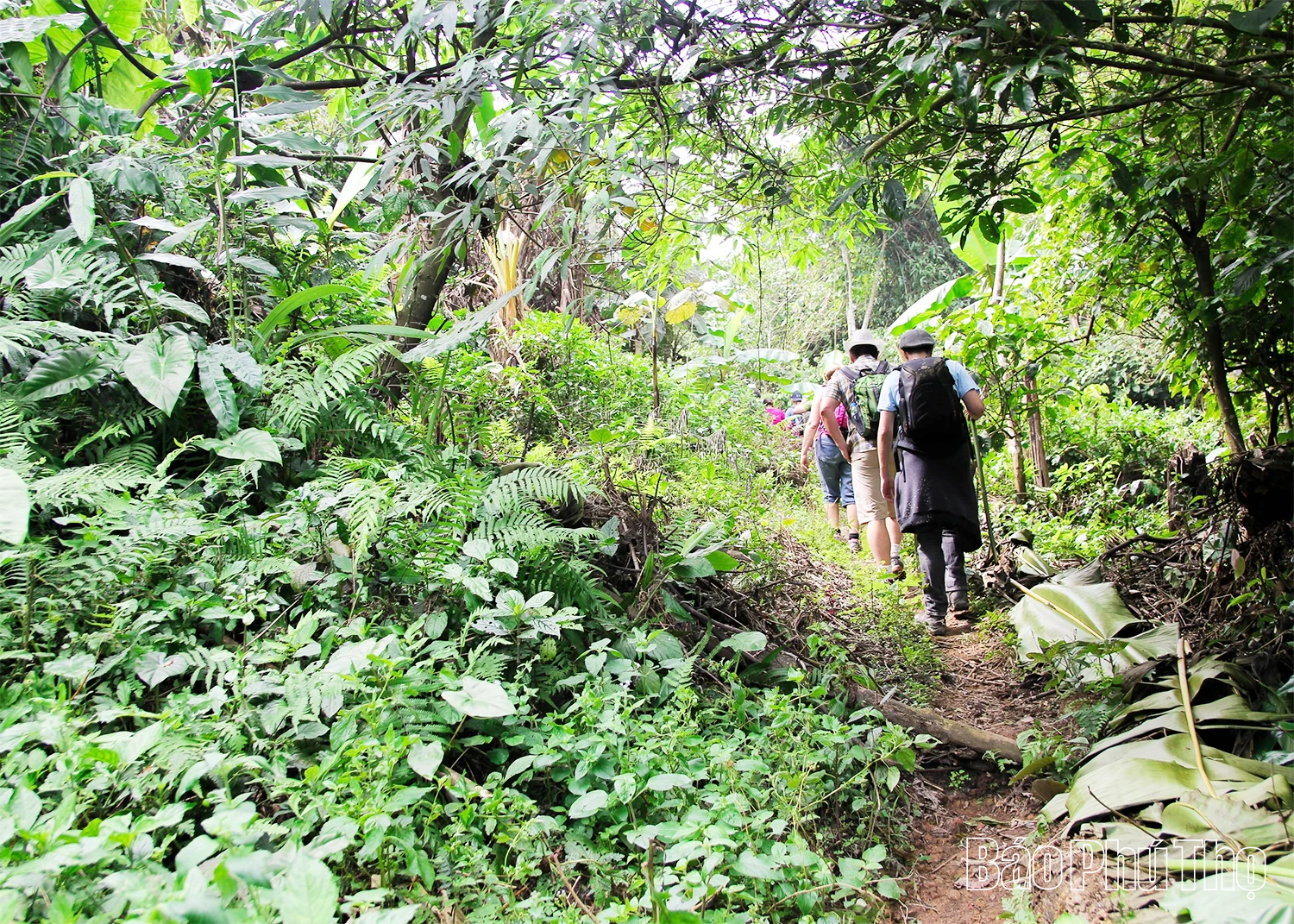
In Da Bia, there are also some beautiful roads that wind through the forest.
Moreover, there are also genuine, friendly smiles, warm and sincere handshakes, and the hospitality of the locals. Many people, upon arriving at Đá Bia, initially hesitate, thinking, "Knowing how far and difficult the journey is, I wouldn't have come." But once they arrive, they can't contain their excitement: Đá Bia truly offers unforgettable experiences, such as trekking tours through the forest, exploring the life of the surrounding villages; fishing, eating traditional meals, and sleeping in stilt houses... As Yves Perrin, a tourist from France, put it: "It's still going to the mountains. But here, there are mountains and water. There's a diverse landscape with plants, flowers, leaves, and a boat landing that anyone who visits once will remember." The hospitality and sincerity of the people of Đá Bia made us feel not like guests, but like members of the village.
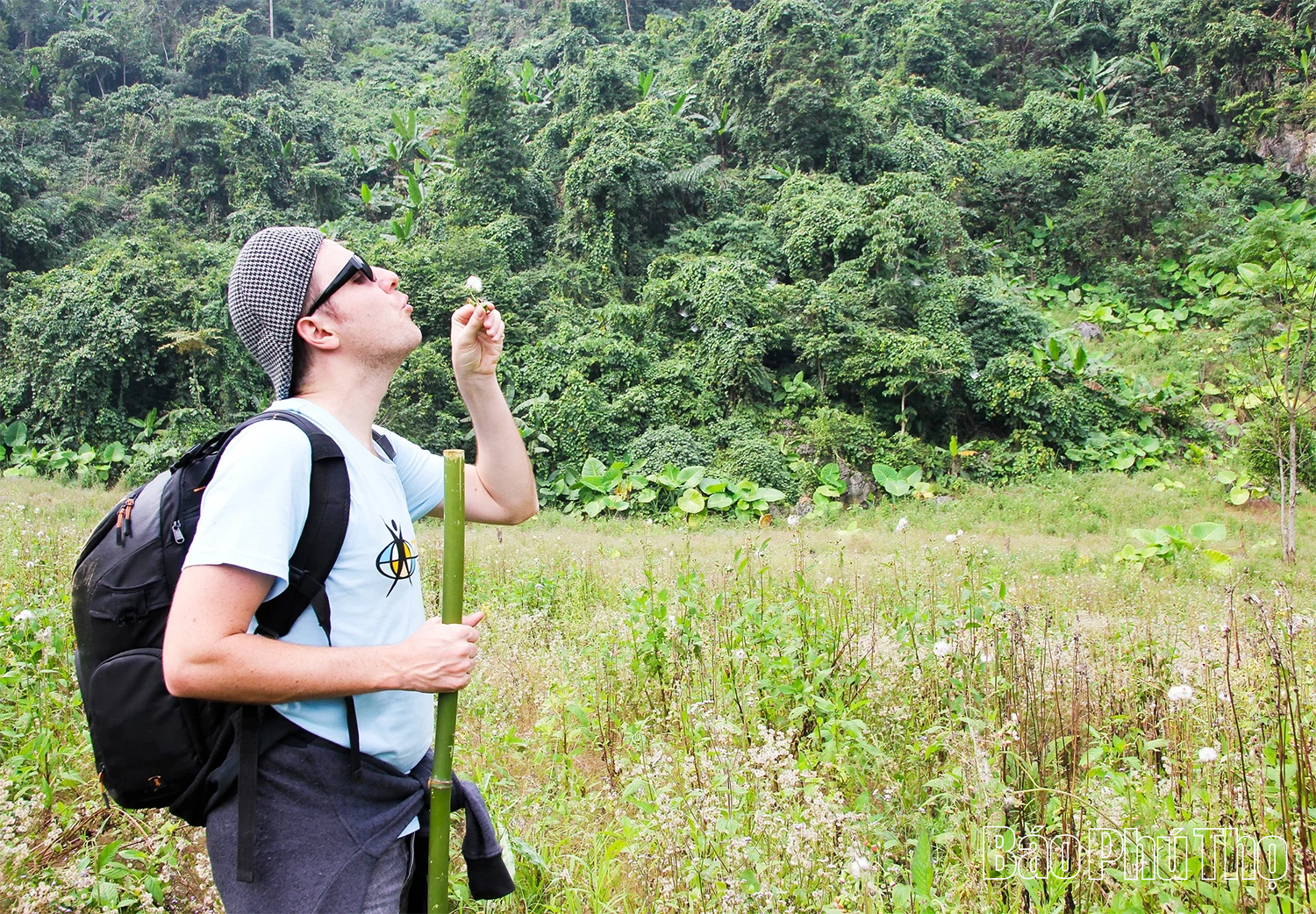
Foreign tourists enjoy experiencing tourism at Da Bia.
The culture and customs of the local people were also a pleasant surprise. Here, we could be ourselves, forgetting the hustle and bustle of life. It was a worthwhile trip, a truly memorable experience... One of the things that amazed me in Đá Bia was the "unattended shops." In Đá Bia, the locals call these "self-service shops." They have no caretakers, no locks, just a table displaying a few bottles of honey, some wild bamboo shoots, a packet of colorful sticky rice, some brocade fabrics, a few fruits picked from the fields... along with a small sign indicating the prices. Next to it is a wooden box for customers to pay themselves. "Aren't you afraid of theft?" I asked Ms. Nhem, who smiled kindly: "The people of Đá Bia trust each other. And they trust the kindness of their customers. If we are sincere, the customers will be sincere too." This "self-service" culture is not just a small detail. It is a profound expression of the people's way of life, valuing trust and integrity. It is proof that amidst the vast mountains and forests, trust is still preserved like a treasure.
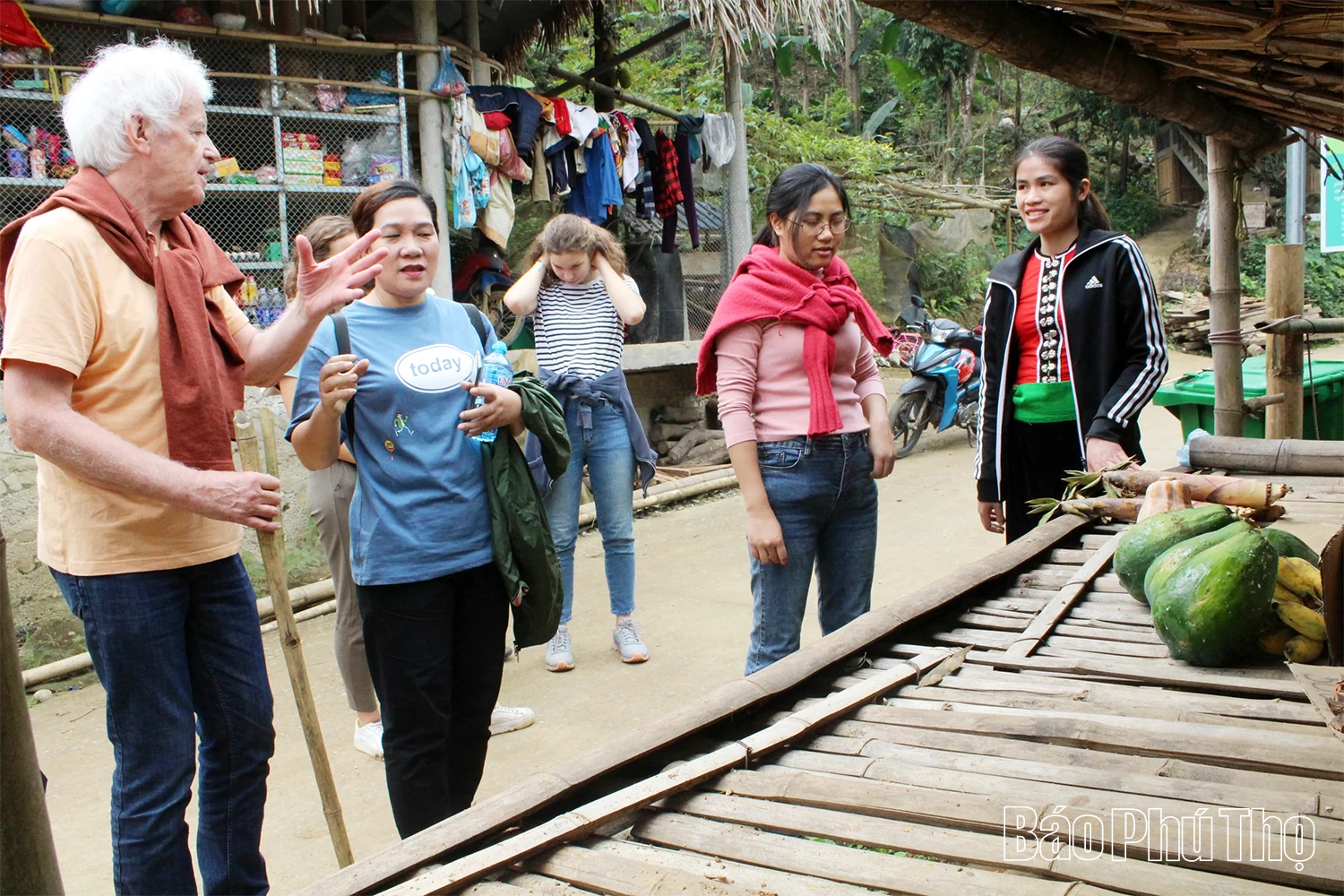
Ms. Bui Thi Nhem (in red shirt) introduces tourists to the unique cultural feature of "self-service cafes" in Da Bia.
Not only that, but visitors also have many special experiences here. For example, Do Thi Phuong Anh, a little girl we met playing with her friends after traveling from Hanoi with her parents, shared: "I traveled a long distance, more than three hours to get here. I'm very tired but also very relaxed because of the fresh air and the warm hospitality of the locals. The food here is delicious, and there are many fun activities such as kayaking on the lake in the late afternoon; cycling through the forest in the morning sun; and participating in fishing and catching fish on the lake..."
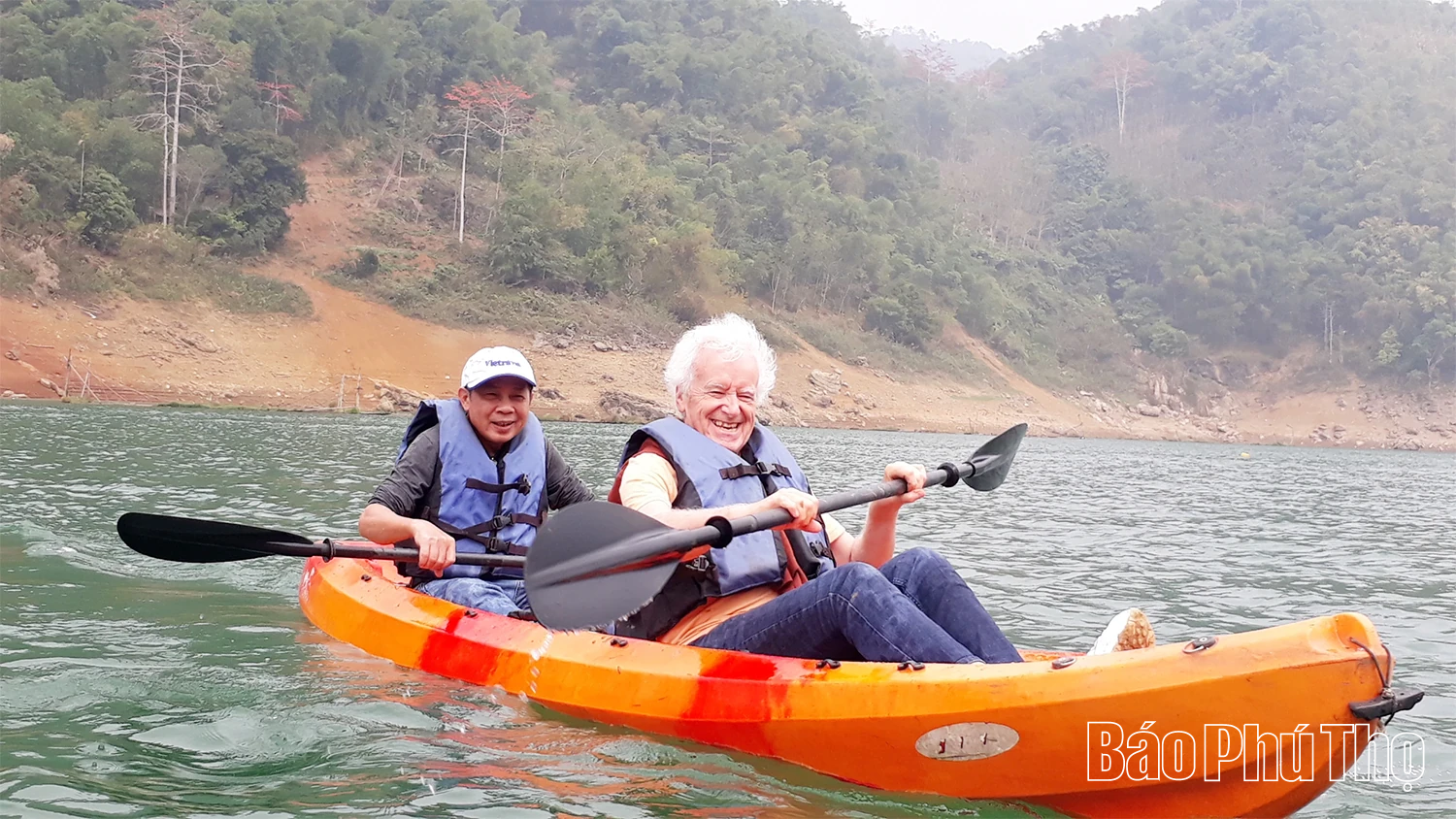
At Da Bia, visitors can enjoy exciting activities such as kayaking on the lake.
In particular, visitors can witness and participate in the daily life of the Muong ethnic people here, from working in the fields and cooking sticky rice to pounding rice cakes and drinking rice wine.
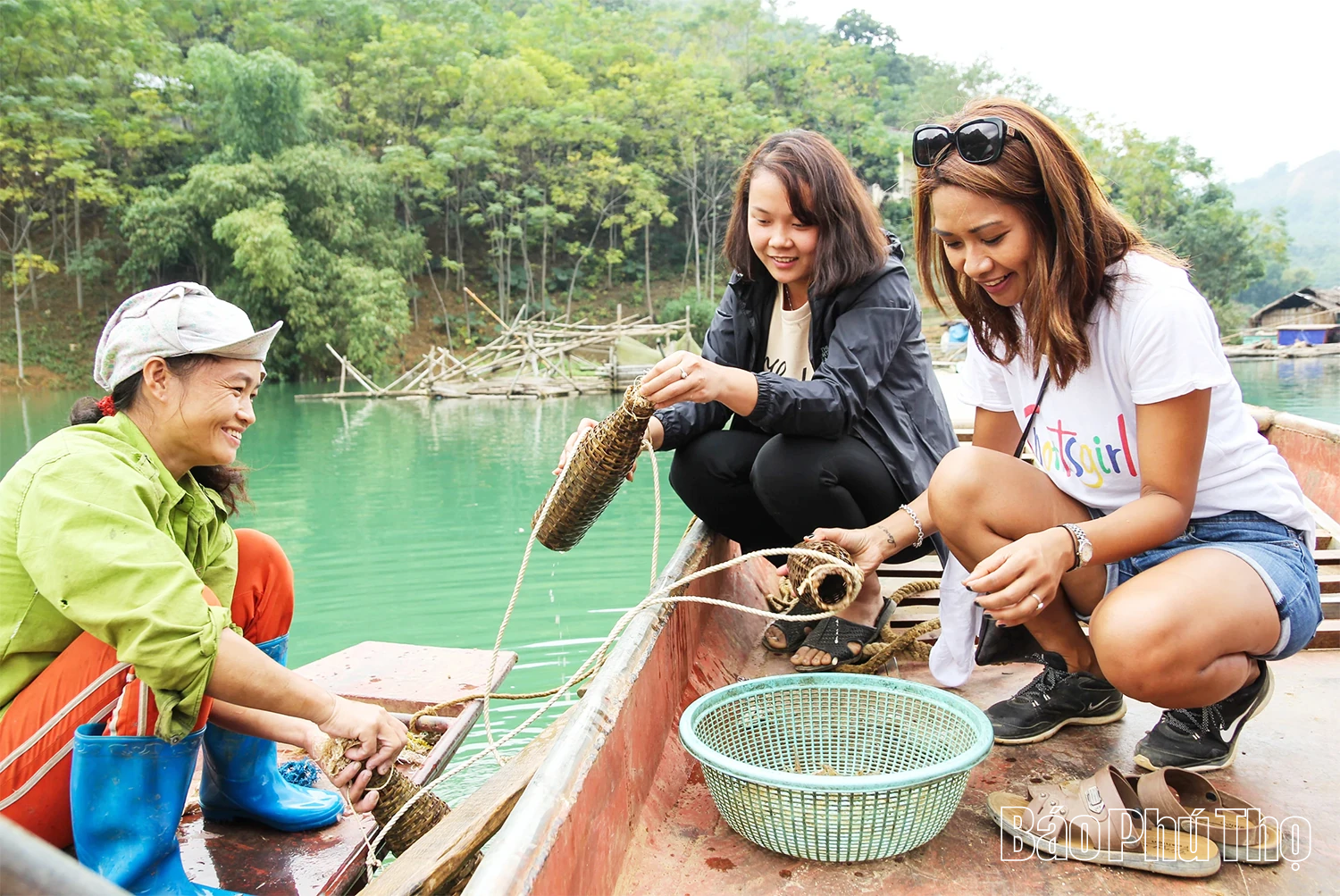
Tourists participate in the activity of pouring shrimp traps on the river with the locals when visiting Da Bia.
Turn off your phone, connect with a smile.
Besides the untouched natural scenery and charm, the friendly and amiable people of Da Bia, along with the activities and experiences visitors have during their stay, have created a positive impression rarely found elsewhere.
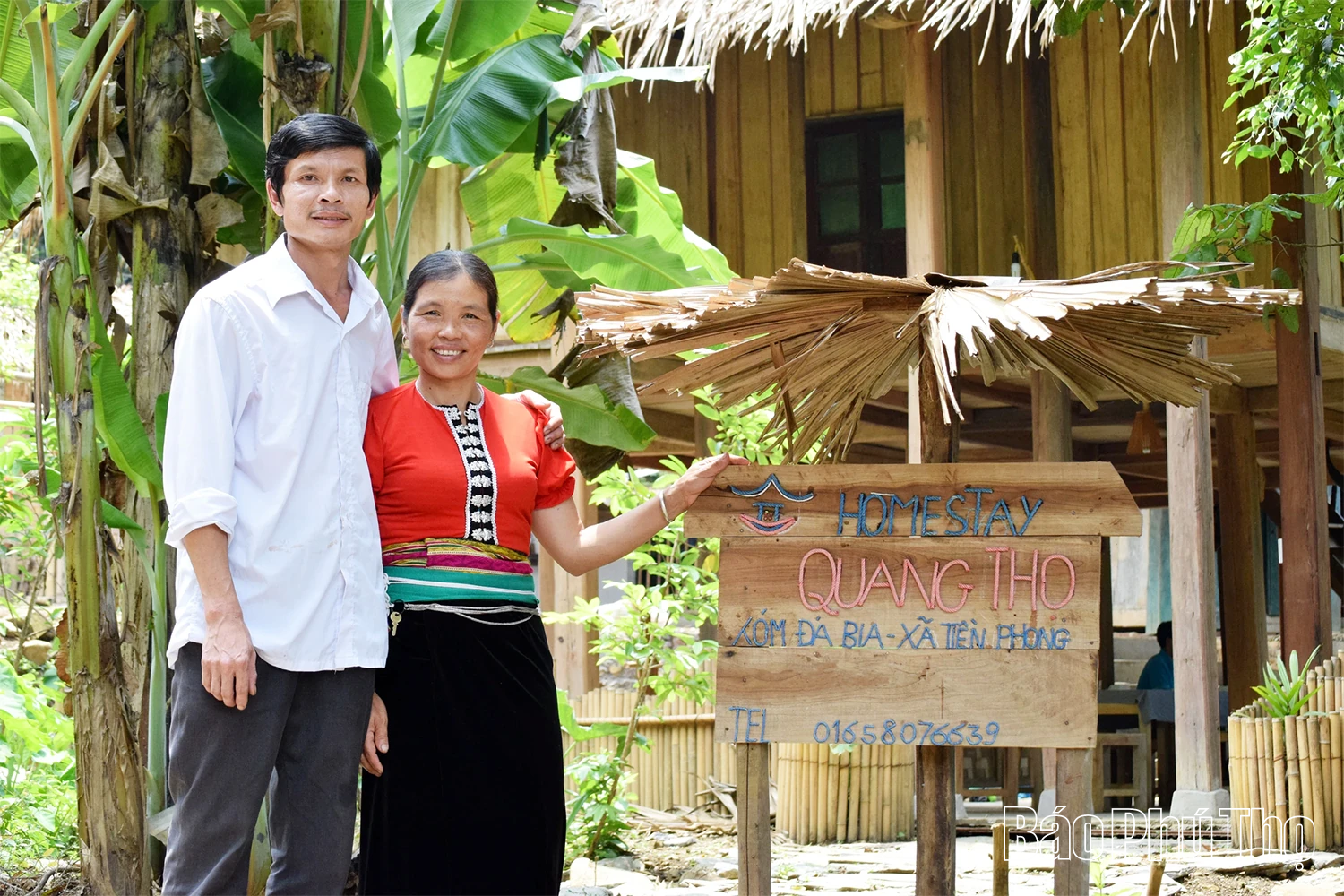
Currently, Da Bia has many quality accommodation facilities to serve domestic and international tourists. Among them, Quang Tho homestay is one of them.
Those mobile phones – which are practically inseparable from most people – have temporarily left their owners' side. According to Ms. Bui Thi Nhem, it's not that there's no mobile network in Da Bia. Recently, internet access has also been brought to the village. However, the interesting experiential activities have created a sense of connection among people, making them forget about their mobile phones. Even during meals, guests put their mobile phones aside so that everyone can feel closer and more intimate.
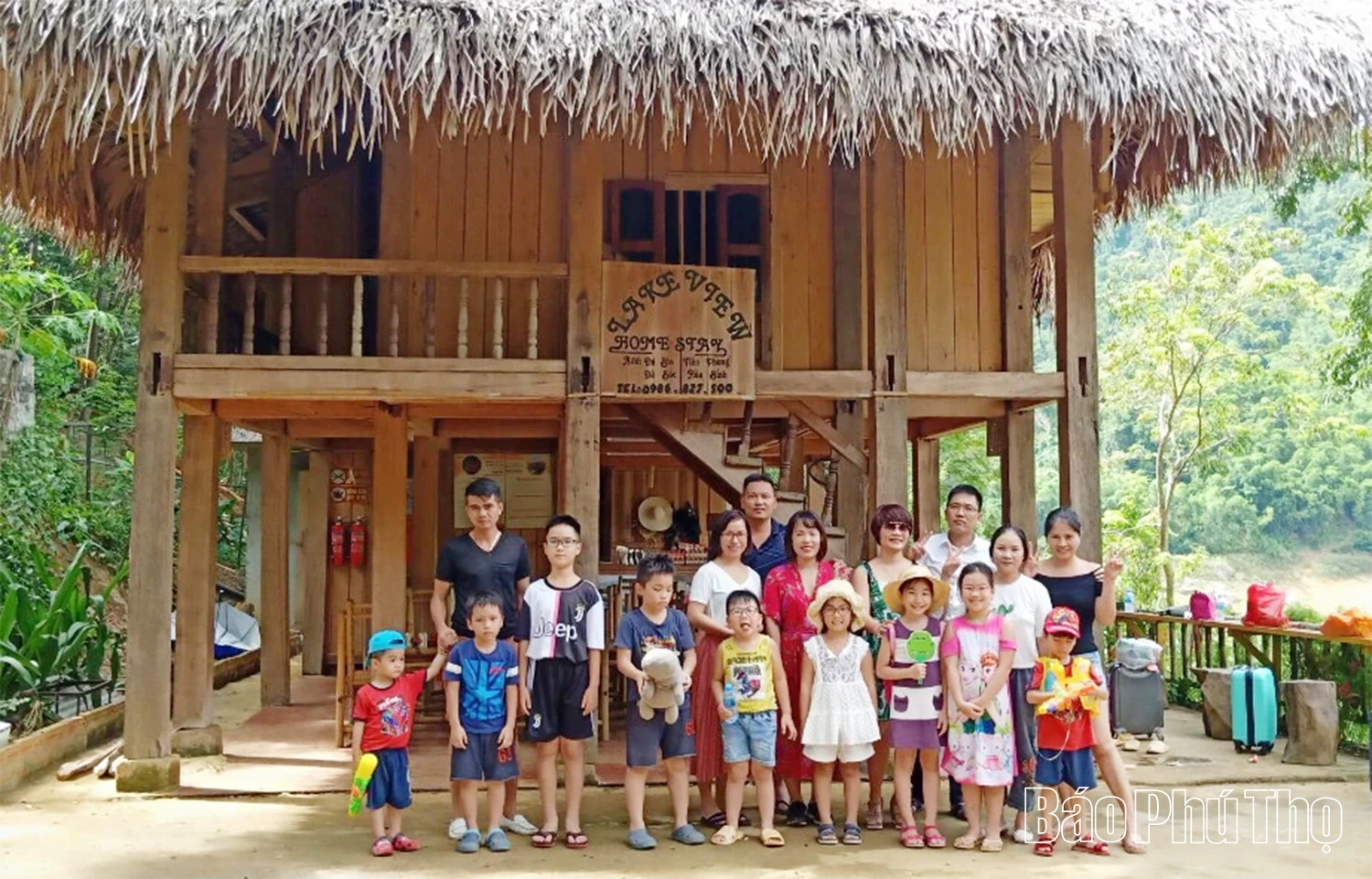
At Da Bia, visitors will always have enjoyable experiences that encourage them to open up and connect with each other through smiles.
This has delighted most visitors. As Emely Nadi from France shared: "No wifi, no problem." And Phuong Linh, a tourist from Hanoi, said: "Here, we turn off our phones, disconnect from the outside world, but that's not a problem. Because when we turn off our phones, we open up and connect with each other through smiles."
Some even expressed their excitement: “Everything here is so strange and wonderful. We experienced a very joyful life. Putting aside modern technology to experience life is something to cherish,” a tourist once shared on a souvenir card at Da Bia. Sharing the same sentiment, a young girl nicknamed “Rika” from Phu Tho wrote about her experience here: “It was amazing to be here, I will come back!”
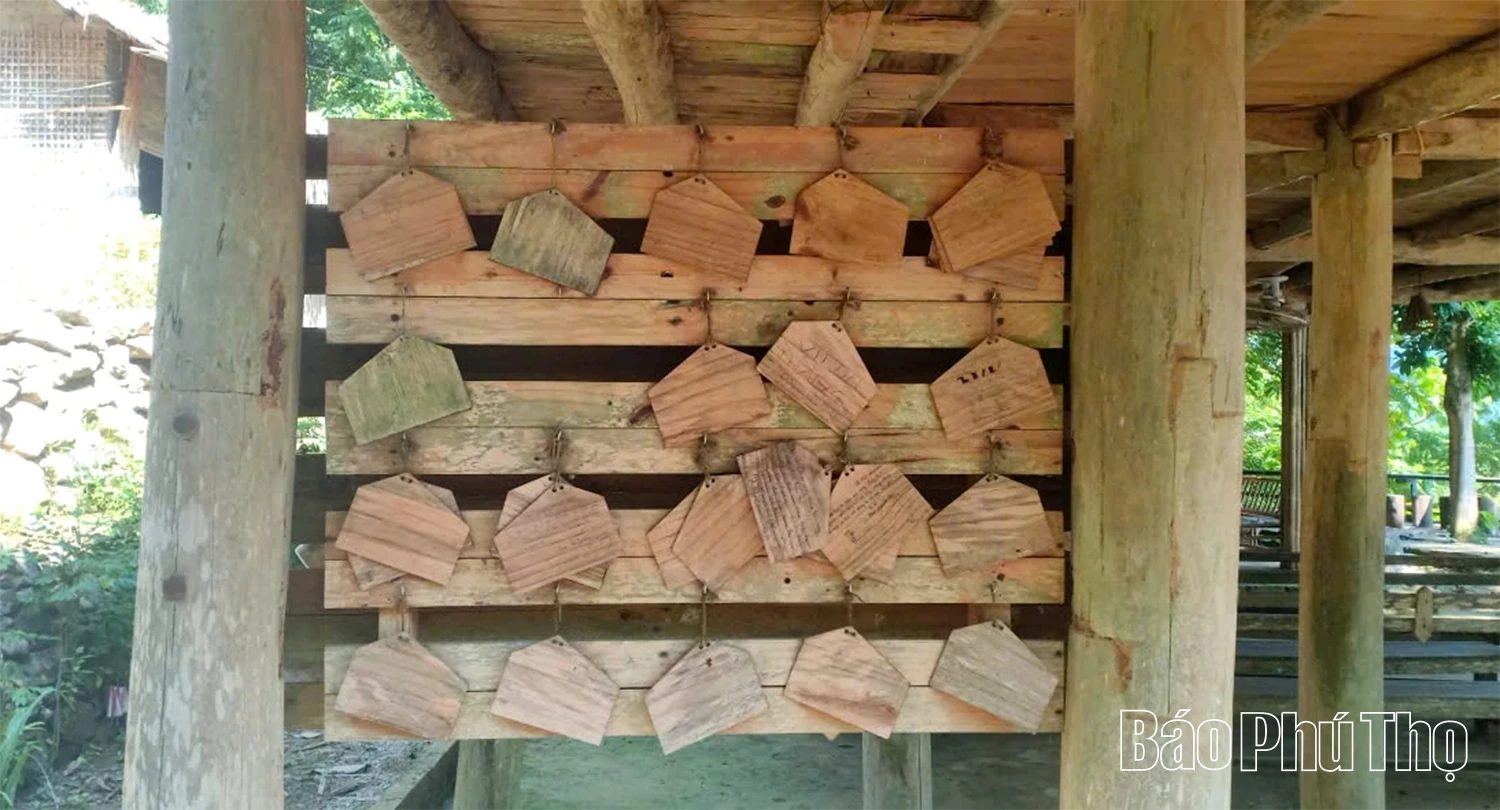
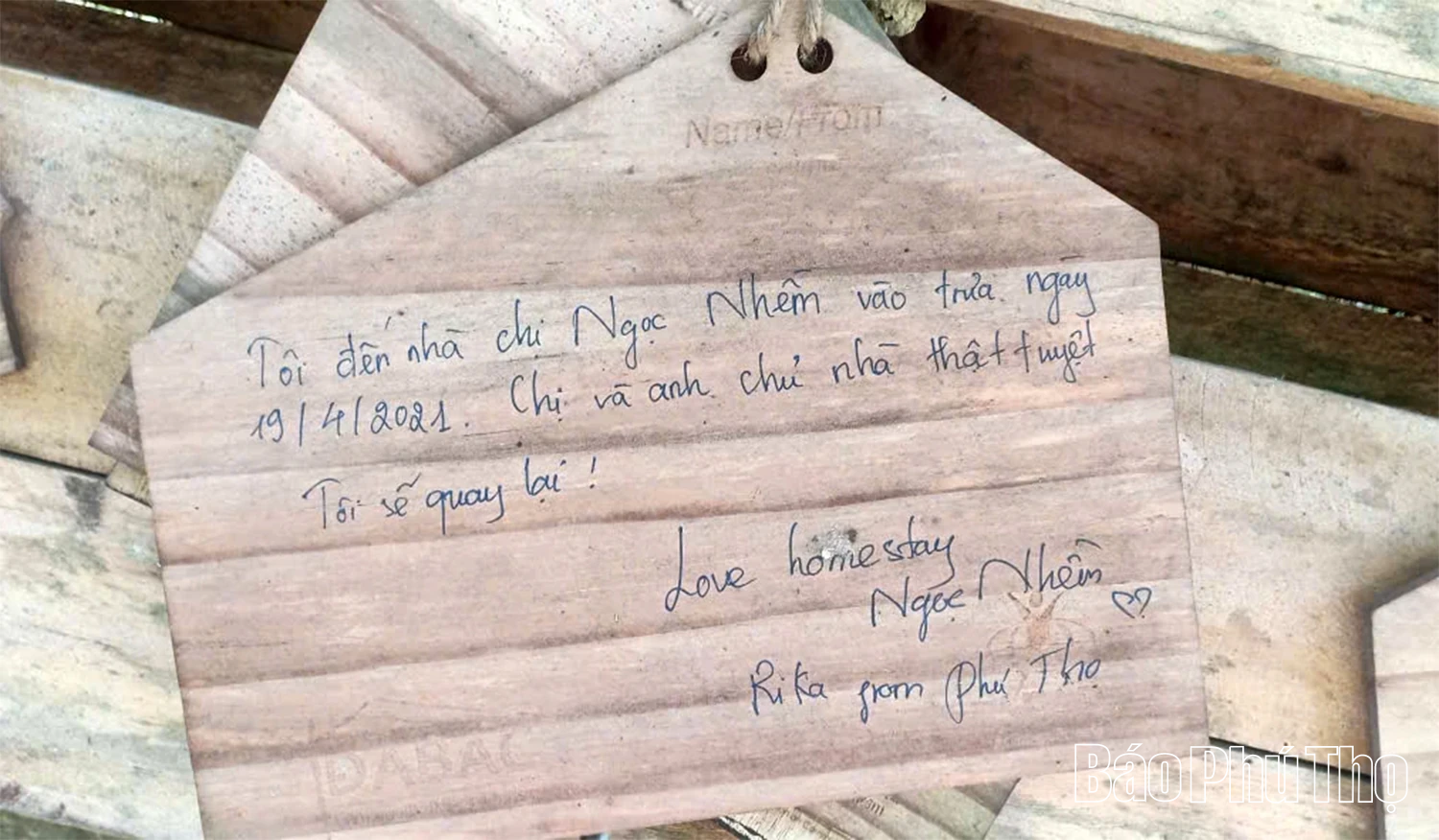
With their experiences visiting Da Bia, many tourists have had positive impressions of the people and the land.
People come to Da Bia simply to enjoy a peaceful morning, from the sound of roosters crowing at dawn. They get out of bed, grab a jacket, and put it on as the early morning chill envelops them. They breathe in the morning mist, feeling a strange sense of tranquility. The village by the lake, its still waters still lingering with the peaceful mist. As for me, I just want to escape the city after tiring days. I come to Da Bia to let my soul wander amidst the river and raise a glass of strong wine with the kind, simple people. And it's been a long time since I've had a whole day "off the air." Something that perhaps has long been forgotten...
* Da Bia, now Duc Phong hamlet, is a familiar destination for tourists, offering stunning natural scenery and unique cultural characteristics of the Hoa Binh lake region.
Manh Hung
Source: https://baophutho.vn/den-da-bia-tat-song-de-ket-noi-nu-cuoi-237012.htm

![[Image] A brilliant symphony and explosive power in the skies of Da Nang.](https://vphoto.vietnam.vn/thumb/1200x675/vietnam/resource/IMAGE/2026/05/31/1780196945787_anh-man-hinh-2026-05-31-luc-10-08-51.png)









![[Video] Sunset at Lap An Lagoon – Where the sun sets over the fishing nets](https://vphoto.vietnam.vn/thumb/340x192/vietnam/resource/IMAGE/2026/05/31/1780192137701_beach-landscape-sea-water-nature-grass-745871-pxhere-com.jpeg)





























































Comment (0)