

 |
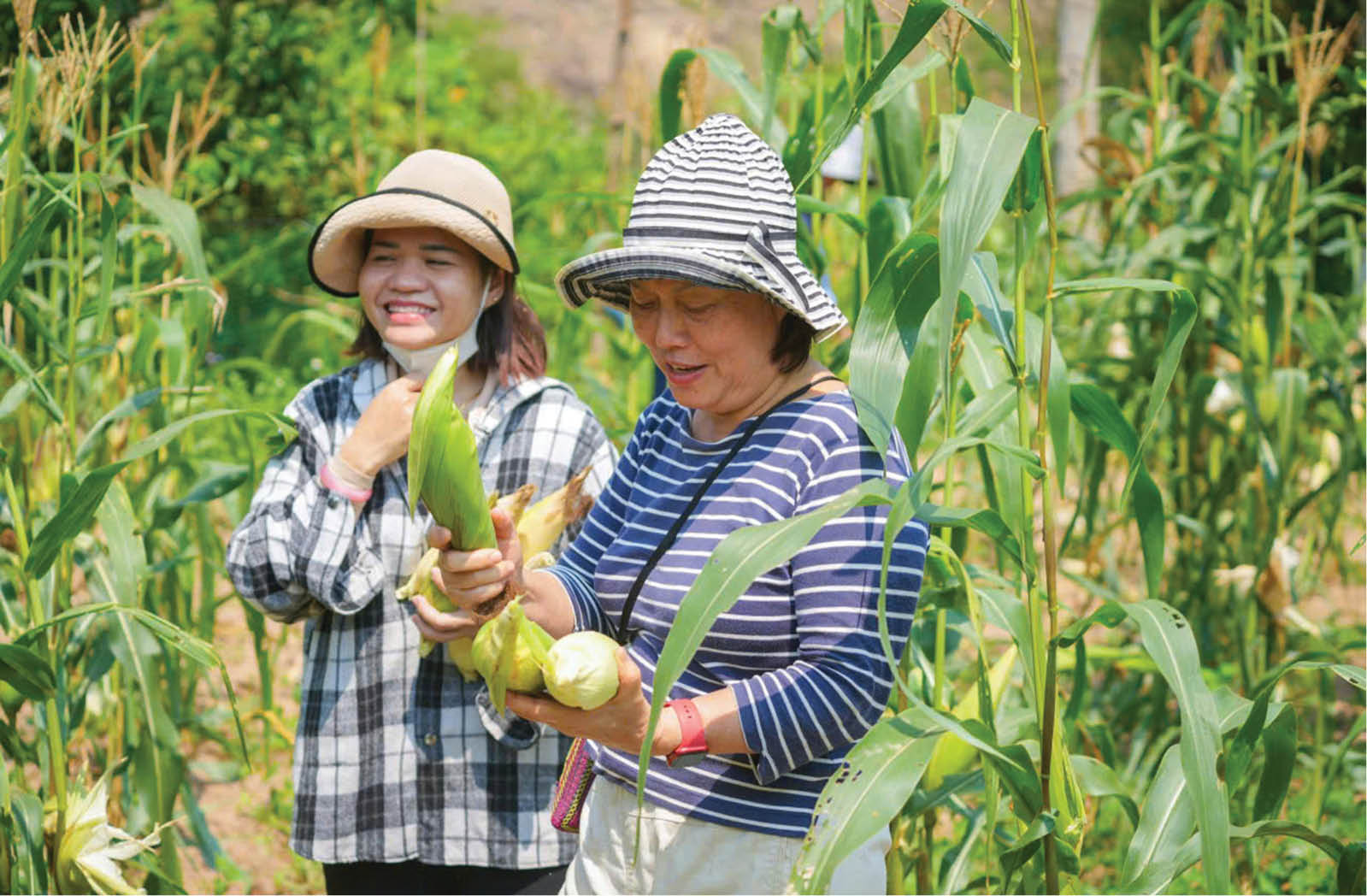
| Ban Doi is gradually developing community-based tourism while preserving local cultural identity. |
Living with the villagers
After a long absence from Khe Tre, I chose An Hanh Homes in Ban Doi as my accommodation. Before the trip, I had seen many pictures and videos introducing this homestay on social media and decided to choose it because of its well-advertised space and services.
At An Hanh Homes, we were warmly welcomed by the local people. The homestay owner introduced us to the experiential activities that the tourism community in Ban Doi is developing to serve visitors.
The first meal in the village features familiar dishes of the highlands such as grilled local pork, free-range chicken, and wild vegetables, all prepared by the locals. Everything is simple, yet enough for visitors to experience the unique flavors of the Khe Tre highlands. According to many households involved in tourism in Ban Doi, traditional cuisine is considered one of the experiences that tourists are interested in when visiting community-based tourism in the Khe Tre highlands.
Ms. Ho Thi Non, a local tour guide, took us to visit the highlights of Ban Doi village. From the zèng weaving and basketry area to the village's Gươl house, each place is associated with the traditional lifestyle and culture of the Co Tu people.
According to Ms. Non, what the tourism community in Ban Doi wants to preserve is the traditional lifestyle and culture of the village. Therefore, many current experiential activities are linked to the daily lives of the local people. "Tourists now like to learn about local culture, like to see how the people live, what food they eat, and what occupations they have. So, experiential tours usually closely follow the needs of tourists," Ms. Non shared.
Currently, many homestays in Ban Doi are also starting to build more experiences for guests, such as guiding them in making souvenirs, introducing black glutinous rice wine, organizing cultural exchanges, or learning about the traditional crafts of the Co Tu people.
In the future, the village's tourism community plans to collaborate with orchard owners to develop tours offering experiences such as picking oranges and pineapples and visiting fruit orchards. "Ban Doi has many beautiful orchards. If we can develop experiential tours, tourists will have more activities to explore, and the villagers will also have an additional source of income," said Ms. Non.
Evenings in Bản Dỗi are usually more lively when the village's performing arts troupe performs gong music and traditional dances for tourists. In the firelight in the courtyard of the Gươl house, many tourists join hands and dance with the locals.
Currently, Bản Dỗi has about 6 homestays in operation. In addition to accommodation services, many households have started making handicrafts, souvenirs, black glutinous rice wine, and other natural products to serve tourists.
Opening the way for community tourism.
Along with developing homestays, the tourism community in Ban Doi is now focusing on exploiting the cultural values of the Co Tu people to create a unique identity for the destination. Traditional crafts such as zèng weaving, basket weaving, traditional dishes, and community art performances are being maintained by the locals to serve visitors.
Mr. Duong Thanh Phuoc, Chairman of the People's Committee of Khe Tre commune, said: “The locality is focusing on supporting the community in developing tourism associated with preserving the traditional culture of the Co Tu people; at the same time, continuing to invest in infrastructure, upgrading experiential points and connecting tour routes to develop community tourism in a sustainable direction. Projects such as the road to Kazan waterfall, lighting system, check-in points, community cultural performance stage and experiential spaces in the Co Tu cultural village are being invested in to serve tourists. In addition, the locality continues to support people in improving their tourism skills, and at the same time develop more experiential activities so that tourists have more choices when coming to Ban Doi.”
In addition to infrastructure and tourism products, the locality is also stepping up promotion on digital platforms. Community fan pages, experience videos, and images of Co Tu culture are being proactively created by many young locals to introduce Ban Doi tourism to visitors.
Another approach being implemented by the tourism community in Ban Doi is the green tourism model, reducing plastic waste and preserving the village landscape. Many homestays have started using environmentally friendly items and are encouraging locals to participate in maintaining cleanliness at tourist sites.
Leaving Bản Dỗi after our return to Khe Tre, what impressed us most was the closeness of the people and how they are developing tourism through their daily lives. The Co Tu cultural values preserved in their daily activities, cuisine, traditional crafts, and community activities are contributing to the unique character of Bản Dỗi's community tourism today.
Source: https://huengaynay.vn/du-lich/giu-chan-du-khach-o-ban-doi-166093.html


![[Photo] Standing Committee member of the Party Central Committee Tran Cam Tu working with the Central Inspection Committee](https://vphoto.vietnam.vn/thumb/1200x675/vietnam/resource/IMAGE/2026/05/28/1779969579668_ndo_br_bnd-2495-jpg.webp)














































































Comment (0)