

 |
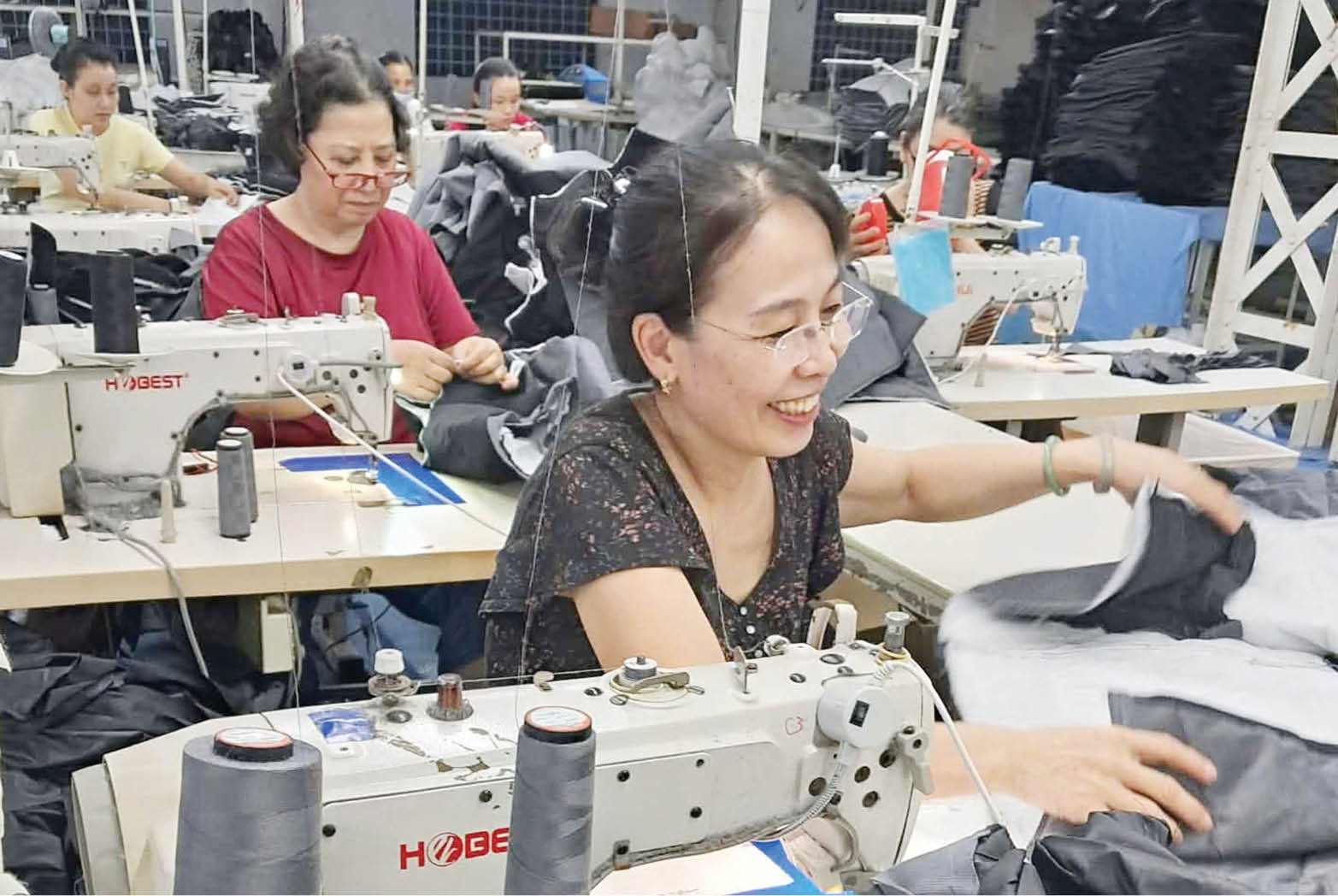
| For many people, working part-time after retirement is seen as a source of enjoyment, a way to stay active, and maintain social connections. |
Not meaning to stop.
Mr. Nguyen Van Vinh, born in 1961, residing in Thuan Hoa ward, retired in 2017. After nearly 25 years of service at a state-owned company, he retired early with a pension of 4.5 million VND per month. The reason for this low pension is that his insurance contributions were based on a low salary, and he retired due to a health impairment exceeding 50%. His wife sells breakfast food, resulting in an unstable income. They also have to support his elderly mother, over 80 years old, and a child attending university. To supplement their income, Mr. Vinh took on multiple jobs after retirement. Currently, he works as a security guard at a company, earning approximately 3.5-4 million VND per month.
Another case I know of who also worked after retirement is Nguyen Thi Hoa (Thanh Thuy ward), a doctor working at a medical center. She retired in 2020 and receives a pension of over 7 million VND per month. With this amount, given her family burdens, and feeling healthy and possessing expertise and experience, Ms. Hoa decided to join a private medical facility after retirement. She didn't disclose the exact monthly amount, but according to her, it's quite stable.
Workers who continue working after the retirement age as stipulated in Clause 2, Article 169 of the 2019 Labor Code will be classified as elderly workers. According to regulations, when employing elderly workers, both parties may agree to multiple fixed-term labor contracts. However, due to their advanced age, these workers are legally granted certain rights, such as guaranteed safe and suitable working conditions; and the right to negotiate shorter daily working hours or part-time work arrangements.
Practical pressure
In the period of 2025-2026, according to the 2024 Social Insurance Law (effective from July 1, 2025), the minimum contribution period to receive a pension will be reduced from 20 years to 15 years. However, with 15 years of contributions, the starting pension is only about 40% for men and 45% for women. This income usually only meets basic needs, forcing many people to continue working to cover living expenses.
Not every situation goes smoothly. Recently, after receiving his early retirement notice under Government Decree 178, Mr. Nguyen Van Toan, a former civil servant from An Cuu ward, applied for a security guard position at a fashion store. He applied in the morning and was scheduled for an interview that same afternoon. He quickly received notification that he had been accepted for a customer service position. However, his actual duties mainly involved guarding the exterior, parking cars, and directing customers in and out of the store.
Upon starting the job, Toan realized things were far from simple. The regulations were four pages long, with a multitude of requirements to remember and follow, from rules about appearance, demeanor, and forms of address to 5S standards and operational procedures… The sheer volume of regulations often left him feeling overwhelmed. When there were no customers, he would quickly check his phone for news, only to be immediately reprimanded by the manager via the surveillance camera system. Occasionally, the manager would even come to the workplace to address various other issues.
After only six days of work, Mr. Toan decided to quit his job. This story illustrates that the working environment in the private sector is not easy for older workers. Many retirees can only manage to adapt when faced with significant economic and life pressures.
In a situation where many people's pensions are insufficient to cover family expenses, coupled with the need to avoid loneliness, maintain mental clarity, exercise, and continue contributing their accumulated experience and skills, taking on additional work after retirement becomes a necessary option for many. It's also a way for them to maintain social relationships and feel useful.
However, older adults should prioritize their health when choosing a job after retirement. They should prioritize light work that suits their physical condition, avoiding overwork that could lead to exhaustion and health problems. At the same time, they should choose a comfortable work environment that respects older adults.
More importantly, taking on extra work after retirement should be seen as a source of enjoyment, a way to stay active and socially connected, rather than becoming an overwhelming financial burden.
Source: https://huengaynay.vn/doi-song/lam-them-after-retirement-166095.html


![[Photo] The heat at the fireworks display site on the opening night of the Da Nang International Fireworks Festival 2026](https://vphoto.vietnam.vn/thumb/1200x675/vietnam/resource/IMAGE/2026/05/27/1779889741485_ndo_br_z7872039145157-fecaba5112f39e8352544099d7ef4738-5140-jpg.webp)















































































Comment (0)