

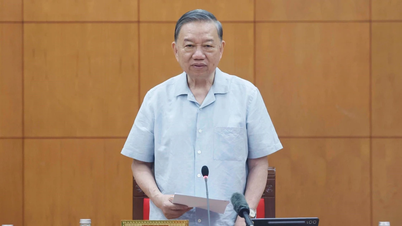
Associate Professor Dr. Nguyen Thi Lien Huong, Deputy Minister of Health, chaired the meeting. At the meeting, the representative of the World Health Organization (WHO) in Vietnam stated that the Ebola epidemic is developing complicatedly in the Democratic Republic of Congo and Uganda, therefore Vietnam should not be complacent.
According to Mr. Hoang Minh Duc, Director of the Department of Disease Prevention (Ministry of Health ), as of May 22nd, Vietnam has not recorded any cases of Ebola. However, the risk of the disease entering the country still exists through passengers arriving from countries with outbreaks.
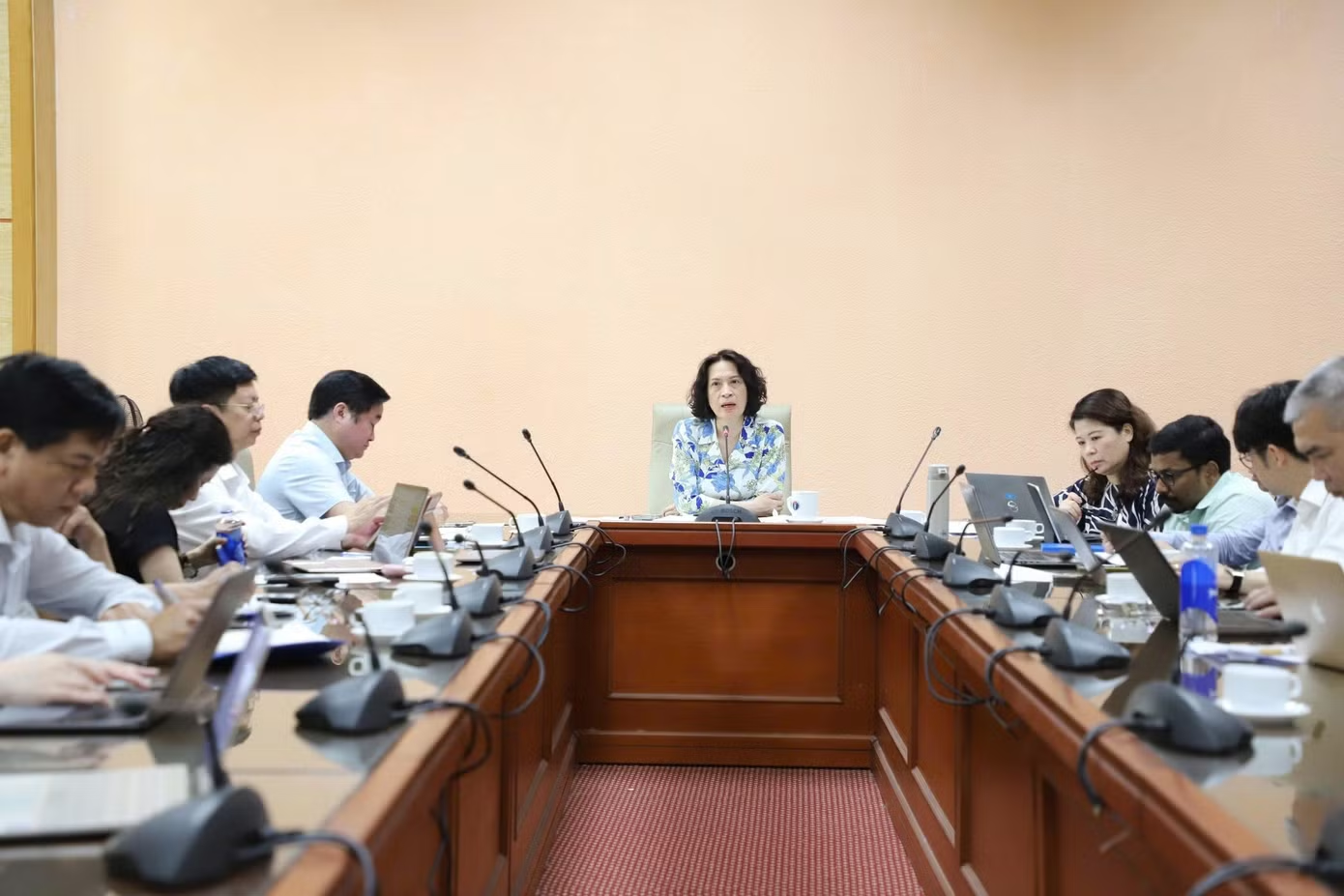
The WHO assesses the risk to public health posed by this outbreak as high in affected countries and in the region, but low globally, including in Vietnam.
The Ministry of Health stated that this outbreak exhibits several unusual factors. Notably, the appearance of clusters of deaths in the community with suspected Ebola symptoms, including the deaths of four healthcare workers, has raised concerns about the risk of infection in treatment facilities and loopholes in infection control.
The Department of Disease Prevention also advises that common symptoms of viral infection include fever, fatigue, headache, muscle pain, sore throat, vomiting, diarrhea, abdominal pain, and rash. Some cases may present with bleeding. The incubation period is usually 2-21 days. People are also advised to monitor their health and proactively report to medical facilities upon returning from affected areas.
The Ministry of Health is currently working closely with the WHO and other countries through the International Health Regulations mechanism to update the disease situation and implement appropriate response measures. At the same time, the Ministry is advising the Government and the Prime Minister on directing effective disease prevention and control solutions.
The health sector also requested localities to strengthen surveillance at border gates and medical facilities; focusing on gathering epidemiological history from people returning from epidemic areas to detect, isolate, and treat cases promptly. Rapid response teams were instructed to be ready to handle situations when cases enter the country.
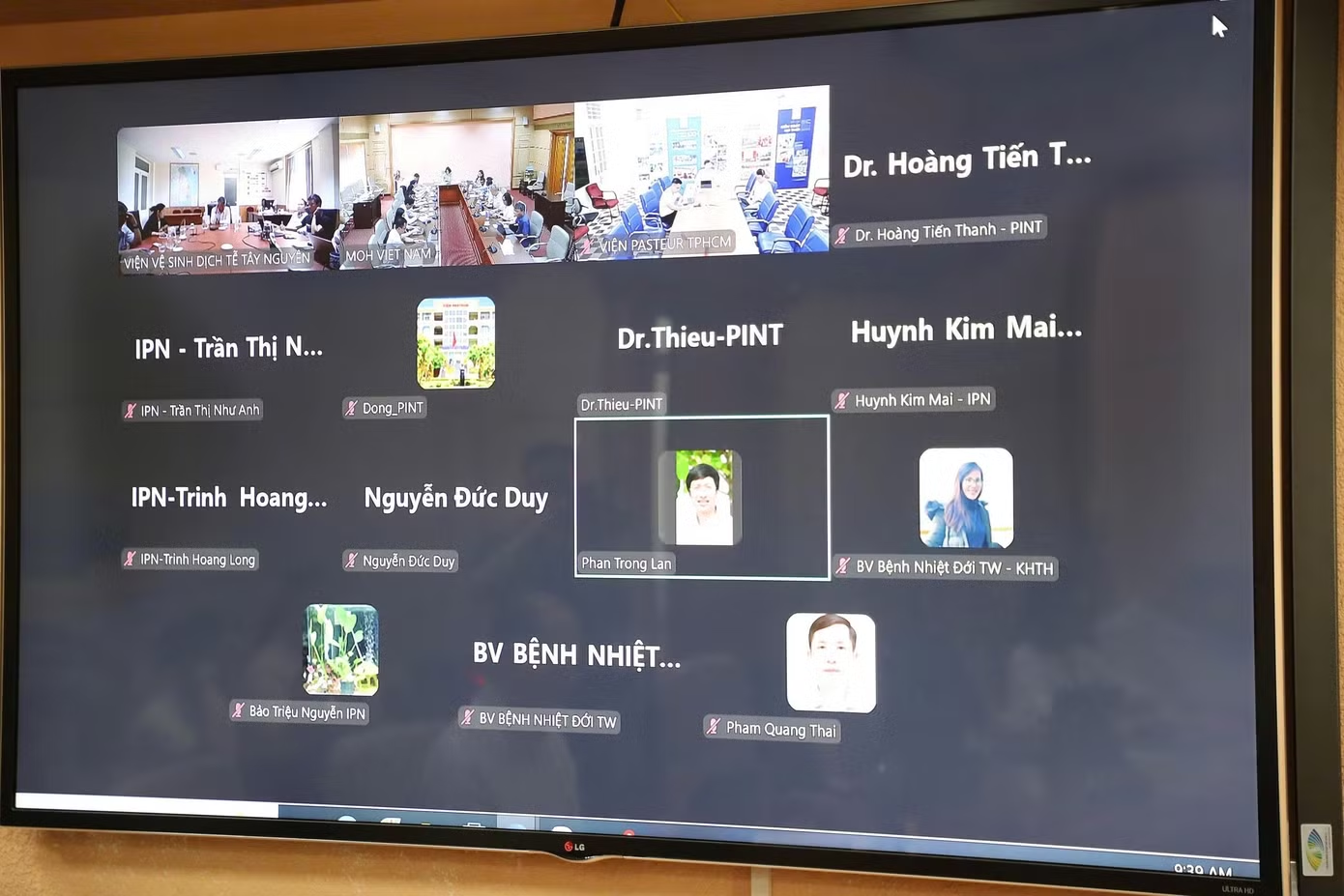
Concluding the meeting, Deputy Minister of Health Nguyen Thi Lien Huong directed the Department of Disease Prevention to proactively coordinate with the WHO in Vietnam to review all information, develop response scenarios related to the disease, identify at-risk groups, and establish guidelines for prevention, treatment, and handling of Ebola-related cases, in order to proactively address any outbreak.
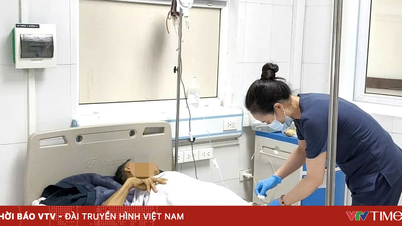
At the same time, the Deputy Minister also requested specialized agencies to urgently review their capacity to respond to the epidemic. The Department of Medical Examination and Treatment Management should promptly issue directives to hospitals to implement epidemic prevention and control measures and prepare contingency plans for admission and treatment.
At border crossings, the Deputy Minister requested a review of passengers returning from high-risk areas. For those in the incubation period, advisories should be issued to local authorities for monitoring and supervision, and rapid response teams should be prepared to respond promptly to outbreaks should cases enter the country.
According to the Ministry of Health, as of May 18th, the Democratic Republic of Congo has recorded 516 suspected cases of Ebola, including 131 deaths across seven health areas in the provinces of Ituri and North Kivu. This is the 17th Ebola outbreak in the country since the disease was first detected in 1976.
Previously, on May 5th, the WHO reported the deaths of four healthcare workers in Ituri province. By May 15th, the agency confirmed these cases were Ebola infections caused by the Bundibugyo strain of the virus. As of May 16th, Ituri province had recorded 8 confirmed cases, 246 suspected cases, and 80 deaths suspected to be due to Ebola.
In Uganda, on May 15th, the Ministry of Health confirmed a case of Ebola imported from Congo. The patient was an elderly man who was hospitalized on May 11th with severe symptoms and died three days later. The following day, Uganda detected another imported case in the capital, Kampala, from a person returning from Congo, with no epidemiological link to the first case yet to be determined.
To date, Uganda has reported two confirmed cases of Ebola, one of which resulted in death. Both patients were from the Democratic Republic of Congo.
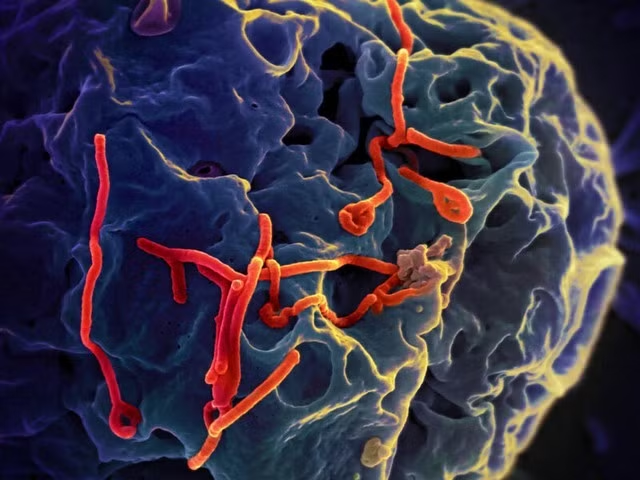
According to the Department of Disease Prevention (Ministry of Health), the clusters of cases in Congo and Uganda all have symptoms consistent with Ebola caused by the Bundibugyo strain. This is also the virus strain identified as causing the current outbreak.
On May 17, the WHO officially declared the Ebola outbreak caused by the Bundibugyo strain in Congo and Uganda a public health emergency of international concern.
Furthermore, health officials have not yet fully determined the actual number of infections, the extent of spread, or the epidemiological links between cases. The positive test rate is high, with 8 out of 13 samples collected from various areas testing positive for the Ebola virus. Simultaneously, the number of suspected cases and clusters of deaths continues to increase in Ituri province, suggesting that the actual number of cases may be much higher than reported.
The WHO also warned of the risk of the disease spreading in the region, as cases have appeared to have crossed the border between Congo and Uganda .
Currently, the world only has vaccines and specific treatments for Ebola caused by the specific strain of Ebola. For other strains such as Sudan and Bundibugyo – the strains causing the current outbreaks in Congo and Uganda – there are still no vaccines or specific treatments.
Ebola is an acute and highly contagious infectious disease with a rapid rate of transmission and a mortality rate that can reach up to 90%. The virus is transmitted from wild animals to humans, and then through direct contact with the blood, secretions, or other bodily fluids of an infected person.
Source: https://tienphong.vn/dich-ebola-dien-bien-phuc-tap-bo-y-te-hop-khan-post1845417.tpo


![[Image] Close-up view of the interchange connecting the two expressways and Long Thanh Airport.](https://vphoto.vietnam.vn/thumb/1200x675/vietnam/resource/IMAGE/2026/05/25/1779703378210_ndo_br_z7863716673926-224453a31600126cce10622af6290afd-4549-jpg.webp)

![[Image] Hanoi's urban life under the challenge of a "scorching hot" environment](https://vphoto.vietnam.vn/thumb/1200x675/vietnam/resource/IMAGE/2026/05/25/1779706979265_nang-nong-t5-2026-minh-duy-7-4636-jpg.webp)












































































Comment (0)