

Applying technology to promote the image and products of the local area.
This year's pear blossom season in Khau Trang village, Hong Thai commune (Na Hang district), has seen a huge influx of visitors, many times more than in previous seasons. Mr. Dang Xuan Cuong, the village head, excitedly stated: "According to preliminary statistics, the number of visitors to the village is estimated at around 600-700 people per day. On weekends, the number is estimated to double, even triple, compared to previous pear blossom seasons."
Mr. Cuong boasted that, in addition to the propaganda and promotion efforts of the district and province, the people of Khau Trang also played a highly effective role in spreading the image of the pear blossom far and wide. Instead of just knowing how to cultivate corn and rice in the fields and dig up bamboo shoots, the villagers have now mastered technology to develop their economy .
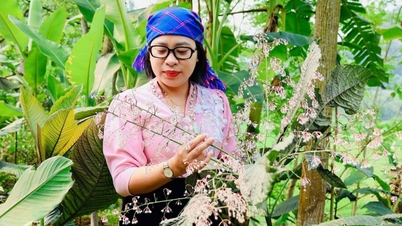
Ms. Dang Thi Nhung, a Dao ethnic woman from Khau Trang village, one of the local tourism promotion experts using digital technology platforms, shared: "Previously, to promote pear blossoms, we could only take photos and post them on social media. But now, livestreaming helps us convey images and sounds more authentically. People can feel the beauty of the pear blossoms and the festive atmosphere right from their homes."
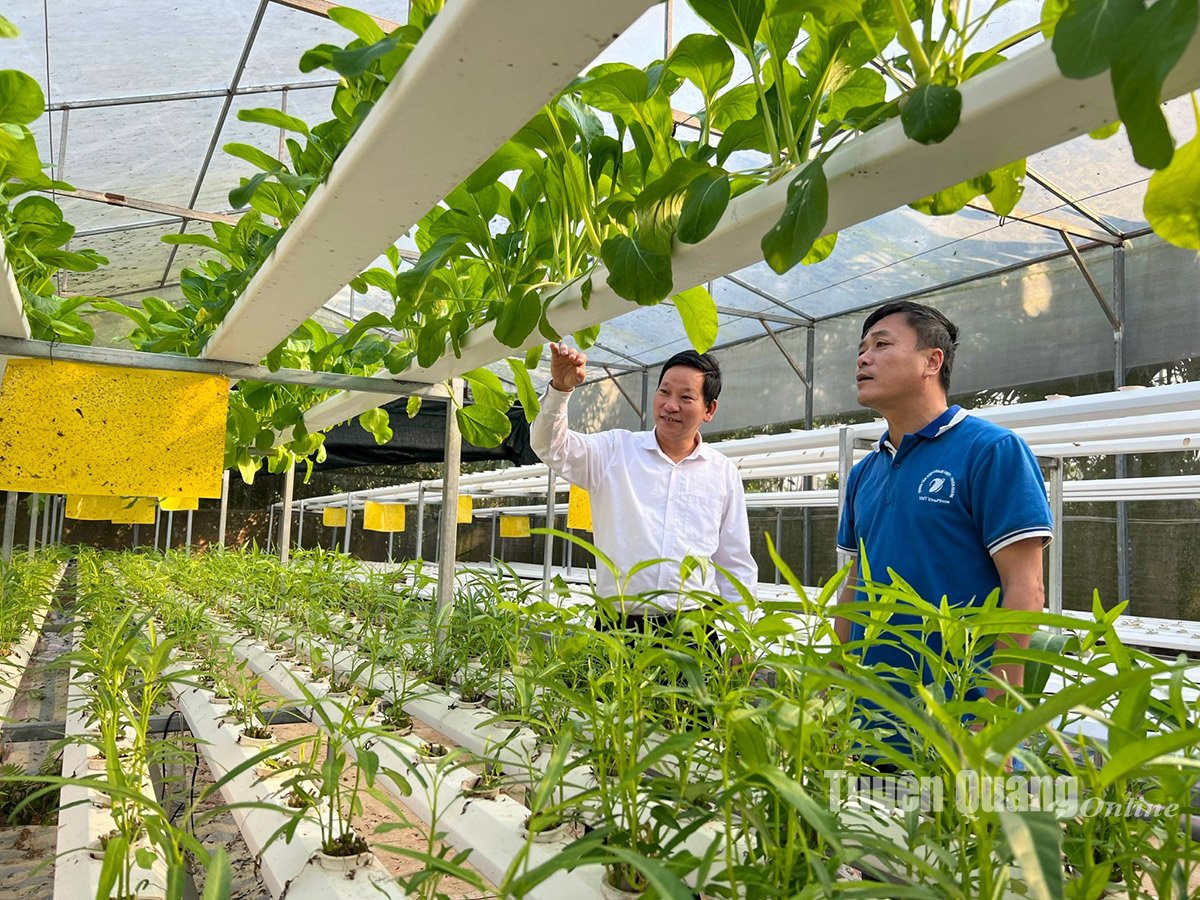
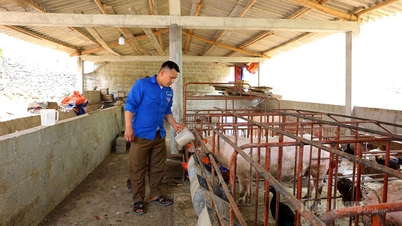
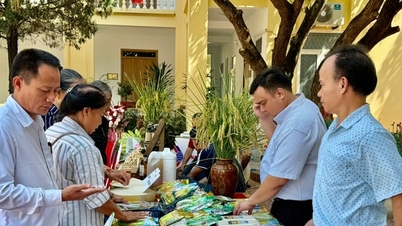
The smart farming model of the people in Hamlet 11, Kim Phu Commune (Tuyen Quang City).
Ms. Nhung said: "These 'homegrown' livestream videos not only help promote the image of the pear blossoms in my hometown but also bring unexpected economic benefits. Many tourists, after watching the livestream, have decided to come in person to admire the beauty of the pear blossoms, experience the festival, and stay in the area."
Ms. Ton Nu Nam Phuong, a tourist from Hue city, excitedly said: “I learned about the pear blossom festival through a livestream video on Facebook. The images of the pristine white pear blossoms and traditional dances inspired me to come here. And I wasn't disappointed at all; the beauty here is even more amazing than in the video.”
Farmers in Yen Phu (Ham Yen district), who used to work in the fields, are now mastering technology and effectively applying it to their production and product consumption. Nguyen Van The Anh, from Minh Phu village, Yen Phu commune (Ham Yen district), shared: "The Fourth Industrial Revolution has changed social habits; most people now shop online. Seizing this trend, I've also shifted my sales to online."
With the TikTok account Theanh22, Mr. The Anh promotes, introduces, and sells his hometown's tea products to consumers nationwide. Mr. The Anh says: "Product quality and trustworthiness are paramount, so my sales channel has attracted thousands of followers and orders."
Comrade Nguyen Dai Thanh, Deputy Director of the Department of Agriculture and Environment, the Standing Agency of the National Steering Committee for the New Rural Development Program, affirmed: Farmers today are very different from before; they are no longer "muddy feet and hands" or "plowing and tilling the land." They have quickly mastered technology, skillfully exploiting and applying it to production activities, bringing high economic efficiency. And it is these modern farmers who are forming a smart village and commune community in the process of building new rural areas.
Challenges and solutions
Digital transformation is revolutionizing production efficiency and reducing human labor, especially in agriculture and rural areas, which have traditionally been considered underdeveloped regions. However, building smart villages and smart communes also presents many challenges. These include disparities in technological levels between regions, a lack of synchronized technological infrastructure, a shortage of highly skilled human resources, and cybersecurity issues.
Comrade Trieu Van Lanh, Vice Chairman of the People's Committee of Hong Thai commune (Na Hang district), acknowledged that digital technology is creating a significant transformation in the socio-economic development of the locality. However, there are still difficulties for Hong Thai to achieve breakthroughs: the rugged terrain limits the development of information technology infrastructure, and the uneven levels of awareness and economic living standards among the people make it difficult to invest in and apply information technology synchronously to the production and daily life of the people.
Not only in Hong Thai, but also in rural communes, information technology infrastructure is developing, but there is a shortage of qualified human resources. According to Mr. Ha Xuan Khanh, Chairman of the People's Committee of Duc Ninh commune (Ham Yen district), young workers with knowledge and technological skills often do not stay in their hometowns; they choose to work in cities and industrial zones. Therefore, building smart villages, or more specifically, developing smart agricultural models in the commune, will be limited.
Comrade Nguyen Dai Thanh, Deputy Director of the Department of Agriculture and Environment, stated: To overcome these challenges, the entire political system needs to be involved, along with the cooperation of the community and businesses. It is necessary to strengthen training and improve the technological skills of rural people, build a synchronized information technology infrastructure, and ensure cybersecurity...
Building smart villages and smart communes is a crucial step in the process of developing new rural areas. This provides an opportunity for rural residents to access the achievements of science and technology, improve their quality of life, and contribute to building a modern and sustainable rural environment.
Source: https://baotuyenquang.com.vn/diem-nhan-nong-thon-moi-208629.html
![[Photo] First session of the 14th Congress of the Vietnam Trade Union](https://vphoto.vietnam.vn/thumb/1200x675/vietnam/resource/IMAGE/2026/06/03/1780465947883_ndo_br_img-3852-jpg.webp)
![[Photo] General Secretary and President To Lam presides over a meeting with the Central Organizing Committee.](https://vphoto.vietnam.vn/thumb/1200x675/vietnam/resource/IMAGE/2026/06/03/1780482764658_a1-bnd-4741-3342-jpg.webp)

![[Photo] Secretary of the National Assembly Party Committee, Chairman of the National Assembly presides over the meeting of the Standing Committee and Executive Committee of the National Assembly Party Committee.](https://vphoto.vietnam.vn/thumb/1200x675/vietnam/resource/IMAGE/2026/06/03/1780480353201_ndo_br_bnd-2585-jpg.webp)




































![[Video] Sunset at Lap An Lagoon – Where the sun sets over the fishing nets](https://vphoto.vietnam.vn/thumb/1200x675/vietnam/resource/IMAGE/2026/05/31/1780192137701_beach-landscape-sea-water-nature-grass-745871-pxhere-com.jpeg)




























Comment (0)