


Currently, scientists at the Vietnam Academy of Science and Technology (Academy) have researched and discovered the potential of this herbal remedy to support the treatment of gout.
Gout is a disease caused by a disorder in purine metabolism in the kidneys, leading to elevated blood uric acid levels and the precipitation of monosodium urate in tissues. The causes of the disease include lifestyle changes, unhealthy eating habits, and excessive daily consumption of alcohol.
According to statistics from the World Health Organization (WHO), in 2017 there were approximately 41.2 million people worldwide suffering from gout, with 7.4 million cases experiencing complications. In Vietnam, the number of people with this disease is increasing rapidly and affecting younger people.
The most obvious manifestation of the disease is when uric acid levels in the blood increase. These molecules combine to form urate crystals, which deposit in the synovial membrane of the joints, causing inflammation, swelling, and pain. If this condition persists, it can lead to complications such as heart failure, stroke, kidney stones, hydronephrosis, and hypertension. To treat the disease, doctors often use medications that increase uric acid excretion and inhibit its synthesis. Among these, uric acid-lowering drugs that work by inhibiting the enzyme xanthine oxidase (XO) are considered effective and have fewer side effects. However, the use of herbal remedies for effective treatment, without complications or side effects, remains a preferred choice for both patients and doctors.
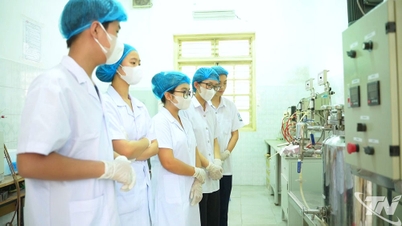
Dr. Ngo Van Quang and his colleagues at the Institute of Chemistry (Vietnam Academy of Sciences) proactively conducted a scientific research project: “Study of the chemical composition, xanthine oxidase inhibitory activity and anti-inflammatory properties of the *Nở ngày đất* plant” (Project Code: VAST04.10/23-24). The research aimed to determine the chemical composition and evaluate the xanthine oxidase inhibitory and anti-inflammatory activity of *Nở ngày đất* in vitro models to create a preparation to support the treatment of gout. Although this plant has been studied by many scientists before, its anti-inflammatory and xanthine oxidase inhibitory activities, which could support the treatment of gout, have not yet been fully researched and tested.
According to Dr. Ngo Van Quang, during the implementation of the scientific research project on the plant *Sesuvium sesurifolium*, the research team simultaneously used various bioguided approaches to solve the problem. The study comprehensively evaluated the anti-gout effects of the studied substance through its effects: inhibition of XO enzyme activity, and anti-inflammatory activity at both the cellular and molecular levels. The authors isolated eight compounds, five of which were discovered for the first time. Among them, sesuvioside A (NDP4) stood out for its ability to both inhibit xanthine oxidase enzyme and reduce inflammatory reactions in the body.
Specifically, to clarify the dual "anti-gout - anti-inflammatory" effects of compound NDP4, the research team conducted various experiments to investigate its ability to inhibit the XO enzyme – the main cause of gout. From there, they evaluated the effects of this special compound in anti-inflammatory and antioxidant treatment at different levels. In addition, the scientists successfully developed a process for creating a highly active XO enzyme inhibitory preparation on a 50g/batch scale, while also assessing acute toxicity and establishing basic standards for the preparation.
The results showed that the n-butanol extract fraction of Sesuvioside A (NDP4) exhibited prominent XO enzyme inhibitory activity, accurately guiding the isolation of compounds with potent anti-gout activity. The resulting preparation showed no toxicity and effectively lowered uric acid levels at high doses. These findings further clarify the xanthine oxidase inhibitory activity and anti-inflammatory properties of the compound sesuvioside A (NDP4)…
The initial results of this scientific project have opened up avenues for developing preparations to support the treatment of gout and many other diseases using domestically sourced medicinal herbs. However, to perfect and expand the production process, the research team needs to continue coordinating with relevant agencies to develop a stable and sustainable source of raw materials. This will guide the development of safe gout treatment support products and create more products to serve public health care.
Source: https://nhandan.vn/dieu-tri-benh-gout-tu-thao-duoc-post961179.html



![[Photo] National Assembly Chairman Tran Thanh Man working with the Standing Committee of the Law and Justice Committee](https://vphoto.vietnam.vn/thumb/1200x675/vietnam/resource/IMAGE/2026/05/21/1779378929214_ndo_br_1-4610-jpg.webp)
![[Photo] General Secretary and President To Lam presides over a working session with the Central Policy and Strategy Committee on the development of the materials industry.](https://vphoto.vietnam.vn/thumb/1200x675/vietnam/resource/IMAGE/2026/05/21/1779359935432_a3-bnd-3129-1412-jpg.webp)
















![[Infographic] Stock market on May 21st: VN-Index falls 16.34 points, market liquidity decreases.](https://vphoto.vietnam.vn/thumb/402x226/vietnam/resource/IMAGE/2026/05/21/1779379204295_screenshot-2026-05-21-220948-jpg.webp)































































Comment (0)