

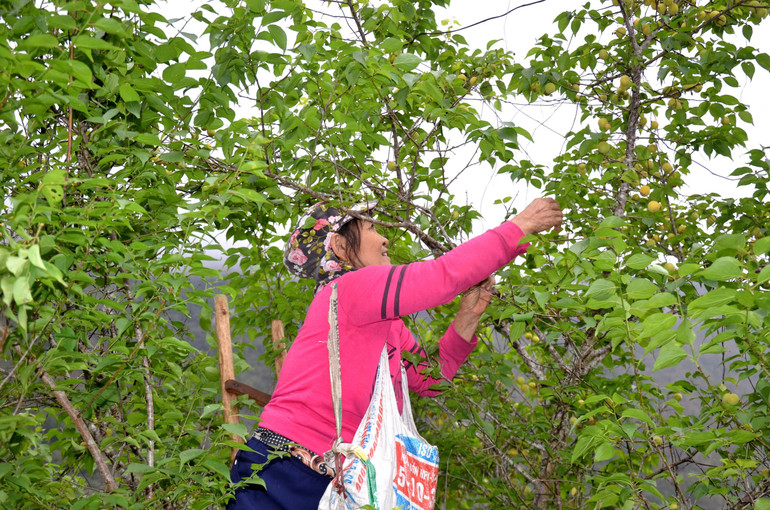
In April, when apricots ripen, the hillsides of Cao Ky commune, Cho Moi district, are bustling with people harvesting them. With an area of approximately 300 hectares and an annual yield of over 1,000 tons, Cao Ky is considered the "apricot capital." For many years, this crop has become an important source of livelihood, helping the local people escape poverty and stabilize their lives.
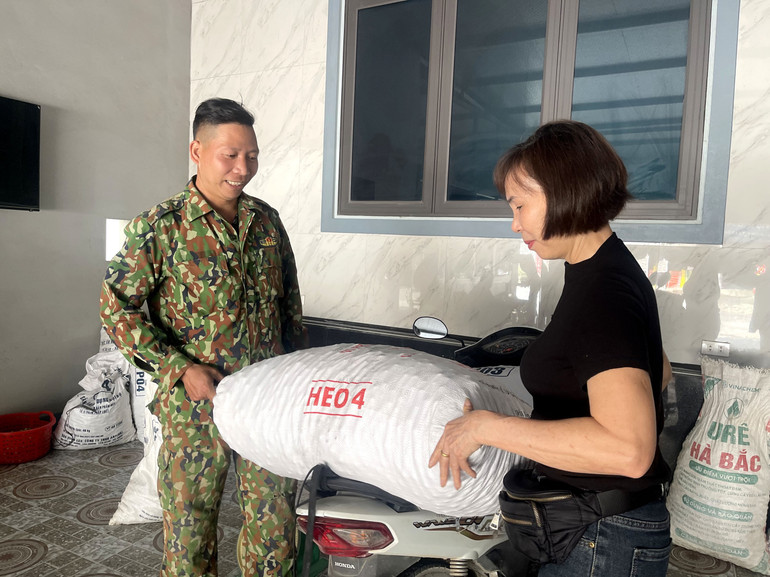
Ms. Trinh Thi Thu, Director of Doan Ket Cooperative (Cao Ky commune), said that in 2024, the cooperative purchased over 300 tons of apricots at prices ranging from 7,000 to 10,000 VND/kg, sometimes reaching over 20,000 VND/kg. The cooperative currently has about 30 hectares of stable apricot cultivation area. The entire province currently has nearly 700 hectares of apricots, concentrated in the districts of Cho Moi, Bach Thong, and Bac Kan city. Bac Kan apricots not only have a stable market but are also processed into various products such as salted apricots, candied apricots, apricot wine, etc., thanks to the participation of many cooperatives and businesses, opening up great potential for this specialty crop.
Not only with apricot trees, Bac Kan is gradually developing many key agricultural raw material areas such as: 40 hectares of Khau Nua Lech sticky rice in Thuong Quan, over 100 hectares in Coc Dan and Thuong An (Ngan Son); 16 hectares of organic rice in Yen Phong (Bach Thong); about 200 hectares of chestnut trees; more than 700 hectares of seedless persimmons; nearly 3,000 hectares of oranges and tangerines; 1,700 hectares of tea; 200 hectares of fragrant green pumpkins and 400 hectares of ginger. This is the result of the province actively issuing policies to support production, encouraging linkages between people, cooperatives and businesses, and gradually building agricultural value chains.
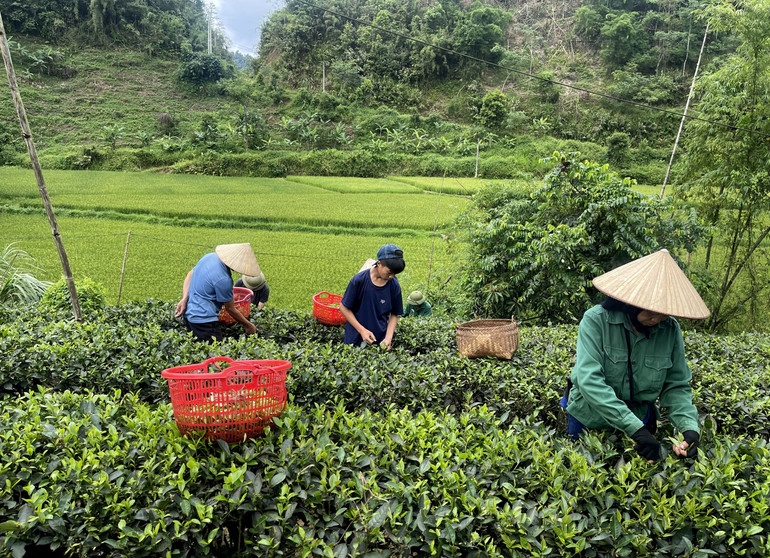
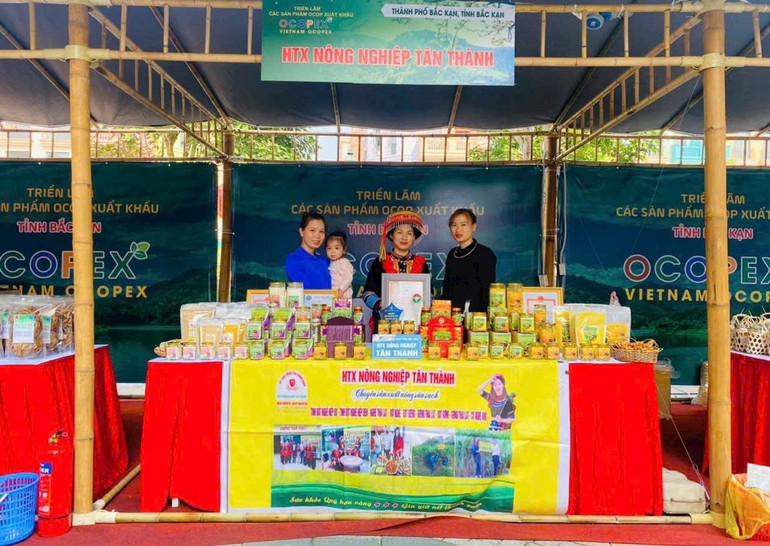
The mindset regarding production has also gradually changed. Instead of fragmented production, people have learned to cooperate in cooperative models, apply technological advancements, and improve product quality. As a result, more and more agricultural products are undergoing deep processing, increasing their added value. To date, the province has 245 OCOP products that have achieved 3 stars or higher.
However, developing raw material areas still faces many difficulties. The complex terrain leads to scattered production; infrastructure such as rural roads and irrigation systems are lacking and inadequate. In addition, young workers leaving their hometowns for work elsewhere have caused a labor shortage in rural areas.
Mr. Nguyen My Hai, Deputy Director of the Department of Agriculture and Environment, said: “The province will continue to promote awareness campaigns about the role of raw material areas; encourage the conversion of inefficient rice and corn cultivation areas to specialty crops; and support cooperatives and businesses in improving orchards and applying new techniques to ensure quality and stable raw materials for processing and export.”
Defining key raw material areas not only creates distinctive products bearing the Bac Kan brand but also serves as a leverage for sustainable agricultural development, improving income and living standards for the people.
Source: https://baobackan.vn/dinh-hinh-vung-nguyen-lieu-nang-tam-nong-san-post70531.html











![[Update] Announcement Ceremony for the Merger of Provincial and Commune-Level Administrative Units in Thai Nguyen and Bac Kan Provinces](https://vphoto.vietnam.vn/thumb/402x226/vietnam/resource/IMAGE/2025/6/30/0de85cb56da843d897e30016b57b1412)




























































Comment (0)