


The achievements of cultural diplomacy in recent years have made a significant contribution to positioning the Vietnamese cultural brand, showcasing the image of an independent, self-reliant nation with rich identity and aspirations for advancement on the world cultural map.
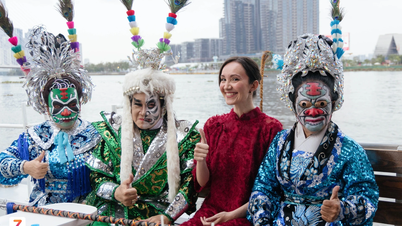
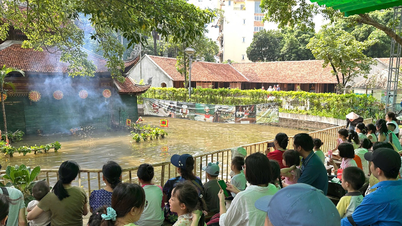
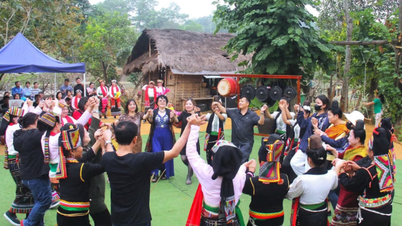
Spreading Vietnamese culture among international friends.
According to the Ministry of Culture, Sports and Tourism's summary, following the 13th National Congress of the Communist Party of Vietnam, cultural diplomacy has made significant strides, shifting strongly from breadth to depth. Enhancing national soft power through promoting the image of Vietnam and its people has become a continuous task, contributing to consolidating political trust and building the country's international standing in the context of deep integration.
According to the Lowy Institute's Asia Power Index 2024, Vietnam's strongest improvement comes from its diplomatic and cultural influence. Vietnam is now becoming one of Asia's most attractive cultural destinations, consistently being honored at the World Travel Awards with titles such as "Leading Heritage Destination" and "Leading Nature Destination".
The most significant achievement in establishing Vietnam's cultural brand is its impressive presence at the world's largest multilateral forums. 2023 and 2025 mark historic milestones as Vietnam assumes roles in six key UNESCO governing bodies, becoming one of the countries with a crucial voice in global policy-making on culture, education, and science. The large number of UNESCO-recognized heritage sites and titles demonstrates the enduring appeal and value of the nation's cultural treasure.
Another outstanding achievement worth mentioning is the breakthrough at the EXPO 2025 Osaka World Exhibition in Japan. The Vietnam National Exhibitor excellently won two international awards: a Silver Award for "Best Exhibition Design" and a Bronze Award for "Best Team".
Over the course of its six-month run, the venue attracted nearly 1.7 million in-person visitors and millions more online, hosting over 1,400 art performances and creating a Vietnamese cultural "craze" in the heart of Japan. This success not only affirms creativity but also demonstrates the capacity of the cultural diplomacy team to organize global-scale events.
Domestically, the first "World Culture Festival in Hanoi" (2025) has become a new symbol of peaceful connection. The event brought together 48 countries and UNESCO, attracting over 1 million visitors to Thang Long Imperial Citadel. With a message of sharing and social responsibility, the festival raised 2.5 billion VND to support people affected by natural disasters, affirming that Vietnam is not only a place where the finest aspects of world culture converge but also a nation rich in compassion.
A shift in strategic thinking and implementation practices.
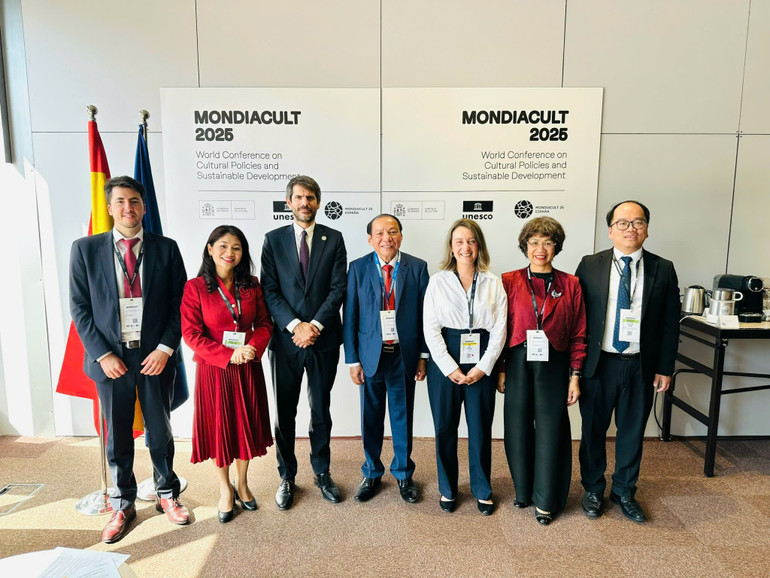
Looking back at these achievements, a fundamental shift in leadership and guidance is clearly evident. Minister of Culture, Sports and Tourism Nguyen Van Hung affirmed: “The Ministry has decisively directed a strong shift from a ‘meeting and exchange’ mindset to a ‘genuine cooperation’ mindset. Accordingly, international cooperation agreements on culture, sports, information, and tourism have been signed at many levels, creating a solid framework for activities. This perspective has brought Vietnamese culture and art into deeper integration into bilateral and multilateral agendas. In particular, Vietnam’s initiative on the ‘International Decade of Culture for Sustainable Development,’ adopted by UNESCO in 2025, demonstrates our leading role in shaping global development thinking after 2030, affirming that culture is an inseparable pillar of sustainable development.”
Meanwhile, from a direct management perspective, Nguyen Phuong Hoa, Director of the Department of International Cooperation (Ministry of Culture, Sports and Tourism), stated that 2025 is a breakthrough period with a long-term strategic vision. Despite facing a complex global situation and tight staffing requirements, cultural diplomacy continues to "shine" thanks to its proactive and creative spirit.
She emphasized that the implementation of the policy of deep international integration has transformed diplomatic culture into a bright spot, with activities not only limited to promotion but also participating in building international rules through mechanisms of UNESCO and ASEAN.
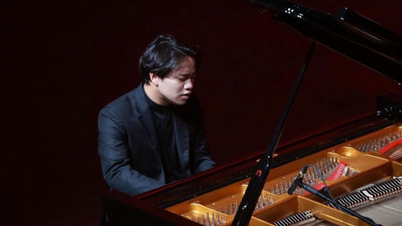
"Cultural diplomacy has now become an indispensable component in the foreign affairs activities of the Party and State leaders. In 2025, the Ministry of Culture, Sports and Tourism presided over the organization of 7 high-level art programs serving the visits of the General Secretary and the President to strategic partners such as Indonesia, Singapore, Kazakhstan, the United States, Russia, etc. Vietnamese melodies resounding at world-renowned theaters such as the New York Museum of Art or friendship concerts have sent a strong message about a peaceful, friendly, and sophisticated Vietnam," Director Nguyen Phuong Hoa affirmed.
Despite achieving commendable results, in order for foreign relations culture to truly become a driving force for socio-economic development and enhance the nation's standing in this era of progress, Director of the International Cooperation Department Nguyen Phuong Hoa believes that we need more fundamental and comprehensive solutions.
Firstly, perfecting institutions and strategies with a breakthrough approach is crucial. The development and implementation of the "Project to Vietnamize International Culture and Internationalize Vietnamese Culture" is a strategic step. This is not only about bringing Vietnamese culture to the world but also about selectively absorbing the best of humanity to enrich national identity and build Vietnam into an attractive destination for international cultural exchange. The Director of the Department of International Cooperation (Ministry of Culture, Sports and Tourism) added that the Department is also urgently reviewing the old Foreign Cultural Strategy to submit a new strategy for 2030, with a vision to 2045, in line with the spirit of the 14th National Congress of the Communist Party of Vietnam.
Secondly, we need to promote the development of the cultural industry in conjunction with digital transformation. We need to strengthen connections between prestigious international cultural institutions and foreign investors to co-produce representative cultural products bearing the Vietnamese brand. The application of technology and digital transformation in the fields of culture and art not only helps to spread the national image faster and wider but also creates direct economic value. The success of the Vietnam Pavilion at EXPO 2025, with over 5.3 million online visits, is a valuable lesson that should be replicated.
Thirdly, we need to promote the role of localities and the network of creative cities. The inclusion of Hoi An, Da Lat, and most recently Ho Chi Minh City into the UNESCO Creative Cities Network has opened up new development opportunities. We need to support localities in fulfilling international commitments, transforming heritage and creativity into competitive advantages, as Ninh Binh has successfully done in shifting its economic structure based on the Trang An heritage site.
Fourth, innovate methods of resource mobilization. The lesson from EXPO 2025, with social mobilization accounting for 30% of the total budget, shows the enormous potential from the collaboration of businesses and the Vietnamese community abroad. It is necessary to promote the public-private partnership (PPP) model and bring together intellectuals and artists – those who play a core role in cultural creation – to implement foreign affairs tasks most effectively.
Fifth, focus on training high-quality human resources. It is necessary to promote cooperation with foreign partners to train and nurture talent in the field of culture and arts, ensuring that this workforce is not only professionally competent but also knowledgeable about international law and modern diplomatic skills.
The achievements of Vietnamese cultural diplomacy in recent years are proof of the correctness of the Party's independent, self-reliant, and distinctive foreign policy. As emphasized by the Deputy Director of the Ho Chi Minh National Political Academy, Le Hai Binh, at the seminar "Orientation for the Development of Vietnamese Culture to 2030, Vision to 2045, and Issues for Cultural Diplomacy": In Vietnam's comprehensive diplomacy, cultural diplomacy is the "spiritual foundation that creates identity." With renewed confidence and strength, Vietnamese cultural diplomacy is steadily entering a new era, making a worthy contribution to the successful achievement of the strategic goals of the 100th anniversary of the Party's founding and the 100th anniversary of the nation's founding, strongly spreading the image of a "prosperous and happy" Vietnam to international friends.
Source: https://nhandan.vn/dinh-vi-van-hoa-viet-บน-ban-do-van-hoa-the-gioi-post943025.html
![[Photo] General Secretary and President To Lam and the President of the Philippines hold talks.](https://vphoto.vietnam.vn/thumb/1200x675/vietnam/resource/IMAGE/2026/06/01/1780286997787_anh-man-hinh-2026-06-01-luc-11-09-43.png)
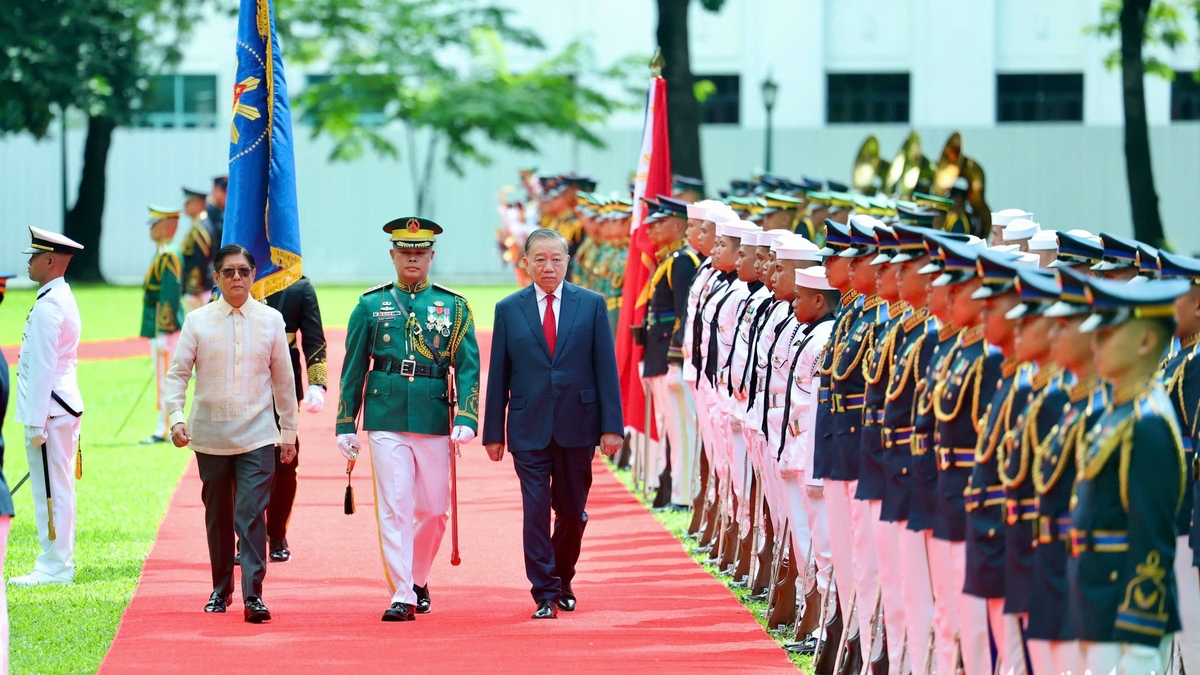








![[Photo] General Secretary and President To Lam and the President of the Philippines hold talks.](https://vphoto.vietnam.vn/thumb/402x226/vietnam/resource/IMAGE/2026/06/01/1780286997787_anh-man-hinh-2026-06-01-luc-11-09-43.png)









































Comment (0)