

Generative AI has emerged as a game-changing technology, promising to revolutionize a wide range of industries.
Speaking at the recent Smart Banking 2023 conference, experts unanimously agreed that data is the catalyst for business growth.
However, data cannot be considered an asset without the support of new technologies, especially artificial intelligence (AI).
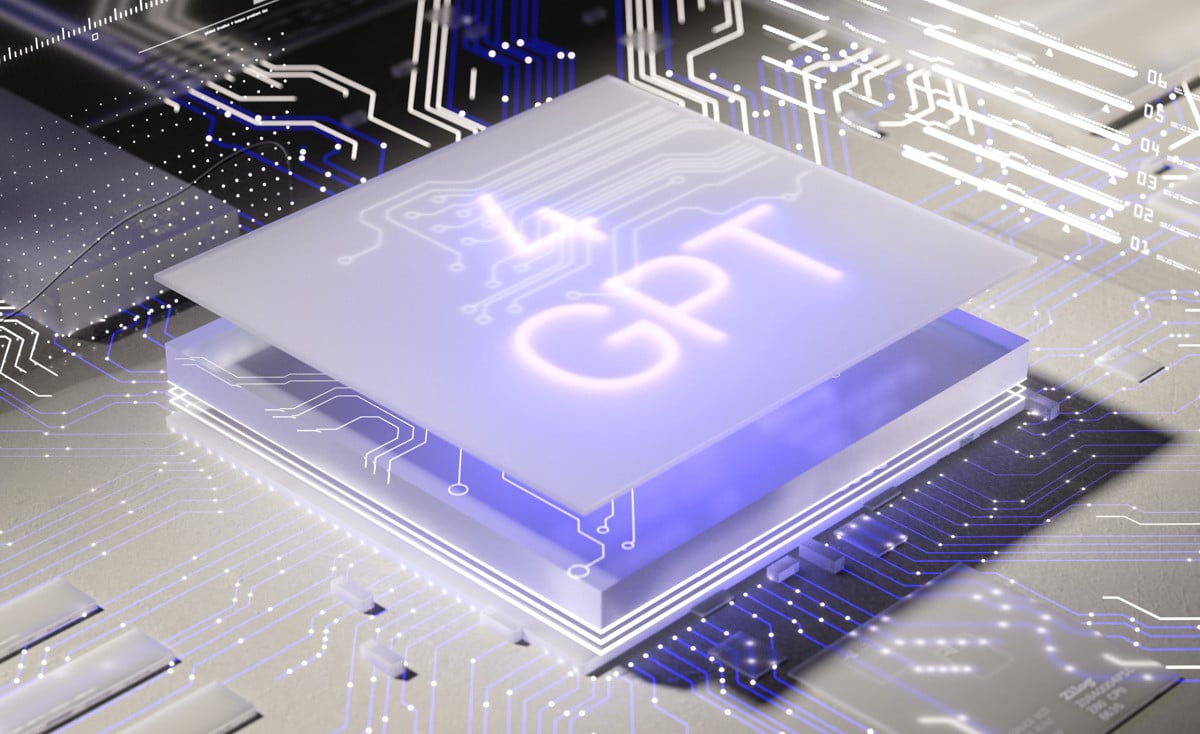
AI uses business data as input, but its full potential will only be realized when businesses establish advanced data management systems. “The rapid and explosive development of AI will usher in a whole new era for the data ‘game’,” stated Ms. Nguyen Thuy Duong, Chairwoman of the Board of Directors of EY Consulting Vietnam.
Discussing the issue of businesses leveraging AI generation, Associate Professor Pham Cong Hiep, Head of the Creative Business Department and Acting Vice Dean of the Business School at RMIT University Vietnam, stated that unlocking the power of AI generation does not follow a single formula but depends on the nature of each business, its competitors, and its core mission and purpose. "Businesses need to remember this to forge their own path with AI generation," Associate Professor Pham Cong Hiep noted.

According to this expert, a common misconception today is that AI can flawlessly replace humans. In reality, most jobs require a combination of repetitive, automated tasks and sophisticated tasks based on human judgment.
Furthermore, businesses need to understand that the AI integration journey is not a straight line that every company follows; therefore, each company must define specific goals when applying AI generation in order to coordinate its strategy and take appropriate preparatory steps.
For example, news websites can use AI generation to quickly draft news articles, while advertising companies can use this technology in the brainstorming phase when writing creative advertising slogans. “Their goals for using AI are different; news websites need speed, while advertising companies need creativity that aligns with their brand. Neither can achieve the desired results without a suitable AI approach,” analyzed an expert from RMIT University Vietnam.
How can businesses effectively apply AI generation?
Delving deeper into the story of businesses applying AI for generation, Associate Professor Pham Cong Hiep pointed out that companies need to combine AI with human skills and define clear business objectives when applying AI for generation.
According to the expert from the Business School of RMIT University Vietnam, to support businesses in developing strategies and adjusting AI deployment to suit organizational goals, businesses can categorize business motivations when integrating AI; this can be based on two criteria: the role of AI in replacing or enhancing existing skills and whether AI applications are directed internally or towards customers.
First, businesses must determine whether the AI technology they need will replace or enhance existing skills. To apply AI to enhance skills, businesses need to develop appropriate training programs, feedback mechanisms, and performance measurement systems.
Conversely, when introducing AI to replace skills, businesses need a comprehensive strategy focused on organizational growth, career transition support, and contingency planning.
“The Swiss AutoBus project, which aims to replace bus drivers with AI-powered vehicles, is a prime example. To successfully integrate AI, the company's employees must adapt to technological changes, and the company needs contingency plans for unforeseen disruptions, such as equipping its fleet with human backup drivers,” Mr. Pham Cong Hiep cited as an example.

The second criterion – whether AI applications are for internal use or for customers – also requires a different approach. If a company wants to apply AI to customers, it needs to be at the forefront of AI research, emphasize user-centric design, and understand customer needs. Taking Tesla as an example in developing self-driving cars, they must be at the forefront of AI innovation, prioritize user-centric design, and strategically position their products in the market.
According to expert Pham Cong Hiep, when using AI to streamline internal processes, the focus shifts. In that case, business leaders must prioritize developing employees' data analysis and interpretation skills.
Another crucial task is effectively managing the transition process, enabling employees to adapt and collaborate with new AI tools.
Such processes require highly skilled data interpretation from employees, as well as well-structured change management strategies from the leadership team.
“AI generation revolves around a delicate balance between human expertise and automation. The AI integration process doesn't have a one-size-fits-all formula for all organizations; it varies depending on business objectives, the role of AI in supplementing or replacing human work, and the focus of AI application,” expert Pham Cong Hiep emphasized.
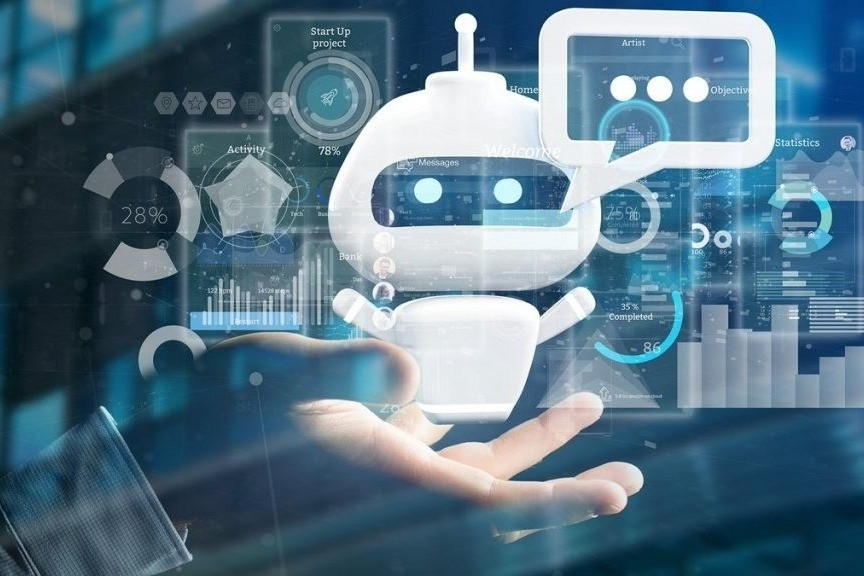
Source

![[Photo] Prime Minister Pham Minh Chinh presides over the conference announcing the establishment of the International Finance Centre in Vietnam.](/_next/image?url=https%3A%2F%2Fvphoto.vietnam.vn%2Fthumb%2F1200x675%2Fvietnam%2Fresource%2FIMAGE%2F2025%2F12%2F21%2F1766309817714_ndo_br_dsc-3400-jpg.webp&w=3840&q=75)

![[Photo] Prime Minister Pham Minh Chinh presides over a meeting on private sector economic development.](/_next/image?url=https%3A%2F%2Fvphoto.vietnam.vn%2Fthumb%2F1200x675%2Fvietnam%2Fresource%2FIMAGE%2F2025%2F12%2F20%2F1766237501876_thiet-ke-chua-co-ten-40-png.webp&w=3840&q=75)
























































































Comment (0)