

Lesson 1: Curiosity and fear easily lead to traps.
Despite the existence of numerous online scams over the years, users in Vietnam continue to fall victim. According to psychological and cybercrime experts, the deciding factor lies not in the sophistication of the tactics but in natural psychological mechanisms such as curiosity, fear, and the reflex to share information faster than to verify it.
Curiosity - the "gateway" for cybercriminals to enter
In the context of rapid digitalization, the online environment in Vietnam has become richer but also more complex. According to Dr. Sreenivas Tirumala, Senior Lecturer in Information Technology at RMIT University Vietnam, cyberspace is a "double-edged sword," as increased digital capabilities have led to an explosion of high-tech fraud.
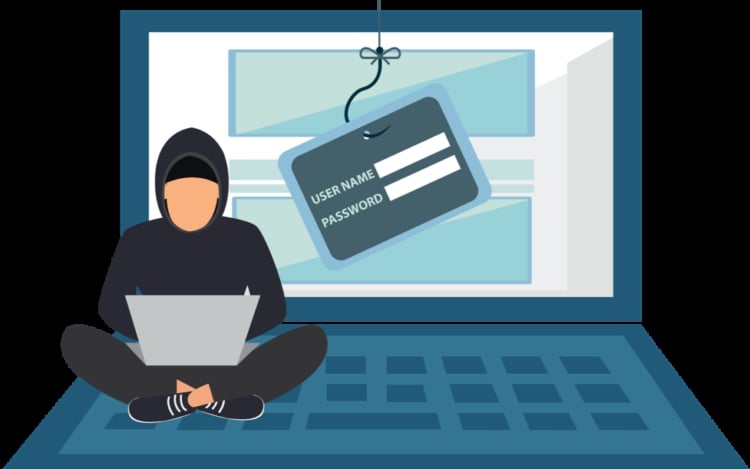
According to a report by Viettel Cyber Security, in the third quarter of 2025 alone, nearly 4,000 fraudulent domains and 877 fake brand websites were detected; 6.5 million accounts were stolen, an increase of 64% compared to the previous quarter.
Despite the sharp increase in numbers, the nature of these scams is nothing new. According to cybersecurity experts, the "curiosity-provoking" tactic remains the starting point for most incidents. Shocking content, sensational headlines, attractive investment offers, or deepfake videos are all designed to trigger curiosity, a biological mechanism that has existed since prehistoric times.
Research by criminal psychology experts describes this as a "powerful evolutionary mechanism" that drives humans to explore unexpected things to seek opportunities or avoid danger. When encountering shocking content, the amygdala is immediately stimulated, propelling the user into a state of rapid action before the frontal cortex has time to analyze it.
According to Dr. Tirumala, this is why users often click on links immediately due to fear of missing out or fear of getting into trouble, causing them to act before checking the authenticity.
Therefore, cybercriminals are well aware of this vulnerability and have "automated" thousands of websites to trick users into logging in, downloading applications, or providing personal information. Cybersecurity experts also note that website cloning is "fast, low-cost, and easy to replace" thanks to the application of AI.
Out of curiosity, many people are also drawn to “free” applications such as AI photo editing, checking who visits their personal pages or finding discount codes. According to RMIT experts, this is bait for the “shadow data economy” model, in which login data is collected and sold on the black market.
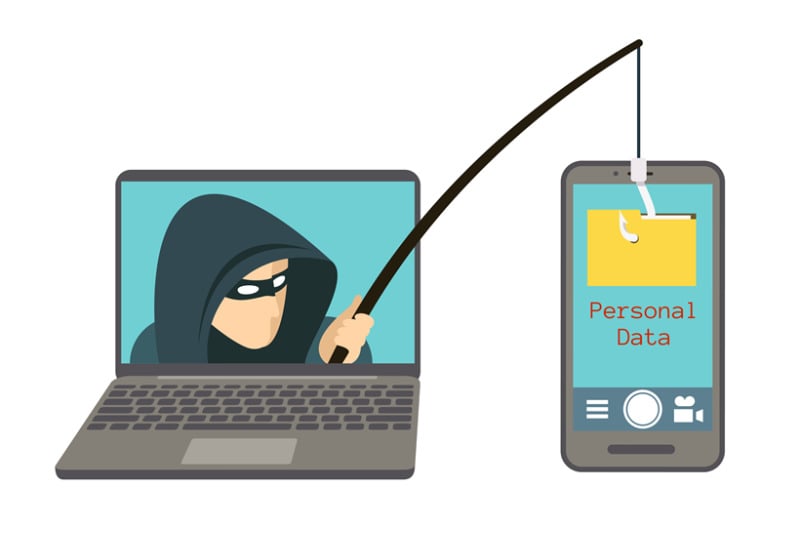
These applications take advantage of the psychology of liking fast, easy-to-use, free utilities. When personal data is exploited, cybercriminals can use it to hijack accounts, blackmail, or expand the attack to the victim's acquaintances.
An equally important factor is the "negative bias," which causes users to pay more attention to negative or shocking content. Ms. Luong Van Lam, lecturer in Professional Communication at RMIT University Vietnam, stated: "The negative bias has existed since ancient times, helping people identify danger. Today, it causes young people to pay more attention to shocking news and share it reflexively."
Accordingly, simply seeing a strange status update, a video flagged with a warning, or some "breaking" news item, many people immediately click on it and share it with friends, inadvertently becoming a link in the chain of spreading fake news. Thus, it's not a sophisticated trick, but rather curiosity, survival instinct, and the need to share quickly that are causing millions of people to fall into the same old trap every day.
Fear, panic and herd mentality put users at risk
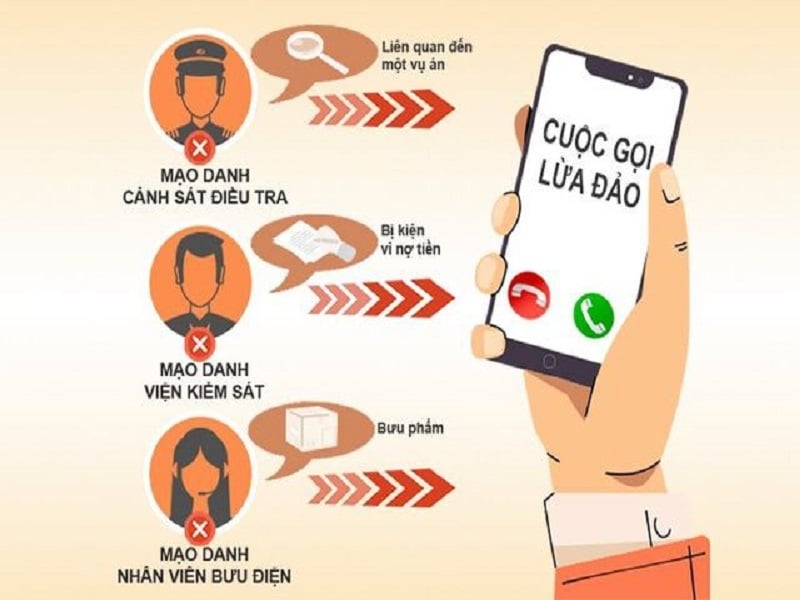
While curiosity may be the starting point, fear is what causes users to disregard all suspicion. Police agencies point out that cybercriminals often use threatening messages such as: "Your account is about to be locked," "court order issued," "overdue bill," or "you are under investigation." These urgent warnings put users in a fight-or-flight state, leading to hasty decisions.
According to some psychologists, in moments of fear, the brain tends to prioritize immediate reactions over critical thinking. This is what makes “emergency” scams so effective, despite users having been warned many times.
Another issue is secondary trauma, a concept mentioned by Dr. Gordon Ingram, a psychology lecturer at RMIT, when users inadvertently view harmful content. Violent and shocking images can cause young people to experience prolonged confusion, anxiety, insomnia, or altered worldviews.
“Young people are even more vulnerable because they don’t have enough experience to process shocking content,” Dr. Gordon Ingram analyzed. More worryingly, social media algorithms continue to repeat similar content, making users more confused and more vulnerable to being fooled in the next steps.
Ms. Vu Bich Phuong, a lecturer in Psychology at RMIT, added: “Many teenagers face double pressure, dealing with real-life difficulties while also being affected by harmful online content. Accidentally encountering negative content can easily lead to stress and anxiety.” Therefore, in this unstable psychological state, users are more likely to believe requests for phone calls, money transfers, or unfamiliar apps presented as “emergency” solutions.
Besides personal factors, mob mentality also contributes to many people falling into traps. The culture of "following the latest news" on social media makes users prioritize speed over accuracy. According to Master's degree holder Luong Van Lam, many people share shocking news to show they are "up-to-date" or "helping to warn the community," but in reality, they become a source of fake news dissemination.
Psychologists also say that when placed in the middle of a continuous flow of information, users tend to act instinctively, lacking the ability to analyze and evaluate. This is the biggest gap in the digital skills of most Vietnamese users today.
From a digital mental health perspective, this leads to information fatigue: Users are bombarded with bad news, easily confused by every warning, and become caught off guard when they need to be most alert.
Lesson 2: Technology pushes old scams to new levels of sophistication
Source: https://baotintuc.vn/van-de-quan-tam/vi-sao-lua-dao-cu-van-hieu-qua-bai-1-to-mo-va-so-hai-de-sap-bay-20251204114139007.htm


![[Photo] Explore the US Navy's USS Robert Smalls warship](/_next/image?url=https%3A%2F%2Fvphoto.vietnam.vn%2Fthumb%2F1200x675%2Fvietnam%2Fresource%2FIMAGE%2F2025%2F12%2F10%2F1765341533272_11212121-8303-jpg.webp&w=3840&q=75)
![[Photo] The captivating scenery of the fragrant maple forest in Quang Tri](/_next/image?url=https%3A%2F%2Fvphoto.vietnam.vn%2Fthumb%2F1200x675%2Fvietnam%2Fresource%2FIMAGE%2F2025%2F12%2F10%2F1765353233198_lan09046-jpg.webp&w=3840&q=75)


























![[Video] The craft of making Dong Ho folk paintings has been inscribed by UNESCO on the List of Crafts in Need of Urgent Safeguarding.](https://vphoto.vietnam.vn/thumb/402x226/vietnam/resource/IMAGE/2025/12/10/1765350246533_tranh-dong-ho-734-jpg.webp)





































































Comment (0)