

Faced with the impact of green barriers imposed by the international market, construction material businesses are forced to adapt and integrate.
Pressure from "green" barriers
Circular economy , green trade, green consumption, green branding… have been creating numerous opportunities and challenges for businesses in the context of integration. Today, amidst global changes, Vietnamese businesses will face many impacts from the green barriers imposed by the international market.
In fact, consumer demand for green products is increasingly high. Research by Nielsen shows that in Vietnam, approximately 80% of Vietnamese consumers are willing to pay more for products made with environmentally friendly materials and bearing green and clean brands. A 2023 survey by Rakuten Insight also indicated that 84% of consumers are willing to pay a higher price for sustainable products.
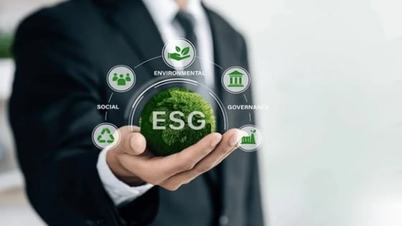
Meanwhile, Vietnam's major export markets, notably the European Union, are implementing stricter environmental regulations and standards for products and services imported into the region. Therefore, sustainable development solutions for businesses in the context of green trade should be linked to substantive CSR (corporate responsibility), ESG (environmental, social, and corporate governance), and Net-Zero (zero net emissions), which are urgent requirements within the business ecosystem.
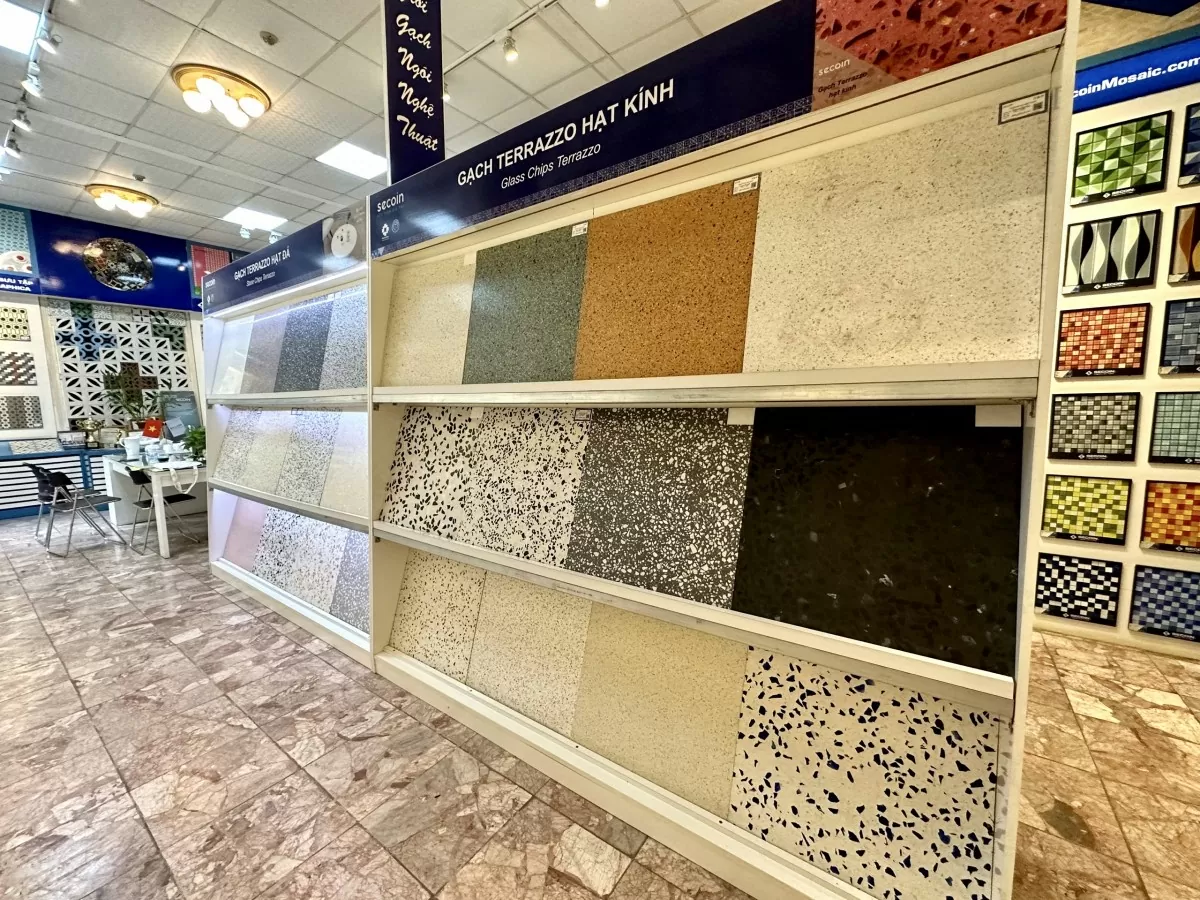 |
| Thanks to its efforts in finding smart, environmentally friendly solutions, Secoin's products are now available in many countries around the world . Photo: Do Nga |
According to media expert Nguyen Dinh Thanh, "greening" in production is key for Vietnamese businesses to enhance their competitiveness and participate more deeply in the supply chain, boosting sustainable exports. Therefore, to build and maintain the image of a green brand, companies need to demonstrate this in their brand statements. The level of demonstration depends on the commitment of the business leader. This could involve adjustments to the company's business philosophy, vision, mission, and core values.
Recognizing the importance of integration into the global market, the construction materials industry has undergone numerous innovations in production and business practices, aiming to meet green standards. Practical experience shows that this is an inevitable path that businesses must choose to reduce dependence on scarce resources, protect the environment, and meet sustainable market standards.
Accordingly, experts believe that practicing ESG (environmental, social, and governance) or making commitments to sustainable development is no longer an option for businesses but has become mandatory now that the EU has implemented carbon emission taxes under the Carbon Border Adjustment Mechanism (CBAM).
Enhancing the ability to penetrate international markets.
As a company specializing in the production of artistic tiles in Vietnam, and always focusing on sustainable brand development, Ms. Dinh Hoai Giang - General Director of Secoin Joint Stock Company - told the Industry and Trade Newspaper that producing green and sustainable building materials is the passport to bringing Vietnamese products to the global market.
Through its efforts to find smart, environmentally friendly solutions, the company's products are now available in Spain, Morocco, Mexico, Brazil, and many other countries around the world.
Sharing further solutions towards green and sustainable goals, Ms. Giang said that utilizing waste in the production of non-fired building materials is an important solution that Secoin is applying in its circular production model, bringing many benefits to the environment and the economy. At the same time, the solution also helps save natural resources by using waste instead of clay, stone, and sand, thus protecting natural resources. In addition, it maximizes the value of previously discarded waste materials, creating a new life cycle for the materials.
"By utilizing waste materials in the production of non-fired building materials, the company has significantly improved economic efficiency by reducing production costs. At the same time, it can create cheaper products (non-fired bricks made from waste materials have lower production costs than traditional fired bricks)... making a significant contribution to building a circular economy and sustainable development. This is a strategic direction for the modern construction industry," Ms. Giang stated.
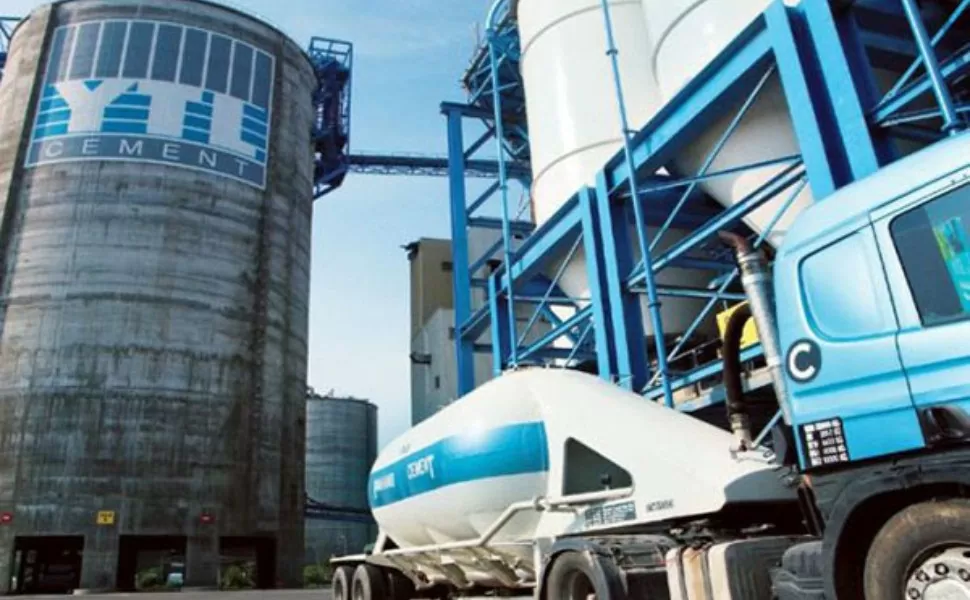 |
| Fico-YTL's products are always geared towards sustainable values. Photo: Fico-YTL |
Similarly, in July of this year, Fico Tay Ninh Cement Joint Stock Company (Fico-YTL) also launched the ECOCem green label for its entire range of cement products according to sustainability criteria, in line with the ISO 14021:2016 emission standard issued by the Global Cement and Concrete Association.
ECOCem Green Label products are manufactured with a lower resource ratio, significantly reducing CO₂ emissions compared to Portland cement (850 kg CO₂/ton). Mr. Nguyen Cong Bao, CEO of Fico-YTL, stated that the announcement of the ECOCem Green Label for Fico-YTL's entire cement product portfolio aims to transparently communicate the results of Fico-YTL's efforts in researching and developing environmentally friendly cement products, contributing to promoting a sustainable construction industry and building a greener Vietnam.
Currently, within its national standards system, Vietnam has developed 750 standards aimed at promoting green growth, such as: standards on environmental quality, air quality, water quality, waste management, and the ISO 11041 standard for organic agriculture…
According to statistics from the Institute of Building Materials (Ministry of Construction), construction projects use approximately 40% of energy, account for 50% of emissions, generate 33% of carbon emissions, and produce 40% of construction solid waste, significantly impacting the environment and requiring a transition. Therefore, green and environmentally friendly building materials are gradually becoming an inevitable trend, aiming to realize Vietnam's commitment to achieving net-zero emissions by 2050.
Assessing the opportunities for green exports and green trade for Vietnamese businesses, Mr. Ta Manh Cuong - Head of the Trade Promotion Capacity Development Department - Trade Promotion Agency (Ministry of Industry and Trade) - said that businesses proactively pursuing green and sustainable development will create many favorable conditions in the context of implementing new generation free trade agreements.
Furthermore, businesses that implement green development practices will find it easier to meet stringent environmental standards and regulations in trade agreements. This not only helps minimize legal risks but also enhances their ability to penetrate international markets. Moreover, businesses committed to sustainable development will have a more positive image in the eyes of customers and partners, thereby attracting more customers and increasing brand value.
Source: https://congthuong.vn/doanh-nghiep-vat-lieu-xay-dung-tan-dung-co-hoi-tu-chuyen-doi-xanh-359655.html


![[Photo] General Secretary To Lam visits the exhibition space showcasing books, photo exhibitions, and achievements of digital transformation in journalism.](/_next/image?url=https%3A%2F%2Fvphoto.vietnam.vn%2Fthumb%2F1200x675%2Fvietnam%2Fresource%2FIMAGE%2F2025%2F12%2F19%2F1766110879215_1766110240024-jpg.webp&w=3840&q=75)

![[Photo] Enchanting ancient rose garden on the mountainside in Nghe An](/_next/image?url=https%3A%2F%2Fvphoto.vietnam.vn%2Fthumb%2F1200x675%2Fvietnam%2Fresource%2FIMAGE%2F2025%2F12%2F19%2F1766109900916_vuon-hong-chin-do-thu-hut-du-khach-toi-check-in-o-ha-noi-3-20162778-1671624890024-1671624890104198100259.jpeg&w=3840&q=75)
























![[INFOGRAPHIC] Overview of the Hoa Phat Dung Quat Rail and Special Steel Production Plant Project](https://vphoto.vietnam.vn/thumb/402x226/vietnam/resource/IMAGE/2025/12/19/1766111183203_z7339170069817-126a3e5a095f62e606a0be41015c1b80.jpeg)



































Comment (0)