

At this "mobile market," people can find bundles of vegetables, pieces of meat, packets of sticky rice, cakes, sugar, salt, household items, and even vegetable seedlings... The image of the "mobile market" is happily welcomed by the locals, becoming a beautiful cultural feature of the people in the riverine region. Goods on mobile carts travel throughout the communes and towns, reaching even the smallest alleys and hamlets, saving people the trouble of going to the market.
Small traders pile all sorts of things onto their carts to sell, literally "bringing the whole market onto a pushcart." Some carts only have one specific item. But others are designed with awnings and hooks to display a wide variety of goods, from fresh produce to groceries. At dawn, while everyone else is still asleep, they head to the wholesale market to get essential, fresh goods to serve the community. The pushcart goes first, followed by the calls of the vendors. Thus, without having to travel far to the market, people can simply wait for the pushcart to pass by, wave down, and have a delicious meal ready for their family.
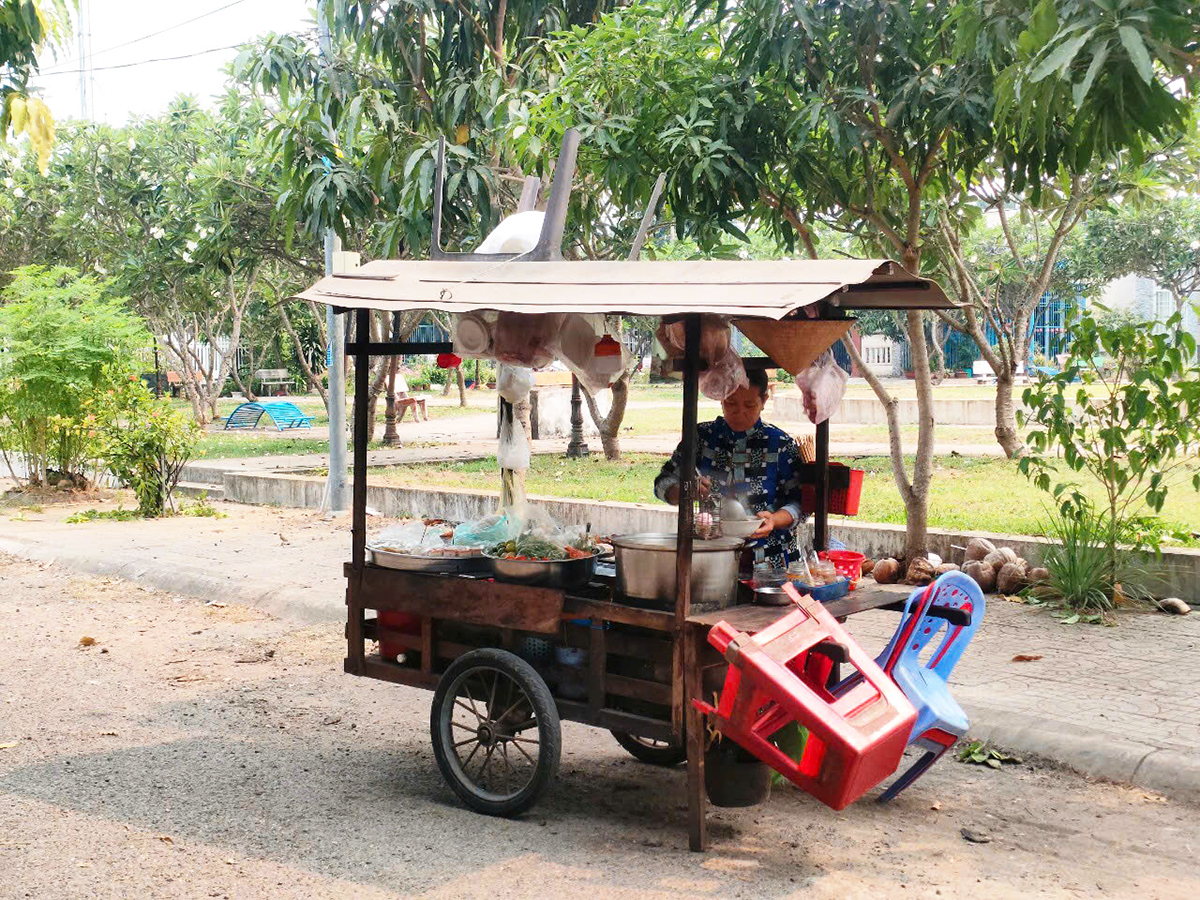
In the countryside, you can tell what crop the farmers are growing, what kind of plants they're cultivating, and what season it is. For example, in the days leading up to Tet (Lunar New Year), the carts will be stocked with Tet goods such as sweets, flowers, ready-made clothes, mosquito nets, blankets, mats, and pillows... with new and diverse designs for people to choose from. During the flood season, there will be more water hyacinths and water lilies... Besides that, carts also help transport goods from traditional craft villages to various places. From glass paintings, clay ovens, puffed rice cakes, and forged products... all are displayed clearly by the sellers on the carts to buyers.
Pushing a cart to sell food daily in rural areas has become a stable occupation, requiring relatively little capital investment. Around noon, the weather can reach 39-40 degrees Celsius, with heat rising from the concrete road, making it extremely hot and uncomfortable for passersby. Yet, Ms. Le Thi Kim Em (Chau Phu district) and her cart selling crab and fish noodle soup travel everywhere. Ms. Kim Em shared: “I’ve been selling for many years; people are used to my food and buy it all the time. It’s hard work, but it earns extra income for my family, and I’m happy to serve the people.”
Ms. Pham Thi Dung (from Cho Moi district) has been selling sweet soups, jelly desserts, and rice noodles for over 20 years. On scorching hot days, her pushcart feels even heavier. Being older, her health isn't what it used to be, so after walking a short distance, she has to stop in a shady spot to rest and recover before continuing. Because of her years of experience, her sweet soups, jelly desserts, and rice noodles are delicious and inexpensive, so most of her customers are regulars. "Selling is hard in both the sunny and rainy seasons, but in the sunny season, sales are better and everything sells out quickly. I've been selling for decades, so I'm used to it. When I was younger, I sold to support my family and send my children to school. Now that I'm older, my children have families and stable jobs, and staying home would be boring, so I'm trying to sell for a few more years, until I can't walk anymore," Ms. Dung shared.
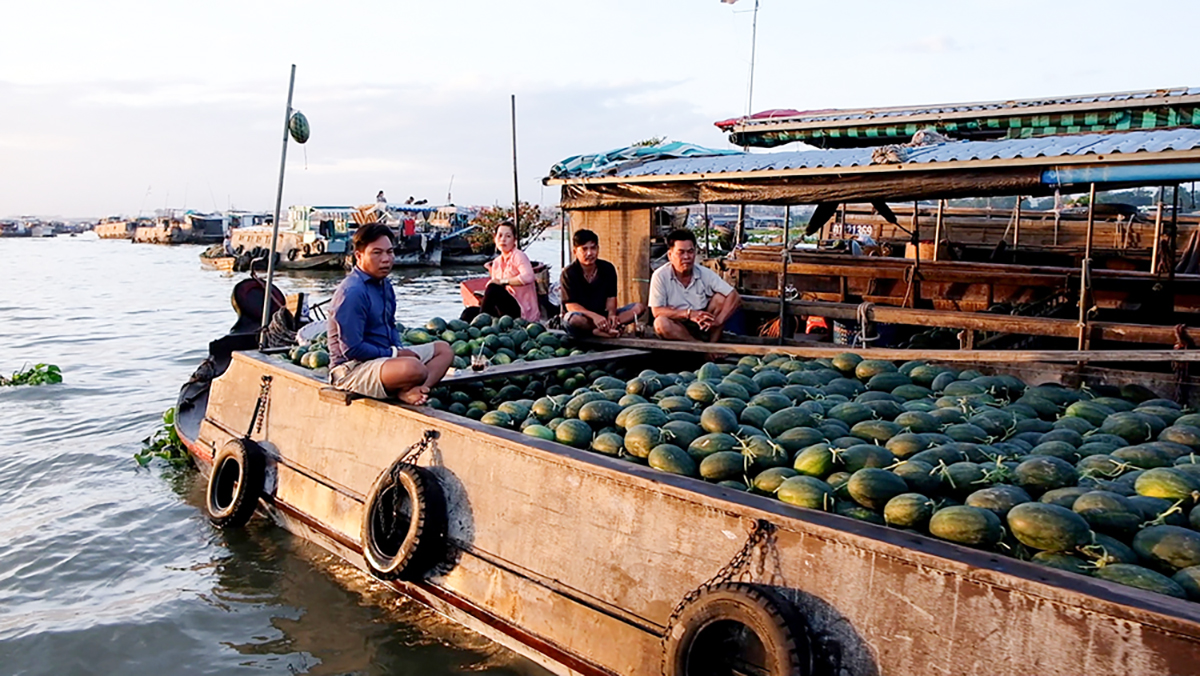
An Giang has a dense network of rivers and canals, so trading activities on boats and barges are quite common. River trading is the primary form of commerce for people living along the river, making it easy to transport goods over long distances. Located on the peaceful Hau River, Long Xuyen floating market sells a wide variety of goods brought in by merchants from all over. Every day, from dawn, people board their boats, start their engines, and prepare for the early morning market, the sounds of people and waves filling the air.
Large merchant boats arrive early, while smaller boats arrive later, but the market usually closes around 8-9 am. A distinctive cultural feature of the floating market is that goods are displayed and showcased on poles, which locals call "bamboo poles." Customers can look at the "bamboo poles" hanging from the front of the boats to choose the products they want to buy. Each boat sells different goods, from vegetables and fruits to essential items for daily life.
Slowly making their way through country roads, alleys, and canals, familiar calls of vendors echo everywhere. The journey of these "mobile markets" begins in the early morning before people wake up and continues until late evening, roaming through both the dry and rainy seasons, becoming a familiar and endearing aspect of the culture of the people in the riverine region.
Source: https://baoangiang.com.vn/doc-dao-cho-di-dong--a420288.html


![[Photo] Prime Minister Pham Minh Chinh presides over a meeting on private sector economic development.](/_next/image?url=https%3A%2F%2Fvphoto.vietnam.vn%2Fthumb%2F1200x675%2Fvietnam%2Fresource%2FIMAGE%2F2025%2F12%2F20%2F1766237501876_thiet-ke-chua-co-ten-40-png.webp&w=3840&q=75)








































































Comment (0)