

(CLO) Artificial intelligence (AI) is rapidly developing in journalism. And a newly published report shows that both readers and journalists are interested in how AI should be used in journalism.
This report, published by RMIT University, is based on three years of research and focus group interviews on AI generation and journalism in Australia and six other countries (USA, UK, Norway, Switzerland, Germany, and France).
The results showed that only 25% of survey participants believed they had encountered AI-generated content in journalism, while 50% were unsure or doubtful about it.
This highlights a lack of transparency from news organizations in their use of AI, and reflects a lack of trust between the press and the public.
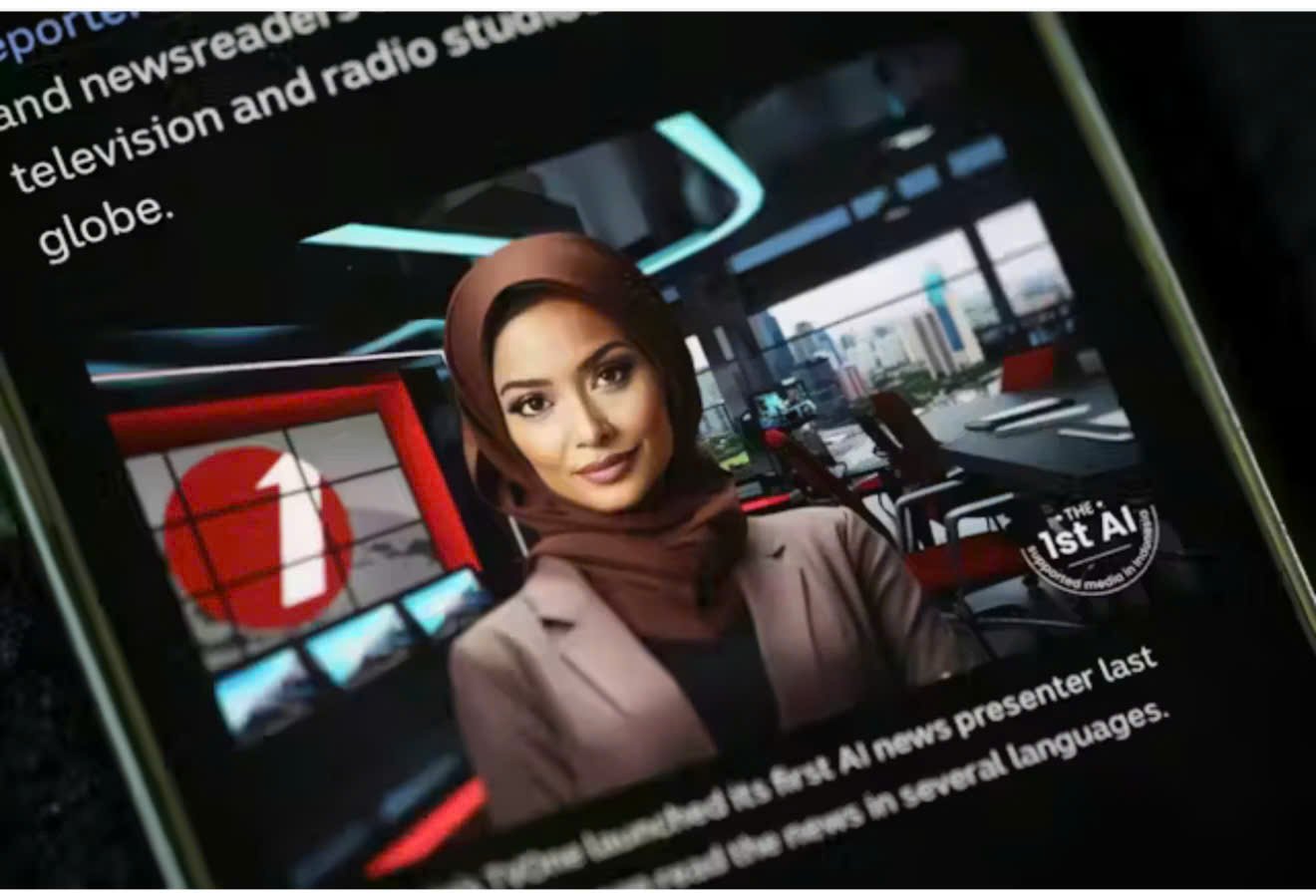
Indonesian TVOne launched an AI news anchor in 2023. (Photo: TJ Thomson)
Challenges and opportunities go hand in hand.
The report highlighted a range of challenges and opportunities for journalists and news organizations when using AI. Overall, surveyed audiences felt most reassured when journalists used AI for post-production tasks, rather than directly participating in the editing and content creation process.
For example, a photographer might work on location, and then AI would take over selecting the best photos, optimizing image quality, and adding keywords. This sounds harmless, but what if the AI misidentifies a subject or detail, leading to inaccurate captions? Or what if the AI's criteria for judging a 'beautiful' photo differ from those of humans, or change over time and context?
Even simple adjustments like increasing or decreasing image brightness can be controversial, especially when they involve sensitive political issues.
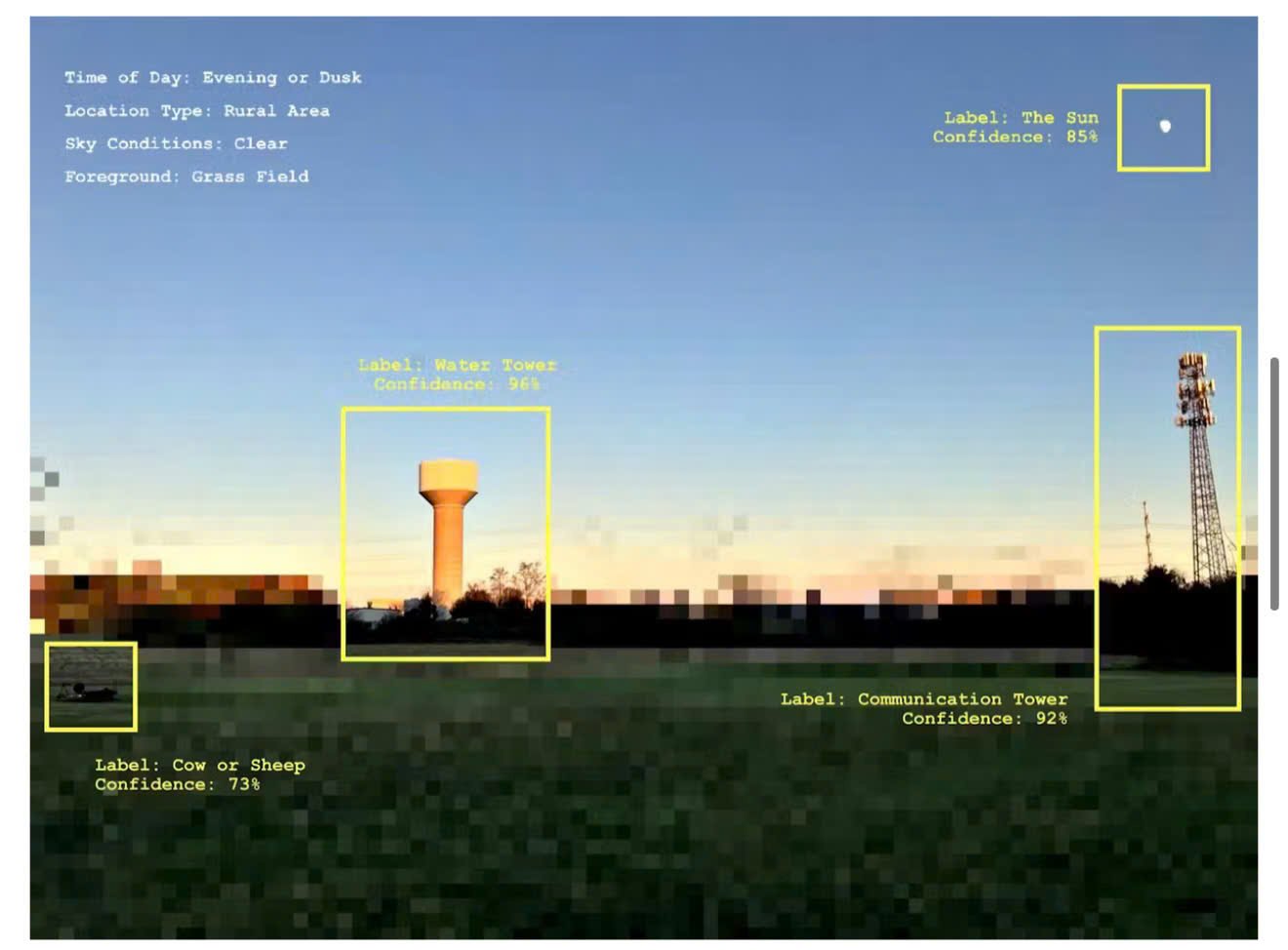
Computer software can attempt to identify objects in images and add keywords, leading to potentially more efficient image processing. (Image: Elise Racine/Better Images of AI/Moon over Fields, CC BY)
AI also has the ability to "manipulate" the truth, creating images and videos that look real but are actually products of artificial intelligence. AI is also used to write headlines or summaries for articles, saving time, but at the same time, it carries the risk of being abused to copy other people's content.
AI-generated news alerts have also had serious consequences on numerous occasions. Recently, Apple had to temporarily suspend its automatic news notification feature after the AI falsely reported that murder suspect Luigi Mangione had committed suicide, citing the BBC as the source.
Reader satisfaction levels with AI in journalism.
Our research shows that readers feel more comfortable when journalists use AI for certain tasks, especially when they have previously used AI for similar purposes.
For example, the majority of those interviewed agreed that journalists use AI to blur certain details in photos. Similarly, when inserting images into word processing or presentation software, AI can automatically generate text descriptions for visually impaired users.
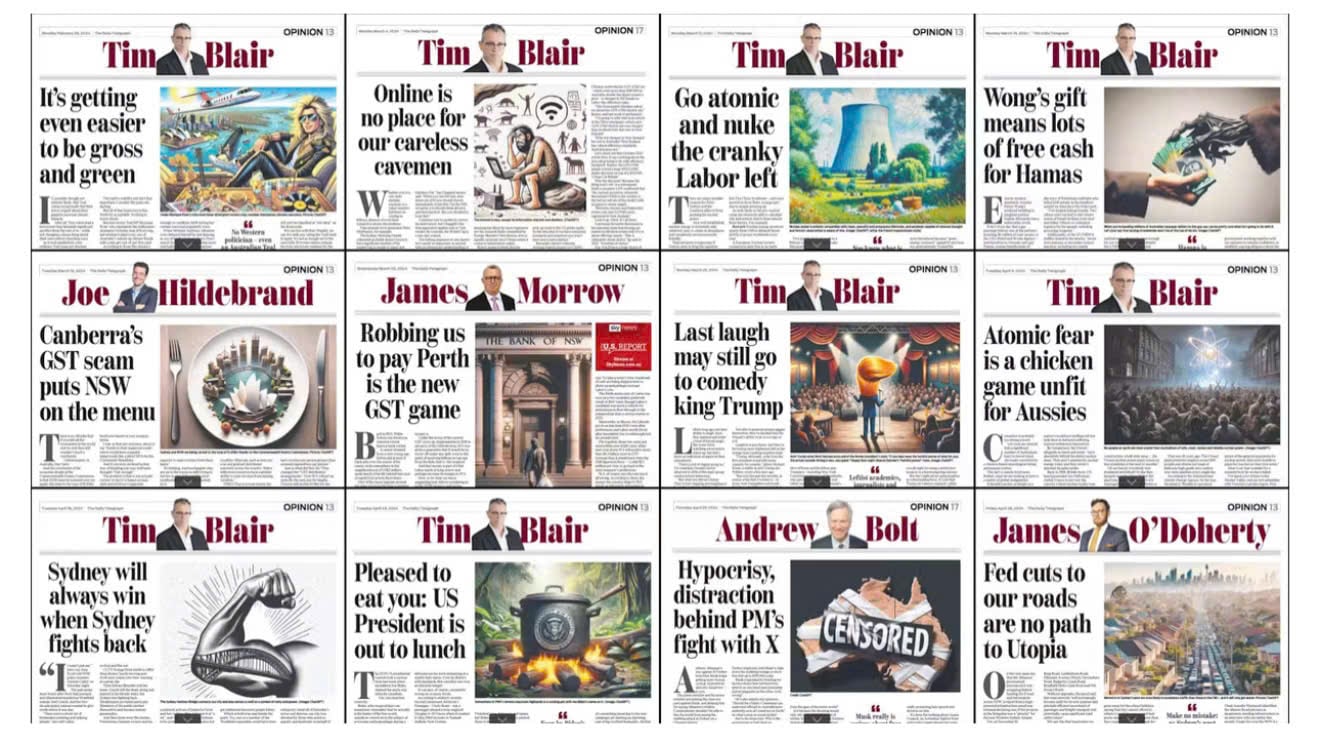
The Daily Telegraph frequently uses AI-generated imagery to illustrate its opinion pieces, sometimes creating more realistic illustrations and sometimes less so. (Image: TJ Thomson)
The majority of survey participants had been exposed to AI-generated content in journalism through articles about AI-generated viral content. For example, when a fake AI-generated photo of Prince William and Harry hugging at King Charles's coronation went viral, news outlets reported on the incident.
Survey participants also saw notifications about AI being used to write, edit, or translate articles. They also saw AI-generated images accompanying some articles. This is a common approach at The Daily Telegraph, which uses AI-generated images to illustrate many of its commentary pieces.
Overall, survey participants felt most comfortable when journalists used AI to generate ideas or enhance existing images. This was followed by the use of AI for editing and creative purposes. However, the level of comfort varied greatly depending on the specific application.
Most participants were comfortable with AI creating icons for infographics, but were uneasy about the idea of an "AI avatar" hosting a news program.
Regarding editing, most participants agreed with the use of AI to animate historical images, such as this one. AI can 'bring to life' a static image, attracting the attention and interaction of viewers.
Phan Anh (according to RMIT, IJNET, Conversation)
Source: https://www.congluan.vn/doc-gia-dang-nghi-gi-ve-viec-su-dung-ai-trong-bao-chi-post334984.html


![[Photo] Prime Minister Pham Minh Chinh presides over a meeting on private sector economic development.](/_next/image?url=https%3A%2F%2Fvphoto.vietnam.vn%2Fthumb%2F1200x675%2Fvietnam%2Fresource%2FIMAGE%2F2025%2F12%2F20%2F1766237501876_thiet-ke-chua-co-ten-40-png.webp&w=3840&q=75)























































![[Infographic] Controlling rabies in pet dogs and cats](https://vphoto.vietnam.vn/thumb/402x226/vietnam/resource/IMAGE/2025/12/21/1766288809667_infographic-kiem-soat-benh-dai-tren-dan-cho-meo-nuoi20251221091138.webp)

















Comment (0)