


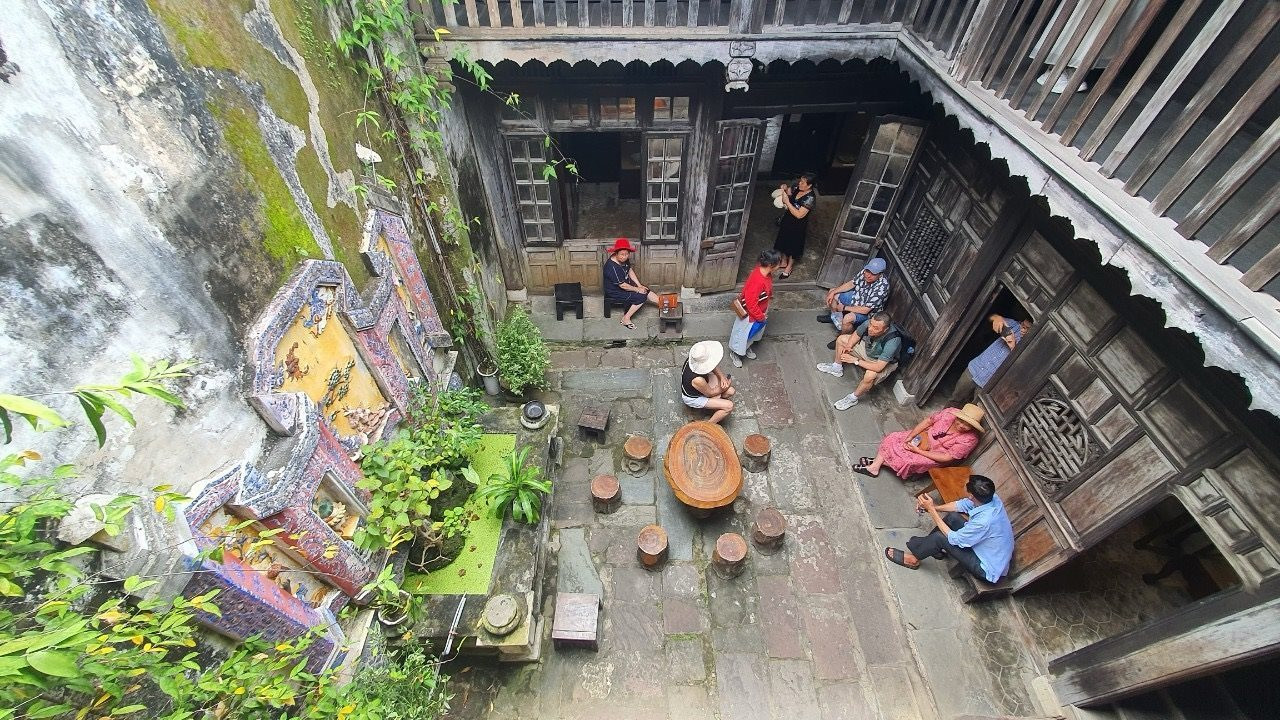
The courtyard where we sat was bathed in spring sunshine and the faint scent of incense...
Rooftop terrace - open space
The place we visited was house number 80 Tran Phu Street (Hoi An). Built around the beginning of the 20th century, the house was originally a shop, used both as a residence and a business premises. The architectural features of this old house are typical of houses in old Hoi An.
With two floors and balconies at the front and back, the house boasts the best structure among traditional old houses. The columns rest on marble slabs, and the column capitals extend upwards to support the roof beams; furthermore, the rafters are separate between the columns.
In particular, the architectural style, which includes a spacious open courtyard in the middle of the house, makes a strong impression on visitors. Stepping through the front of the house, a wooden door opens onto a stone-paved courtyard. A tea table set up beside a small fish pond.
On the wall, there is still a bas-relief painting depicting the typical courtyard architecture of the ancient houses in Hoi An. Many tourists are sitting and resting there. Sunlight filters through the courtyard, casting a golden glow on the small bonsai trees by the pond.
Artist Truong Bach Tuong, a resident of the old town, said that the courtyard has become a distinctive feature of the houses in the old town. Ordinary houses also have an open space called a skylight, but in Hoi An's old houses, this space is so large that it should be called a courtyard.
Artist Truong Bach Tuong said that the common feature of the houses in the old town is that they are all designed in the Cantonese style, with very long, tube-shaped houses. Some houses stretch from Tran Phu Street to Nguyen Thai Hoc Street, or from Nguyen Thai Hoc Street to Bach Dang Street, with a length of about 50 meters.
"With such a length, a courtyard is essential to address the ventilation and airflow issues, according to feng shui principles. Without a courtyard, the house would feel stuffy and lack light. The courtyard is usually located in the middle of the house. Many houses dedicate two large spaces to create two courtyards in the middle of the house," said artist Truong Bach Tuong.
We followed the artist Truong Bach Tuong as he visited many old houses. As his feet trod on the tiled floor, Tuong's memories flashed through his mind: visits to friends' houses in the old quarters to enjoy tea, play music, and talk about music, art, and the refined pastimes of the old quarter, right in the open courtyards.
Many exhibitions have also been held in several open-air courtyards, preserving beautiful memories of the unique spiritual and cultural life of the old town's residents.
The philosophy of life of the residents of the old town.
Mr. Nguyen Su, former Secretary of the Hoi An City Party Committee, believes that the open-air courtyard designed within the ancient houses reflects the philosophy of life of the people of Hoi An.
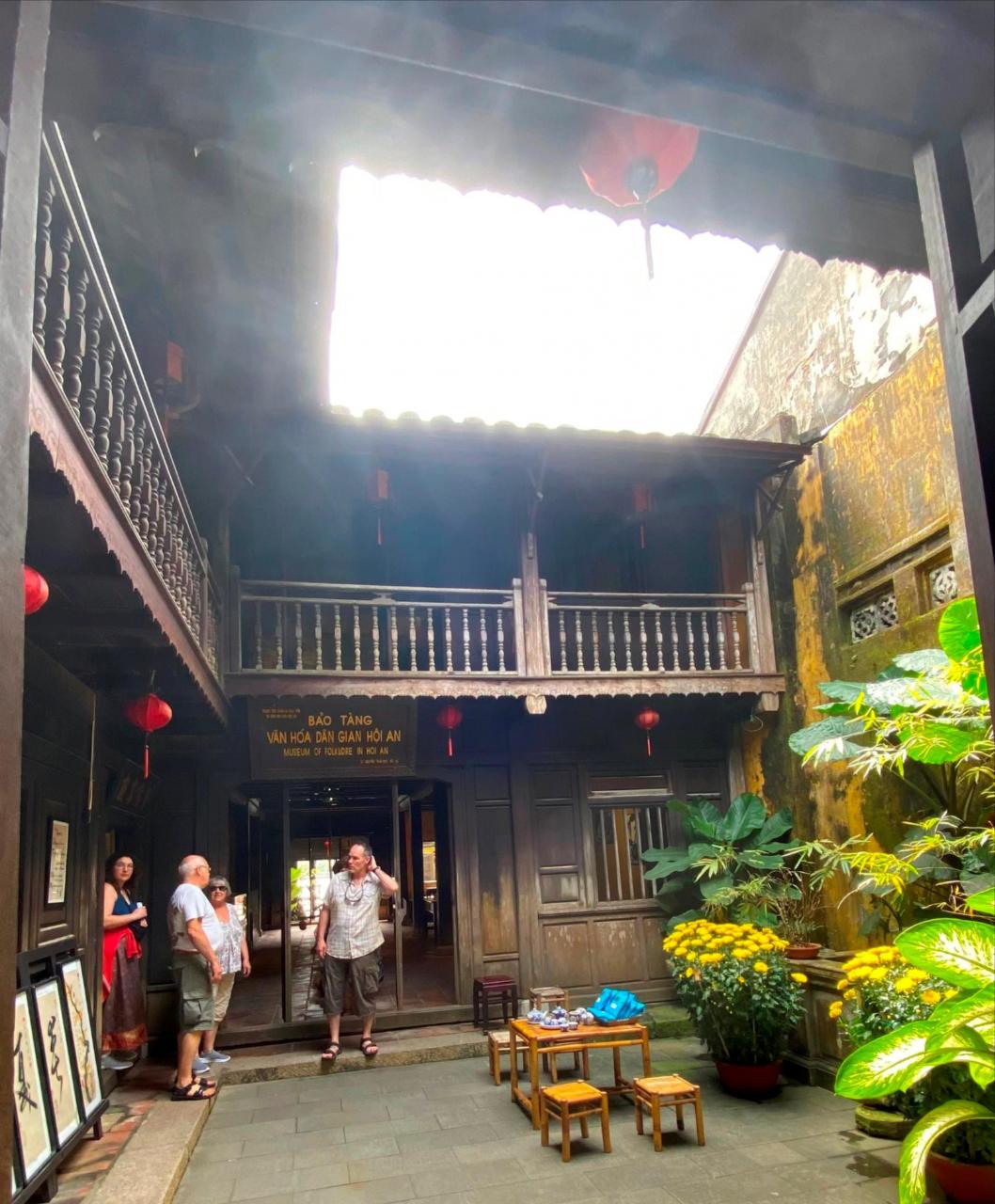
"Out of ten houses, you can count at least eight with open courtyards. Some houses even have two. This architectural style reflects the lifestyle and spirit of the ancient town's inhabitants. They built their houses to live in and conduct business, but they didn't want their homes to be isolated from nature."
They want to dialogue with nature, they want their homes to speak to the sun and wind. That is the attitude of the people of Hoi An: living discreetly but not withdrawn.
"Nowadays, people talk a lot about the uses and benefits of rooftop gardens. But we must understand the lifestyle philosophy of the residents. People in the past may have faced hardship and scarcity, but they never destroyed their rooftop gardens; instead, they added greenery, fish ponds, and miniature landscapes to make them more beautiful. The rooftop garden at house number 9 Nguyen Thai Hoc Street, spanning 40 square meters, is a prime example," Mr. Su said.
As someone who has lived in the old town for many years, Mr. Su said that somewhere in every line, detail of architecture, culture, and customs of the old town, there shines simple yet profound things. And the open-air courtyard is one piece of that puzzle.
"People can sit and talk endlessly about the old town, but they can't fully understand or describe it all. That's Hoi An. It's not just about the architecture and the streets; Hoi An holds the essence of many generations and the cultural sediments of its history," Mr. Su said thoughtfully.
However, a rather common phenomenon in the Old Quarter is that the owners of these houses mostly don't live in them. The old houses are rented out, and the tenants use them primarily for business purposes.
The open-air patio takes up too much space, and rain and wind can affect business, so many owners try to cover it up. The landscape and architecture are, in a way, subtly disrupted, right inside the house.
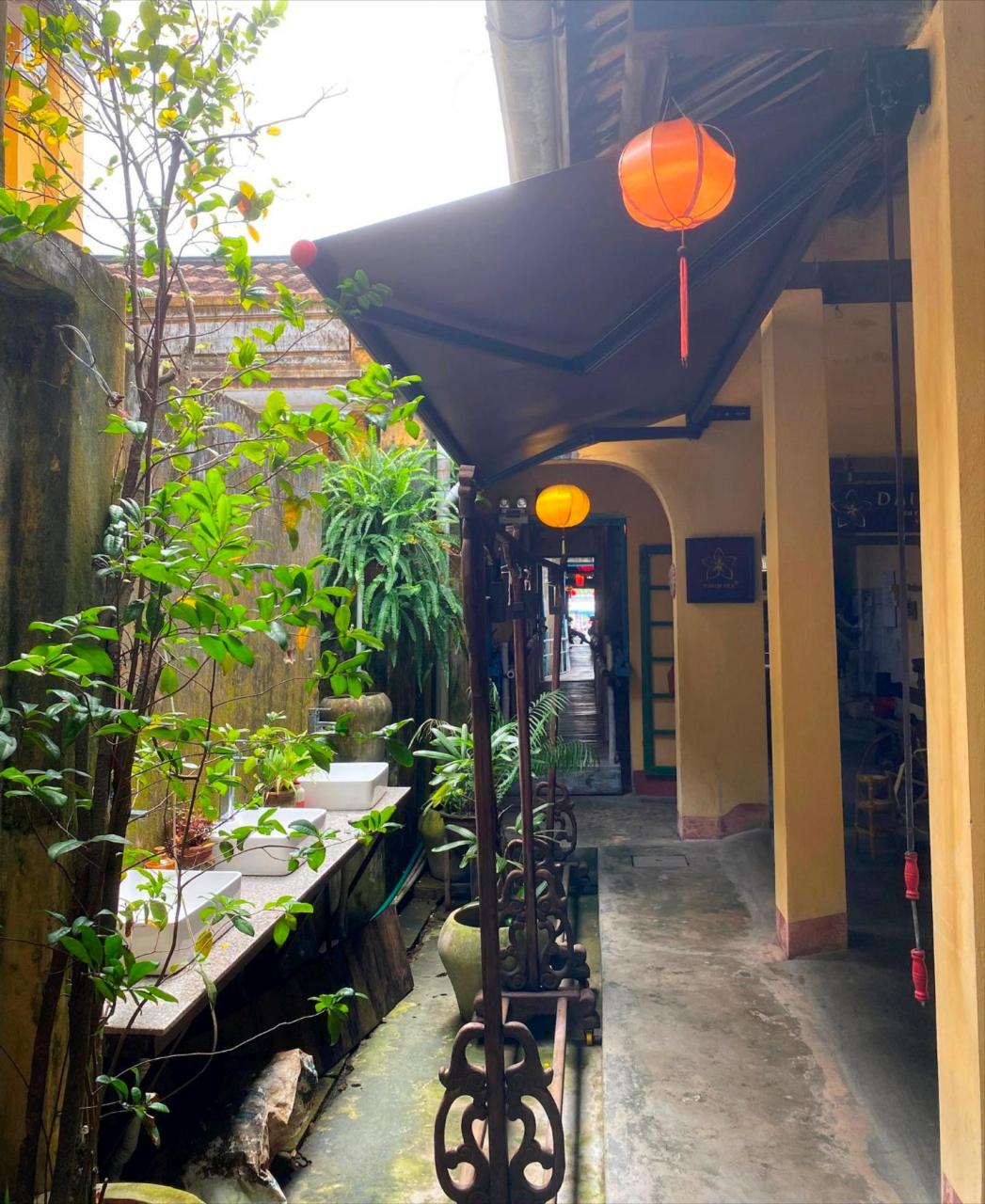
"As life improves, people no longer live there, old houses are rented out, and modern amenities cause many things to change. At that point, we are forced to tighten up heritage management. We can exploit the functionality of the site, but we cannot destroy or distort the historical monument."
"The open-air courtyards can also be covered and used to protect against rain and wind, but they must not be completely enclosed or covered up, because that is a characteristic feature of houses in Hoi An. That is something we must reflect on, think about, and preserve," Mr. Su said.
There are subtle changes within these houses, changes that can only be perceived by living there, by immersing oneself in its life. People cover up the skylights; from a preservation standpoint, the architecture and culture are lost and diminished.
Although it only accounts for a very small percentage, it is still a regrettable change. The house has lost its connection with nature, through the sunlight and wind coming from the courtyards. A few words from the artist Truong Bach Tuong, sounding like a sigh on the first day of spring...
Source

![[Photo] General Secretary To Lam attends the meeting between voters and candidates for the 16th National Assembly.](https://vphoto.vietnam.vn/thumb/1200x675/vietnam/resource/IMAGE/2026/02/26/1772088196117_a1-bnd-7412-5887-jpg.webp)































![[Photo] Prime Minister Pham Minh Chinh presides over the meeting of the Central Steering Committee on Housing Policy.](https://vphoto.vietnam.vn/thumb/402x226/vietnam/resource/IMAGE/2026/02/26/1772088860610_anh-man-hinh-2026-02-26-luc-13-54-08.png)

















Comment (0)