

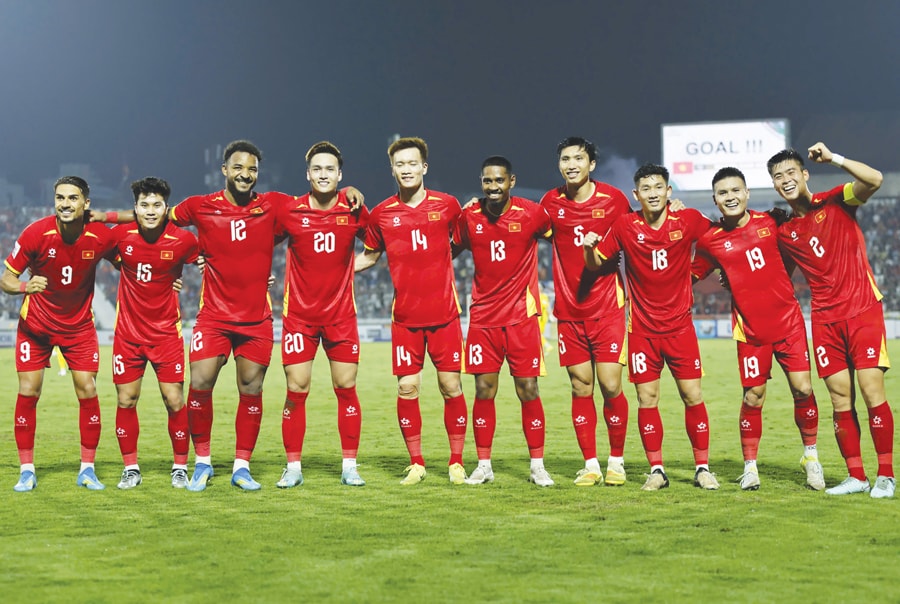
It's not just about the score.
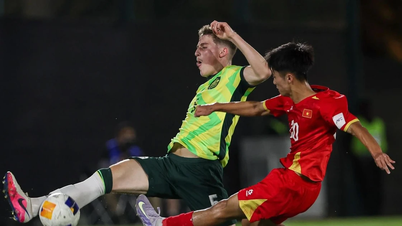
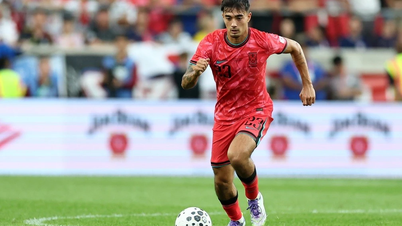
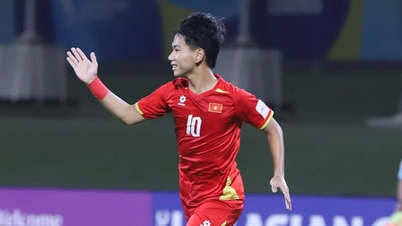
Vietnam's convincing victory over Malaysia on the evening of March 31st was significant not only in terms of points, but also demonstrated the effectiveness of harmoniously combining domestically trained players, players of Vietnamese origin, and naturalized players.
In the match against Malaysia, the impact of players who exemplify this strategy was clearly evident. Do Hoang Hen and Nguyen Xuan Son, naturalized players who have grown up in foreign football environments, left their mark with important goals and assists.
In addition, players of Vietnamese origin such as Nguyen Filip and Cao Pendant Quang Vinh have also made positive contributions. Meanwhile, players trained domestically, when playing in a team with high-quality players, also reach their peak performance. All of this creates a team that complements each other, significantly improving the quality of the squad. And it would not be surprising if, in the future, the Vietnamese national football team or the U23 Vietnamese team fielded a lineup with players like the one described above.
Perhaps this is no longer a temporary experiment, but is gradually becoming a long-term direction for Vietnamese football, in line with the development trends of modern football.
In fact, the issue of using players of Vietnamese origin and naturalized players is not new in Vietnamese football. For many years, this has been a subject of debate among experts and fans. Some opinions worry that the "foreignization" of the national team could reduce the development opportunities for domestic players, affecting the identity and the youth training system in the country.
However, conversely, many experts believe this is an inevitable trend in the context of integration, as football nations in the region and continent are utilizing overseas Vietnamese and naturalized players to enhance their competitiveness.
Another important factor is the shift in mindset. While previously, playing for the national team was viewed quite "closed off," the perspective has now become more open. Fans and administrators are gradually accepting that, as long as a player has the desire to contribute and possesses sufficient professional ability, they can all become part of the Vietnamese national team. This also aligns with the globalization trend in football, where national boundaries in sports are becoming increasingly flexible.
The key issue is not whether or not to use naturalized players, but how to use them effectively.
The "dosage" still needs to be calculated.
Nevertheless, the balancing act still needs careful consideration. Increasing the number of naturalized players or players of Vietnamese origin must be accompanied by a strategy for developing domestic football. Otherwise, domestic youth academies could be affected as opportunities to play for the national team are reduced. This is something that the Vietnam Football Federation and the coaching staff need to pay special attention to during the process of building the team.
According to football expert Phan Anh Tú, domestic training academies should remain the top priority to create a stable source of players for Vietnamese football in general and the national team in particular. Therefore, action from the management is still needed to encourage clubs to continue to nurture their training academies.
In fact, many successful football nations have demonstrated a sensible approach. Japan and South Korea still prioritize domestic youth development, but they don't hesitate to use naturalized players in necessary positions.
Conversely, some teams that rely too heavily on naturalized players lack stability and a lasting identity. Vietnam clearly needs to choose a path where "internal strength" plays a fundamental role, while external resources are a selective supplement. Judging from the victory against Malaysia, it's clear that the Vietnamese national team is heading in the right direction.
The combination of different groups of players not only improves the quality of the squad but also creates a healthy competitive environment. When domestic players see that their positions are no longer "automatically" secured, they will be forced to work harder to prove themselves. Conversely, Vietnamese-born and naturalized players also need to demonstrate their worth to deserve the opportunities given to them.
In the increasingly competitive Southeast Asian football landscape, improving the quality of personnel is a pressing need. Rivals like Malaysia, Indonesia, and Thailand have all been utilizing naturalized players to strengthen their squads. Without timely adjustments, the Vietnamese national team will struggle to maintain its competitive edge.
According to many experts, the combination of domestic players, players of Vietnamese origin, and naturalized players, if properly managed, will become the foundation for the sustainable development of Vietnamese football in the future. The remaining issue is finding the right "dosage" to both utilize external resources and avoid losing the momentum for development from within.
Source: https://hanoimoi.vn/doi-tuyen-viet-nam-dinh-hinh-loi-di-nhan-su-trong-giai-doan-moi-743036.html

![[Photo] General Secretary and President To Lam presides over a meeting on assessing national development resources.](https://vphoto.vietnam.vn/thumb/1200x675/vietnam/resource/IMAGE/2026/05/20/1779253785852_a1-bnd-2943-8519-jpg.webp)





























































Comment (0)