Bridging the gap between mountainous and urban areas.
In its socio -economic development strategy for disadvantaged areas, Quang Ninh province has identified transportation infrastructure as a key lever for breakthroughs. The province has focused significant resources and implemented many key projects to eliminate connectivity bottlenecks and shorten the distance between mountainous and border regions and economic and urban centers.
Among key transportation projects, Provincial Road 341 (QL18C), connecting the Mong Cai Border Economic Zone to the Bac Phong Sinh Border Economic Zone, is a clear example of the commitment to investing in infrastructure in disadvantaged areas. The 35.26km long road passes through many mountainous and border communes that previously faced transportation difficulties. Before its completion and commissioning in September 2023, this road has truly "opened the way" for the border region.
Thanks to the new road, people in the highland communes along Provincial Road 341 have more convenient access to the city center; the trade of agricultural products and goods is also faster and safer. Many ethnic minority households have better access to markets and stable outlets for their products, thereby improving their income and quality of life. Not only does it contribute to poverty reduction, but the project also opens up opportunities for ethnic minorities to participate more deeply in border economic activities, gradually becoming wealthy in their homeland.
Besides its economic value, Provincial Road 341 also helps shorten the development gap between border areas and central regions, creating conditions for people to have better access to healthcare, education , and cultural services. This project is not only a trade route, but also a path of change, opening up many new hopes for mountainous and border communes on their development journey.
Following the completion of Provincial Road 341, in September 2023, another important transportation project was launched: the renovation and upgrading of Provincial Road 342 connecting Ha Long - Ba Che - Lang Son, with a length of 20.9 km, a width of 9 m, and designed according to mountainous region Class III standards. The project has a total investment of over 800 billion VND from the provincial budget, including four large bridges (Thac Da, Thac Cha, Khe Lu, Khe Lao) and a comprehensive infrastructure system ensuring traffic safety. After more than a year of construction, the road has been completed, meeting the schedule and technical requirements, becoming a new "connecting link" for the mountainous region of Quang Ninh.
 The opening of this road significantly reduces travel distance and time between the Ha Long - Lang Son area, while also forming a continuous transportation corridor connecting Quang Ninh with Lang Son and Bac Ninh. As a result, ethnic minority communities in the former Ba Che district have easier access to markets, the value of agricultural and forestry products is enhanced, and people's lives are improving. The road also plays a crucial role in attracting investment, expanding development opportunities, and creating momentum for the area to soon become a center for forestry, medicinal herbs, ecotourism, and modern rural services.
Beyond its economic benefits, Provincial Road 342 also affirms Quang Ninh's special attention to mountainous areas and ethnic minority regions. This is a vivid testament to the policy of investing in infrastructure in disadvantaged areas, aiming to narrow the development gap, realize inclusive growth, and ensure that all citizens benefit from the changes.
While the completion of provincial roads 341 and 342 has brought about significant changes to the highlands, the commencement of provincial road 330 on National Day recently opens up new expectations for the future infrastructure of Quang Ninh's mountainous region. The project, nearly 21km long and with a total investment of 987 billion VND from the provincial budget, runs through Ba Che commune to the intersection with provincial road 342. This road plays a vital role, directly connecting the highlands of Ba Che and Ky Thuong with the provincial center and neighboring provinces such as Lang Son and Bac Ninh, creating a seamless transportation link between the dynamic and disadvantaged areas.
Unlike the old route, which was narrow, had many sharp bends, and steep slopes posing potential dangers, the new Provincial Road 330 project is designed to mountainous region Class III standards, with a 9m wide roadbed and asphalt concrete surface. Many modern features such as river bridges, viaducts, retaining walls, and alignment adjustments will also be implemented to thoroughly address dangerous curves, ensuring safety and convenience for traffic. This is not only a technical improvement but also a commitment to bringing the people in the highlands closer to transportation conditions comparable to those in the lowlands and urban areas.
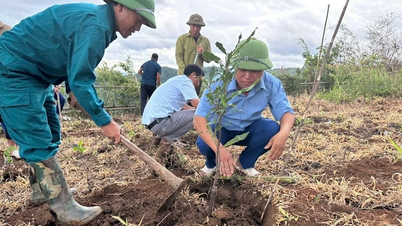
 Delegates and local people perform the groundbreaking ceremony for the project to renovate and upgrade Provincial Road 330. Photo : Minh Duc
The project's greatest significance extends beyond simply shortening travel distances. For ethnic minority communities in Ba Chẽ and Kỳ Thượng, the new road represents an opportunity to break free from the vicious cycle of trade difficulties, paving the way for agricultural products, medicinal herbs, and forestry products to reach wider markets. With improved transportation, the economic value of local products increases, thereby contributing to higher incomes and a better quality of life for the people.
Furthermore, Provincial Road 330 plays a crucial role in regional development connectivity. Upon completion, the road will add a vital link to Quang Ninh's integrated transportation infrastructure network, creating an economic corridor connecting Ha Long, Ba Che, and Lang Son. This will facilitate attracting more investment projects, tourism services, and the development of forestry and medicinal plant industries linked to nature conservation, thereby transforming the mountainous region's potential into a real competitive advantage.
Above all, the commencement of the project on National Day, September 2nd, holds special political and social significance, demonstrating the commitment of the Quang Ninh Party Committee and government to prioritizing resources for the most disadvantaged areas. This is not just a concrete road through the mountains and forests, but also a road of hope and aspiration for progress for the ethnic minority people. It opens up hope that in the near future, the highlands of Quang Ninh will no longer be an underdeveloped area, but will become an integral part of the province's overall prosperous, modern, and sustainable landscape.
The region is difficult to change every day.
If transportation infrastructure is considered a "lever" paving the way for development, then the comprehensive transformation of disadvantaged areas can only be truly affirmed when accompanied by synchronized investment in other essential elements such as electricity, water, information, healthcare, education, and culture. Therefore, in recent years, Quang Ninh has allocated significant resources to cover and improve the quality of basic infrastructure services in mountainous areas, ethnic minority regions, remote areas, border regions, and islands. The goal is not only to build roads, but also to create a modern and sustainable living foundation for all citizens, helping them access development opportunities equally.
Implementing Resolution No. 16/2021/NQ-HĐND and Resolution No. 06-NQ/TU, during the 2021-2025 period, the province allocated 4,200 billion VND of provincial budget public investment capital to communes, villages, and hamlets in ethnic minority, mountainous, border, and island areas, achieving 100% of the medium-term plan. This level of investment clearly demonstrates the priority given to improving infrastructure in disadvantaged areas, showing that this is not a temporary solution but a long-term strategy with a vision extending to 2030.
Not only relying on the provincial budget, Quang Ninh has also mobilized all available capital sources. Over the past five years, the total resources for the development of disadvantaged areas reached over 120,203 billion VND. Of this, credit capital for agriculture and rural areas accounted for 81.11%, exceeding 97,000 billion VND; budgets at all levels contributed over 6,400 billion VND; and integrated capital from various programs and projects amounted to nearly 15,000 billion VND. This was further enhanced by the participation of businesses, cooperatives, and other legitimate capital sources. It is evident that the development of ethnic minority and mountainous regions relies not only on the state budget but has become a shared endeavor, with the contributions of the entire society.
Thanks to these strong resources, the face of disadvantaged areas in Quang Ninh has undergone fundamental changes. One of the outstanding achievements is that 100% of households in the area now have access to safe and stable electricity. Electricity not only illuminates remote villages but also serves production and business, paving the way for the application of science and technology, and promoting the development of household and community economies.
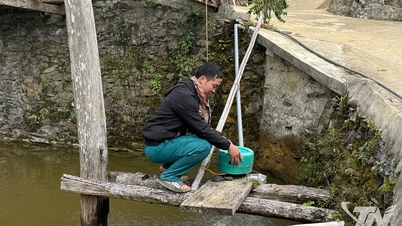
Along with electricity, water supply infrastructure has been prioritized. To date, 99.99% of rural households have access to safe water, with over 85.5% having access to clean water meeting prescribed standards. Notably, the rate of ethnic minority households using safe water has reached 100%. This is a crucial factor in ensuring health, improving quality of life, and reducing disease in remote areas – areas that previously often suffered from a lack of clean water and had to rely on streams and springs with potential hygiene risks.
In the field of information and communication, Quang Ninh has basically eliminated areas with poor mobile phone and television coverage. Currently, 100% of villages and hamlets have mobile phone coverage, and 100% of the population is covered by 4G, with over 6,359 BTS stations installed throughout the province. The internet and mobile phones have now become familiar tools not only for communication but also for learning, accessing information, and e-commerce for people in mountainous areas.
Alongside "hard" infrastructure, Quang Ninh also pays special attention to social infrastructure. During the 2021-2025 period, the province invested in repairing and upgrading 24 schools at all levels, while also supporting the construction of new high-quality schools. As a result, children from ethnic minority areas have better learning conditions, access to modern educational methods, and a foundation for the long-term development of local human resources.
In terms of healthcare, many provincial and district hospitals have been upgraded and equipped with more modern facilities. This helps people in remote areas access quality healthcare services without having to travel long distances. Along with that, the system of cultural centers and community activity centers has also been invested in comprehensively. To date, 100% of ethnic minority villages have cultural centers, becoming places that connect the community, preserve and promote ethnic cultural identity, and improve the spiritual life of the people.
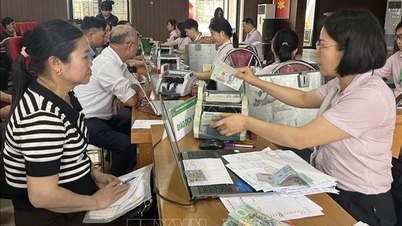
 In addition to basic infrastructure, the province also focuses on investing in commercial and service infrastructure in rural and mountainous areas. Central markets and trading points have been built and renovated, helping people sell their products more easily and access a diverse range of goods at reasonable prices. This is an important step to promote the rural economy, creating conditions for local products to reach a wider market and gradually integrate into the overall value chain.
Alongside this is the development of irrigation and disaster prevention infrastructure, which is crucial for mountainous areas. The construction and upgrading of irrigation works, reservoirs, dams, and embankments not only ensures agricultural production but also contributes to protecting people's lives and property from natural disasters and climate change.
As can be seen, the completed projects and figures are vivid evidence of Quang Ninh's determination. Investing in disadvantaged areas is not only a budget priority, but also a way for the province to demonstrate its responsibility in harmonious development, ensuring that no region or person is left behind.
New schools, modern health centers, and electricity, water, and telecommunications coverage reaching every village... have fundamentally changed the face of mountainous areas and ethnic minority regions. More importantly, they have given the people here hope and aspirations that their children will receive a better education, have access to information and employment opportunities; and a desire for a prosperous and comfortable life right in their homeland.
Thanks to these efforts, Quang Ninh has not only affirmed its pioneering position in socio-economic development but has also become a shining example in caring for disadvantaged areas. This is clear evidence of an inclusive development policy that puts people at the center, ensuring that all citizens, whether in mountainous, border, or island areas, benefit from the changes.
Hoang Anh
Source: https://baoquangninh.vn/don-bay-phat-trien-cho-vung-kho-3374887.html


![[Image] Close-up view of the interchange connecting the two expressways and Long Thanh Airport.](https://vphoto.vietnam.vn/thumb/1200x675/vietnam/resource/IMAGE/2026/05/25/1779703378210_ndo_br_z7863716673926-224453a31600126cce10622af6290afd-4549-jpg.webp)


![[Image] Hanoi's urban life under the challenge of a "scorching hot" environment](https://vphoto.vietnam.vn/thumb/1200x675/vietnam/resource/IMAGE/2026/05/25/1779706979265_nang-nong-t5-2026-minh-duy-7-4636-jpg.webp)







































































Comment (0)