

This earthquake was the worst to hit Morocco in decades. To date, the full extent of its devastation has not been fully analyzed. The earthquake struck Friday evening south of Marrakech, but was felt as far north as Casablanca. However, the area most severely affected was the remote hilly region at the foot of the Atlas Mountains.
Thousands of people were injured or missing, and rescue teams spent days trying to reach the most remote areas affected by the earthquake.
Numerous ancient buildings, mosques, and relics, some dating back centuries, were also severely affected by the earthquake.
The most severely affected areas
Rescue teams continued working after the earthquake in Morocco, with the death toll surpassing 2,900 on Tuesday and more than 5,500 injured. A regional analysis released by the Interior Ministry on Sunday showed that Al Haouz was the hardest-hit region, accounting for approximately 60% of the total deaths in the area.
According to EM-DAT, an international disaster database, Friday's earthquake was the deadliest in Morocco in 60 years. It was also the strongest earthquake the country has experienced in over a century.
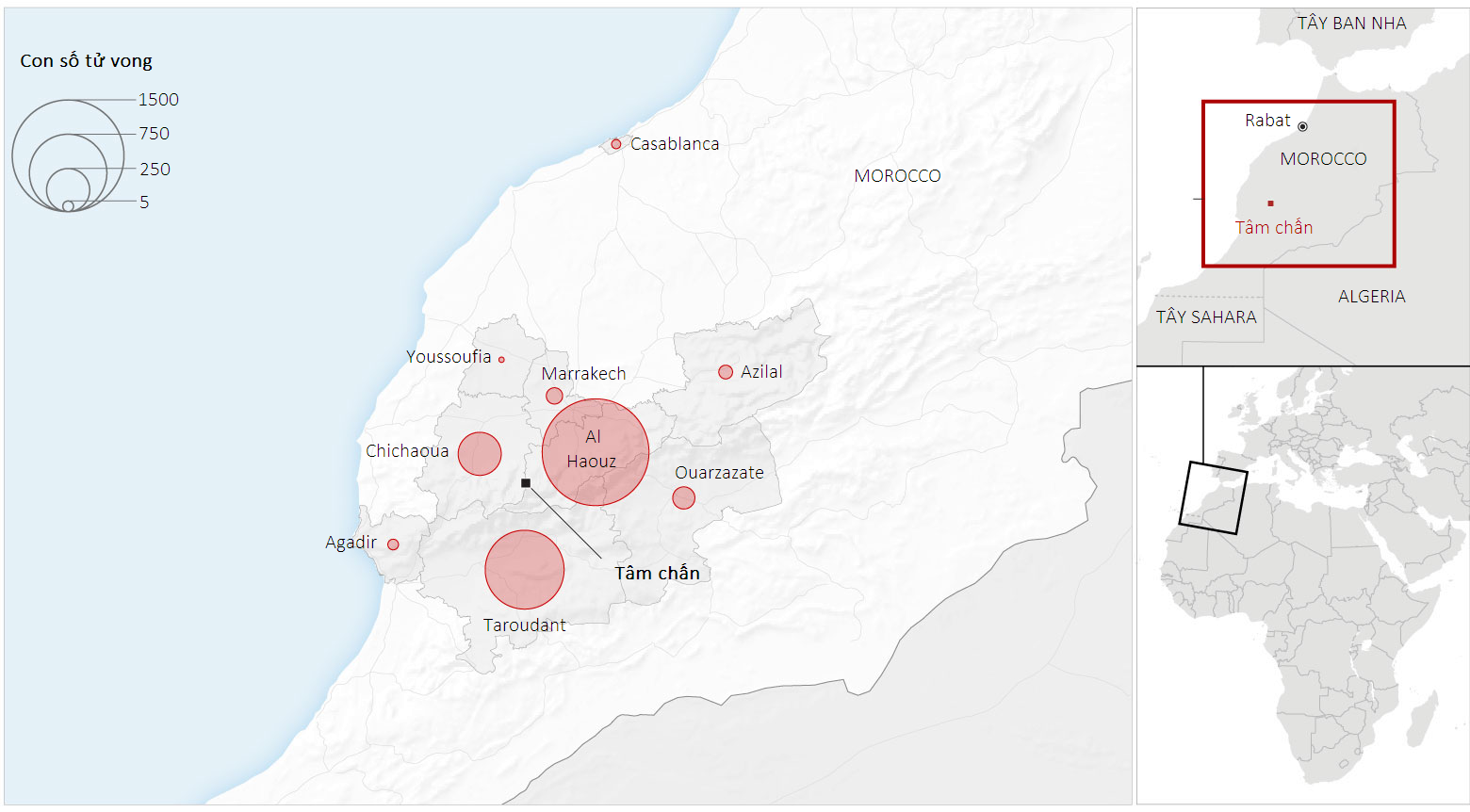
Strong earthquake shakes central Morocco.
A 6.8 magnitude earthquake shook Morocco's High Atlas Mountains at 11:11 p.m. (local time) on Friday (September 8).
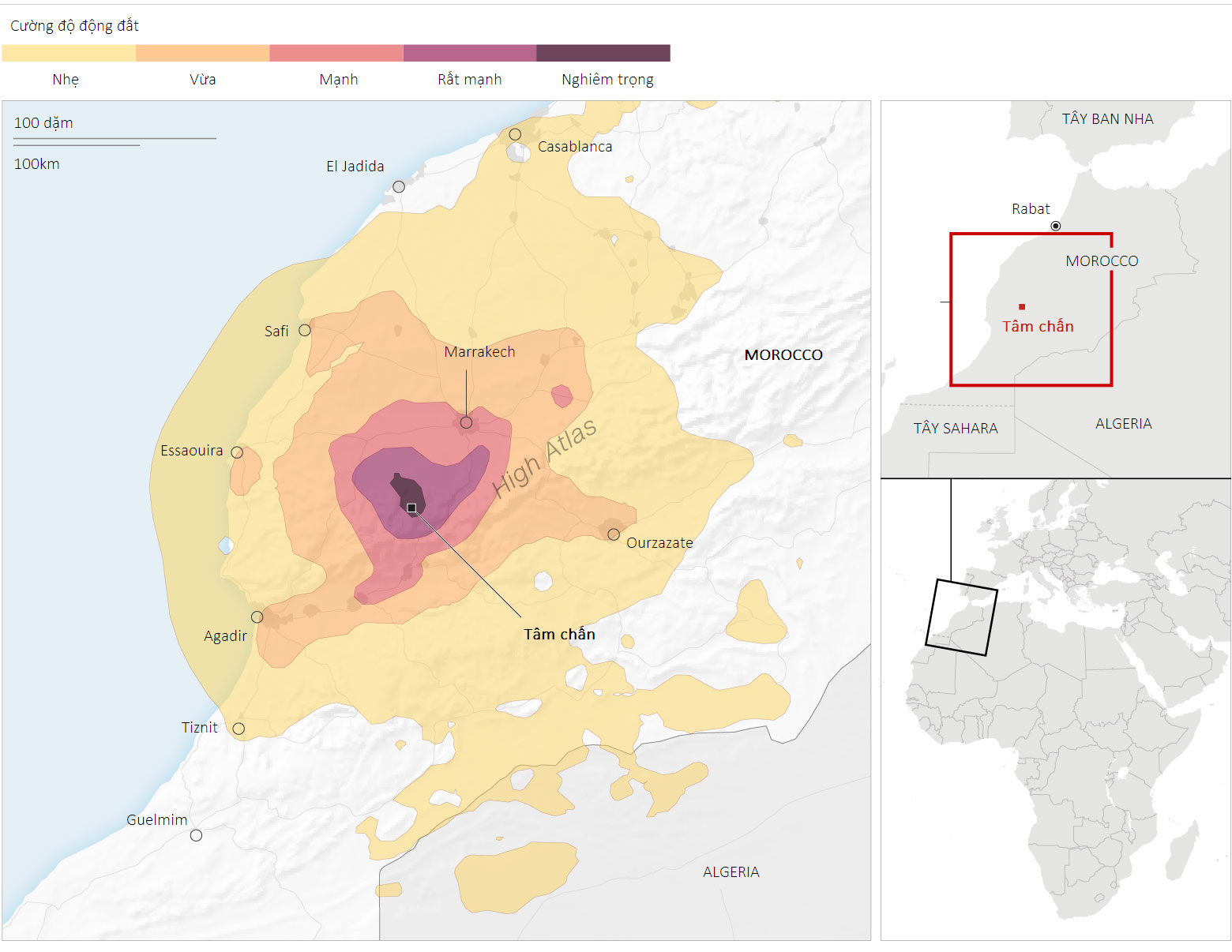
Although the death toll is still being updated, this earthquake has become the second deadliest earthquake in North Africa since 1900.
In 1960, a 5.8 magnitude earthquake in Morocco, with its epicenter in Adagir, killed 12,000 people and injured 25,000. In 1980, a 7.8 magnitude earthquake in Algeria and a subsequent tsunami killed 2,600 people and caused extensive damage.
Numerous historical sites have been destroyed, damaged, or threatened by the earthquake.
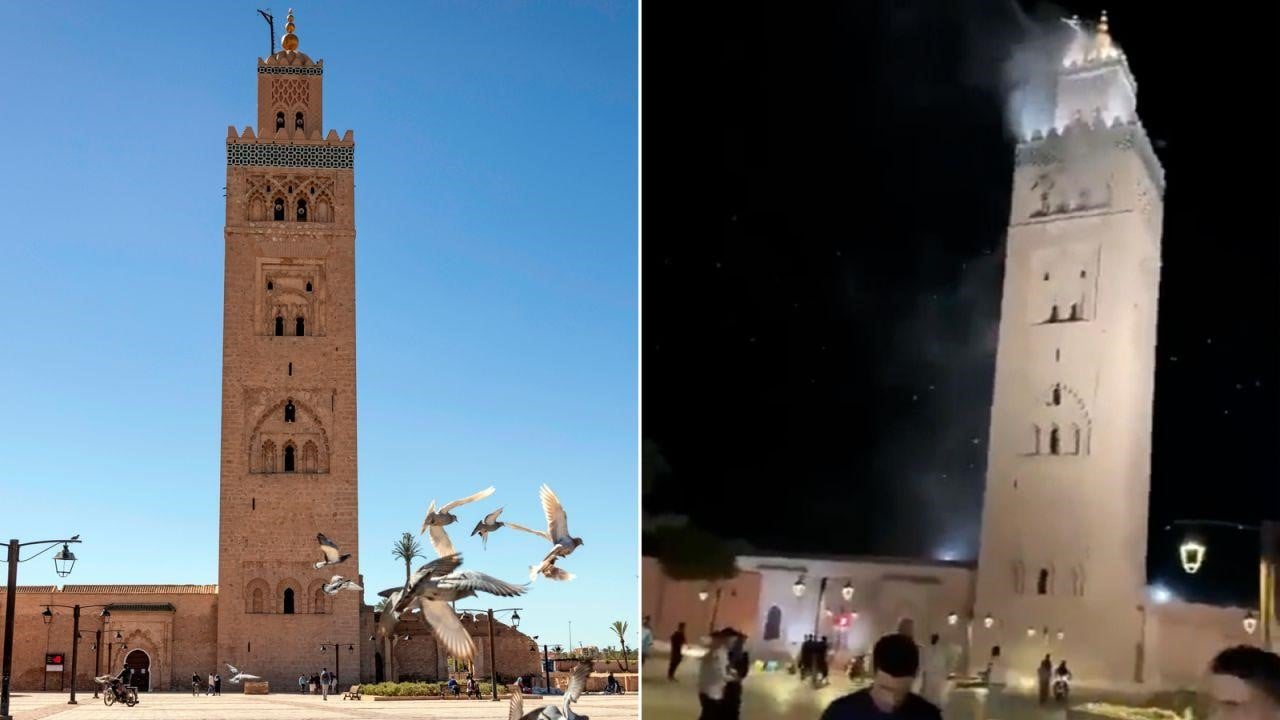
The jewel of Marrakech, the famous Kutubiyya Mosque, shook in the earthquake. However, this 12th-century structure, along with its 77-meter-tall minaret, remained standing after the earthquake over the weekend.
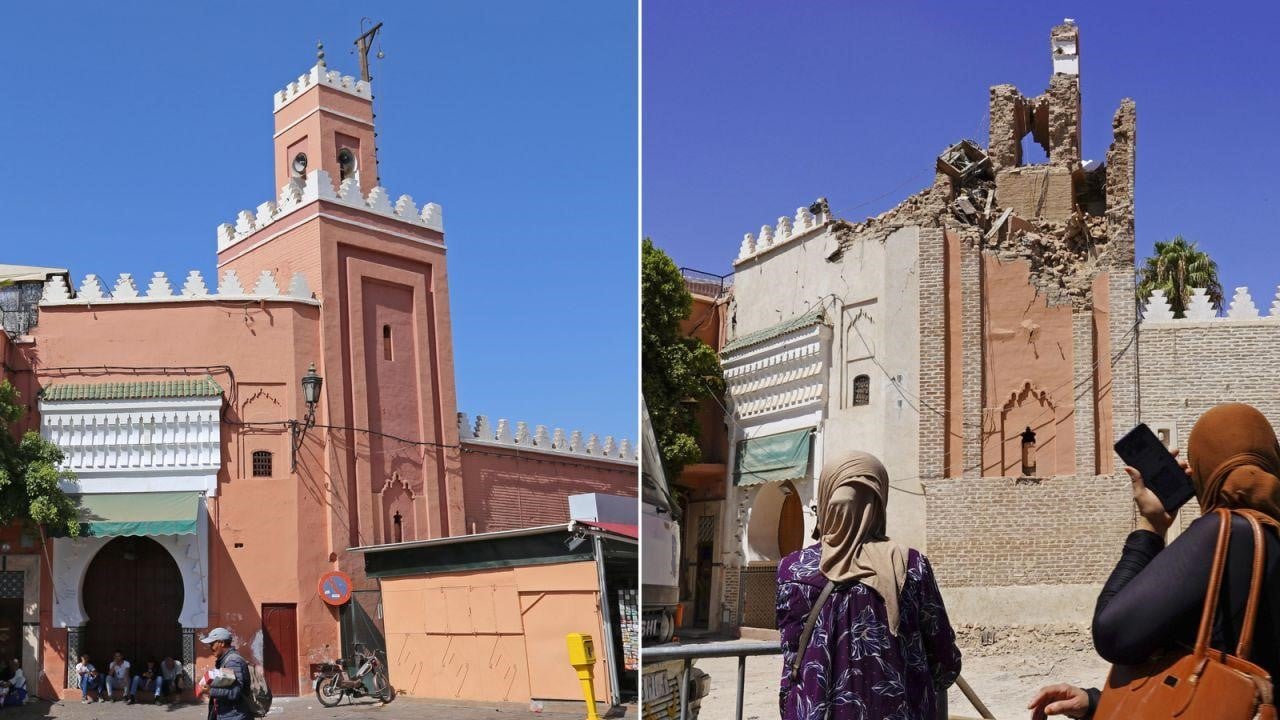
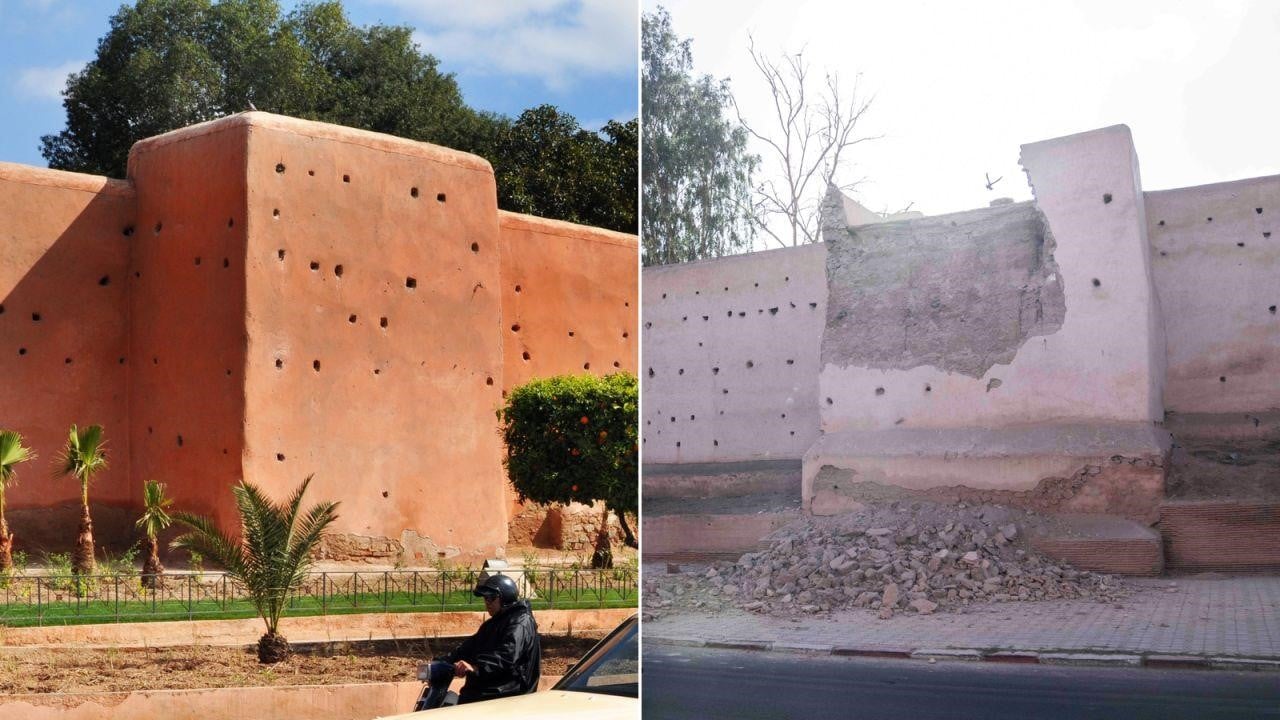
The 900-year-old Marrakech city walls were damaged by the earthquake, leaving cracks and some sections crumbling. These walls stretch for miles around the Medina district.
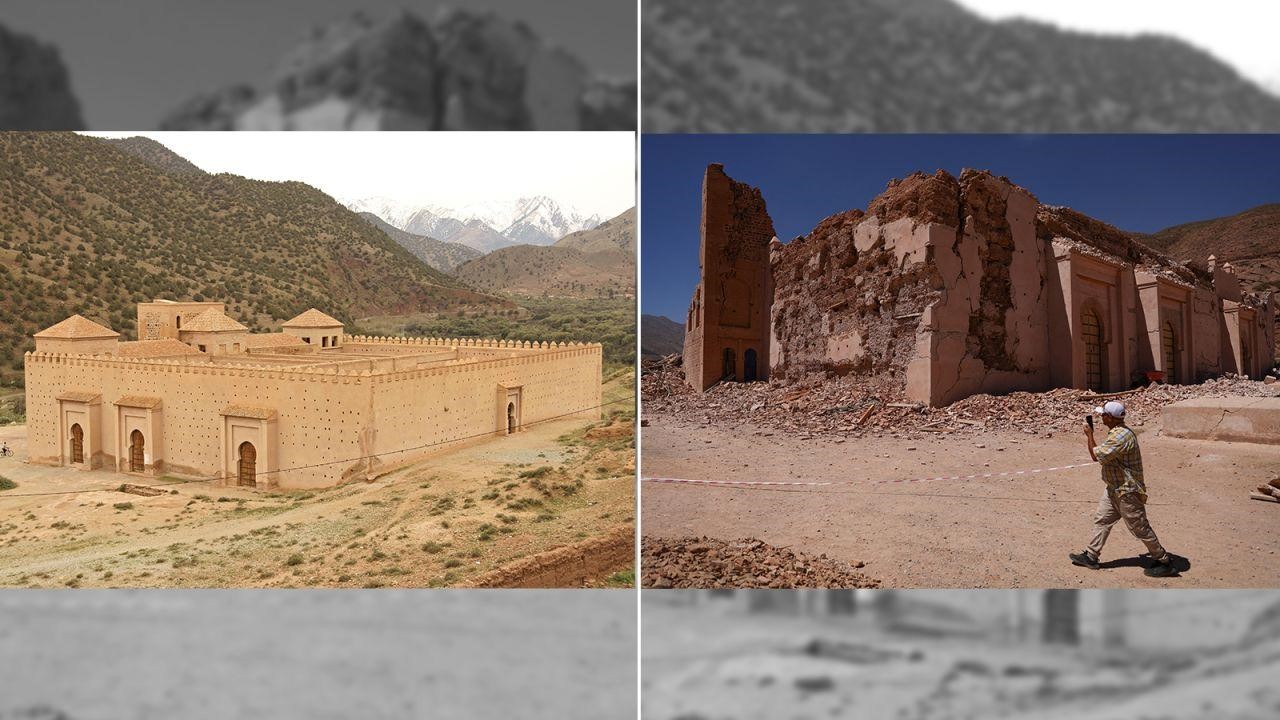
The Tinmal Church is a prime example of 12th-century Almohad architecture, with its brick walls, arches, and intricate carvings. The building has been severely damaged, with its walls and structure reduced to ruins.
To date, more than 2,600 people have died and 2,500 have been injured. Authorities warn that the death toll could continue to rise.
Nguyen Quang Minh (according to CNN)
Source
![[Photo] Commemorating the unwavering friendship between Vietnam and Laos](/_next/image?url=https%3A%2F%2Fvphoto.vietnam.vn%2Fthumb%2F1200x675%2Fvietnam%2Fresource%2FIMAGE%2F2026%2F01%2F27%2F1769518372051_ndo_br_1-jpg.webp&w=3840&q=75)


![[Photo] Announcement Ceremony of the Art Program “Light Concert – Welcoming the New Year 2026”](/_next/image?url=https%3A%2F%2Fvphoto.vietnam.vn%2Fthumb%2F1200x675%2Fvietnam%2Fresource%2FIMAGE%2F2026%2F01%2F27%2F1769514762857_le-cong-bo-ct-hoa-nhac-anh-sang-1772-9042-jpg.webp&w=3840&q=75)


![OCOP during Tet season: [Part 3] Ultra-thin rice paper takes off.](/_next/image?url=https%3A%2F%2Fvphoto.vietnam.vn%2Fthumb%2F402x226%2Fvietnam%2Fresource%2FIMAGE%2F2026%2F01%2F28%2F1769562783429_004-194121_651-081010.jpeg&w=3840&q=75)


![OCOP during Tet season: [Part 2] Hoa Thanh incense village glows red.](/_next/image?url=https%3A%2F%2Fvphoto.vietnam.vn%2Fthumb%2F402x226%2Fvietnam%2Fresource%2FIMAGE%2F2026%2F01%2F27%2F1769480573807_505139049_683408031333867_2820052735775418136_n-180643_808-092229.jpeg&w=3840&q=75)
![OCOP during Tet season: [Part 1] Ba Den custard apples in their 'golden season'](/_next/image?url=https%3A%2F%2Fvphoto.vietnam.vn%2Fthumb%2F402x226%2Fvietnam%2Fresource%2FIMAGE%2F2026%2F01%2F26%2F1769417540049_03-174213_554-154843.jpeg&w=3840&q=75)



Comment (0)