

In the context of a challenging economic environment, rising input costs, and uneven order recovery, adjusting the minimum wage forces businesses to change their development mindset, moving towards a growth model based on productivity, quality, and efficiency.
Essentially, raising the minimum wage is not just about increasing labor costs, but a clear policy message: economic growth cannot continue to rely on the advantage of cheap labor, but must be based on innovation, creativity, and increasing added value. In the current climate, many businesses, especially small and medium-sized enterprises (SMEs), are facing significant pressure from rising raw material costs, credit interest rates, and market volatility. Raising the minimum wage necessitates urgent restructuring of production, streamlining operations, and improving management efficiency.
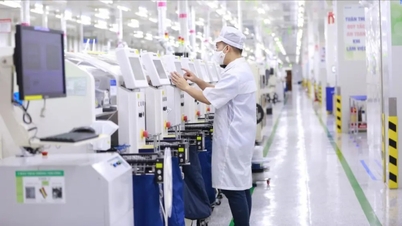
According to economic experts, this minimum wage increase is a "boost" to encourage businesses to innovate in depth. As labor costs rise, businesses cannot maintain the old production model based on a large workforce and low productivity; instead, they must invest in technology, improve processes, and retrain their workforce.
 |
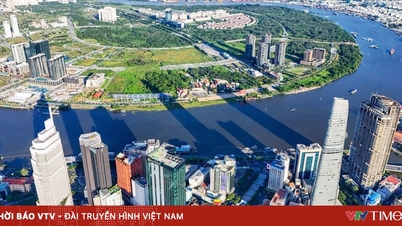
| Raising the regional minimum wage will contribute to creating momentum for socio-economic development. In the photo: A section of Hung Vuong Street, Tuy Hoa Ward, which has been invested in and built to be spacious and modern. Photo: N. Thanh |
In reality, businesses that proactively adapt and view wage increases as a driver of innovation often achieve positive results in the medium and long term. Conversely, businesses that are slow to innovate will face many difficulties in competition and retaining employees. Ms. Nguyen Thi Dung, Director of Viet Thang Production - Trade - Service Co., Ltd., believes that adjusting the regional minimum wage in 2026 is a step in line with development trends. Businesses are increasingly proactively restructuring their production activities, applying technology, and improving management capabilities to adapt to new policies. Increasing the minimum wage is not only a social responsibility but also an opportunity for businesses to improve the quality of their human resources and competitiveness.
From the perspective of a public utility enterprise, Mr. Tran Minh Hoang, Director of Phu Yen Urban Environment Joint Stock Company, said that the unit currently has 454 employees, with an average income of 7.5 million VND/person/month, higher than the regional minimum wage. According to Mr. Hoang, maintaining stable income and gradually improving the living standards of employees helps them feel secure in their work, stay committed long-term, and work more effectively.
Mr. Nguyen Tan Thuan, Permanent Vice Chairman of the Provincial Business Association, stated that most businesses in the area are now paying salaries higher than the new regional minimum wage. This demonstrates the proactive approach and social responsibility of businesses. However, to prevent salary increases from becoming a burden, a stable adjustment roadmap is needed, along with supporting policies such as tax deferrals, credit support, and reduced compliance costs for businesses. Furthermore, strengthening dialogue between employers and employees is particularly important. Through dialogue, both sides can agree on salary, benefits, and working conditions that are appropriate to the actual situation, thereby creating consensus and stability within businesses.
It can be affirmed that the 7.2% increase in the regional minimum wage is not only a challenge but also an opportunity for businesses to upgrade their management models, improve productivity, and achieve sustainable development. In this new phase of development, businesses that know how to turn pressure into motivation will stand firm and go far.
Source: https://baodaklak.vn/kinh-te/202601/dong-luc-doi-moi-quan-tri-nang-cao-nang-suat-1d514b0/












































































Comment (0)