

The amendment and supplementation of several articles of the Law on Investment in Public-Private Partnership (PPP) in Law No. 57/2024/QH15 will remove obstacles for PPP projects and promote the attraction of investment capital.
 |
| The new regulations in Law No. 57/2024/QH15, amending some provisions of the PPP Law, will contribute to resolving obstacles for projects and promoting investment attraction. Photo: D.T. |
The Law amending and supplementing a number of articles of the Law on Planning, the Law on Investment, the Law on Investment under the Public-Private Partnership method and the Law on Bidding (Law No. 57/2024/QH15) was passed by the 15th National Assembly at its 8th session.
This is a significant step forward in perfecting the legal framework, addressing bottlenecks in investment mechanisms, and promoting infrastructure development. These changes not only resolve existing barriers but also open up great opportunities for future PPP projects.
Remove restrictions on sectors and minimum capital requirements.
Previously, the PPP Law only permitted projects in five key sectors: transportation, power grids, water supply, healthcare, and education, with a minimum capital investment of 100 to 200 billion VND. This limited the ability to implement small-scale projects, especially in localities with difficult socio-economic conditions, where private investment needed to address urgent issues.
Law No. 57/2024/QH15 has removed these limitations, allowing the application of the PPP method in all sectors consistent with socio-economic development needs. Expanding the scope of investment and eliminating the minimum capital requirement will facilitate localities in implementing essential but small-scale infrastructure projects, thereby attracting more investors and improving capital efficiency.
This is a breakthrough, not only increasing flexibility but also fostering creativity in proposing new projects that meet the practical needs of each region.
Increase the proportion of state capital participating in the project.
A notable new point in Law No. 57/2024/QH15 is the increase in the proportion of state capital participating in PPP projects to a maximum of 70% of the total investment for projects with high land acquisition costs or implemented in economically disadvantaged areas. The previous regulation only allowed state capital to account for no more than 50%, leading to many projects being stalled due to insufficient attractiveness to private investors.
The new regulations not only reduce the financial burden on investors but also provide peace of mind when participating in high-risk projects. A higher proportion of state capital ensures that important infrastructure projects will be implemented quickly and on schedule, contributing to improved public service quality and boosting economic growth.
Strong reforms to investment procedures.
Simplifying investment procedures is one of the top priorities in amending the PPP Law. The project appraisal and approval process has been streamlined, and significant decentralization has been implemented for local authorities. This not only reduces approval time but also enhances flexibility, helping projects to be implemented promptly and meet the urgent needs of people and businesses.
In particular, the new law requires the entire project appraisal and approval process to be open and transparent, aiming to curb corruption and waste. Investors are also assured of their rights as procedures become clearer and more transparent.
This reform is expected to create a more favorable and attractive investment environment, not only for domestic investors but also for foreign partners.
Re-implementing BT contracts with innovative mechanisms.
Law No. 57/2024/QH15 marks the return of BT (Build-Transfer) contracts after a long period of suspension. This is an important form of contract that allows investors to propose infrastructure projects themselves without using state budget funds.
However, to avoid past shortcomings such as lack of transparency or uncontrolled costs, this revised law introduces stricter management regulations. The bidding process for selecting investors will be conducted rigorously, with clear and public criteria to ensure fairness and efficiency.
Furthermore, the payment mechanism for investors is specified in detail right from the project planning stage, helping to minimize prolonged debt accumulation. Monitoring mechanisms are also strengthened to promptly detect and address issues arising during contract implementation.
The reintroduction of BT contracts not only helps reduce the financial burden on the State but also unlocks private capital, accelerating the construction progress of essential infrastructure projects.
Resolving obstacles in transitional projects.
Currently, many BOT and BT projects are facing difficulties in implementation due to legal obstacles. Law No. 57/2024/QH15 allows the application of new regulations to contracts signed before the law came into effect. This facilitates the continued implementation of these projects and provides a legal basis for resolving arising issues.
The government has also allowed pilot implementation of PPPs in unregulated sectors in Hanoi , Ho Chi Minh City, and Da Nang. This is an opportunity for localities to maximize the potential of BT contracts, attract private capital, and promote infrastructure development in a flexible manner.
It can be said that amending the PPP Law not only resolves current legal obstacles but also opens up a clear, transparent, and effective legal framework for future public infrastructure projects.
Reforms such as expanding investment areas, increasing the proportion of state capital, and reinstating BT contracts demonstrate the government's efforts to unlock resources and promote socio-economic development.
If implemented effectively, these changes will not only improve infrastructure quality but also enhance national competitiveness, attract domestic and foreign investment, and create a strong impetus for sustainable growth.
Source: https://baodautu.vn/dong-luc-moi-de-khoi-thong-nguon-luc-dau-tu-d234842.html


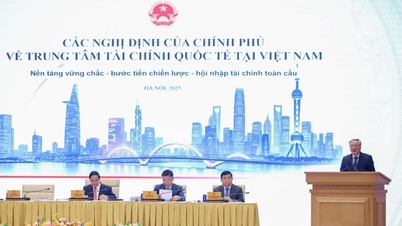
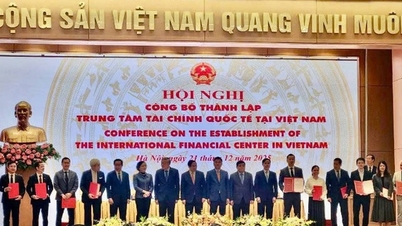
![[Photo] Prime Minister Pham Minh Chinh presides over the conference announcing the establishment of the International Finance Centre in Vietnam.](/_next/image?url=https%3A%2F%2Fvphoto.vietnam.vn%2Fthumb%2F1200x675%2Fvietnam%2Fresource%2FIMAGE%2F2025%2F12%2F21%2F1766309817714_ndo_br_dsc-3400-jpg.webp&w=3840&q=75)
![[Photo] Prime Minister Pham Minh Chinh presides over a meeting on private sector economic development.](/_next/image?url=https%3A%2F%2Fvphoto.vietnam.vn%2Fthumb%2F1200x675%2Fvietnam%2Fresource%2FIMAGE%2F2025%2F12%2F20%2F1766237501876_thiet-ke-chua-co-ten-40-png.webp&w=3840&q=75)

























































































Comment (0)