

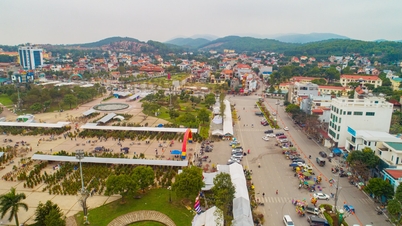
In recent years, Quang Ninh has become a shining example of urban development and infrastructure construction, especially transportation infrastructure. This has created many favorable conditions to promote socio -economic development and improve the quality of life for its people.
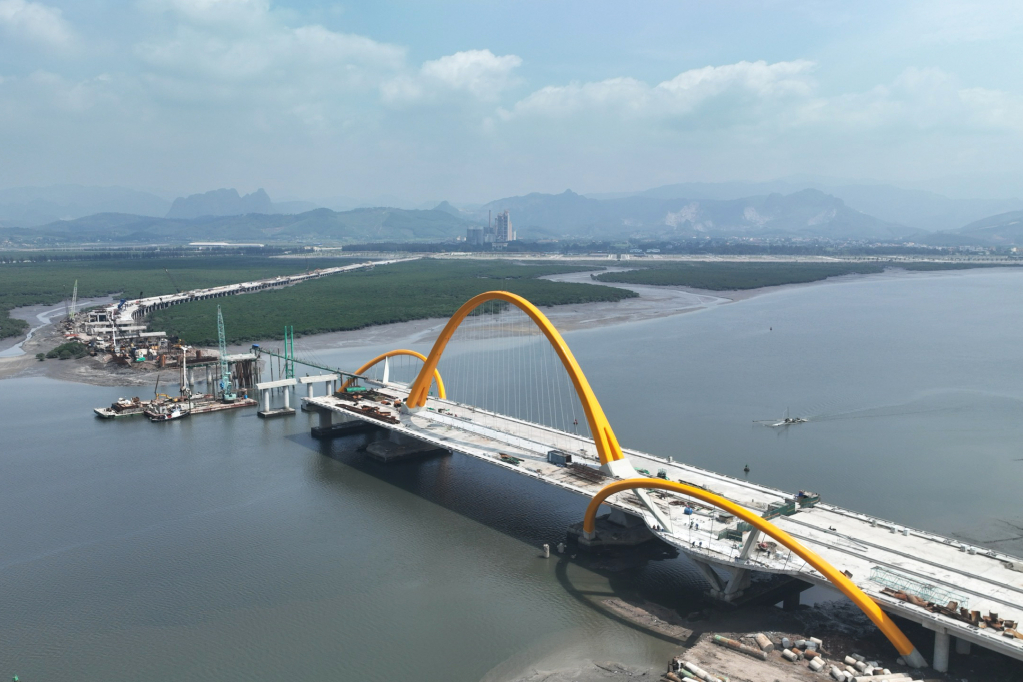
Over the past three years, despite facing numerous difficulties due to the impact of the Covid-19 pandemic and the volatile global situation, which has affected all aspects of people's lives and livelihoods, Quang Ninh province, with the determination of the entire political system, has continued to allocate resources, attract investment, and focus on developing urban infrastructure and transportation infrastructure. According to the province's estimates, total social investment capital for the period 2021-2023 is projected to reach VND 294,059 billion, with an average annual increase of approximately 10.2% (the target set in the province's XV Congress Resolution was over 10% per year). Socio-economic infrastructure, especially transportation, urban, tourism, and service infrastructure, has been invested in comprehensively.
The province has completed and put into operation projects such as: the Van Don - Mong Cai Expressway, the Love Bridge, the road connecting Cai Lan Industrial Park through Viet Hung Industrial Park to the Ha Long - Van Don Expressway; the road from Van Don International Airport to the Van Don high-end resort and entertainment complex; and the system of transportation infrastructure connecting 104 villages and hamlets in Binh Lieu district.
Alongside this, the Ha Long International Cruise Port – the first specialized port in Vietnam – is a meeting point for international-class cruise ships, constantly improving and enhancing service quality. The province's chain of tourist ports is also being invested in comprehensively, operating under the "one destination, many amenities" model, such as: Tuan Chau International Cruise Port – the gateway bringing tourists to the World Heritage Site and Wonder of Ha Long Bay; and the high-class Ao Tien Port, designed with a green space theme – a new gateway for Quang Ninh to effectively exploit its advantages in marine and island tourism, which is currently very popular...
On the other hand, the province's internal transportation infrastructure also clearly demonstrates its interconnectedness, comprehensiveness, and seamlessness. Along with main arterial roads, new tourist routes connecting to tourism centers within the province have been formed. For example: the Ha Long - Cam Pha coastal road, a beautiful coastal landscape axis of Quang Ninh, connecting Ha Long Bay and Bai Tu Long Bay with impressive architectural works, commercial centers, shopping malls, and wholesale markets... Furthermore, many roads, such as: the road to the Yen Tu historical site (Uong Bi City); the rural road in Yen Duc (Dong Trieu Town); the road in the highlands of Binh Lieu… have been newly constructed and expanded, best meeting the travel needs of tourists.
The transportation system in rural and mountainous areas is also becoming increasingly synchronized, facilitating travel and trade for the people, and promoting socio-economic development in various regions of the province… In 2022, Quang Ninh ranked first in the list of localities with the best infrastructure index in Vietnam.
Mr. Le Manh Hien, a resident of Quang Ninh who had been away from his hometown for a long time, shared his thoughts: “Although I have always followed the development of my hometown, returning to visit and witnessing it firsthand, I see even more clearly the rapid changes in my homeland, especially the roads and transportation, which are now convenient and modern. In particular, the newly inaugurated Van Don - Mong Cai expressway allows us to travel to Mong Cai City very quickly. I am truly delighted because Quang Ninh is developing more and more, and the people are enjoying these achievements…”
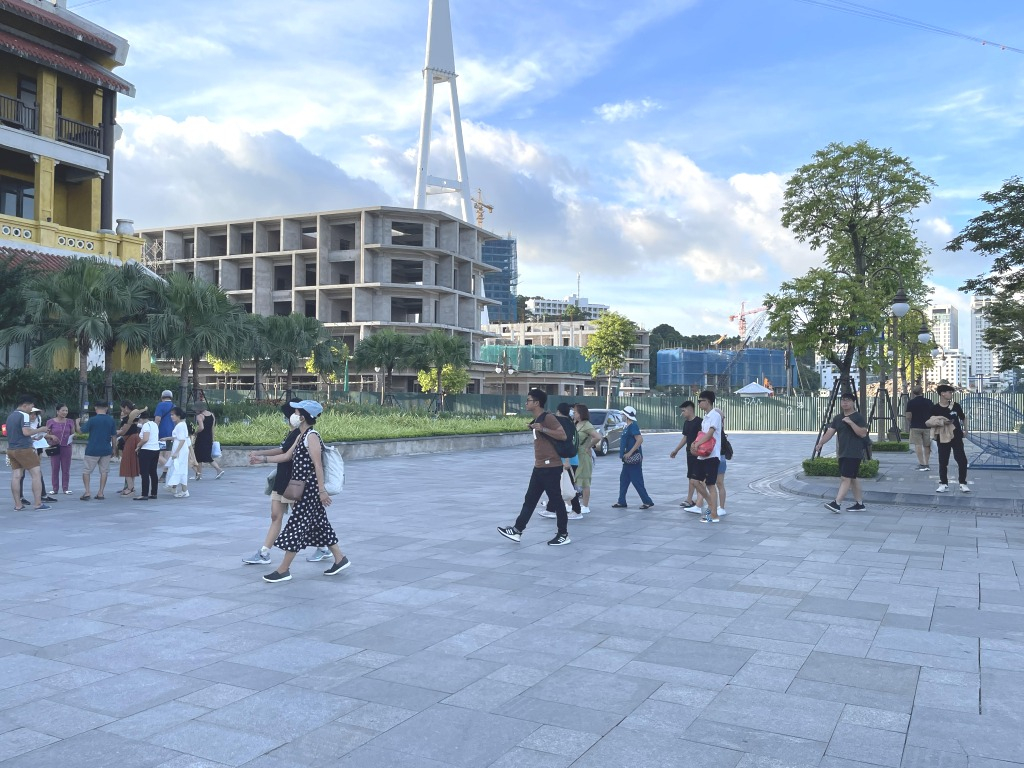
Currently, the province is urgently implementing many key transportation projects, such as: Cua Luc 3 Bridge; the riverside road connecting from the Ha Long - Hai Phong expressway to Dong Trieu town (section from provincial road 338 to Dong Trieu town); the road connecting from the Ha Long - Hai Phong expressway (km6+700) to provincial road 338 (phase I)... The province is also proactively coordinating with neighboring provinces and cities to invest in and complete the Trieu Bridge and access roads connecting National Highway 18 with Provincial Road 389; the Lai Xuan Bridge project and the roads at both ends of the bridge; the construction of Ben Rung Bridge and access road system; the renovation and upgrading of Road 342 connecting Lang Son province; the road connecting from National Highway 279 (Tan Dan commune, Ha Long city) to Provincial Road 291 (Tay Yen Tu town, Son Dong district, Bac Giang province)...
To date, Quang Ninh has the largest number of kilometers of expressways in the country (176/1,046km). This is a new breakthrough for Quang Ninh province in the first half of the term implementing the Resolution of the 15th Provincial Party Congress on developing strategic transport infrastructure, promoting regional and intra-regional linkages and international cooperation and integration.
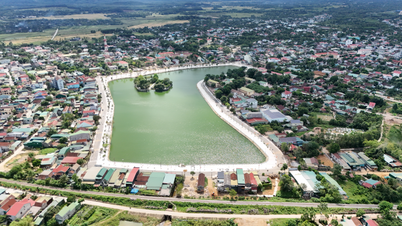
Along with that, urban planning, land management, and infrastructure have been comprehensively upgraded to be civilized, modern, bright, green, clean, beautiful, and safe, aiming towards a smart city model. Quang Ninh has 13 urban areas. Ha Long City is a Type I urban area directly under the province; Mong Cai, Cam Pha, and Uong Bi are Type II urban areas; Quang Yen and Dong Trieu are Type III urban areas; Van Don, Tien Yen, and Quang Ha are Type IV urban areas; and 4 towns (Ba Che, Binh Lieu, Dam Ha, and Co To) are Type V urban areas… Quang Ninh is among the localities with the highest urbanization rate in the country (approximately 68.5%).
Starting from a low base, Quang Ninh has risen to become one of the most dynamically developing localities in the country. More significantly, the province has effectively implemented solutions to attract investment through public-private partnerships (PPP).
Source
![[Photo] General Secretary and President To Lam presides over a working session with the Central Policy and Strategy Committee on the development of the materials industry.](https://vphoto.vietnam.vn/thumb/1200x675/vietnam/resource/IMAGE/2026/05/21/1779359935432_a3-bnd-3129-1412-jpg.webp)
![[Photo] National Assembly Chairman Tran Thanh Man working with the Standing Committee of the Law and Justice Committee](https://vphoto.vietnam.vn/thumb/1200x675/vietnam/resource/IMAGE/2026/05/21/1779378929214_ndo_br_1-4610-jpg.webp)

























































Comment (0)